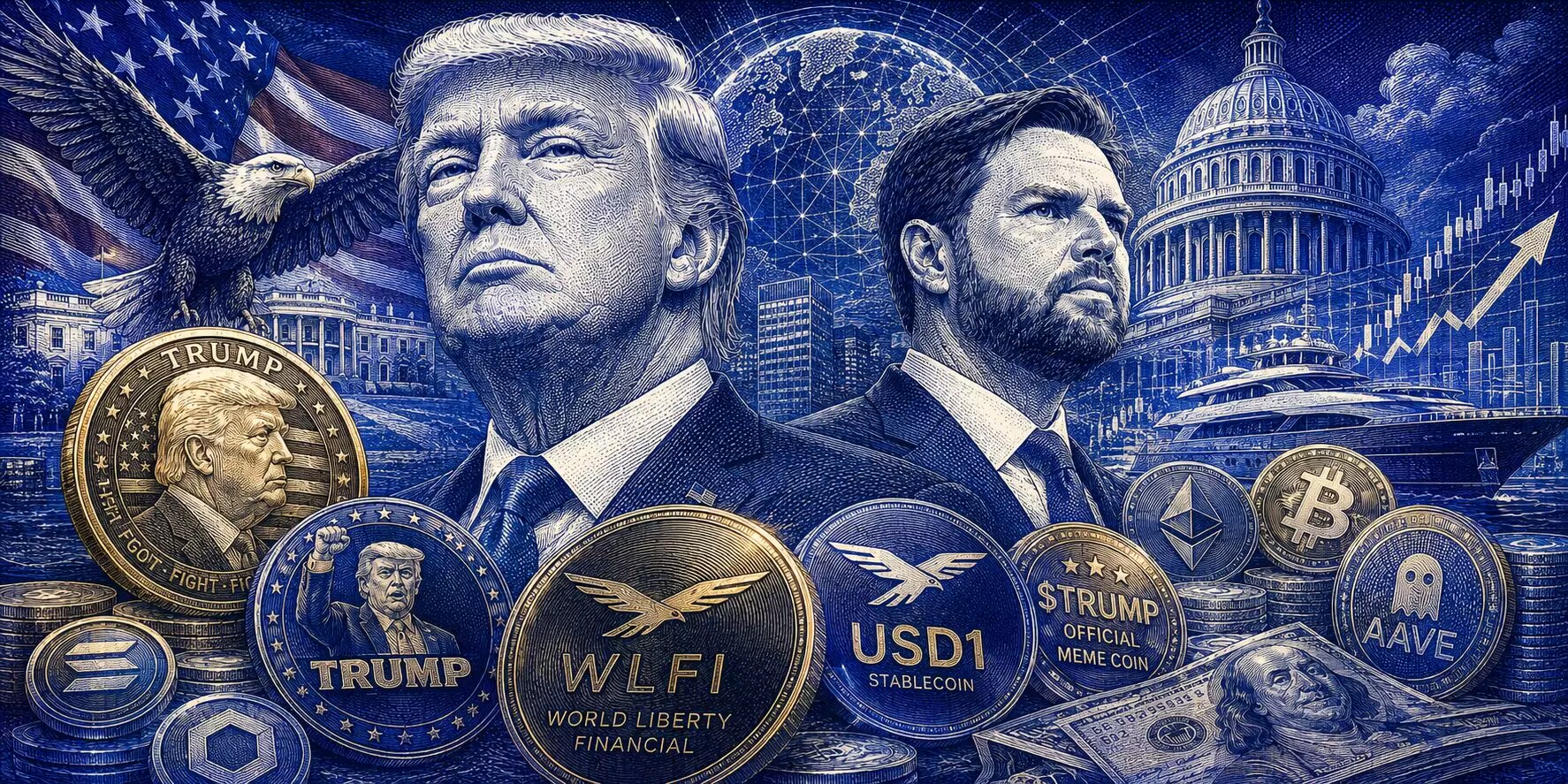
特朗普被控“非法牟利”!某单一钱包持有20亿USD1稳定币

投研日志Publicado a 2025-05-06Actualizado a 2025-05-06

Resumen

民主党参议员沃伦撤回对GENIUS稳定币法案支持,指控其可能为特朗普家族USD1美元稳定币非法牟利。链上发现,某单一钱包持有价值20亿美元USD1稳定币。

FX168财经报社(亚太)讯 民主党9名议员意外撤回支持,拒绝通过美国总统特朗普阵营提议的《指导和建立美国稳定币国家创新法案》(GENIUS Act)。民主党参议员伊丽莎白·沃伦(Elizabeth Warren)撤回支持,指控其可能为特朗普家族USD1美元稳定币非法牟利。

CoinGape报道,特朗普计划在美国推出强有力的稳定币立法,但却引发了一系列意想不到的问题。最近的一个问题是,沃伦拒绝支持GENIUS稳定币法案。
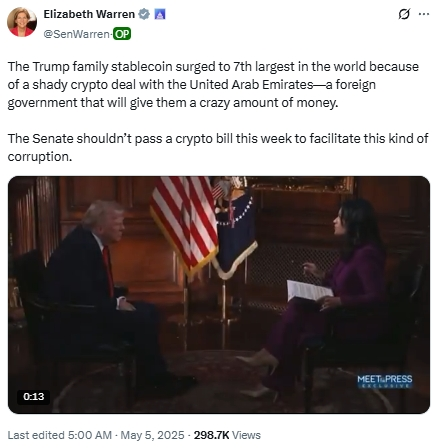
沃伦帖文对该法案提出了质疑,担心该法案的通过将使特朗普家族旗下去中心化金融(DeFi)项目World Liberty Financial(WLFI)获得一笔不义之财。她的论点集中在WLFI与阿联酋MGX达成的最新协议上,该协议将依靠价值1美元的稳定币来完成其对币安的20亿美元投资。

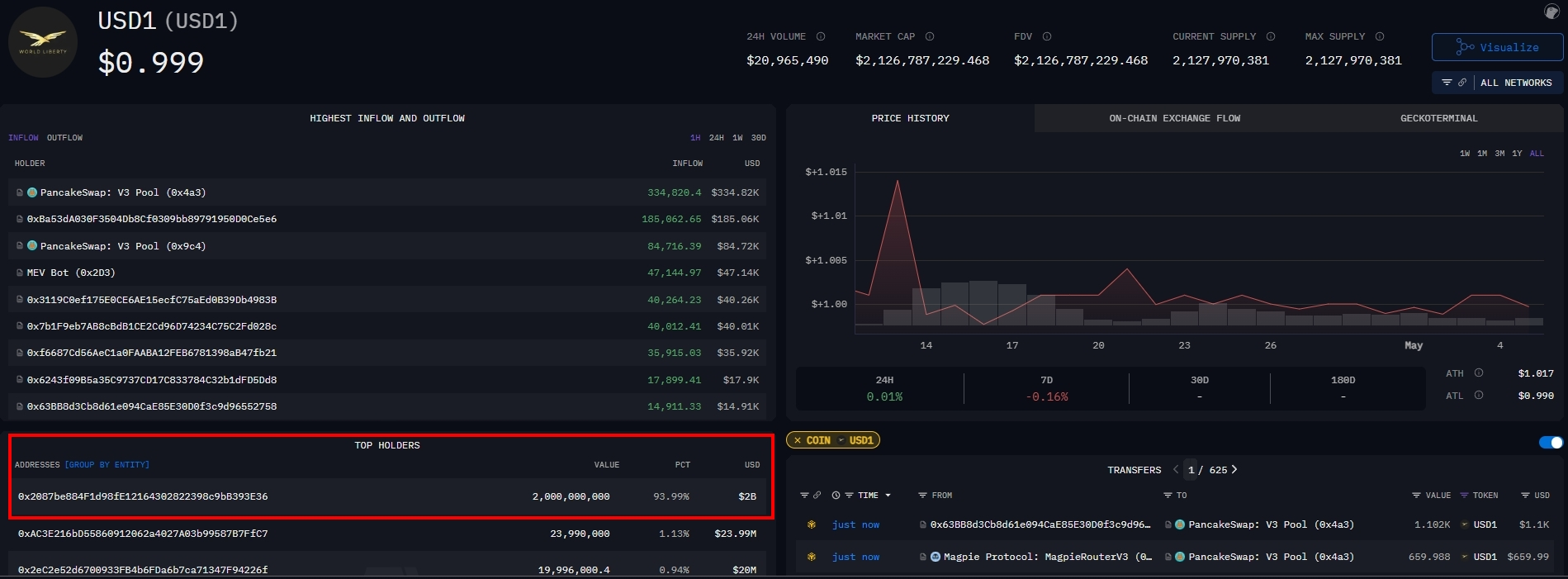
WLFI发行的美元计价稳定币USD1当前发行价值达已到约21亿美元,但其主要持有者的身份仍不清楚。

据Arkham监测数据显示,一个独立钱包持有价值20亿美元的USD1,占到发行价值的约95%,暂时无法确认该钱包的持有者身份。
此前消息透露,特朗普次子埃里克(Eric Trump)表示,World Liberty Financial发行的美元计价稳定币USD1已被正式选定为阿布扎比投资机构MGX用于完成对币安20亿美元投资的官方稳定币。

今年早些时候,总部位于阿布扎比的投资公司MGX斥资20亿美元收购了币安的股份。

据上周在迪拜TOKEN 2049峰会发表的信息,特朗普家族的USD1稳定币将发行在波场(TRON)公链上。

MGX的安排使得USD1稳定币的日交易量创下历史新高,市值也随之增长。沃伦敦促参议院在众议院全体投票之前,以不当得利为由否决GENIUS稳定币法案。

沃伦表示:“特朗普家族的稳定币飙升至全球第7大,是因为与阿联酋达成了一项可疑的加密货币交易——阿联酋是一个外国政府,会给他们巨额资金。参议院本周不应该通过一项加密货币法案来助长这种腐败行为。”

由于GENIUS稳定币法案缺乏反洗钱和国家安全保护规则,10名美国参议员撤回了对该法案的支持。

特朗普政府此前曾表示乐观,认为GENIUS稳定币法案将克服所有立法障碍。据戴维·萨克斯(David Sacks)称,该法案曾于5月获得最终批准,但人们的热情已逐渐消退。

沃伦等参议员在众议院对GENIUS稳定币法案进行投票之前做出的180度大转变令特朗普政府措手不及。

然而,如果该法案未能获得通过,受打击最严重的将是特朗普支持的WLFI。据报道,WLFI正在暂停在中心化交易所上市,等待监管部门明确后再继续推进。

在USD1追赶行业先行者的过程中,这一延迟可能会损害其与全球最大美元稳定币USDT发行商Tether正面竞争的机会。

来源为FX168财经

Lecturas Relacionadas

Grayscale: After Halving, BTC is Nearing the Bottom of This Cycle

Grayscale Research suggests Bitcoin's recent decline below $60,000, a >50% drop from its October peak, represents a cyclical correction within a long-term uptrend rather than a trend reversal. Key factors behind the pullback include a shift in market expectations toward Federal Reserve rate hikes under new Chair Kevin Warsh, uncertainty around the CLARITY Act's Senate passage, pressure on leveraged entities like Strategy, and concerns over quantum computing risks. The path out of the current bear market hinges on upcoming catalysts. An optimistic scenario, where the CLARITY Act passes, leverage is contained, and the Fed refrains from hiking, could mean Bitcoin is nearing its cycle bottom. A pessimistic scenario, featuring legislative failure, further deleveraging, and Fed rate hikes, could lead to additional moderate downside. Grayscale does not expect a historically deep ~80% drawdown due to a more measured prior bull run and stickier institutional demand. Despite short-term headwinds, Grayscale remains highly optimistic about crypto's long-term structural prospects, driven by institutional adoption of public blockchains, unsustainable government debt, declining trust in intermediaries, and AI's potential demand for alternative systems. The report concludes that while the exact cycle low depends on near-term catalysts, current valuations present an attractive entry point for long-term investors betting on the decade-ahead growth of digital assets.

marsbitHace 2 min(s)

Grayscale: After Halving, BTC is Nearing the Bottom of This Cycle

marsbitHace 2 min(s)

Web3 Bear Market Survival Guide: Ten Great Books to Help You Navigate the Cycles

"Web3 Bear Market Survival Guide: Ten Books to Help You Navigate the Cycle" This article presents a curated book list aimed at helping Web3 enthusiasts and professionals endure and grow during crypto market downturns. It argues that bear markets are not just periods of waiting but crucial times for deepening one's foundational understanding beyond technical whitepapers and price charts. The ten recommended books offer perspectives on technology, economics, philosophy, and strategy to build resilience and long-term vision. The list includes: 1. **"The Inevitable" by Kevin Kelly:** For using a long-term technological lens to combat uncertainty about the future, including the role of crypto and AI. 2. **"Human Action" by Ludwig von Mises:** To upgrade one's economic and philosophical framework, understanding action, speculation, and calculation in a bear market context. 3. **"The Nature of Technology" by W. Brian Arthur:** For viewing blockchain and crypto as combinatorial evolutions of existing technologies, understanding their modular and economic development. 4. **"The Distant Savior" (Chinese novel):** Explores the cultural attributes of self-reliance ("strong culture") versus dependency ("weak culture"), crucial for surviving industry cycles. 5. **"The Sovereign Individual" by James Dale Davidson & Lord William Rees-Mogg:** A prophetic 1997 work on how technology empowers individuals and challenges nation-states, foreshadowing Bitcoin's emergence. 6. **"Japanization: What the World Can Learn from Japan's Lost Decades" (Adapted title):** Uses Japan's economic history as a case study to identify structural opportunities that persist even during broader recessions. 7. **"Denationalisation of Money" by F.A. Hayek:** The ideological blueprint for Bitcoin, arguing for competitive currency issuance beyond state monopoly. 8. **"Duan Yongping Investment Q&A" (Chinese compilation):** Emphasizes the simple discipline of "doing the right things and doing things right," focusing on fundamentals and maintaining a "stop doing list." 9. **"The Network State: How To Start a New Country" by Balaji Srinivasan:** A visionary text from a crypto insider outlining bold predictions and concrete ideas for a blockchain-based future across media, governance, and identity. 10. **"Selected Works of Mao Zedong" (Vol. 1):** Analyzed as a strategic playbook for a weak force challenging a powerful establishment, offering lessons on strategy, alliance-building, and perseverance for the crypto movement. The conclusion states that bear markets filter out those with weak conviction, not weak skills. Survival depends on cognitive depth and mental fortitude, which these books aim to provide.

Foresight NewsHace 24 min(s)

Web3 Bear Market Survival Guide: Ten Great Books to Help You Navigate the Cycles

Foresight NewsHace 24 min(s)

Who is the Most Profitable Man in the Crypto World? Trump Rakes in Over $1.427 Billion in 2025

Who is the most profitable man in crypto? President Trump's 2025 financial disclosure, filed with the Office of Government Ethics, reveals crypto-related earnings exceeding $1.427 billion, starkly contrasting the broader market downturn. The bulk of this wealth stems not from passive investment but from his entities' roles as issuers and licensors. CIC Digital LLC, his memecoin operation, generated approximately $636 million in 2025, primarily from "Celebration Coins" royalty fees. DT Marks Defi LLC, a stakeholder in World Liberty Financial, earned about $594 million from asset sales and token distribution proceeds. Other entities held significant Bitcoin, Ethereum, and various altcoin wallets, along with substantial income from stablecoin ventures and his wife's NFT sales. This "issuer model" shields him from market downturns. While his namesake memecoin plummeted from ~$74 to ~$1.68, leaving many retail investors at a loss, his royalty income remained unaffected. The disclosure emerges as the U.S. Senate debates the CLARITY Act, which includes contentious ethics provisions aimed at preventing officials from profiting from the crypto sector they regulate. Critics argue Trump's earnings exemplify a critical conflict of interest, fueling demands for stricter rules to separate regulatory power from personal financial gain in the industry.

Foresight NewsHace 43 min(s)

Who is the Most Profitable Man in the Crypto World? Trump Rakes in Over $1.427 Billion in 2025

Foresight NewsHace 43 min(s)

Trump's 25-Year Financial Report: Family Earns Over $1 Billion Annually from Crypto, While Retail Investors Lose Money on $TRUMP

Former President Donald Trump's family earned approximately $1.2 billion from cryptocurrency ventures in 2025, according to a financial disclosure report. This revenue stream, outlined in a 927-page filing, now surpasses income from most of his long-established real estate holdings. The crypto earnings originated from two main sources: over $500 million from the sale of products like "governance tokens" by World Liberty Financial, a DeFi project co-owned by the Trump family, and roughly $635 million in royalties from the Trump-themed meme coin $TRUMP, issued by CIC Digital LLC. While Trump's entities profited, retail investors faced significant losses. The $TRUMP token, which peaked above $74 shortly after its January 2025 launch, has plummeted to around $1.68. World Liberty Financial's token has also fallen roughly 80% since its debut. Reports indicate that the majority of meme coin buyers have lost money, with Trump-linked entities still holding about 80% of $TRUMP's supply under vesting plans. The disclosure highlights a stark contrast: Trump's crypto and real estate businesses flourished—with new international property deals bringing in tens of millions—even as his administration shifted to crypto-friendly policies, relaxing the stringent regulatory stance of the previous Biden administration. The White House maintains that Trump acts only in the public interest, with his businesses placed in a trust managed by his sons, denying any conflict of interest. However, the report notes the difficulty of assessing such conflicts, particularly regarding foreign business dealings with countries that later received favorable U.S. policy decisions.

marsbitHace 44 min(s)

Trump's 25-Year Financial Report: Family Earns Over $1 Billion Annually from Crypto, While Retail Investors Lose Money on $TRUMP

marsbitHace 44 min(s)

From 'Address Clustering' to 'Evidence Standards': Why is Chainalysis Redefining Blockchain Tracing?

**Summary:** In June 2026, Chainalysis introduced the **Blockchain Tracing Ontology (BTO)**, a proposed data framework aiming to establish standardized, transparent, and verifiable models for blockchain analysis. This initiative addresses a core industry issue: despite public blockchain data, different firms often produce inconsistent results (e.g., differing entity labels for the same address) due to non-uniform methodologies, particularly in **address clustering**. This lack of standardization poses challenges for judicial investigations, AML, and enforcement. The BTO is not a new clustering algorithm but a **common "language" or conceptual framework**. It moves beyond the simplistic "cluster" model by introducing a hierarchical structure: **Entity → Wallet → Wallet Segment → Address**, which better reflects complex organizational wallet management. A key shift is from presenting mere results to ensuring **process trust and explainability**. The framework emphasizes documenting the **Evidence** and **Confidence** behind each analytical claim—specifying the on-chain/off-chain data, rules applied, and certainty levels—enabling third-party verification. This focus is partly informed by legal precedents like the **Bitcoin Fog** case, where Chainalysis's methods underwent rigorous judicial scrutiny (Daubert hearing), highlighting the need for reproducible, scientifically sound analysis. The proposal clarifies that on-chain analysis identifies address relationships and flow patterns, not real-world identities, which still require off-chain evidence (e.g., KYC data). Ultimately, Chainalysis envisions steering the industry from an "experience-driven" to a **"standards-driven"** future, where competition centers on **data quality, analytical transparency, and judicial admissibility** rather than just label coverage. Widespread adoption could facilitate cross-agency collaboration, reduce disputes, and provide a more reliable foundation for global compliance and enforcement.

marsbitHace 1 hora(s)

From 'Address Clustering' to 'Evidence Standards': Why is Chainalysis Redefining Blockchain Tracing?

marsbitHace 1 hora(s)

Trading

Spot
活动图片