Компания Rice Robotics запускает робота с искусственным интеллектом в стиле FLOKI

cryptonews.ruPublicado a 2025-01-29Actualizado a 2025-04-29

Rice Robotics, компания, специализирующаяся на роботах с искусственным интеллектом, сотрудничает с Floki. Компания выпустит робота в стиле Floki и собственный токен RICE, который будет бесплатно предоставлен держателям FLOKI.

Мини-бот будет помощником в выполнении задач на основе ИИ, который сможет предложить пользователям несколько услуг. Пользователи будут получать токены RICE за взаимодействие с мини-ботами, поскольку данные, полученные от людей, могут помочь в обучении моделей ИИ компании.

Первый в мире робот, вдохновленный монетами-мемами?

Монеты-мемы нечасто ассоциируются с передовыми разработками в области искусственного интеллекта и робототехники. Однако Floki уже некоторое время продвигает креативные инициативы в сфере Web3, реализуя несколько проектов, ориентированных на полезность. Проект также пытается запустить ETP в Европе.

Сегодня Floki открыла новые горизонты благодаря партнёрству с Rice Robotics, возможно, став первым крупным деловым сотрудничеством между этими двумя сферами:

Rice Robotics — материнская компания, производящая роботов, но Rice AI специализируется на программном обеспечении и протоколе DePin, на котором работают эти машины.

Компания выпустит свой токен RICE через TokenFi — платформу токенизации, входящую в экосистему Floki.

Изначально пользователи, находящиеся в списке ожидания, и держатели FLOKI получат токены RICE в ходе последующей раздачи. После этого основным способом получения новых токенов станет взаимодействие с физическими роботами.

По сути, мини-роботы FLOKI M1 могут помогать пользователям с домашними делами, и за взаимодействие они будут получать токены RICE. Другими словами, роботы в стиле Floki будут собирать данные о людях для обучения протоколов ИИ.

Пользователи будут получать финансовое вознаграждение за использование своих роботов-помощников, которые имеют несколько практических применений. В будущем программа может распространиться на других мини-роботов.
Мини-бот FLOKI M1 — это очень амбициозный проект, и у Rice Robotics уже есть список ожидания. В прошлом компания работала с такими известными клиентами, как Nvidia (которая интересуется робототехникой), Softbank, Dubai Future Foundation и 7-Eleven. Мини-бот будет работать на нанокомпьютере Nvidia.

В начале этого года компания привлекла 7 миллионов долларов в рамках финансирования серии A и считает SoftBank своим основным клиентом в сфере ИИ. Одним из её ключевых инвесторов является гигант электронной коммерции Alibaba.

Будет очень интересно посмотреть, получится ли у Floki и Rice Robotics успешное партнёрство. Это начинание действительно не похоже ни на что из того, что когда-либо видела криптоиндустрия.

На первый взгляд, у робототехники и мемных монет мало общего, но они могут сочетать в себе популярность и реальную пользу.


Criptos en tendencia

Lecturas Relacionadas

In the AI Era, What's Left for Bitcoin?

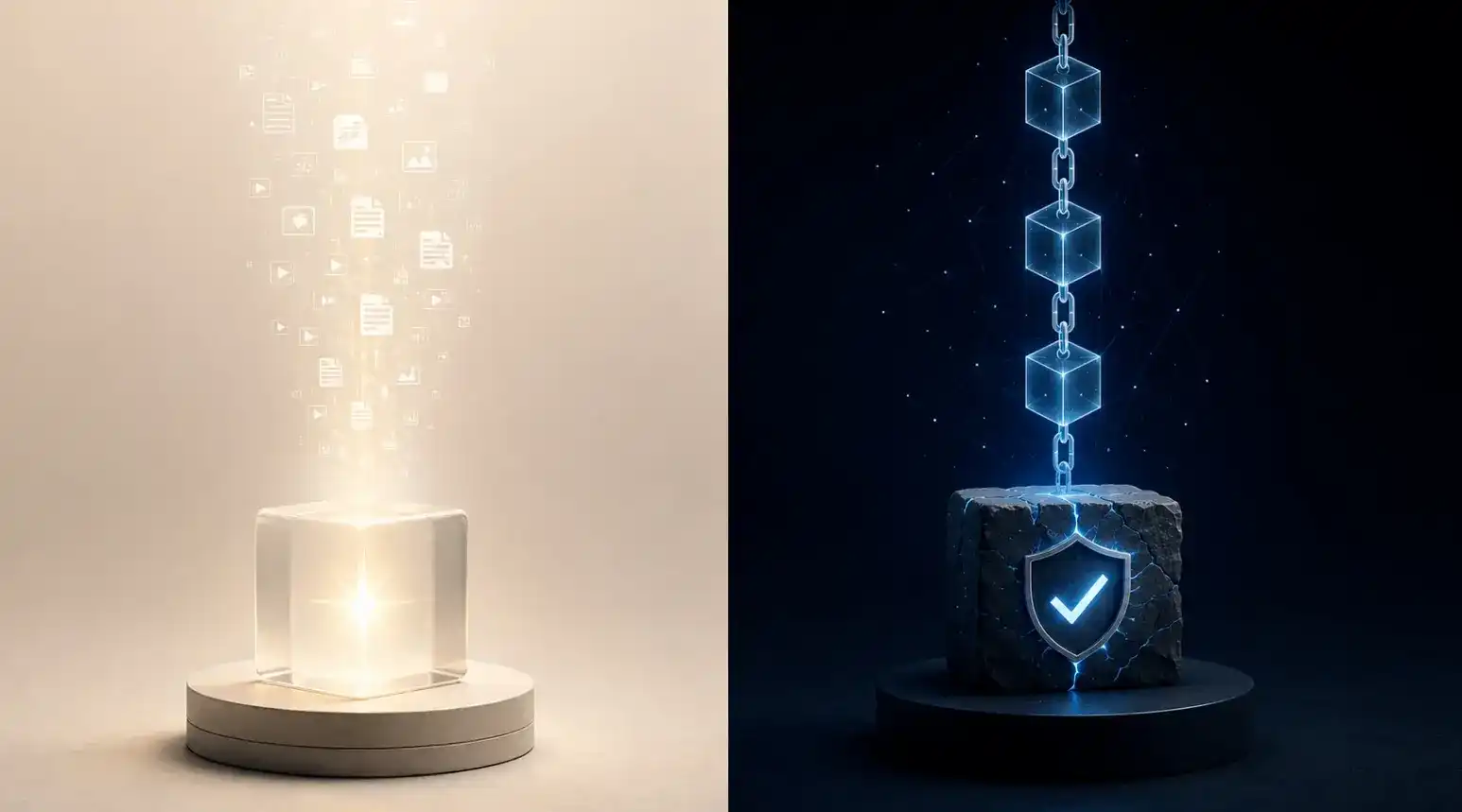
As Bitcoin falls below $60,000, the author reflects on the relationship between AI and Bitcoin, seeing them as two sides of the same coin. In the AI era, the cost of generating content has plummeted, making fake text, images, and videos increasingly easy and cheap to produce. This has led to a fundamental shift: while AI dramatically lowers the cost of information production, it also undermines trust and authenticity online. What becomes truly valuable is not more content, but the ability to verify what is real—"verifiability." This perspective offers a new lens for Bitcoin. Its massive energy consumption, often criticized as wasteful, is reinterpreted. While AI burns energy to enhance "capability" and efficiency, Bitcoin burns energy to produce "verifiability." Its purpose is not to be trusted but to enable a system where no trust in intermediaries—banks, platforms, or developers—is needed. Every transaction and the entire ledger's history is secured by cryptography and a decentralized network of nodes, making it independently verifiable. AI cannot forge a transaction on the Bitcoin network because the system is designed for proof, not generation. The author draws a historical parallel to the Renaissance: the printing press drastically reduced the cost of copying knowledge, while double-entry bookkeeping reduced the cost of trust in commerce. Today, AI is the new printing press, reducing content creation costs to near zero. Blockchain, and Bitcoin as its pioneer, may be the modern equivalent of double-entry bookkeeping—a foundational technology for verifying digital asset ownership and historical records without centralized authorities. Thus, AI and blockchain are not competitors. AI lowers the cost of creation; blockchain lowers the cost of verification. In an age where AI can generate anything, true scarcity may lie not in more content, but in independently verifiable facts. Whether the market will reprice Bitcoin accordingly remains uncertain, but its core value proposition as a "machine for producing verifiability" becomes strikingly relevant.

marsbitHace 1 hora(s)

In the AI Era, What's Left for Bitcoin?

marsbitHace 1 hora(s)

In the Age of AI, What's Left for Bitcoin?

Author: Sevclub, Seven Research Amid Bitcoin's recent drop below $60k, the author reflects on a growing sense that AI and Bitcoin are two sides of the same coin. Today, encountering any content triggers a new default question: "Was this made by AI?" The cost of generating convincing text, images, and video is now negligible. While the internet lowered information *distribution* costs, AI is crashing information *production* costs to near zero. The consequence is a flood of content where truth and falsehood are increasingly indistinguishable. In this environment, what becomes truly valuable is not more information, but the ability to verify what is real—"verifiability." This reframes the common criticism that Bitcoin "wastes electricity." AI consumes power to produce "capability" (e.g., more powerful models). Bitcoin consumes power to produce something else: "verifiability." Bitcoin's core purpose isn't about belief or trust in any institution, developer, or even its creator. It's about enabling independent verification. Every bitcoin's origin, every transaction, and the integrity of the entire ledger are secured by mathematics, cryptography, and a global network of nodes. AI can fabricate convincing media, but it cannot falsify a transaction on the Bitcoin network. The expended energy makes篡改历史 (tampering with history) prohibitively expensive, purchasing a globally verifiable ledger. The author draws a historical parallel to the Renaissance. The printing press drastically reduced the cost of copying knowledge, while double-entry bookkeeping reduced the cost of trust in commerce—one enabled creation, the other verification. Today, AI is the new printing press, driving content production costs toward zero. The question becomes: what is this era's "double-entry bookkeeping"? Blockchain appears to be the leading candidate. It doesn't verify which news is true or which image is real, but it provides a foundational layer for independently verifying asset ownership and historical records in the digital realm without centralized authorities. Therefore, AI and blockchain are not in competition. AI lowers the cost of *generation*. Blockchain (and Bitcoin as a prime example) lowers the cost of *verification*. One creates, the other proves. Whether Bitcoin ultimately succeeds remains uncertain, facing potential challenges from quantum computing, regulation, and technical evolution. However, the author now sees it less as a "machine for making bitcoin" and more as a "machine for making verifiability." In an age where AI can generate anything, true scarcity may no longer be "more content," but "more independently verifiable facts." Whether the market will price this accordingly is a separate question.

链捕手Hace 1 hora(s)

In the Age of AI, What's Left for Bitcoin?

链捕手Hace 1 hora(s)

Trading

Spot

Artículos destacados

Cómo comprar FLOKI

¡Bienvenido a HTX.com! Hemos hecho que comprar FLOKI (FLOKI) sea simple y conveniente. Sigue nuestra guía paso a paso para iniciar tu viaje de criptos.Paso 1: crea tu cuenta HTXUtiliza tu correo electrónico o número de teléfono para registrarte y obtener una cuenta gratuita en HTX. Experimenta un proceso de registro sin complicaciones y desbloquea todas las funciones.Obtener mi cuentaPaso 2: ve a Comprar cripto y elige tu método de pagoTarjeta de crédito/débito: usa tu Visa o Mastercard para comprar FLOKI (FLOKI) al instante.Saldo: utiliza fondos del saldo de tu cuenta HTX para tradear sin problemas.Terceros: hemos agregado métodos de pago populares como Google Pay y Apple Pay para mejorar la comodidad.P2P: tradear directamente con otros usuarios en HTX.Over-the-Counter (OTC): ofrecemos servicios personalizados y tipos de cambio competitivos para los traders.Paso 3: guarda tu FLOKI (FLOKI)Después de comprar tu FLOKI (FLOKI), guárdalo en tu cuenta HTX. Alternativamente, puedes enviarlo a otro lugar mediante transferencia blockchain o utilizarlo para tradear otras criptomonedas.Paso 4: tradear FLOKI (FLOKI)Tradear fácilmente con FLOKI (FLOKI) en HTX's mercado spot. Simplemente accede a tu cuenta, selecciona tu par de trading, ejecuta tus trades y monitorea en tiempo real. Ofrecemos una experiencia fácil de usar tanto para principiantes como para traders experimentados.

221 Vistas totalesPublicado en 2024.12.12Actualizado en 2026.06.02

Cómo comprar FLOKI

Discusiones

Bienvenido a la comunidad de HTX. Aquí puedes mantenerte informado sobre los últimos desarrollos de la plataforma y acceder a análisis profesionales del mercado. A continuación se presentan las opiniones de los usuarios sobre el precio de FLOKI (FLOKI).

活动图片