Tether Gold (XAU₮) Attestation Released, $770M Market Cap

TheCryptoTimesPublicado a 2025-04-28Actualizado a 2025-04-28

Tether, the biggest stablecoin issuer in the world, has shared its first official report for Tether Gold (XAU₮), its token backed by gold.

The report, released at the end of Q1 2025, states that XAU₮ is backed by over 7.7 tons of gold, establishing it as the biggest tokenized gold product in the market.

The token is regulated by El Salvadoran law, making its value more comprehensible and safe. According to the report, 246,523.33 troy ounces of gold are safely deposited in Swiss vaults, backing XAU₮ on a 1:1 ratio.

As of publication time, XAU₮ was trading at $3,123 per token and thus had a total worth of $770 million. The token reached its recent peak at $3,423 on April 21, 2025, when demand for gold from around the globe surged during uncertain times in the economy.

Tether Gold (Xau₮) Hits $770M Market Cap
Tether Gold (XAU₮) hits $770M market cap | Source: x.com/Tether_to

Paolo Ardoino, the CEO of Tether, emphasized that the token is safe. He stated, “XAU₮ enables users to have access to the stability of physical gold in digital form.” The company highlighted that the value of XAU₮ is entirely backed by real gold reserves. This makes it a reliable option for investors who seek security amidst uncertain times.

XAU₮ is gaining attention as more individuals globally are demanding gold. One of the reasons is that central banks, particularly those in the BRICS nations, are increasing gold reserves to hedge against inflation and reduce dependence on the U.S. dollar.

The World Gold Council stated that in 2024, the central banks bought more than 1,000 metric tons of gold, and this helped drive gold prices up by 2024. In 2025, gold has been doing great, beating the S&P 500 by 32.6% year to date. Analysts observed that gold prices have gone up by 26.5%, but the S&P 500 has dropped by 6.1%.

Tether’s focus on XAU₮ is not simply providing a safe-haven asset for investors. The company is also targeting emerging markets where people are subject to currency devaluation or political instability.

Ardoino said, “XAU₮ is secure, easy to transfer, and fully backed by physical gold reserves on a one-to-one basis.” This provides those in these markets with access to a stable, digital representation of gold.

Also Read: Cardano Founder Charles Hoskinson Says ADA Could Reach $10


Lecturas Relacionadas

Will Warsh Compromise with Trump? A Look at the 70-Year Power Struggle Between the President and the Fed

Will the Fed's new chair, Kevin Warsh, yield to pressure from President Trump? A White House-administered oath ceremony for Warsh breaks recent precedent, spotlighting a seven-decade power struggle between the presidency and the Federal Reserve. Historically, each Fed chair has balanced political pressure with policy independence. Warsh's situation, however, is uniquely complex, inheriting a divided Federal Open Market Committee (FOMC) with some members opposing even hints of rate cuts, while Trump expects easing. The report from Caitong Securities reviews this history: from William Martin establishing independence, to Arthur Burns compromising under Nixon, Paul Volcker building institutional credibility, Alan Greenspan navigating political waters, and Jerome Powell facing severe pressure from Trump, ultimately hardening the Fed's defensive stance. Warsh, a former Fed governor known for questioning quantitative easing, is not a traditional dove. His recent statements emphasize a nuanced view of Fed independence, skepticism of forward guidance, serious concern over inflation (contradicting Trump's "fake inflation" claims), and the potential for AI-driven productivity gains to allow rate cuts. The analysis concludes Warsh's policy will likely feature a clear direction but cautious pace. Rate cuts are probable but constrained by persistent inflation above target; if Trump pressures heavily, Warsh may delay cuts to defend Fed independence. Balance sheet reduction is seen as necessary but will be gradual to avoid premature conflict. Ultimately, Warsh's path will depend more on macroeconomic trends—inflation, growth, oil prices—than on his personal stance or the immediate political relationship.

marsbitHace 4 min(s)

Will Warsh Compromise with Trump? A Look at the 70-Year Power Struggle Between the President and the Fed

marsbitHace 4 min(s)

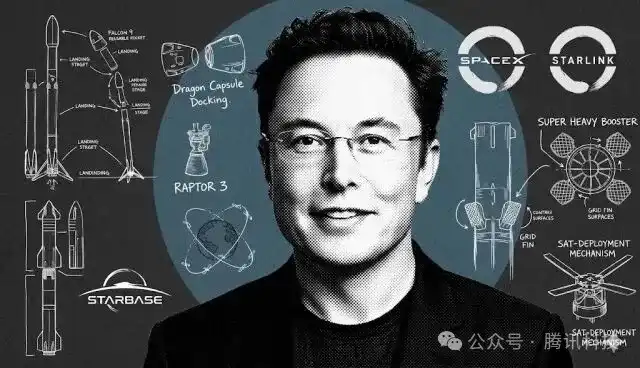
Musk's 'One-Man Dynasty' Set to Ring the Bell on June 12th

SpaceX Files for IPO, Targets Up to $2 Trillion Valuation SpaceX has officially filed for an initial public offering (IPO) with the U.S. SEC, planning to list on Nasdaq under the ticker "SPCX" on June 12. The company aims to raise $70-$80 billion, targeting a historic valuation between $1.75 and $2 trillion. Despite going public, founder Elon Musk will retain approximately 85% of the voting power through a dual-class share structure, maintaining absolute control. The S-1 filing reveals a company with sharply contrasting financial segments. In 2025, SpaceX reported $18.67 billion in revenue but a net loss of $4.94 billion. The loss was primarily driven by its AI unit, xAI, which burned $6.4 billion. In contrast, the Starlink satellite internet business was highly profitable, generating $11.4 billion in revenue and $4.4 billion in operating profit with an impressive 63% EBITDA margin. Starlink's user base grew to 10.3 million by Q1 2026, though average revenue per user has been declining. A key driver of the sky-high valuation is the recent $1.25 trillion merger with xAI, which added an AI narrative to the core aerospace business. SpaceX plans futuristic ventures like orbital AI data centers and space mining, though these are not yet revenue-generating. The company's capital expenditures are massive, exceeding $20.7 billion in 2025, with AI spending surpassing that of space operations. The IPO, led by Goldman Sachs, has drawn both enthusiasm and skepticism from Wall Street. While some hail it as a generational investment opportunity, others question the steep valuation multiples and the sustainability of funding xAI's significant losses with Starlink's profits. The listing represents a major test of market faith in Musk's long-term vision and his unique model of centralized control.

marsbitHace 4 min(s)

Musk's 'One-Man Dynasty' Set to Ring the Bell on June 12th

marsbitHace 4 min(s)

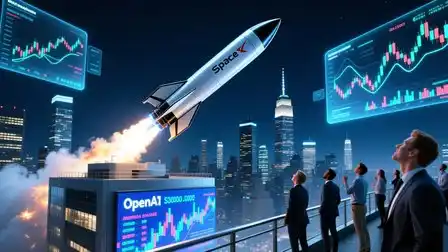
SpaceX and OpenAI Are Rushing to Go Public. Is Wall Street Ready?

SpaceX and OpenAI Rush to IPO: Is Wall Street Ready? SpaceX and OpenAI, led by former partners turned rivals Elon Musk and Sam Altman, are on a collision course to go public, igniting a potential Wall Street showdown. SpaceX filed for an IPO targeting a staggering $1.75-$2 trillion valuation. Its financials are starkly divided: while the Starlink (Connectivity) segment is profitable, these earnings are being consumed by massive losses in its core Aerospace business (rocket/Starship development) and the newly integrated AI business, formerly xAI. The entire IPO narrative hinges on investors betting that Starlink can fund Musk's long-term vision of orbital AI data centers, lunar infrastructure, and Mars colonization. OpenAI, following its legal victory over Musk, is reportedly preparing a secret IPO filing with a target to list by September. Its move is framed as a necessary "lifeline." Despite high revenue, OpenAI is burning cash at an alarming rate. Facing intense competition from rivals like Anthropic (which is nearing profitability) and pressure to sustain enormous compute costs, the IPO is seen as a critical step to secure public market funding for survival. Both companies present investors with a high-stakes gamble on future value versus present-day financial realities. SpaceX's valuation is a bet on unproven, capital-intensive space-based infrastructure. OpenAI's hinges on AI becoming a foundational platform, despite current monetization challenges and heavy losses. Their IPOs test whether Wall Street will pay a historic premium for these grand, long-term narratives or demand more conventional proof of near-term profitability, potentially setting the stage for a significant market reckoning.

marsbitHace 21 min(s)

SpaceX and OpenAI Are Rushing to Go Public. Is Wall Street Ready?

marsbitHace 21 min(s)

AI Server Power Supply Undergoes Major Transformation, ADI Bets Big with a $1.5 Billion Investment

**Title: AI Server Power Supply Undergoes Major Shift as ADI Makes $1.5 Billion Bet** **Summary:** Analog Devices Inc. (ADI) has announced a definitive agreement to acquire Empower Semiconductor in an all-cash transaction valued at approximately $1.5 billion. This move highlights the critical and growing importance of advanced power delivery technologies in the era of data-intensive AI computing. The acquisition targets Empower's key technologies that address fundamental power challenges in high-performance AI data centers: **Integrated Voltage Regulators (IVR)**, which integrate dozens of discrete components into a single IC for high density and nanosecond transient response; **ECAP Silicon Capacitors (SiCaps)**, offering ultra-low ESL/ESR for high-frequency filtering; **Vertical Power Delivery (VPD)** architecture, which reduces transmission distance and losses; and the overarching **FinFast** technology platform. ADI's strategy aims to fill the "last millimeter" gap in power delivery from the board level to directly beneath the processor die. The deal follows ADI's recent product launches and strategy focused on AI data center power, including µModule solutions, SiC switches, and 800V high-voltage DC systems. The article details the industry-wide trend towards higher integration and VPD to manage soaring GPU/accelerator power demands, now reaching kilowatt levels per card. It examines the three evolutionary stages of AI power: traditional lateral power delivery, VPD, and ultimately substrate-integrated voltage regulators (SIVR). Competitors like Infineon, MPS, Vicor, and TDK are also advancing VPD solutions, while companies like Murata, Samsung Electro-Mechanics, and Rohm are leading in silicon capacitor development. In conclusion, as AI server power consumption escalates dramatically, technologies like IVR, SiCaps, and VPD are becoming essential for efficient power delivery within constrained spaces. ADI's significant investment signals an urgent industry need for innovation in this domain.

marsbitHace 1 hora(s)

AI Server Power Supply Undergoes Major Transformation, ADI Bets Big with a $1.5 Billion Investment

marsbitHace 1 hora(s)

Trading

Spot
Futuros
活动图片