Cardano Founder: Ethereum Won’t Survive The Next 10 To 15 Years

bitcoinistPublicado a 2025-04-24Actualizado a 2025-04-24

Resumen

In his latest ask-me-anything session streamed on April 23, Cardano founder Charles Hoskinson delivered a sweeping critique of Ethereum’s long-term...

Trusted Editorial content, reviewed by leading industry experts and seasoned editors. Ad Disclosure

In his latest ask-me-anything session streamed on April 23, Cardano founder Charles Hoskinson delivered a sweeping critique of Ethereum’s long-term prospects, arguing that the world’s second-largest smart-contract platform is encumbered by what he called three “self-inflicted wounds” and lacks the on-chain governance needed to heal them.

Ethereum Faces 15-Year Deadline: Cardano Founder

Responding to an audience question—“If you were running the Ethereum Foundation, what would you do differently?”—Hoskinson said the project chose “the wrong accounting model, the wrong virtual machine, and the wrong consensus model,” a triad of design decisions he believes now threaten Ethereum’s survival. “People told them not to do it, they did it, and they got where they needed to go,” he said, before warning that the fixes adopted so far “put in all these weird slashing economics and layer twos and other things,” whose unintended consequences are starting to bite.

Hoskinson, who co-founded Ethereum in 2014 before leaving to launch Cardano two years later, insisted that a viable turnaround would require parallel workstreams. “First off, you have to solve your technological problems,” he said, pointing to Ethereum’s proof-of-stake implementation as something the network “needs to wean itself off of.”

He suggested a shift to what he called a “telescoping protocol design” such as Ouroboros-Leios—Cardano’s forthcoming upgrade path—and urged Ethereum developers to look at the “object model of SWE,” along with Narwhal-and-Tusk-style consensus, and a move to the RISC-V instruction set. “Something like RISC-V with intent, with an object model like SWE, probably would fit their ecosystem quite well,” he argued.

Yet the bigger obstacle, in Hoskinson’s view, is Ethereum’s lack of formalized self-governance. “They really don’t have a good on-chain governance system,” he said. Building one, he estimates, would take “five to seven years” given the network’s size and entrenched stakeholders. Without it, he warned, protocol upgrades and community coordination will remain fragile.

Hoskinson’s most pointed forecast came midway through the session: “I don’t think Ethereum will survive more than 10 years to 15 years.” He predicted that layer-2 networks will continue to “suckle out all of the alpha,” eroding the base chain’s utility while sparking internal conflict that will grow “harder and harder for Vitalik to be able to hold […] together through sheer force of will.”

He also contended that a revitalized Bitcoin ecosystem by Cardano’s efforts and faster monolithic chains could outcompete Ethereum on both liquidity and user experience. “Once [Bitcoin DeFi] turns on, the TVL will be larger than Ethereum […] and the other thing is they’re being eaten alive by Solana and SUI and these other things,” he said, likening Ethereum’s predicament to companies such as MySpace and BlackBerry that struggled to pivot when “fundamentally different paradigms […] creep up on you.”

Hoskinson also contrasted Ethereum’s roadmap with Cardano’s own. He highlighted Cardano’s RISC-V-based virtual machine, its extended UTXO accounting, and its “non-parasitic” approach to layer-2 scaling—namely Hydra and the Midnight sidechain—as evidence that Cardano already embodies the architectural decisions he is urging Ethereum to adopt.

Hoskinson conceded that some of Cardano’s governance tooling is “kind of weird now,” but maintained it will be “awesome in three to five years.” By contrast, he warned, Ethereum’s transition would be slower and more contentious, giving alternative platforms time to attract developers and liquidity. “Users will gradually migrate to other places and then they’re gonna get eclipsed by Bitcoin DeFi,” he said.

The remarks come at a sensitive moment for Ethereum, which completed its proof-of-stake merge 18 months ago and is preparing for upgrades aimed at lowering transaction costs and boosting throughput. Hoskinson’s comments are unlikely to sway Ethereum’s core developers, but they underscore a growing debate over whether modular, rollup-centric roadmaps can maintain network coherence as competing ecosystems evolve.

Asked to sum up his outlook, Hoskinson reverted to first principles. “A brilliant project,” he said of Ethereum, “it’s just [a] victim of its own success.” Without decisive architectural and governance reforms, he concluded, the platform risks “a very hostile divorce” between the base layer and its scaling solutions and, ultimately, obsolescence within the coming decade.

At press time, ADA traded at $0.6872.

Cardano price
Cardano remains below the key resistance zone, 1-day chart | Source: ADAUSDT on TradingView.com
Featured image from YouTube, chart from TradingView.com
Editorial Process for bitcoinist is centered on delivering thoroughly researched, accurate, and unbiased content. We uphold strict sourcing standards, and each page undergoes diligent review by our team of top technology experts and seasoned editors. This process ensures the integrity, relevance, and value of our content for our readers.

Jake Simmons has been a Bitcoin enthusiast since 2016. Ever since he heard about Bitcoin, he has been studying the topic every day and trying to share his knowledge with others. His goal is to contribute to Bitcoin's financial revolution, which will replace the fiat money system. Besides BTC and crypto, Jake studied Business Informatics at a university. After graduation in 2017, he has been working in the blockchain and crypto sector. You can follow Jake on Twitter at @realJakeSimmons.

Lecturas Relacionadas

Will Warsh Compromise with Trump? A Look at the 70-Year Power Struggle Between the President and the Fed

Will the Fed's new chair, Kevin Warsh, yield to pressure from President Trump? A White House-administered oath ceremony for Warsh breaks recent precedent, spotlighting a seven-decade power struggle between the presidency and the Federal Reserve. Historically, each Fed chair has balanced political pressure with policy independence. Warsh's situation, however, is uniquely complex, inheriting a divided Federal Open Market Committee (FOMC) with some members opposing even hints of rate cuts, while Trump expects easing. The report from Caitong Securities reviews this history: from William Martin establishing independence, to Arthur Burns compromising under Nixon, Paul Volcker building institutional credibility, Alan Greenspan navigating political waters, and Jerome Powell facing severe pressure from Trump, ultimately hardening the Fed's defensive stance. Warsh, a former Fed governor known for questioning quantitative easing, is not a traditional dove. His recent statements emphasize a nuanced view of Fed independence, skepticism of forward guidance, serious concern over inflation (contradicting Trump's "fake inflation" claims), and the potential for AI-driven productivity gains to allow rate cuts. The analysis concludes Warsh's policy will likely feature a clear direction but cautious pace. Rate cuts are probable but constrained by persistent inflation above target; if Trump pressures heavily, Warsh may delay cuts to defend Fed independence. Balance sheet reduction is seen as necessary but will be gradual to avoid premature conflict. Ultimately, Warsh's path will depend more on macroeconomic trends—inflation, growth, oil prices—than on his personal stance or the immediate political relationship.

marsbitHace 3 min(s)

Will Warsh Compromise with Trump? A Look at the 70-Year Power Struggle Between the President and the Fed

marsbitHace 3 min(s)

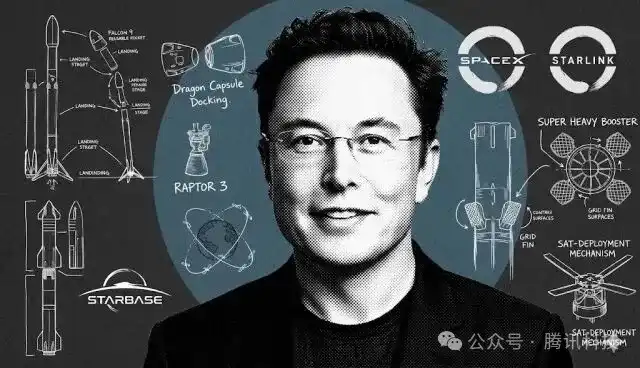
Musk's 'One-Man Dynasty' Set to Ring the Bell on June 12th

SpaceX Files for IPO, Targets Up to $2 Trillion Valuation SpaceX has officially filed for an initial public offering (IPO) with the U.S. SEC, planning to list on Nasdaq under the ticker "SPCX" on June 12. The company aims to raise $70-$80 billion, targeting a historic valuation between $1.75 and $2 trillion. Despite going public, founder Elon Musk will retain approximately 85% of the voting power through a dual-class share structure, maintaining absolute control. The S-1 filing reveals a company with sharply contrasting financial segments. In 2025, SpaceX reported $18.67 billion in revenue but a net loss of $4.94 billion. The loss was primarily driven by its AI unit, xAI, which burned $6.4 billion. In contrast, the Starlink satellite internet business was highly profitable, generating $11.4 billion in revenue and $4.4 billion in operating profit with an impressive 63% EBITDA margin. Starlink's user base grew to 10.3 million by Q1 2026, though average revenue per user has been declining. A key driver of the sky-high valuation is the recent $1.25 trillion merger with xAI, which added an AI narrative to the core aerospace business. SpaceX plans futuristic ventures like orbital AI data centers and space mining, though these are not yet revenue-generating. The company's capital expenditures are massive, exceeding $20.7 billion in 2025, with AI spending surpassing that of space operations. The IPO, led by Goldman Sachs, has drawn both enthusiasm and skepticism from Wall Street. While some hail it as a generational investment opportunity, others question the steep valuation multiples and the sustainability of funding xAI's significant losses with Starlink's profits. The listing represents a major test of market faith in Musk's long-term vision and his unique model of centralized control.

marsbitHace 4 min(s)

Musk's 'One-Man Dynasty' Set to Ring the Bell on June 12th

marsbitHace 4 min(s)

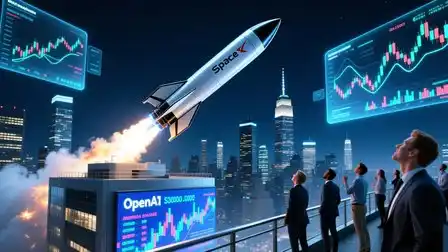
SpaceX and OpenAI Are Rushing to Go Public. Is Wall Street Ready?

SpaceX and OpenAI Rush to IPO: Is Wall Street Ready? SpaceX and OpenAI, led by former partners turned rivals Elon Musk and Sam Altman, are on a collision course to go public, igniting a potential Wall Street showdown. SpaceX filed for an IPO targeting a staggering $1.75-$2 trillion valuation. Its financials are starkly divided: while the Starlink (Connectivity) segment is profitable, these earnings are being consumed by massive losses in its core Aerospace business (rocket/Starship development) and the newly integrated AI business, formerly xAI. The entire IPO narrative hinges on investors betting that Starlink can fund Musk's long-term vision of orbital AI data centers, lunar infrastructure, and Mars colonization. OpenAI, following its legal victory over Musk, is reportedly preparing a secret IPO filing with a target to list by September. Its move is framed as a necessary "lifeline." Despite high revenue, OpenAI is burning cash at an alarming rate. Facing intense competition from rivals like Anthropic (which is nearing profitability) and pressure to sustain enormous compute costs, the IPO is seen as a critical step to secure public market funding for survival. Both companies present investors with a high-stakes gamble on future value versus present-day financial realities. SpaceX's valuation is a bet on unproven, capital-intensive space-based infrastructure. OpenAI's hinges on AI becoming a foundational platform, despite current monetization challenges and heavy losses. Their IPOs test whether Wall Street will pay a historic premium for these grand, long-term narratives or demand more conventional proof of near-term profitability, potentially setting the stage for a significant market reckoning.

marsbitHace 20 min(s)

SpaceX and OpenAI Are Rushing to Go Public. Is Wall Street Ready?

marsbitHace 20 min(s)

AI Server Power Supply Undergoes Major Transformation, ADI Bets Big with a $1.5 Billion Investment

**Title: AI Server Power Supply Undergoes Major Shift as ADI Makes $1.5 Billion Bet** **Summary:** Analog Devices Inc. (ADI) has announced a definitive agreement to acquire Empower Semiconductor in an all-cash transaction valued at approximately $1.5 billion. This move highlights the critical and growing importance of advanced power delivery technologies in the era of data-intensive AI computing. The acquisition targets Empower's key technologies that address fundamental power challenges in high-performance AI data centers: **Integrated Voltage Regulators (IVR)**, which integrate dozens of discrete components into a single IC for high density and nanosecond transient response; **ECAP Silicon Capacitors (SiCaps)**, offering ultra-low ESL/ESR for high-frequency filtering; **Vertical Power Delivery (VPD)** architecture, which reduces transmission distance and losses; and the overarching **FinFast** technology platform. ADI's strategy aims to fill the "last millimeter" gap in power delivery from the board level to directly beneath the processor die. The deal follows ADI's recent product launches and strategy focused on AI data center power, including µModule solutions, SiC switches, and 800V high-voltage DC systems. The article details the industry-wide trend towards higher integration and VPD to manage soaring GPU/accelerator power demands, now reaching kilowatt levels per card. It examines the three evolutionary stages of AI power: traditional lateral power delivery, VPD, and ultimately substrate-integrated voltage regulators (SIVR). Competitors like Infineon, MPS, Vicor, and TDK are also advancing VPD solutions, while companies like Murata, Samsung Electro-Mechanics, and Rohm are leading in silicon capacitor development. In conclusion, as AI server power consumption escalates dramatically, technologies like IVR, SiCaps, and VPD are becoming essential for efficient power delivery within constrained spaces. ADI's significant investment signals an urgent industry need for innovation in this domain.

marsbitHace 1 hora(s)

AI Server Power Supply Undergoes Major Transformation, ADI Bets Big with a $1.5 Billion Investment

marsbitHace 1 hora(s)

Trading

Spot
Futuros

Artículos destacados

Cómo comprar T

¡Bienvenido a HTX.com! Hemos hecho que comprar Threshold Network Token (T) sea simple y conveniente. Sigue nuestra guía paso a paso para iniciar tu viaje de criptos.Paso 1: crea tu cuenta HTXUtiliza tu correo electrónico o número de teléfono para registrarte y obtener una cuenta gratuita en HTX. Experimenta un proceso de registro sin complicaciones y desbloquea todas las funciones.Obtener mi cuentaPaso 2: ve a Comprar cripto y elige tu método de pagoTarjeta de crédito/débito: usa tu Visa o Mastercard para comprar Threshold Network Token (T) al instante.Saldo: utiliza fondos del saldo de tu cuenta HTX para tradear sin problemas.Terceros: hemos agregado métodos de pago populares como Google Pay y Apple Pay para mejorar la comodidad.P2P: tradear directamente con otros usuarios en HTX.Over-the-Counter (OTC): ofrecemos servicios personalizados y tipos de cambio competitivos para los traders.Paso 3: guarda tu Threshold Network Token (T)Después de comprar tu Threshold Network Token (T), guárdalo en tu cuenta HTX. Alternativamente, puedes enviarlo a otro lugar mediante transferencia blockchain o utilizarlo para tradear otras criptomonedas.Paso 4: tradear Threshold Network Token (T)Tradear fácilmente con Threshold Network Token (T) en HTX's mercado spot. Simplemente accede a tu cuenta, selecciona tu par de trading, ejecuta tus trades y monitorea en tiempo real. Ofrecemos una experiencia fácil de usar tanto para principiantes como para traders experimentados.

590 Vistas totalesPublicado en 2024.12.10Actualizado en 2025.03.21

Cómo comprar T

Discusiones

Bienvenido a la comunidad de HTX. Aquí puedes mantenerte informado sobre los últimos desarrollos de la plataforma y acceder a análisis profesionales del mercado. A continuación se presentan las opiniones de los usuarios sobre el precio de T (T).

活动图片