US SEC Crypto Task Force 1st Roundtable: Live Updates

TheCryptoTimesPublicado a 2025-04-11Actualizado a 2025-04-11

2Posts
Auto Updates

Lecturas Relacionadas

Justin Sun’s Interview with Hurun Report: A New Order and Certainty for Value Flow in the Era of Transformation

In an interview with *Hurun Report*, Justin Sun, founder of TRON, discussed the evolution of the Web3 industry as it moves from initial exploration to large-scale adoption. He emphasized that the core value of blockchain lies in building an open and inclusive internet of value, enabling anyone globally to transfer and use funds efficiently and at low cost, regardless of location or access to banking. Sun highlighted that projects with lasting impact are those built on genuine demand and real-world usage. He pointed to the stablecoin payment ecosystem as the most mature and scalable application currently, noting that TRON has rapidly become one of the world's largest stablecoin networks. The circulation of USDT on TRON has surpassed $86.3 billion, driven by actual use cases such as cross-border transfers and daily payments, demonstrating strong network effects. Regarding strategy, Sun outlined a methodology combining data-driven iteration, rapid execution, and user-centric focus. He cited the decision to partner with Tether to launch TRC-20 USDT as a key strategic move, based on an assessment of market trends and long-term potential, which has become a significant growth engine for the TRON ecosystem. On globalization, Sun stressed the importance of local compliance and cultural adaptation, noting that success in different markets depends on deep understanding and local partnerships. He also addressed the convergence of AI and blockchain, describing it as a transformative direction where blockchain provides decentralized infrastructure for AI, while AI enhances the intelligence and user experience of blockchain systems. For industry participants and young entrepreneurs, Sun advised continuous learning and adaptability in a fast-changing environment, focusing on building irreplaceable core strengths rather than spreading resources too thinly. Through infrastructure development, global strategy, and technological foresight, TRON aims to advance the practical implementation and evolution of the value internet.

marsbitHace 24 min(s)

Justin Sun’s Interview with Hurun Report: A New Order and Certainty for Value Flow in the Era of Transformation

marsbitHace 24 min(s)

Samsung Leverages Technology Cycles, SK Hynix Relies on HBM, What Enabled Micron to Win a Trillion-Dollar Market Cap?

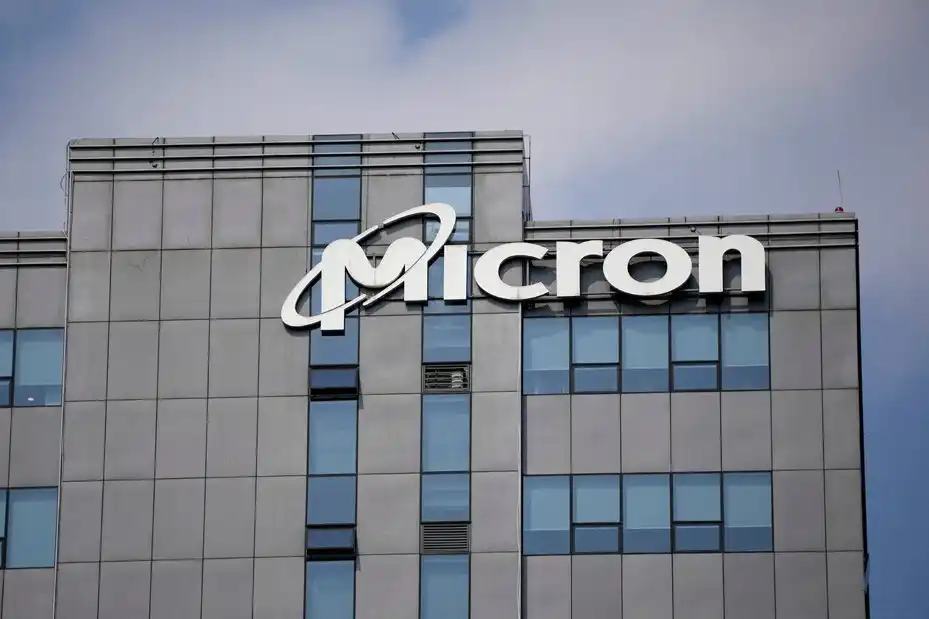
Micron Technology, the Idaho-based memory chip maker, recently saw its market cap surpass $1 trillion, securing its position as one of the top three DRAM manufacturers alongside Samsung and SK Hynix. Its survival and growth story is marked by a unique combination of political maneuvering and hard-won manufacturing efficiency, but also strategic missteps that now challenge its future. Founded in 1978 in Boise without significant government or capital backing, Micron repeatedly turned to Washington for survival during critical junctures. In the 1980s, it filed anti-dumping complaints against Japanese firms, leading to the U.S.-Japan Semiconductor Agreement. Ironically, this created an opening for Samsung, which Micron had earlier licensed its 64K DRAM technology to. In 2002, Micron avoided heavy fines in a price-fixing investigation by acting as a whistleblower against its competitors, cementing its reputation as a "political opportunist." A major strategic error occurred in 2013 with its $2.5 billion acquisition of bankrupt Japanese firm Elpida. This deal burdened Micron with integrating incompatible manufacturing processes just as the industry was pivoting toward HBM (High Bandwidth Memory), a critical technology for AI. SK Hynix had launched its first HBM chip that same year. By the time AI demand exploded with ChatGPT in 2022, SK Hynix commanded about 85% of the HBM3 market, while Micron, playing catch-up, held only around 3%. In 2017, Micron employed similar tactics against a new competitor, Chinese startup Fujian Jinhua, by alleging intellectual property theft, which led to U.S. sanctions effectively crippling the firm. However, this strategy backfired in 2023 when China banned Micron's products from its critical infrastructure, causing its revenue share from China to plummet from 14% in FY2023 to just 7.1% by FY2025. Today, Micron faces a triple squeeze: it lags in the high-margin HBM race, faces pricing pressure in low-end DRAM from Chinese manufacturers like CXMT, and has lost crucial access to the booming Chinese AI server market. Despite its political strategies, Micron's core strength is its exceptional manufacturing cost control, achieved through decades of engineering. Its DRAM chips have a smaller cell area than its rivals, yielding more chips per wafer. This efficiency has been vital for weathering industry downturns. However, this advantage cannot compensate for the decade lost in HBM development. Micron is now racing to ramp up production of its HBM3E, certified by NVIDIA, and develop HBM4. Its future hinges on whether it can close this technological "time debt" through relentless R&D and execution, in a marathon where its competitors, having started earlier, are not slowing down.

marsbitHace 43 min(s)

Samsung Leverages Technology Cycles, SK Hynix Relies on HBM, What Enabled Micron to Win a Trillion-Dollar Market Cap?

marsbitHace 43 min(s)

Deconstructing Mysterious Researcher Serenity's Chokepoint Algorithm and the Global Revaluation of Equity Assets

Unmasking Serenity's "Chokepoint Theory": A Framework for AI-Era Investment This article deconstructs the investment methodology of the pseudonymous online researcher Serenity (formerly AleaBito on Reddit), who claims extraordinary returns by identifying critical bottlenecks in AI and robotics supply chains. Rejecting Wall Street's typical top-down analysis, Serenity employs a bottom-up, reverse-engineering approach. Starting with an end product like an Nvidia GPU cluster, he meticulously maps the global supply chain down to its most essential, irreplaceable physical components—the "choke points." These are low-profile, often monopolized sub-sectors where a disruption could paralyze entire downstream industries, analogous to a strategic strait controlling global oil flow. His primary focus is the physical evolution of AI data centers, specifically the shift from copper interconnects to silicon photonics and Co-Packaged Optics (CPO). He identifies five critical, monopolized technical barriers within CPO: high-precision fiber alignment components (e.g., FOCI), external light sources and high-power lasers (e.g., SIVE), molecular beam epitaxy equipment (ALRIB/Riber), ultra-high-purity red phosphorus raw materials, and Silicon-on-Insulator (SOI) wafers (Soitec). Serenity extends this framework to humanoid robotics, arguing that while the AI "brain" resides in the US, the physical "body" hardware (actuators, gears, motors) is dominated by Asian manufacturers. He highlights a looming "demand tsunami" for specific rare earth elements essential for robot motors, presenting a severe future supply chain and geopolitical challenge. The article cites several of his investment targets (RPI, SIVE, Soitec, VLN, NBIS) where identifying such choke points, coupled with correcting market mispricings (e.g., ticker code confusion for VLN), allegedly led to significant re-ratings. Ultimately, the article posits that Serenity's core value is not in providing stock picks, but in demonstrating a paradigm: using deep technical analysis to find the silent, indispensable "physical switches" within complex systems, thereby exploiting institutional research blind spots. However, it warns of major risks, including illiquidity in micro-cap stocks, potential "pump-and-dump" accusations, and the foundational gamble that his identified technological paths (like CPO) are the correct and inevitable ones.

marsbitHace 45 min(s)

Deconstructing Mysterious Researcher Serenity's Chokepoint Algorithm and the Global Revaluation of Equity Assets

marsbitHace 45 min(s)

Cross-strait Regulators Jointly Block Hong Kong Stock Account Openings: Where Can Your Money Go Now?

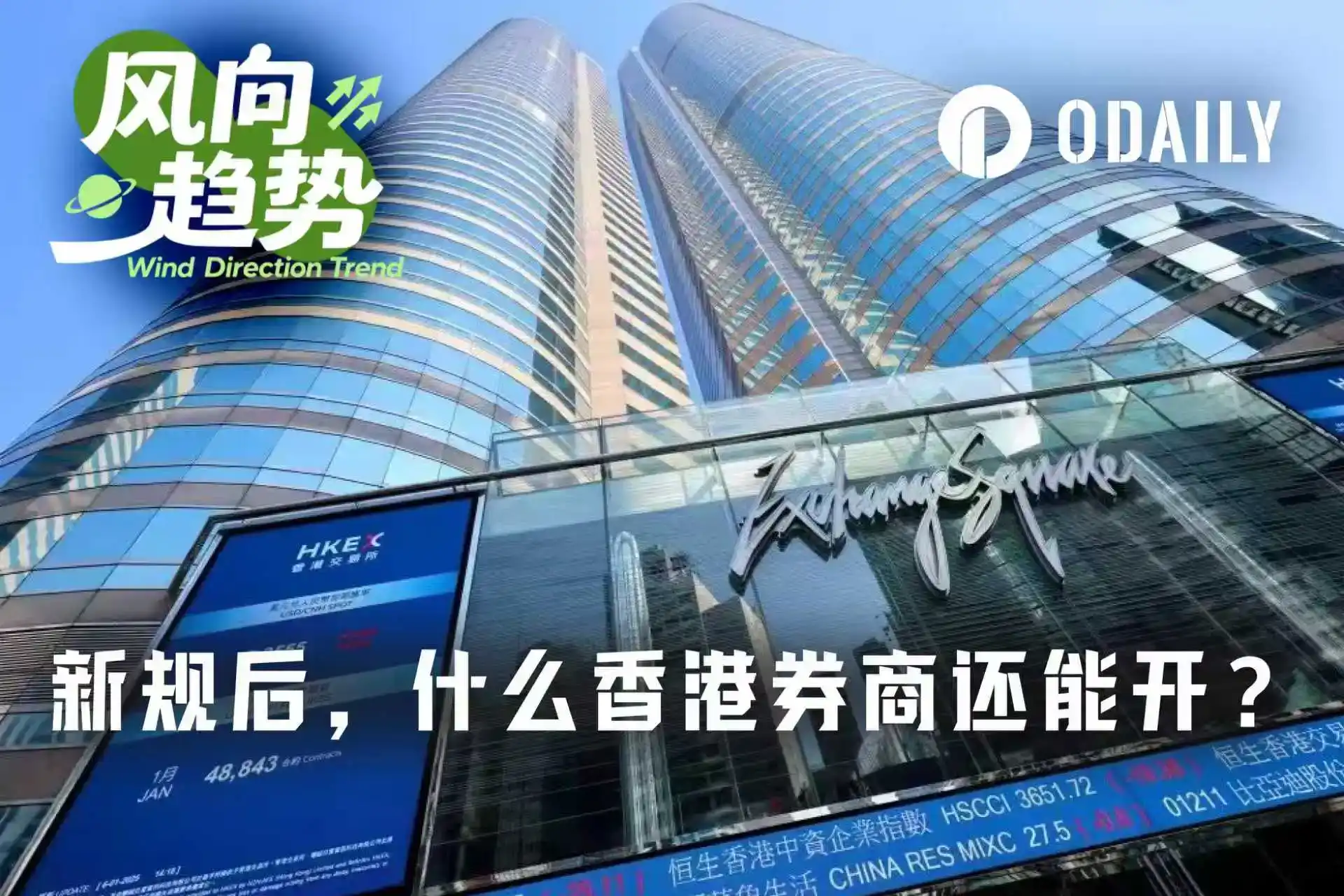
**Summary:** On May 22, 2026, financial regulators in mainland China and Hong Kong launched a synchronized crackdown targeting informal channels used by mainland investors to trade in Hong Kong and US stocks via Hong Kong-based securities firms. The Hong Kong Securities and Futures Commission (SFC) issued a stringent circular to licensed brokers, mandating stricter onboarding procedures for mainland clients. New requirements include a mandatory written declaration stating that all investment funds originate from *outside* mainland China and are from legal sources. The SFC also demanded the closure of accounts opened with suspicious documents and dormant accounts. Simultaneously, China's securities regulator, along with seven other ministries, initiated a two-year rectification plan, penalizing firms like Futu and Tiger Brokers for illegal cross-border operations. This effectively ends the previously common grey-area practice for mainlanders. Immediate impacts are evident. Social media reports show mainland investors traveling to Hong Kong for in-person account openings are now frequently denied after signing the new declaration, even at firms like uSMART that still accept applications. The declaration acts as both a compliance shield for brokers and a filter for clients. While major internet brokers have halted new mainland accounts, limited options remain. A few Hong Kong-licensed firms like uSMART, Fosun Wealth, and Cheerful still offer avenues, but approval is not guaranteed and hinges on proving offshore fund sources. Crucially, funding accounts must now be in the investor's own name at qualified Hong Kong or international banks, blocking previous informal methods like third-party transfers. For compliant access, official channels like Stock Connect, QDII, and the Cross-boundary Wealth Management Connect remain open. Individuals with verifiable overseas residency or status have better prospects. The crackdown signals the definitive end of the loosely regulated expansion period, forcing mainland investors toward stricter, fully compliant pathways for overseas asset allocation.

marsbitHace 50 min(s)

Cross-strait Regulators Jointly Block Hong Kong Stock Account Openings: Where Can Your Money Go Now?

marsbitHace 50 min(s)

Iran and the Fed -- Three Scenarios That Will Impact Global Markets Next

"Three Scenarios for Iran and the Fed Shaping Global Markets" Iranian geopolitics and the Fed's monetary policy path are two dominant themes for markets. Deutsche Bank Research outlines three scenarios linking Iran ceasefire outcomes to Fed policy, with oil prices as the key transmission channel. **Scenario 1: Peace Deal.** A breakthrough leading to the Strait of Hormuz reopening would ease near-term Fed tightening pressure. Recent inflation would be viewed as a temporary energy shock. However, medium-term risks remain; rate hikes could resurface in 2027 if inflation persists. **Scenario 2: Stalemate.** A breakdown in talks and a prolonged Strait closure, but no major escalation, is deemed the scenario with the *highest* Fed hike risk. Sustained high oil prices would feed into core inflation and threaten inflation expectations, while not severely damaging demand enough to give the Fed a reason to pause. This environment could necessitate multiple Fed rate hikes in 2026. **Scenario 3: Conflict Escalation.** Renewed conflict and sharply higher oil prices create a two-way risk for Fed policy. On one hand, it would risk severe inflation expectations de-anchoring, forcing a hawkish response. On the other, extreme oil prices could severely damage demand and the labor market, potentially shifting the Fed's focus toward easing. The ultimate policy decision would depend on which risk materializes first. Overall, Deutsche Bank's framework emphasizes that the path for oil prices, dictated by Iran, will define the nature of inflation pressures and ultimately determine the Fed's policy space. Key signals to watch include ceasefire progress, whether Brent crude stabilizes below $100, and any shift in Fed officials' rhetoric from discussing cuts to potential hikes.

marsbitHace 59 min(s)

Iran and the Fed -- Three Scenarios That Will Impact Global Markets Next

marsbitHace 59 min(s)

Trading

Spot
Futuros
活动图片