ЦФА: будущее финансов или нишевый инструмент

cryptonews.ruPublicado a 2024-10-28Actualizado a 2025-03-28

Цифровые финансовые активы (ЦФА) существуют на российском рынке финансов уже несколько лет. Однако для большинства пользователей этот инструмент остается сложным и непонятным

Редация BeInCrypto поговорила с директором Департамента инфраструктуры финансового рынка Банка России Кириллом Прониным, чтобы узнать, как на практике работают ЦФА и есть ли шансы у этого инструмента в долгосрочной перспективе.

Что такое ЦФА простыми словами

ЦФА — это новые финансовые инструменты, которые существуют в цифровом виде. Их создают и хранят на блокчейне. Обращаются эти инструменты на специальных площадках, называемых информационными системами.

«Блокчейн создает этому инструменту добавленную стоимость. Технология позволяет распоряжаться активом без посредников и заранее программировать действия с помощью смарт-контрактов», — отметил Пронин.

Эксперт добавил, что ЦФА часто путают с криптовалютами. На самом деле их объединяет только одно — и те, и другие работают на базе блокчейна. Однако криптовалюты никем не регулируются, а цифровые финансовые активы создаются в рамках юридической структуры и регулируются соответствующими законами.

Так, выпускать ЦФА могут только российские юридические лица, включенные в реестр операторов информационных систем (ОИС). Его ведет Центробанк РФ.

Как на практике работают ЦФА

Многие пользователи считают ЦФА слишком запутанными. Несмотря на то, что эти инструменты вышли на рынок несколько лет назад, кажется, что частных инвесторов они почти не интересуют. Вероятная причина — сложность технологии.

Однако, по словам Пронина, многие платформы для выпуска ЦФА «имеют простой и понятный клиентский интерфейс». В большинстве случаев он интегрирован в мобильные приложения.

Эксперт также добавил, что клиентский путь в целом не отличается от покупки привычного финансового инструмента. Выглядит он примерно так:

  • сначала инвестор выбирает платформу, которой планирует купить ЦФА;
  • затем регистрируется и проходит идентификацию у оператора выбранной информационной системы;
  • после регистрации он выбирает конкретный выпуск ЦФА и покупает его;
  • впоследствии пользователь либо дожидается момента погашения ЦФА, либо продает их на площадке этого же оператора.

«Если совсем упрощать, то условно деньги обращаются в банке, ценные бумаги живут на бирже, а ЦФА существует в блокчейне. У этих сущностей разная юридическая начинка и разные технологии оборота и учета. Однако с точки зрения клиента, это просто финансовые продукты, которые расположены на «прилавке» его мобильного приложения», — прокомментировал наш собеседник.

Пронин подчеркнул, что количество обладателей ЦФА уже достигло 180 тыс. Согласно недавно опубликованным данным, в 2024 году россияне потратили на эти активы более 160 млрд рублей.

За счет чего растет рынок ЦФА

По состоянию на февраль 2025 года объем российского рынка ЦФА оценивался в 187 млрд рублей.
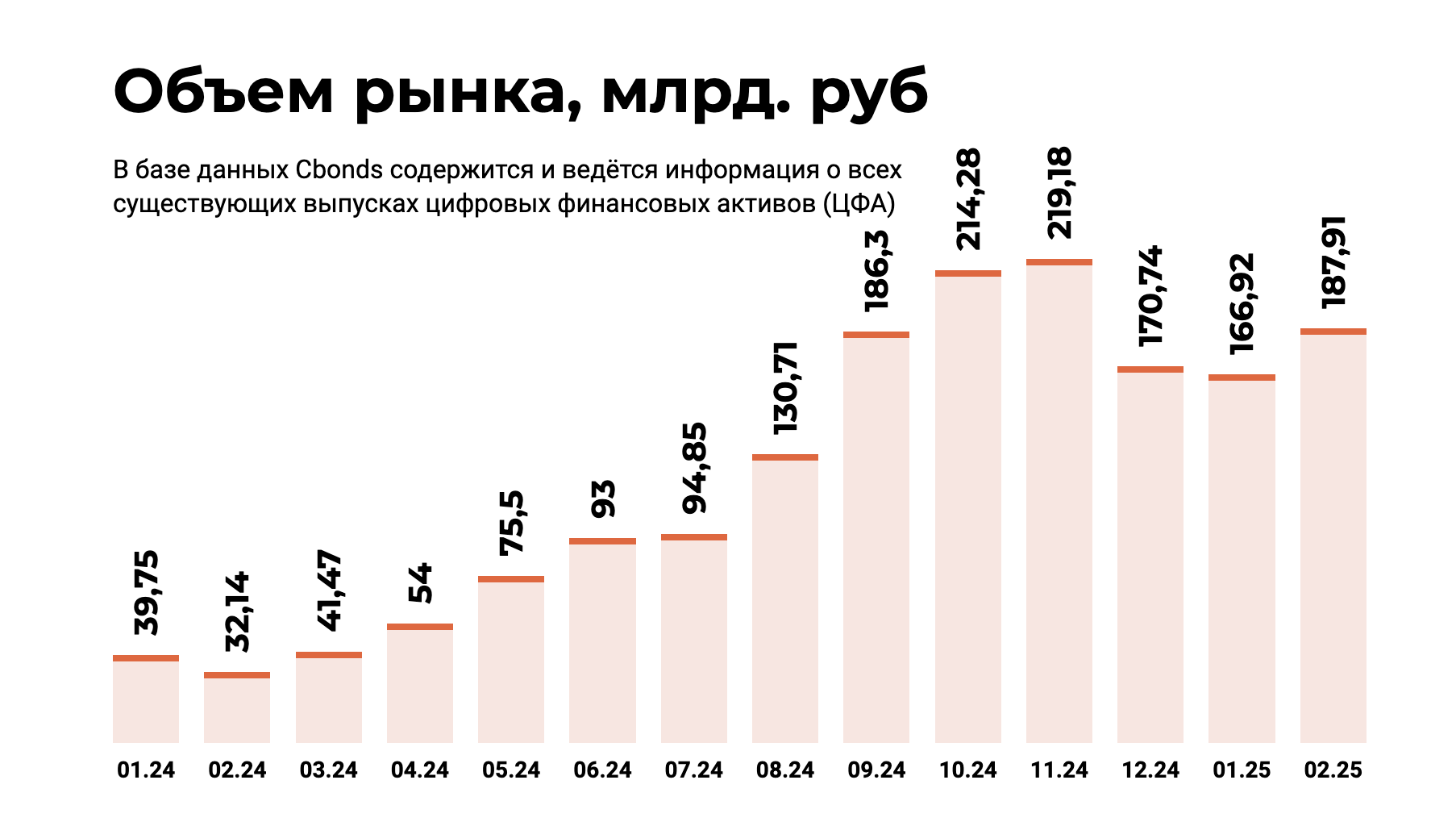
Источник: Cbonds

Некоторые эксперты предсказывают, что уже к 2030 году этот объем российского сектора цифровых финансовых активов достигнет $1 трлн.

«Рынок цифровых прав в 2024 году показал заметный рост по всем показателям, включая число новых операторов, количество состоявшихся выпусков, объемы размещенных средств, количество эмитентов и инвесторов. В 2024 году размещено порядка 960 выпусков на 590 млрд руб., это почти в 9 раз выше аналогичных показателей 2023 года», — отметил Пронин.

Рост сектора цифровых финансовых активов обеспечивается рядом факторов. Среди них:

  • Высокую скорость выпуска ЦФА и снижение барьеров для входа на рынок. Эмитенты могут выпускать цифровые активы в рекордно короткие сроки — буквально за 15 минут. Это значительно упрощает использование таких инструментов в финансовых операциях и делает их удобными для организаций, которые ищут новые способы привлечения капитала.
  • Разнообразие финансовых инструментов. ЦФА можно привязывать ко всему, чему угодно. Например, в России уже появлялись цифровые финансовые активы, привязанные к стоимости квадратного метра и редкоземельным металлам платиновой группы.
  • Конкурентоспособность рыночных условий. ЦФА позволяют инвесторам получить такие уникальные инвестиционные возможности, как гибридные цифровые права, которые дают право выбора между самим активом или деньгами при погашении. Это открывает двери для более разнообразных и интересных инвестиционных стратегий.

Кто участвует в рынке ЦФА

По словам Пронина, состав участников сектора цифровых финансовых активов разнообразен. Эмитентами могут быть как представители крупных корпораций, финансовых и промышленных групп, так и малые и средние предприятия.

Однако основную часть выпускаемых активов занимают банки, которые составляют около 65% от общего объема размещений. Это объясняется тем, что для банков и финансовых организаций ЦФА — отличный инструмент для привлечения капитала с минимальными затратами времени.
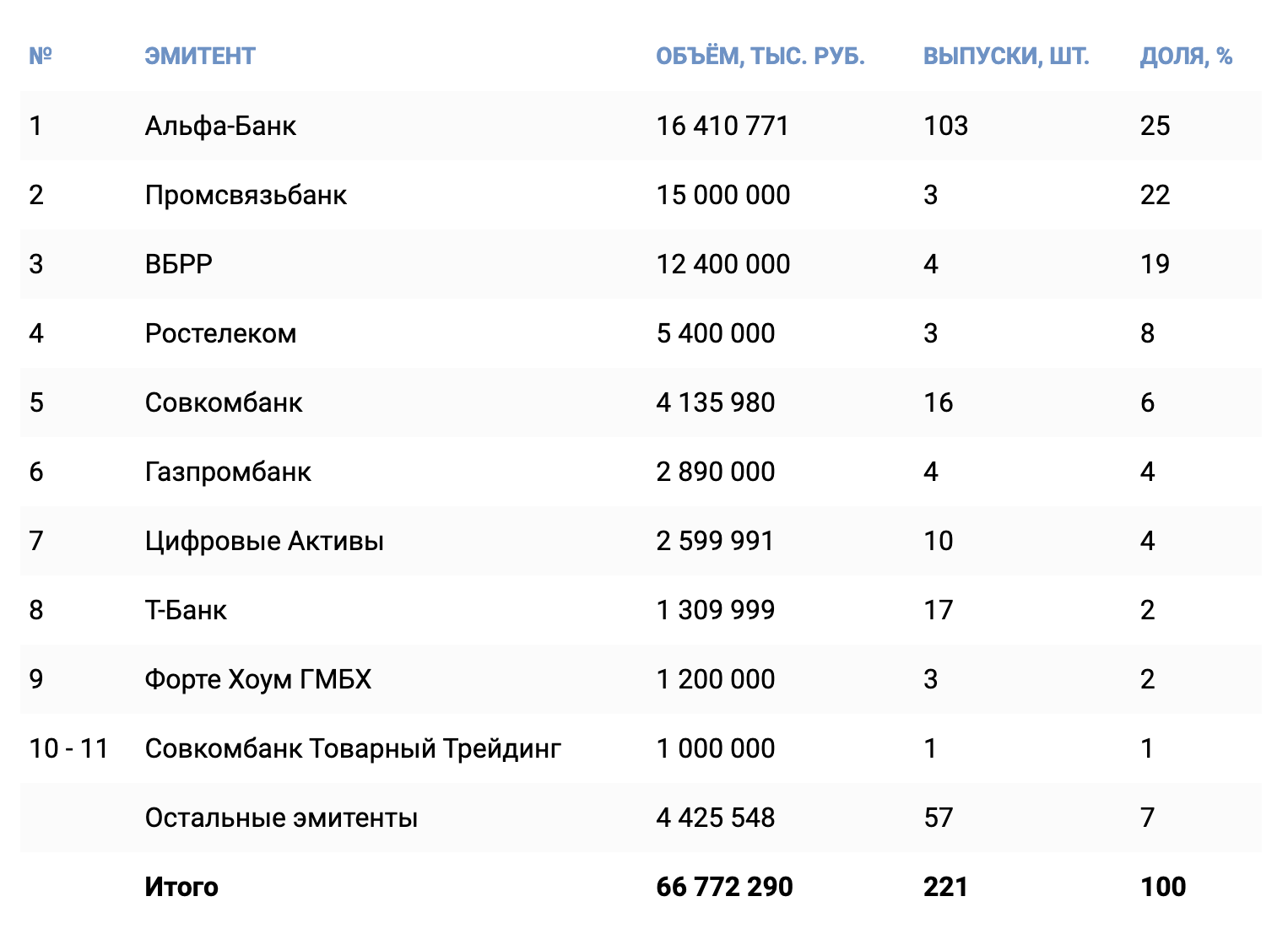
Статистика по эмитентам ЦФА. Источник: Cbonds

Сейчас в реестр ОИС входят 14 эмитентов. В 2024 году в него попали крупнейшие российские банки: «Сбер» и «ВТБ». Ожидается, что в этом году к сектору присоединится «Росбанк».

Перспективы рынка ЦФА

В криптосообществе есть мнение, что цифровые финансовые активы — это искусственно продвигаемый инструмент, который формируется за счет государственных ресурсов. По мнению некоторых, ЦФА вряд ли найдут реальное применение и в итоге исчезнут.

Представитель Банка России с такой точкой зрения не согласен. Пронин подчеркнул, что доля компаний с госучастием среди эмитентов и инвесторов небольшая.

«Мы ожидаем, что интерес к ЦФА будет только возрастать по мере появления и распространения уникальных продуктов, характеристики которых будут основаны именно на преимуществах технологии распределенных реестров», — поделился эксперт.

Он также добавил, что регулятор планирует развивать вторичный рынок цифровых активов. Недавно такой пилот запустил «Сбер».

В рамках тестирования вторичного рынка ЦФА Банк России собирается допустить на рынок финансовых посредников — брокеров и управляющие компании.

«Учитывая, что этот сегмент финансового рынка находится на начальном этапе своего становления, мы с большим вниманием относимся к запросам участников рынка, обсуждаем с ними проблемы, включая административные барьеры, возможности совершенствования регуляторного поля, в том числе за счет созданий новых технологических возможностей», — подчеркнул Пронин.

Сейчас в РФ активно тестируют ЦФА в трансграничных расчетах. В декабре прошлого года депутат Госдумы Анатолий Аксаков заявил, что первую сделку с цифровыми финансовыми активами осуществили между Россией и Беларусью. Ожидается, что в этом году власти продолжат развивать этот механизм.
Lecturas Relacionadas

MSTR Discloses Sale of 3,588 Bitcoins, Stock Price Drops Over 5% at One Point During Trading

MicroStrategy, the world's largest corporate holder of Bitcoin, has significantly shifted its business model. Between June 29 and July 5, the company sold 3,588 bitcoins for approximately $216 million to fund quarterly dividends for its preferred stock. This marks its largest-ever Bitcoin sale and signals a strategic pivot: Bitcoin is transitioning from a "buy-and-hold" reserve asset to a liquidity management tool for the company. This move follows a recent authorization allowing Bitcoin sales when equity fundraising is less attractive. The announcement contributed to a more than 5% intraday drop in MicroStrategy's stock price, while Bitcoin fell to around $61,800—below the company's average holding cost of roughly $75,700. The sale represents a major departure from MicroStrategy's long-standing "never sell" commitment, which saw its first minor breach in May with a $2.5 million sale. The latest, hundred-times-larger transaction underscores growing financial pressures. Analysts note the company faces about $1.5 billion in annual preferred dividend obligations, far exceeding cash flow from its software business. As of July 5, MicroStrategy holds 843,775 bitcoins. Its current operational logic involves buying Bitcoin during favorable financing conditions and selling portions to cover dividends when needed, creating a flexible capital management cycle amidst a challenging market environment.

华尔街日报Hace 1 hora(s)

MSTR Discloses Sale of 3,588 Bitcoins, Stock Price Drops Over 5% at One Point During Trading

华尔街日报Hace 1 hora(s)

Q-Day Countdown: Will Quantum Computing End Cryptocurrencies?

Quantum Computing's Threat to Cryptocurrency: A Countdown to Q-Day Quantum computing, specifically Shor's algorithm, poses a fundamental threat to the public-key cryptography (e.g., ECDSA, RSA) that secures blockchain networks like Bitcoin and Ethereum. This critical juncture, known as Q-Day, is estimated to occur potentially within the next 5-15 years. The core vulnerability stems from the public and immutable nature of blockchains. Assets in addresses where the public key is already exposed on-chain (e.g., spent outputs) are at direct risk, as a sufficiently powerful quantum computer could derive the private key. This threatens the very trust model of cryptocurrencies. The response lies in Post-Quantum Cryptography (PQC)—algorithms like lattice-based ML-DSA and hash-based SLH-DSA, which are resistant to quantum attacks. NIST has standardized key PQC algorithms (FIPS 203, 204, 205), providing a migration path. However, the primary challenge is not technical but socio-economic and involves complex governance: * **Bitcoin's** path is constrained by its conservative ethos. Migrating requires a soft-fork to new address types, facing hurdles like significantly larger signature sizes and, most critically, the divisive governance question of how to handle at-risk legacy UTXOs without violating core principles. * **Ethereum** is pursuing a "cryptographic agility" strategy, with a multi-layered roadmap. It leverages account abstraction for user accounts and is developing compressed hash-based signatures (e.g., leanXMSS) for its consensus layer, aiming for a full-stack upgrade over time. In conclusion, quantum computing does not spell an instant end for cryptocurrency but initiates a critical countdown. The industry has a limited "engineering comfort window" to orchestrate a coordinated, ecosystem-wide migration to PQC. The ultimate bottlenecks are the immense coordination efforts and governance decisions required for this foundational transition.

marsbitHace 2 hora(s)

Q-Day Countdown: Will Quantum Computing End Cryptocurrencies?

marsbitHace 2 hora(s)

Trump, the President Who Knows Best How to 'Trade Stocks'

Former US President Donald Trump reported a record-breaking $2.2 billion in personal income for 2025, the highest annual income ever disclosed by a sitting president. This figure, from a 927-page government ethics filing, represented a 3.5-fold increase from his $600 million income in 2024 and boosted his net worth to $6.5 billion. The primary drivers were cryptocurrency (64% of income, approximately $1.4 billion) and real estate (26%, approximately $575 million). His crypto earnings stemmed largely from the launch of his personal meme coin, $TRUMP, generating over $600 million in licensing fees, and substantial profits from the WLFI token and its parent company. Despite a sluggish property market, his Mar-a-Lago resort and associated golf clubs saw revenue surges of 50% and 27%, respectively, attributed to their use as venues for presidential events. Trump's financial disclosure also revealed an unprecedented level of stock market activity, with over 22,000 trades executed in 2025, averaging 87 trades per market day. Media analyses noted several instances where significant trading coincided with major policy announcements, such as proposed tariffs, raising questions about potential conflicts of interest. While the White House stated these trades were handled by a family-managed trust fund and not Trump directly, critics highlighted this as a departure from the blind trusts traditionally used by presidents post-Watergate. The report has intensified debate over the commercialization of the presidency. Supporters view it as a success story of a businessman-president, while critics argue it demonstrates an unprecedented conversion of public influence into private wealth, with policy decisions potentially linked to personal financial gains. The controversy centers on whether Trump's earnings represent innovative entrepreneurship or a fundamental conflict of interest, sparking renewed calls for stricter ethics reforms in US governance.

marsbitHace 2 hora(s)

Trump, the President Who Knows Best How to 'Trade Stocks'

marsbitHace 2 hora(s)

Countdown to Q-Day: Will Quantum Computing End Cryptocurrencies?

The article explores the existential threat quantum computing poses to cryptocurrencies and the urgent need for "post-quantum" migration. It outlines that quantum computers, through Shor's algorithm, could break the elliptic-curve cryptography (ECC) underlying blockchain security, potentially allowing private keys to be derived from public keys. The core challenge is not a lack of post-quantum cryptography (PQC) standards—like NIST's ML-KEM and ML-DSA—but the immense complexity of upgrading entire ecosystems before "Q-Day" (when quantum computers become capable of such attacks, estimated around 2035-2045). Key points include: * **Bitcoin's** risk is concentrated in legacy UTXOs with exposed public keys (e.g., early P2PK outputs). Migration faces massive hurdles: PQC signatures are much larger, increasing transaction size and cost, and the governance dilemma of handling un-migrated assets threatens its "code is law" ethos. * **Ethereum's** strategy focuses on "cryptographic agility," using Account Abstraction for user accounts and developing compressed hash-based signatures (like leanXMSS with SNARK aggregation) for consensus. Its migration is a complex, full-stack overhaul of execution, consensus, and data layers. * The "security debt" is enormous. The comfortable engineering window for a coordinated, ecosystem-wide upgrade is only 5-8 years. High-value infrastructure (exchanges, bridges) may face pressure before mainnet protocols. In conclusion, quantum computing is not an instant "doomsday" event but a forcing function for systemic change. Bitcoin's ultimate test is social consensus and property rights governance, while Ethereum's is technical complexity. Failure to migrate in time could lead to a fundamental re-pricing of crypto assets.

链捕手Hace 2 hora(s)

Countdown to Q-Day: Will Quantum Computing End Cryptocurrencies?

链捕手Hace 2 hora(s)

Trading

Spot
活动图片