First US Bank Stablecoin & SEC Talks Fuel Crypto Momentum – Could This Help Best Wallet Token?

bitcoinistPublicado a 2025-03-26Actualizado a 2025-03-26

Resumen

The good news just seems to keep on coming for crypto. Two US banks – Custodia and Vantage – have...

Trusted Editorial content, reviewed by leading industry experts and seasoned editors. Ad Disclosure

The good news just seems to keep on coming for crypto. Two US banks – Custodia and Vantage – have teamed up to produce ‘America’s first-ever bank-issued stablecoin’ called Avit, and this first US bank stablecoin could prove to be good news for other coins like Best Wallet Token.

One person who won’t be happy though is President Trump, who earlier announced plans for his own US dollar-pegged stablecoin, $USD1.

With two other US dollar stablecoins in existence – $USDC and $USDT – is the market at risk of getting flooded with too many of these US dollar cryptocoins?

Too Many US Dollar-Pegged Stablecoins, Too Few Users?

There may be a risk that we’re going to have far too many US dollar-pegged stablecoins out there, and not enough adoption to sustain them. Two of them – $USDT and $USDC – are not bank-issued but they’re still popular and regularly used.

In February 2024, Tether (the company behind USDT) announced profits of $13B, and Circle (the company behind USDC) said their profits had topped $1.6B. However, since they’re not public companies required to open their books, we have to take their word for it.

So where does that leave the two scrappy incoming tokens, $USD1 and Avit? Will there be space for them to compete? Will President Trump’s backing be enough for $USD1 to muscle its way in?

Avit crypto coin tweet

One thing is for sure – Avit’s adoption as an ERC-20 token on the Ethereum blockchain has $ETH fans cheering – and Custodia CEO Caitlin Long crowing. However, Long went to great pains to push back on the Fed Governor’s remarks that ‘stablecoins are synthetic dollars.’ Long begged to differ.

Gov Waller is right–to date, every stablecoin issued in crypto is a “synthetic dollar” – but what Custodia Bank issued yesterday is a “real dollar” precisely because it was issued by a bank authorized to take deposits. We tokenized a bank’s ‘demand deposit’ & that’s different.

By bringing out Avit on the Ethereum blockchain, Custodia showed a big shift in their thinking. In the past, they’ve always championed Bitcoin. Choosing to bring out Avit as an ERC-20 token on Ethereum did not go unnoticed, including Ethereum advocate Evan Van Ness who was blunt.

ETH fixed this. Bitcoin couldn’t.

If Avit truly takes off, this would consolidate Ethereum as the GOAT in the room – and leave all other blockchains in the dust.

SEC Roundtables Discuss More Crypto Adoption Plans

The new Marvel-sounding SEC Crypto Task Force is planning 4 more crypto roundtables on the subjects of trading, custody, tokenization, and DeFi. With the first one on April 11th, the public are invited to attend in person or online. Get your popcorn and beer ready.

The Crypto Task Force – launched one day after President Trump took office – has been told to come up with a workable crypto framework. This has involved abandoning long-running lawsuits against crypto companies and relaxing the rules in general towards crypto adoption.

This new SEC-crypto bromance is widely expected to be extremely beneficial for new crypto – such as meme coins – currently in presale, such as Best Wallet Token ($BEST).

Their plans align with what Custodia and Vantage are trying to do – bring crypto into the mainstream and make it a default form of payment.

Best Wallet Token ($BEST) – Invest In a Wallet For Online & Offline Payments

Best Wallet Token ($BEST) is shaping up as one of the best presales of 2025, having raised more than $11.5M so far. It’s the native token of Best Wallet, and holders of $BEST will get exclusive benefits which won’t be available to the rest of the unwashed masses.

Best Wallet Token $BEST

These benefits include cheaper transaction fees, higher staking rewards, governance and voting rights to influence the Best Wallet token, and early access to new projects. Although those ‘new projects’ have not been specified yet.

The current token price – which is set to increase today – is $0.024475 and the staking APY is 137%.

The bigger picture though is the Best Wallet itself.

Like the first US bank stablecoin, Best Wallet wants crypto payments to be something that people do by default. To that end, they want to introduce the BEST debit card, which will enable users to pay for online and offline purchases using their Best wallet balance.

Cash could become a thing of the past.

Do Your Crypto Research!

We end with our usual disclaimers. All of this talk about the best altcoins is obviously very motivating. But nobody can predict the future. Therefore, you’re going into uncertain territory when you invest in crypto.

Therefore, don’t take anybody’s word for it – do your own independent research, consult lots of credible sources (your uncle Chad doesn’t count), and make your own decisions. Plus the most important rule of all – don’t invest what you can’t afford to lose. That includes the kid’s college fund and your spouse’s 401K.

Editorial Process for bitcoinist is centered on delivering thoroughly researched, accurate, and unbiased content. We uphold strict sourcing standards, and each page undergoes diligent review by our team of top technology experts and seasoned editors. This process ensures the integrity, relevance, and value of our content for our readers.

Bitcoinist is the ultimate news and review site for the crypto currency community!

Lecturas Relacionadas

Trump, the "Stock Market Manipulator" in U.S. Stocks, Lifts Up the Entire Quantum Computing Sector

"Trump, the 'U.S. Stock Market Mastermind,' Boosts the Entire Quantum Computing Sector" This article details how former U.S. President Donald Trump's policies and public statements have significantly influenced the stock market, particularly in the quantum computing sector. A key example is the U.S. government's direct investment in Intel stock in August 2025, which yielded over $45 billion in gains within seven months. Trump publicly credited himself for this profit. Recently, the Trump administration announced a new $2 billion initiative. Through the Department of Commerce, funding from the CHIPS and Science Act will be provided to nine quantum computing companies in exchange for minority, non-controlling equity stakes. The recipients include IBM ($1B for its subsidiary Anderon), GlobalFoundries ($375M), and listed companies like D-Wave, Infleqtion, and Rigetti ($100M each). Private firms such as Atom Computing and PsiQuantum also received $100M. This "investment-for-equity" strategy marks a shift from pure subsidies to an "active investor" model under the CHIPS Act. The announcement immediately boosted quantum computing stocks. The article frames this as part of Trump's "America First" industrial policy, aimed at securing U.S. technological leadership, similar to past investments in semiconductors, rare earths, and lithium. The author suggests this pattern of government-backed market intervention, alongside Trump's personal stock endorsements, is a hallmark of his approach to driving market gains and may continue in sectors like defense and advanced energy.

marsbitHace 18 min(s)

Trump, the "Stock Market Manipulator" in U.S. Stocks, Lifts Up the Entire Quantum Computing Sector

marsbitHace 18 min(s)

2-Year Return of 225x? Uncovering Mysterious Researcher Serenity's AI 'Choke Point' Investment Strategy

"2 Years, 225x Returns? Decoding Serenity's AI 'Chokepoint' Investment Strategy" This article profiles Serenity (formerly AleaBito on Reddit's WallStreetBets), a pseudonymous researcher known for exceptional returns by applying a "Chokepoint Theory" to AI investments. His methodology involves a bottom-up, reverse-engineering approach of the AI hardware supply chain. He identifies critical, irreplaceable physical bottlenecks (chokepoints) that could cripple entire AI systems if disrupted, bypassing Wall Street's top-down focus on major tech firms. Key examples include pinpointing essential suppliers in the emerging Silicon Photonics and Co-Packaged Optics (CPO) sector—components vital for next-generation AI data center interconnects—such as niche companies providing external laser sources, molecular beam epitaxy equipment, or ultra-pure raw materials. Similarly, he highlights geopolitical "chokepoints" in the humanoid robotics supply chain, where key hardware components and rare earth elements are concentrated in Asia. Serenity validates his investment theses through rigorous adversarial AI debates before publication. He leverages institutional blind spots, directing a sophisticated network of retail followers toward undervalued, under-covered micro-cap stocks across global exchanges, driving significant price movements in names like Sivers ($SIVE), Soitec, and Raspberry Pi ($RPI). While presenting a powerful framework for finding critical system dependencies, the strategy carries inherent risks: extreme concentration on specific technological paths, liquidity issues in small-cap stocks, and accusations of market manipulation. Ultimately, the core takeaway is not to copy his trades, but to adopt his analytical lens: to ask which silent, physical switches hold irreplaceable power within a complex system and invest ahead of the market's recognition of their value.

链捕手Hace 20 min(s)

2-Year Return of 225x? Uncovering Mysterious Researcher Serenity's AI 'Choke Point' Investment Strategy

链捕手Hace 20 min(s)

Bitroot Public Chain Invited to Attend Tencent Cloud Singapore AI Conference, Discussing the Future Alongside Solana

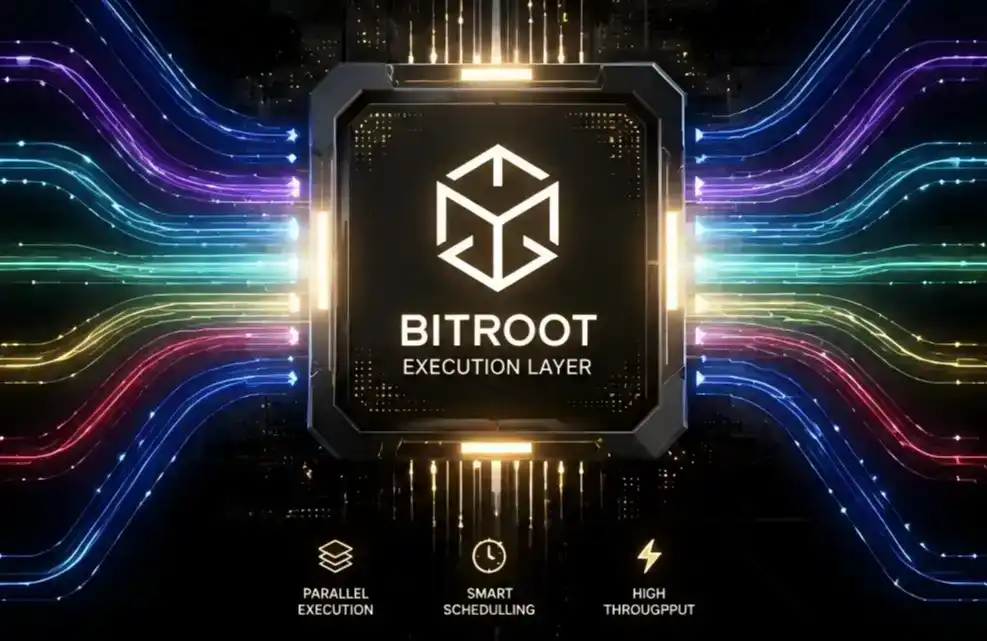
On May 19, Bitroot, an emerging Layer 1 blockchain, participated in the Tencent Cloud AI Summit in Singapore alongside key industry players like Solana Foundation. The event explored the intersection of AI infrastructure, enterprise applications, AI Agents, and Web3. Bitroot's invitation, despite being pre-mainnet, highlights industry interest in its focus on high-performance, AI-native architecture tailored for future AI Agent execution and verifiable on-chain automation. Bitroot CEO Juan Jose emphasized that AI competition is shifting from model performance to data, real-world application scenarios, and trust infrastructure. He argued that for AI Agents to evolve from assistants to autonomous executors managing transactions and assets, they require low-latency, low-cost, and high-throughput blockchain environments. Bitroot aims to address this through its EVM-compatible design, optimistic parallel execution, and a consensus mechanism targeting high scalability. Currently in its Testnet 5.0 phase, Bitroot reports metrics like over 50,000 peak TPS and sub-0.3 second average block time. Its narrative positions it within a growing landscape where next-generation Layer 1s like Monad and Aptos also compete on performance, while Bitroot differentiates by integrating AI computational capabilities natively across its stack. The summit underscored that the fusion of AI and Web3 is moving from concept to infrastructure competition, where networks balancing performance, security, and verifiability will be crucial for enabling scalable AI-driven applications.

marsbitHace 1 hora(s)

Bitroot Public Chain Invited to Attend Tencent Cloud Singapore AI Conference, Discussing the Future Alongside Solana

marsbitHace 1 hora(s)

Hedge Fund Q1 Interpretation: Everyone Is Selling Software, Buying Chips

Hedge Funds and Mutual Funds Aligned in Q1: Dumping Software, Buying Chips A clear consensus emerged among major U.S. hedge funds and mutual funds in Q1: they were simultaneously selling software stocks and pouring capital into the semiconductor sector. This aggressive rotation pushed semiconductor exposure in hedge fund long portfolios to a record high. Hedge funds delivered a 7% return year-to-date, while only 30% of large-cap active mutual funds outperformed their benchmarks. The average short interest for S&P 500 constituents rose to 3% of market cap, the highest since 2011. Within technology, the structural shift was stark. Hedge funds' semiconductor weighting hit an all-time high, while software fell to its lowest since 2019. Excluding Microsoft, mutual funds' relative overexposure to semis vs. software was the largest since 2012. Microsoft was among the most net-sold stocks by both groups. Hedge funds net purchased semiconductor names like LRCX and AMAT. Strategies diverged on leverage and cash. Hedge funds increased their net exposure to near a one-year high after an initial cut. Mutual funds raised their cash allocation, though it remains historically low at 1.4%. Sector alignment was high in Industrials (both overweight) but divergent in Tech: hedge funds increased their Tech net tilt by a record 853 basis points, while mutual funds reduced theirs. Clear splits also appeared in Financials and Consumer Discretionary. Four stocks appeared on both Goldman's hedge fund VIP and mutual fund overweight lists: BA, MA, MRVL, and V. This "shared favorites" basket has returned 10% YTD, outperforming the equal-weight S&P 500. Notably, all "Magnificent Seven" stocks are on the hedge fund VIP list but are uniformly underweighted by mutual funds.

marsbitHace 1 hora(s)

Hedge Fund Q1 Interpretation: Everyone Is Selling Software, Buying Chips

marsbitHace 1 hora(s)

Trading

Spot
Futuros
活动图片