加密冬天来了——如何在加密货币熊市期间管理你的资产

Meta之光Publicado a 2022-06-17Actualizado a 2022-06-17

Resumen

加密货币冬天——相当于华尔街熊市的加密货币——已经到来。

加密货币冬天——相当于华尔街熊市的加密货币——已经到来。

虽然金融专家有一个特定的基准来定义熊市,这意味着股票从最高价下跌了20%,但加密冬天的定义并不那么具体。一般来说,如果价格下跌并在很长一段时间内保持低位,投资者和专家将宣布加密货币冬天。而且,确实,那个时候到了。

市场下跌伴随着包括Gemini在内的一些主要加密货币交易所的裁员。Coinbase方面表示,它将检查其员工人数,目前正在冻结招聘。

得知加密冬天这个词被认为来自电视节目中流行的模因和短语,你可能不会感到惊讶。在《权力的游戏》中,史塔克家族会宣称,“冬天来了”,作为对未来长期冲突和艰难时期的警告。

同样不足为奇的是,加密投资者的在线社区聚集在一起,在他们喜欢的社交媒体平台上分享他们度过加密寒冬的最佳秘诀。

使用美元成本平均来降低您的风险

NFT收藏家@Krissyos在Twitter上以24部分的帖子为加密货币和NFT投资者提供了提示。第一个技巧是使用美元成本平均(DCA)来限制“你的潜在上行空间,以减轻可能的损失”。通过分散你的投资,你不必猜测在你最喜欢的加密货币中找到“下降”。“看看你的风险承受能力,然后在你想要的交易所中相应地设置自动触发器,”@Kissyos发推文说。

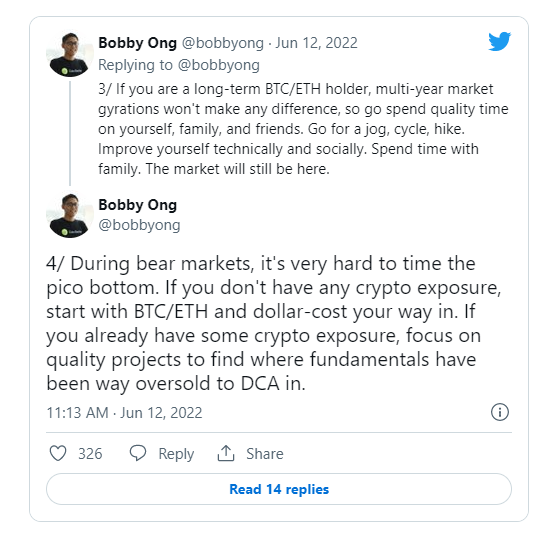
CoinGecko.com的联合创始人BobbyOng表示同意:“在熊市期间,很难确定pico底部的时间。如果您没有任何加密货币风险敞口,请从BTC/ETH和美元成本入手。”

避开最具波动性的投资

CoinTelegraph.com建议:“一旦市场开始普遍低迷,第一步就是重新评估当前头寸并减少对波动最大的资产的敞口。”

检查你的加密投资组合并寻找似乎没有持久力的项目。这些投资——从较小的山寨币到NFT——可能无法熬过冬天。现在减少损失并将风险降至最低还为时不晚。

不要冒险超过你能承受的损失

永远不要冒险超过你能承受的损失这句古老的格言在低迷的市场中比以往任何时候都更有意义。Krissyos雄辩地在推特上写道:“如果你在晚上无法对当前的价值储存感到安全,那么你将无法做出理性的决定。”

投资自己

如果你发现最好的行动方案是坚持冬天到春天,请花时间投资学习更多关于加密和NFT投资的知识。Ong表示,他将利用这段时间寻找有希望的新项目。他在推特上写道:“如果你是BTC/ETH的长期持有者,多年的市场波动不会有任何影响,所以请把美好的时光花在自己、家人和朋友身上。去慢跑,骑自行车,远足。在技术和社交方面提升自己。”
考虑加倍下注

富达投资首席执行官阿比盖尔约翰逊在奥斯汀举行的2022年共识活动中表示,如果你已经完成研究并且有迹象表明NFT或加密货币在长期内表现非常出色,请不要害怕加倍投资你最喜欢的投资,据Forbes.com报道。“这是我的第三个加密冬天。经历了很多起起落落,但我认为这是一个机会。”


Lecturas Relacionadas

The Real Battlefield of AI Lies in the 'Dark Forest'

The article "AI's Real Battlefield is in the 'Dark Forest'" discusses the shifting dynamics in the global AI landscape, contrasting the strategic directions of Chinese and U.S. AI developers. Chinese companies like Alibaba (with its "HappyHorse" video model), ByteDance (Seedance 2.0), and Kuaishou (Kling 3.0) have taken the lead in text-to-video generation, surpassing OpenAI’s now-discontinued Sora. These models are deeply integrated into their parent companies’ content ecosystems (e.g., Douyin, Kuaishou), serving to reduce content creation costs and enhance user engagement rather than operating as standalone profit centers. In contrast, U.S. firms are pivoting toward high-stakes enterprise and security applications. Anthropic’s Claude Mythos model demonstrates advanced capabilities in autonomously discovering and exploiting software vulnerabilities, prompting concern at the highest levels of U.S. financial and governmental institutions. OpenAI responded with its own GPT-5.4-Cyber, signaling a strategic shift from consumer-facing products to enterprise-grade tools focused on cybersecurity and programming. The divergence is attributed to fundamental differences in resources and market structures. U.S. companies, backed by vast computational resources (e.g., Amazon and Google supply Anthropic with substantial funding and TPU access), can pursue deep, specialized R&D in high-value B2B sectors. Chinese firms, facing significant compute power constraints and a less mature enterprise SaaS market, have found success by leveraging their massive consumer platforms and optimizing for cost-efficiency. The article warns that the AI race is entering a "dark forest" phase—a reference to competitive dynamics where cybersecurity capabilities could determine digital sovereignty. While Chinese models like Zhipu AI’s GLM-5.1 show promise in narrowing the gap in coding proficiency, the author stresses that achieving parity in security-critical AI will require asymmetric strategies, including greater investment in coding models, adaptation to domestic hardware, and exploring international markets in the Global South.

marsbitHace 1 hora(s)

The Real Battlefield of AI Lies in the 'Dark Forest'

marsbitHace 1 hora(s)

Trading

Spot
Futuros
活动图片