Биткойны прорастают на фермах

cryptonews.ruPublicado a 2024-11-21Actualizado a 2025-02-21

Количество майнинговых ферм в России за 2024 год выросло на 7% и достигло 136,6 тыс. Наиболее популярной среди майнеров была Иркутская область благодаря мощным ГЭС и дешевой электроэнергии. При этом эксперты оценивают, что лишь четверть мощностей майнеров используется легально, а новые ограничения и новое регулирование могут затормозить развитие этого бизнеса.
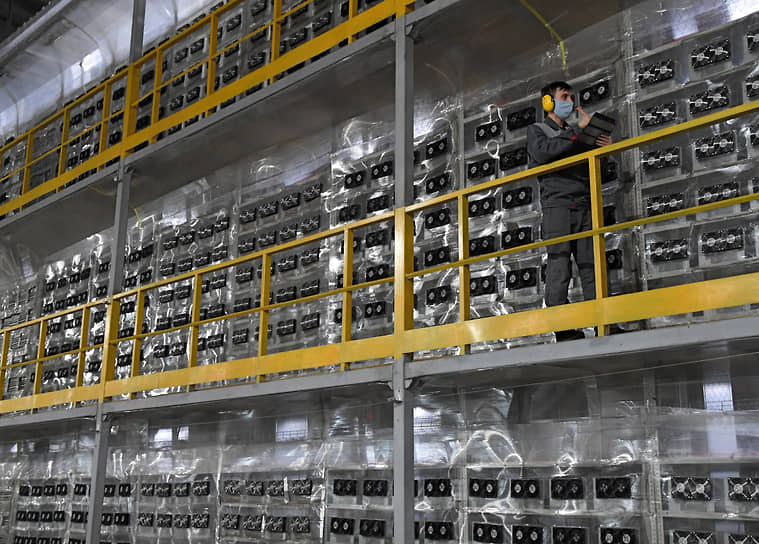
В январе 2025 года в России действовало 136,6 тыс. майнинговых ферм, за год их количество выросло на 7%, следует из оценок МТС EnergyTool (с ними ознакомился “Ъ”). Суммарная мощность всех уникальных майнинговых ферм в России превысила к этому времени 11 ГВт.

По оценке EnergyTool МТС, в настоящее время на территории Иркутской области сосредоточено более 10% от выявленных майнинговых ферм. В Москве этот показатель составил около 9%, в Московской области — 8%. В число крупнейших регионов также входят Башкирия и Самарской область. Годом ранее в пятерку крупнейших входили регионы Северного Кавказа. При этом, по оценке источника “Ъ”, близкого к индустрии, из 11 ГВт располагаемых мощностей только 3 ГВт используют легальные майнеры.

Интерес к майнингу в России сохраняется на фоне дешевой электроэнергии и подходящих климатических условий, которые позволяют экономить на системах охлаждения, поясняют эксперты. Также в некоторых регионах майнеры использовали для размещения своих вычислительных устройств простаивающие промышленные предприятия, которые подходили для аренды и которые были подключены к мощным линиям электропередачи, отметил СЕО Tehnobit Александр Пересичан.

Иркутская область стала наиболее популярным регионом для майнеров благодаря высокой суммарной действующей мощности Ангарского каскада ГЭС (более 12 ГВт).

«Электричество здесь значительно дешевле, чем в среднем по стране, что делает затраты на добычу криптовалют существенно ниже»,— отмечает CEO OXLY Денис Макашов. Вместе с тем введенные в этом году ограничения могут затронуть майнеров и в этом регионе. Согласно постановлению правительства РФ, с 1 января 2025 года майнинг полностью запрещен в десяти регионах России, а также в отдельных зонах Бурятии, Иркутской области и Забайкальского края — в осенне-зимний период.

Наиболее активно в России добывают биткойн (BTC), на который приходится 90% мощностей, а также Litecoin, Kaspa, Ethereum и Monero, отметили в МТС. Биткойн остается самым популярным, так как «он наиболее ликвидный, его проще всего реализовать, он менее волатилен, чем альткойны, что важно для корректного расчета экономики майнинговой фермы», отмечает СЕО Crypto Summit Алексей Зюзин. При этом другие популярные криптовалюты — Ethereum (после перешел на алгоритм Proof-of-Stake), Solana и XRP — «не добываются путем майнинга», отмечает эксперт. Впрочем, в отношении эфира остается возможность майнинга по немного модифицированной старой технологии, так называемой Ethereum Proof of Work.

Однако в отношении перспектив этого года для рынка майнинга эксперты настроены осторожно.

В частности, с 1 ноября 2024 года вступили в силу поправки к закону «О цифровых финансовых активах», согласно которым все юрлица и ИП, добывающие криптовалюту, обязаны регистрироваться в качестве майнера в ФНС. Как отмечает Александр Пересичан, «физлицам это делать не нужно, но только если они не расходуют электроэнергию более чем на 6 тыс. кВт•ч в месяц». При этом майнеры-юрлица и ИП после регистрации «должны отчитываться в ФНС о добытых активах, адресах кошельков и сообщать другие идентификаторы», отмечает эксперт.

Кроме того, запрет на майнинг в ряде областей может повлечь за собой миграцию производств в другие регионы, но уверенности в том, что и там не появится запрет на майнинг, у инвесторов нет. Поэтому «сейчас большинство проектов встали на паузу и инвесторы смотрят на то, как будет развиваться ситуация с запретами и правоприменением нового майнингового законодательства»,— указывает Алексей Зюзин. Александр Пересичан считает, что, скорее всего, в этом году количество майнеров в РФ расти не будет, и связывает такую ситуацию как с отсутствием явного бычьего ралли на крипторынке, так и со вступлением в силу закона о майнинге, который «пока непонятно как скажется на отрасли».


Lecturas Relacionadas

Doubao and Qwen Will Discontinue Agent Functionality on July 15

On July 4th, Doubao and Tongyi Qianwen announced the impending shutdown of their user-created "AI Agent" features. Doubao confirmed its agent feature will be taken offline on July 15, directing users to ByteDance's CatBox app for similar needs. On the same day, Tongyi Qianwen notified users, specifying that personalized interactive agents and user-built agent functions will cease on July 10, with all agent features and services completely deactivated by July 15. After this date, access to agent configurations and historical chat records will be lost. This adjustment impacts core user scenarios like role-playing, personal assistants, and vertical tool agents. The shutdown date coincides with the official implementation of China's "Interim Measures for the Administration of Artificial Intelligence Human-like Interactive Services" on July 15. The new regulations impose strict rules on "human-like emotional interaction services," requiring platforms to implement measures like anti-addiction systems, minor verification, and content moderation. This move is widely seen as a proactive step by the platforms to align with regulatory timelines and mitigate compliance risks. Additionally, commercial challenges are a key driver. Analysis suggests that casual, human-like chat agents generate high-frequency, low-value interactions, leading to high computational costs with poor monetization. As the AI application market shifts from user growth to proving value, sustaining such "high-cost, low-efficiency" user-generated content becomes difficult. Both platforms have outlined transition plans. Doubao will allow data viewing and self-backup for a period after shutdown, with data scheduled for permanent deletion by October 15. Tongyi Qianwen similarly advised users to save important content via copying or screenshots before the deadline. This strategic retreat from C-end agent features signals a broader market shift. Compliance capability and sustainable business models are replacing user scale and feature richness as the new core competitive dimensions. Tongyi Qianwen's recent move to fully open its Agent and Skill platforms to third-party enterprises and developers further underscores a strategic pivot from low-value C-end services to high-value B-end enterprise scenarios.

marsbitHace 3 hora(s)

Doubao and Qwen Will Discontinue Agent Functionality on July 15

marsbitHace 3 hora(s)

Why Did Codex and ChatGPT Merge? What's Next for Codex? OpenAI Core Leader Answers Everything

In 2026, OpenAI's Codex saw explosive growth, with weekly active users surging over 5x to 5 million since January, driven largely by the February launch of its desktop app. Codex desktop lead Andrew Ambrosino explains key shifts behind its evolution. A core change is the inversion of development costs: implementation is now cheap, while curation and taste—judging which of many AI-generated prototypes is valuable—have become the new scarcities. Ambrosino defines taste as a blend of aesthetics, systems thinking, direction, and semantic coherence in interaction. He notes AI still struggles with design because evaluating it requires human cultural context and abstract reasoning about how components relate—capabilities beyond current models. Timing is critical: the same Codex app would have failed months earlier; success hinges on the model's capabilities at launch. Roles are blurring within his team, with engineers, designers, and PMs overlapping significantly. However, Ambrosino cautions against eliminating specialized roles entirely, as each field retains deep expertise. On AI-assisted development, the focus has shifted from measuring code written by AI to distinguishing between supervised and unsupervised generation. A current challenge is teaching models to simplify code, not just add complexity. The merger of Codex and ChatGPT stems from observed user behavior: non-developers adopted Codex for general knowledge work despite its developer-centric interface. This revealed a collapsing boundary between specialized tools and universal assistants. The vision is a "home base" that orchestrates tasks across external professional tools (like Excel or Premiere Pro) via connectors, rather than rebuilding everything internally. An internal example showed Codex helping edit video by interacting with Premiere Pro's files and even writing a plugin for it. The future direction is a unified, extensible platform that serves as a central hub for automating and managing work across any specialized tool the user employs.

marsbitHace 3 hora(s)

Why Did Codex and ChatGPT Merge? What's Next for Codex? OpenAI Core Leader Answers Everything

marsbitHace 3 hora(s)

Trading

Spot
活动图片