stETH Depegging: What are the Consequences?

Huobi ResearchPublicado a 2022-06-16Actualizado a 2022-06-16

Resumen

stETH is a token offered by the biggest Ethereum 2.0 liquid staking protocol Lido. stETH represents an ownership of ETH staked on Lido. By holding stETH, users gain staking rewards on a daily basis.

Abstract

stETH is a token offered by the biggest Ethereum 2.0 liquid staking protocol Lido. stETH represents an ownership of ETH staked on Lido. By holding stETH, users gain staking rewards on a daily basis. The price of stETH has been trading close to the price of ETH for the majority of its lifetime. However, its price has been trading below the price of ETH recently, and liquidity is becoming scarce across its second-hand markets. There are worries concerning the depeg.

This report delves into the major factors causing the declining price of stETH:

1) FUD generated by the collapse of Luna and UST;

2) Celsius selling their stETH (Lido) positions on Curve to supply the withdrawals of their users;

3) Alamenda Research dumping stETH on Curve;

4) Liquidations on AAVE against undercollateralized as stETH price declines;

5) Increased probability of postponing the “Difficulty Bomb” in ETH 2.0 transition.

In the end of this report, we will discuss the likelihood of stETH price and market behavior in the short-term and long-term and highlight potential opportunity of stETH amidst FUD and bear market sentiment.

1. Much attention has been drawn to the stETH/ETH “depeg”

The stETH/ETH "depeg" has triggered worries in the market, especially around how the devaluing of stETH might cause subsequent liquidations across the lending market. stETH has been trading at approximately 1:1 with ETH most of the time. However, recently, its price dropped and liquidity has been depleted out as liquidity providers are withdrawing their funds. stETH/ETH is now trading at 0.94 at the time of writing.
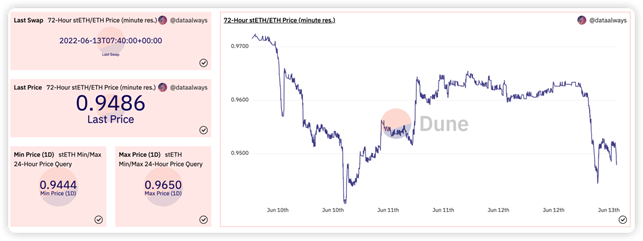
Figure 1: stETH/ETH ratio

Source: Dune@dataalways

There are worries that a further decline in stETH price will cause a chain of serious consequences. In the following, we will delve into:

1) the reasons why stETH has been trading below ETH, why its liquidity is being drained and the current unpegging scenario of stETH/ETH (Chapter 2);

2) stETH market behavior in the short-term and long-term (Chapter 3).

2. Causes behind decline of stETH price

There are possibly five major factors contributing to the declining price of stETH.

2.1 Luna and Terra Collapse

The collapse of Luna and UST certainly posed fear and incited selling pressure across the market. People lost confidence and the price of stETH was driven down to 0.96 ETH as a result of the Luna and UST collapse.

However, the collapse of UST alone would only have limited effect on stETH prices, because UST and stETH are underpinned by different mechanisms and are fundamentally unrelated. The initial correlation for price decreases can be explained by the bear market sentiment as well as diminishing confidence among investors.

stETH is backed by ETH and it does not require being traded at 1:1 to ETH to work. stETH represents the stake in staking ETH 2.0, and trades at market price based on the demand/supply on its second-hand markets. If we look at other stETH tokens (offered by other protocols for liquid ETH 2.0 staking), we can conclude that a 1:1 stETH to ETH price is not a guarantee (see Figure below for BETH).
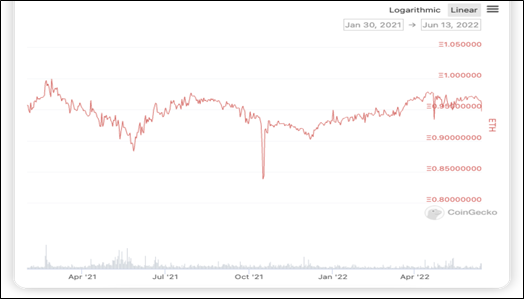
Figure 2: BETH/ETH

Source: Coingecko.com

2.2 Celsius Incident

Celsius took a huge loss from staking stETH on Stakehound as Stakehound had misplaced the keys to over 38,000 Ethereum tokens that they had deposited on behalf of clients. Celsius and other customers are now stuck with the Stakehound stETH token, which is currently nearly worthless. Celsius wallets have at least 42,306 Stakehound staked Ethereum (0xdfe66b14d37c77f4e9b180ceb433d1b164f0281d). This equates to a loss of almost US$71 million according to Ethereum prices as of today (14 June 2022).

This incident was revealed in the news one week ago, and upon knowing their investment was in a precarious position, users on Celsius rushed to redeem their positions. The withdrawal rate was rapid, at around 50,000 ETH per week, which forced Celsius to sell other assets like stETH (staked on Lido) for ETH on stETH second-hand markets like Curve to acquire more liquidity, take out loans against stETH to support withdrawal and temporarily pause withdrawals and transfers in the worst-case scenario.

Today, Celsius has paused all withdrawals, transfers and swaps due to extreme market conditions.
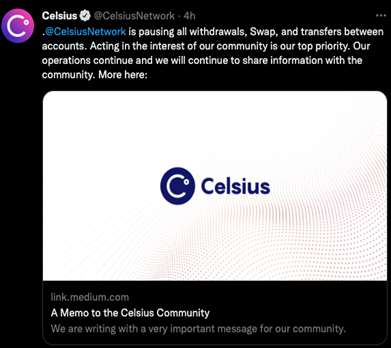
Figure 3: Celsius pauses withdrawals

Source: Celsius Twitter

The decision by Celsius was probably caused by insufficient liquidity. In fact, only 27% of Celsius' ETH holdings is liquid, the rest is either staked in ETH 2.0 or stETH. Celsius had no choice but to sell their stETH staked on Lido(0xae7ab96520DE3A18E5e111B5EaAb095312D7fE84).
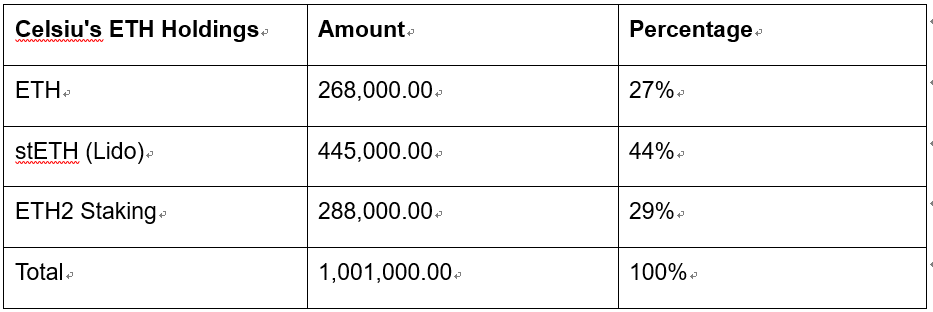
From the table above, we know that Celsius previously held about 445,000 stETH (staked on Lido) worth US$1.4 billion. Currently there is only around 132,000 stETH in the liquidity pool on Curve. (recorded on 11 June 2022)

It is difficult for Celsius to sell their stETH for ETH as the depth of liquidity is insufficient to support their selling.
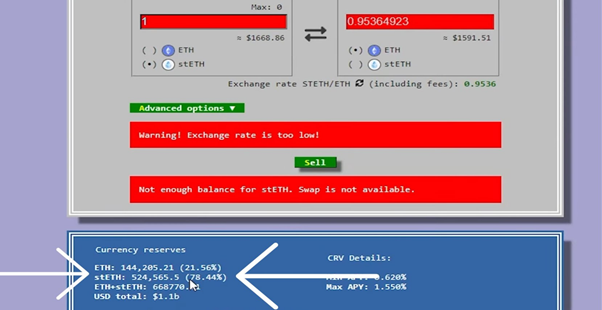
Figure 4: Curve

Source: curve.finance
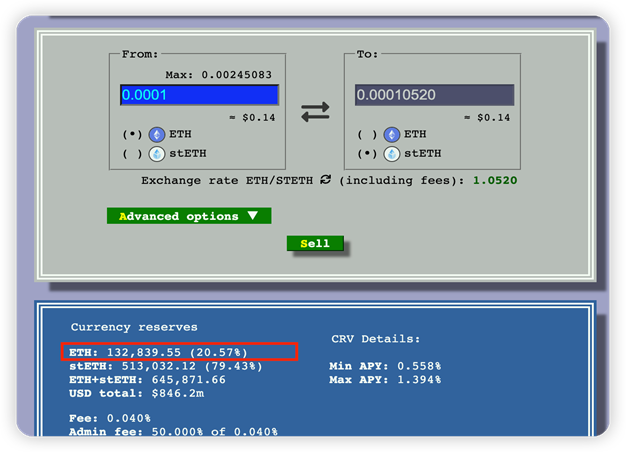
Figure 5: Curve

Source: curve.finance
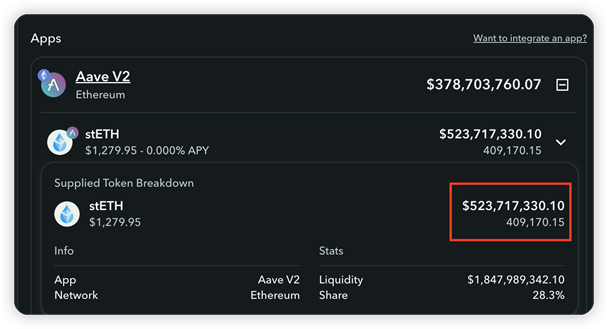
Figure 6: Celsius wallet portfolio at AAVE

Source: https://zapper.fi

Upon checking Celsius's account (0x8aceab8167c80cb8b3de7fa6228b889bb1130ee8), the stETH in Celsius's account is only about 409,00, compared to the 445,000 two days ago. Celsius, under financial pressure, has already started selling stETH on Curve to meet customer redemption demands.

2.3 Alamenda Research selling stETH

A report showed that Alamenda Research, one of the biggest crypto investment firms, sold around 50,000 stETH on 8 June. The following is a screenshot from Etherscan recording the selling activities.
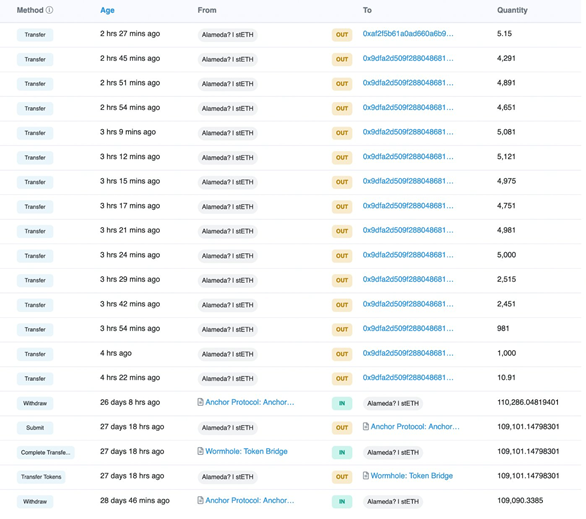
Figure 7: Alamenda Research selling stETH transactions

Source: https://etherscan.io/

The selling from Alamenda Research posed further supply pressure on stETH second-hand markets, pushing down the price of stETH. This might trigger further selling from other big holders. Yet, the selling pressure does not end here. Let's us look into the problems we discovered on AAVE with stETH.

2.4 stETH in AAVE lending protocol

As we can see from the chart below, the staking pool of AAVE got the largest stETH percentage with a total of 1.4 million ETH, worth about US$1.7 billion.

Users stake their stETH into AAVE to take out ETH loans, then stake ETH on Lido to take out stETH again to achieve a leveraged staking position. This is also called a revolving loan. The following are the steps for taking out a revolving loan:

‒ get back stETH by staking ETH at LIDO;

‒ deposit stETH in Aave and borrow ETH;

‒ repeat steps above;
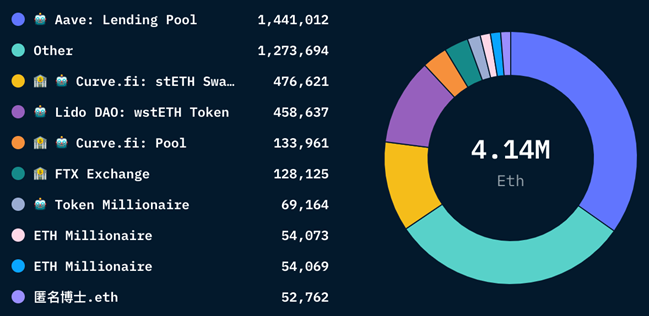
Figure 7: Top stETH holders balance

Source: nansen.ai

However, unlike other st-Tokens at Lido, stETH cannot be unstaked before the completion of ETH 2.0. We don't know how big the leverage is with stETH/ETH, and how many times the revolving loans repeated. This is a big risk to both stETH and ETH. A further decrease in stETH price will cause a chain of liquidations on their leveraged position.

The following figure shows the liquidation price of stETH.

‒ stETH/ETH = 0.925, 17M will be liquidated;

‒ stETH/ETH =0.860, 41M will be liquidated;

‒ stETH/ETH =0.680, 81.3M will be liquidated;

‒ stETH/ETH =0.450, 149M will be liquidated;

‒ stETH/ETH =0.410, 180M will be liquidated.
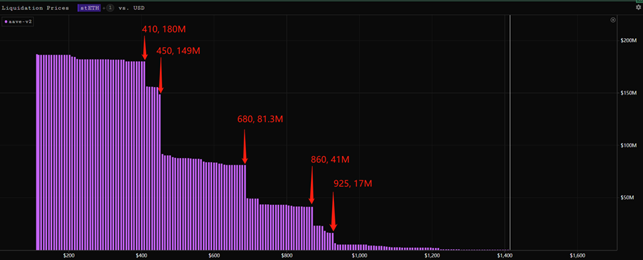
Figure 8: stETH liquidation prices

Source: Twitter

There is 1.44 million of ETH locked on AAVE. Users use stETH as collateral and take out loans of ETH on AAVE to stake on Lido and get stETH again. This process can be repeated multiple times to achieve a leveraged staking position. It can get very dangerous when the price of stETH decreases (caused by Celsius selling their huge position and subsequent selling pressure from other big holders and retailers) and stETH (collateral) is being liquidated and resold on the second-hand market, further pushing the price of stETH down.

2.5 The rising concerns around Etherum2.0

The prospect of ETH 2.0 lingers and recent reports have shown that Ethereum developers will likely delay what’s called the “difficulty bomb”, where a sudden increase in mining difficulty is foreseen, in order to discourage miners from opting to stay with the proof-of-work mechanism after Ethereum’s transition to proof-of-stake. Difficulty refers to the time and computational power needed to verify a cryptocurrency's transactions within a blockchain. This will trigger market concern about the transition. As such, the price of the backed asset (ETH) will go down due to this delay and also cause the price of stETH to drop and worsen the degree of depeg for stETH. Although the team has said “It does not impact the merge at all”, some have been a bit skeptical on the merge of ETH 2.0. Afterall, a delay would certainly lead to a detrimental effect on investor confidence.

3.Conclusion

3.1 In the short-term, stETH will face tremendous selling pressure, turbulence is expected in the near future

Supply of stETH is dominant in the short term as Celsius is forced to sell their stETH position, triggering a subsequent chain of selling events. Second-hand stETH markets have become the exit channel for stakers, because there is no way for ETH 2.0 staking participants to redeem their ETH except through the second-hand markets. The stETH/ETH second-hand market structure is inclined toward the stETH supply side.

3.2 New demand will step into stETH second-hand markets and drive up its price

It is reasonable to think that this price discount will introduce new demand into the second-market which will eventually drive up the price of stETH price so it creeps closer to the price ETH. We should consider that the lower price of stETH will also induce new demand (the cheaper the stETH price, the more profit can one take from redeeming ETH upon ETH 2.0 merging).

3.3 Long-term prospects, risks and opportunities

Risks represent potential returns in the future, and as we get closer to ETH 2.0 merging, risks become lower and the price is likely to recover. In short term, the price of stETH is like to decrease further due to 1) Celsius selling their stETH for ETH to get liquidity for their users; and 2) subsequent selling from whales to mitigate risk from Celsius' selling, but as price is driven down to certain level, arbitragers will step in and seize the attractive opportunity and provide support to the price. The Celsius Incident and stETH whales dumping their stETH would cause short-term turbulence, but stETH will show resilience against the short-term supply when ETH 2.0 merging draws closer.

Nevertheless, we should always consider the risks associated with ETH 2.0 merging, and some risks are not negligible. For example, if the Ethereum transition encounters technical problems that might cause another long delay, such that investors get impatient and lose their conviction, or that the liquid staking protocols could have critical protocol bugs or face slashing risks where its validators for some reason fail to operate properly. All these risks have been factored into stETH price. In addition, the price of ETH also affects the stETH price. If ETH price declines, stETH will also decline. The biggest problem lies with stETH leveraged and collateralised on AAVE. Declining stETH price will cause a chain of liquidations across the lending platform, and the consequences will be severe.

About Huobi Research Institute

Huobi Blockchain Application Research Institute (referred to as "Huobi Research Institute") was established in April 2016. Since March 2018, it has been committed to comprehensively expanding the research and exploration of various fields of blockchain. As the research object, the research goal is to accelerate the research and development of blockchain technology, promote the application of blockchain industry, and promote the ecological optimization of the blockchain industry. The main research content includes industry trends, technology paths, application innovations in the blockchain field, Model exploration, etc. Based on the principles of public welfare, rigor and innovation, Huobi Research Institute will carry out extensive and in-depth cooperation with governments, enterprises, universities and other institutions through various forms to build a research platform covering the complete industrial chain of the blockchain. Industry professionals provide a solid theoretical basis and trend judgments to promote the healthy and sustainable development of the entire blockchain industry.

Official website:

https://research.huobi.com/

Consulting email:

research@huobi.com

Twitter: @Huobi_Research

https://twitter.com/Huobi_Research

Medium: Huobi Research

https://medium.com/huobi-research

Disclaimer

1. The author of this report and his organization do not have any relationship that affects the objectivity, independence, and fairness of the report with other third parties involved in this report.

2. The information and data cited in this report are from compliance channels. The sources of the information and data are considered reliable by the author, and necessary verifications have been made for their authenticity, accuracy and completeness, but the author makes no guarantee for their authenticity, accuracy or completeness.

3. The content of the report is for reference only, and the facts and opinions in the report do not constitute business, investment and other related recommendations. The author does not assume any responsibility for the losses caused by the use of the contents of this report, unless clearly stipulated by laws and regulations. Readers should not only make business and investment decisions based on this report, nor should they lose their ability to make independent judgments based on this report.

4. The information, opinions and inferences contained in this report only reflect the judgments of the researchers on the date of finalizing this report. In the future, based on industry changes and data and information updates, there is the possibility of updates of opinions and judgments.

5. The copyright of this report is only owned by Huobi Blockchain Research Institute. If you need to quote the content of this report, please indicate the source. If you need a large amount of reference, please inform in advance (see "About Huobi Blockchain Research Institute" for contact information) and use it within the allowed scope. Under no circumstances shall this report be quoted, deleted or modified contrary to the original intent.


Lecturas Relacionadas

$9.4 Billion: The Largest Robotics Funding This Year Has Emerged

Munich-based humanoid robotics company Neura has completed a $1.4 billion (approximately RMB 94.9 billion) Series C funding round, valuing the company at around $7 billion and positioning it among the global leaders in the sector. The investment round is notable not just for its size—reportedly the largest in robotics this year—but also for its strategic backers, which include tech giants like NVIDIA and Amazon, alongside established industrial players such as German engineering firms Bosch and Schaeffler. This mix of investors signals a significant shift in the industry's focus from technological demonstrations and general-purpose narratives toward practical, industrial deployment and commercialization. Neura's approach centers on developing humanoid robots for defined, high-value industrial tasks rather than pursuing a general-purpose model. Its early validation comes from a partnership with BMW, where its robots are being tested on actual production lines. The involvement of Bosch and Schaeffler, companies deeply embedded in global manufacturing, underscores a growing belief that humanoid robots are transitioning from labs to viable factory-floor solutions. The article highlights two converging trends driving investment: advancements in AI and large language models, which enhance robots' perception and decision-making in unstructured environments, and mounting pressure from labor shortages and rising costs in major manufacturing regions. The funding landscape is now bifurcating between companies like Figure AI, focusing on versatile general-purpose robots, and firms like Neura, targeting specific vertical industrial applications with clearer, shorter paths to ROI. While technical hurdles remain, the core challenges for widespread adoption are increasingly seen as engineering and commercial in nature: managing the high integration and customization costs for different factory environments and establishing robust, localized maintenance and service networks. The record investment in Neura, particularly from industrial capital, indicates the industry's growing confidence in moving from proving feasibility to solving the practical problems of scalability, reliability, and building sustainable business models around humanoid robots in real-world settings like automotive manufacturing and hazardous labor environments.

marsbitHace 7 hora(s)

$9.4 Billion: The Largest Robotics Funding This Year Has Emerged

marsbitHace 7 hora(s)

Trading

Spot
Futuros

Artículos destacados

Qué es ETH 2.0

ETH 2.0: Una Nueva Era para Ethereum Introducción ETH 2.0, conocido ampliamente como Ethereum 2.0, marca una actualización monumental para la blockchain de Ethereum. Esta transición no es solo una mejora superficial; busca mejorar fundamentalmente la escalabilidad, seguridad y sostenibilidad de la red. Con un cambio del mecanismo de consenso intensivo en energía Prueba de Trabajo (PoW) a una Prueba de Participación (PoS) más eficiente, ETH 2.0 promete un enfoque transformador para el ecosistema blockchain. ¿Qué es ETH 2.0? ETH 2.0 es un conjunto de actualizaciones interconectadas y distintivas centradas en optimizar las capacidades y el rendimiento de Ethereum. La reestructuración está diseñada para abordar desafíos críticos que el mecanismo actual de Ethereum ha enfrentado, particularmente en lo que respecta a la velocidad de transacción y la congestión de la red. Objetivos de ETH 2.0 Los objetivos principales de ETH 2.0 giran en torno a mejorar tres aspectos clave: Escalabilidad: Con el objetivo de aumentar significativamente el número de transacciones que la red puede manejar por segundo, ETH 2.0 busca superar la limitación actual de aproximadamente 15 transacciones por segundo, potencialmente alcanzando miles. Seguridad: Las medidas de seguridad mejoradas son fundamentales para ETH 2.0, particularmente a través de una mejor resistencia contra ciberataques y la preservación del ethos descentralizado de Ethereum. Sostenibilidad: El nuevo mecanismo PoS está diseñado no solo para mejorar la eficiencia, sino también para reducir drásticamente el consumo de energía, alineando el marco operativo de Ethereum con consideraciones ambientales. ¿Quién es el Creador de ETH 2.0? La creación de ETH 2.0 se puede atribuir a la Fundación Ethereum. Esta organización sin fines de lucro, que desempeña un papel crucial en el apoyo al desarrollo de Ethereum, es liderada por el notable cofundador Vitalik Buterin. Su visión de un Ethereum más escalable y sostenible ha sido la fuerza motriz detrás de esta actualización, involucrando contribuciones de una comunidad global de desarrolladores y entusiastas dedicados a mejorar el protocolo. ¿Quiénes son los Inversores de ETH 2.0? Si bien los detalles sobre los inversores de ETH 2.0 no se han hecho públicos, se sabe que la Fundación Ethereum recibe apoyo de varias organizaciones e individuos en el ámbito de blockchain y tecnología. Estos socios incluyen firmas de capital de riesgo, compañías tecnológicas y organizaciones filantrópicas que comparten un interés mutuo en apoyar el desarrollo de tecnologías descentralizadas e infraestructura blockchain. ¿Cómo Funciona ETH 2.0? ETH 2.0 se distingue por introducir una serie de características clave que lo diferencian de su predecesor. Prueba de Participación (PoS) La transición a un mecanismo de consenso PoS es uno de los cambios más destacados de ETH 2.0. A diferencia de PoW, que se basa en la minería intensiva en energía para la verificación de transacciones, PoS permite a los usuarios validar transacciones y crear nuevos bloques de acuerdo con la cantidad de ETH que apuestan en la red. Esto conduce a una mayor eficiencia energética, reduciendo el consumo en aproximadamente un 99.95%, convirtiendo a Ethereum 2.0 en una alternativa considerablemente más verde. Cadenas Shard Las cadenas shard son otra innovación crítica de ETH 2.0. Estas cadenas más pequeñas operan en paralelo con la cadena principal de Ethereum, lo que permite que múltiples transacciones sean procesadas simultáneamente. Este enfoque mejora la capacidad general de la red, abordando las preocupaciones de escalabilidad que han afectado a Ethereum. Cadena Beacon En el núcleo de ETH 2.0 se encuentra la Cadena Beacon, que coordina la red y gestiona el protocolo PoS. Funciona como un organizador de cierta manera: supervisa a los validadores, asegura que los shards permanezcan conectados a la red y monitorea la salud general del ecosistema blockchain. Cronología de ETH 2.0 El viaje de ETH 2.0 ha estado marcado por varios hitos clave que trazan la evolución de esta importante actualización: Diciembre 2020: El lanzamiento de la Cadena Beacon marcó la introducción de PoS, preparándose para la migración hacia ETH 2.0. Septiembre 2022: La finalización de “La Fusión” representa un momento crucial en el que la red Ethereum se trasladó exitosamente de un marco PoW a uno PoS, anunciando una nueva era para Ethereum. 2023: El lanzamiento esperado de cadenas shard tiene como objetivo mejorar aún más la escalabilidad de la red Ethereum, consolidando a ETH 2.0 como una plataforma robusta para aplicaciones y servicios descentralizados. Características Clave y Beneficios Escalabilidad Mejorada Una de las ventajas más significativas de ETH 2.0 es su escalabilidad mejorada. La combinación de PoS y cadenas shard permite que la red expanda su capacidad, permitiendo acomodar un volumen mucho mayor de transacciones en comparación con el sistema heredado. Eficiencia Energética La implementación de PoS representa un gran paso hacia la eficiencia energética en la tecnología blockchain. Al reducir drásticamente el consumo de energía, ETH 2.0 no solo disminuye los costos operativos, sino que también se alinea más estrechamente con los objetivos de sostenibilidad global. Seguridad Mejorada Los mecanismos actualizados de ETH 2.0 contribuyen a mejorar la seguridad en toda la red. El despliegue de PoS, junto con las medidas de control innovadoras establecidas a través de cadenas shard y la Cadena Beacon, asegura un mayor grado de protección contra posibles amenazas. Costos Más Bajos para los Usuarios A medida que la escalabilidad mejora, los efectos sobre los costos de transacción también serán evidentes. Se espera que una mayor capacidad y una menor congestión se traduzcan en tarifas más bajas para los usuarios, haciendo que Ethereum sea más accesible para transacciones cotidianas. Conclusión ETH 2.0 marca una evolución significativa en el ecosistema blockchain de Ethereum. A medida que aborda problemas fundamentales como la escalabilidad, el consumo de energía, la eficiencia en las transacciones y la seguridad general, la importancia de esta actualización no puede ser subestimada. La transición a la Prueba de Participación, la introducción de cadenas shard y el trabajo fundamental de la Cadena Beacon son indicativos de un futuro donde Ethereum puede satisfacer las crecientes demandas del mercado descentralizado. En una industria impulsada por la innovación y el progreso, ETH 2.0 se erige como un testimonio de las capacidades de la tecnología blockchain para allanar el camino hacia una economía digital más sostenible y eficiente.

166 Vistas totalesPublicado en 2024.04.04Actualizado en 2024.12.03

Qué es ETH 2.0

Qué es ETH 3.0

ETH3.0 y $eth 3.0: Un Examen Profundo del Futuro de Ethereum Introducción En el paisaje en rápida evolución de las criptomonedas y la tecnología blockchain, ETH3.0, a menudo denotado como $eth 3.0, ha surgido como un tema de considerable interés y especulación. El término abarca dos conceptos principales que merecen aclaración: Ethereum 3.0: Esto representa una posible actualización futura destinada a aumentar las capacidades de la blockchain existente de Ethereum, enfocándose particularmente en mejorar la escalabilidad y el rendimiento. ETH3.0 Meme Token: Este proyecto de criptomoneda distinto busca aprovechar la blockchain de Ethereum para crear un ecosistema centrado en memes, promoviendo la participación dentro de la comunidad de criptomonedas. Comprender estos aspectos de ETH3.0 es esencial no solo para los entusiastas de las criptomonedas, sino también para aquellos que observan tendencias tecnológicas más amplias en el espacio digital. ¿Qué es ETH3.0? Ethereum 3.0 Ethereum 3.0 se presenta como una actualización propuesta para la red de Ethereum ya establecida, que ha sido la columna vertebral de muchas aplicaciones descentralizadas (dApps) y contratos inteligentes desde su inicio. Las mejoras previstas se concentran principalmente en la escalabilidad, integrando tecnologías avanzadas como sharding y pruebas de conocimiento cero (zk-proofs). Estas innovaciones tecnológicas tienen como objetivo facilitar un número sin precedentes de transacciones por segundo (TPS), potencialmente alcanzando millones, abordando así una de las limitaciones más significativas que enfrenta la tecnología blockchain actual. La mejora no es meramente técnica, sino también estratégica; está destinada a preparar la red de Ethereum para su adopción generalizada y utilidad en un futuro marcado por una mayor demanda de soluciones descentralizadas. ETH3.0 Meme Token En contraste con Ethereum 3.0, el ETH3.0 Meme Token se aventura en un ámbito más ligero y juguetón al combinar la cultura de memes de internet con la dinámica de las criptomonedas. Este proyecto permite a los usuarios comprar, vender e intercambiar memes en la blockchain de Ethereum, proporcionando una plataforma que fomenta la participación comunitaria a través de la creatividad y los intereses compartidos. El ETH3.0 Meme Token tiene como objetivo demostrar cómo la tecnología blockchain puede intersectarse con la cultura digital, creando casos de uso que son tanto entretenidos como financieramente viables. ¿Quién es el Creador de ETH3.0? Ethereum 3.0 La iniciativa hacia Ethereum 3.0 es impulsada principalmente por un consorcio de desarrolladores e investigadores dentro de la comunidad de Ethereum, incluyendo notablemente a Justin Drake. Conocido por sus ideas y contribuciones a la evolución de Ethereum, Drake ha sido una figura prominente en las discusiones sobre la transición de Ethereum a una nueva capa de consenso, denominada “Beam Chain.” Este enfoque colaborativo para el desarrollo significa que Ethereum 3.0 no es el producto de un creador singular, sino más bien una manifestación de ingenio colectivo centrado en avanzar la tecnología blockchain. ETH3.0 Meme Token Los detalles sobre el creador del ETH3.0 Meme Token son actualmente inidentificables. La naturaleza de los tokens de memes a menudo conduce a una estructura más descentralizada y dirigida por la comunidad, lo que podría explicar la falta de atribución específica. Esto se alinea con la ética de la comunidad cripto más amplia, donde la innovación a menudo surge de esfuerzos colaborativos en lugar de individuales. ¿Quiénes son los Inversores de ETH3.0? Ethereum 3.0 El apoyo a Ethereum 3.0 proviene principalmente de la Fundación Ethereum junto con una entusiasta comunidad de desarrolladores e inversores. Esta asociación fundamental proporciona un grado significativo de legitimidad y mejora la perspectiva de una implementación exitosa, ya que aprovecha la confianza y credibilidad construidas a lo largo de años de operaciones en la red. En el clima cambiando rápidamente de las criptomonedas, el apoyo de la comunidad juega un papel crucial en impulsar el desarrollo y la adopción, posicionando a Ethereum 3.0 como un contendiente serio para futuros avances en blockchain. ETH3.0 Meme Token Si bien las fuentes actualmente disponibles no proporcionan información explícita sobre las fundaciones o organizaciones de inversión que respaldan el ETH3.0 Meme Token, es indicativo del modelo de financiamiento típico para tokens de memes, que a menudo depende del apoyo de base y la participación comunitaria. Los inversores en tales proyectos suelen consistir en individuos motivados por el potencial de innovación impulsada por la comunidad y el espíritu de cooperación que se encuentra dentro de la comunidad cripto. ¿Cómo Funciona ETH3.0? Ethereum 3.0 Las características distintivas de Ethereum 3.0 radican en su implementación propuesta de sharding y tecnología zk-proof. Sharding es un método de particionamiento de la blockchain en piezas más pequeñas y manejables o “shards,” que pueden procesar transacciones de manera concurrente en lugar de secuencial. Esta descentralización del procesamiento ayuda a prevenir la congestión y asegura que la red permanezca receptiva incluso bajo una carga pesada. La tecnología de prueba de conocimiento cero (zk-proof) contribuye con otra capa de sofisticación al permitir la validación de transacciones sin revelar los datos subyacentes involucrados. Este aspecto no solo mejora la privacidad, sino que también aumenta la eficiencia general de la red. También se habla de incorporar una Máquina Virtual de Ethereum de conocimiento cero (zkEVM) en esta actualización, amplificando aún más las capacidades y utilidad de la red. ETH3.0 Meme Token El ETH3.0 Meme Token se distingue al capitalizar la popularidad de la cultura de memes. Establece un mercado para que los usuarios participen en el comercio de memes, no solo por entretenimiento sino también por el posible beneficio económico. Al integrar características como staking, provisión de liquidez y mecanismos de gobernanza, el proyecto fomenta un entorno que incentiva la interacción y participación de la comunidad. Al ofrecer una mezcla única de entretenimiento y oportunidad económica, el ETH3.0 Meme Token tiene como objetivo atraer a una audiencia diversa, que abarca desde entusiastas de las criptomonedas hasta conocedores casuales de memes. Línea de Tiempo de ETH3.0 Ethereum 3.0 11 de noviembre de 2024: Justin Drake insinúa la próxima actualización de ETH 3.0, centrada en mejoras de escalabilidad. Este anuncio significa el comienzo de las discusiones formales sobre la futura arquitectura de Ethereum. 12 de noviembre de 2024: Se espera que la propuesta anticipada para Ethereum 3.0 se desvele en Devcon en Bangkok, preparando el escenario para una mayor retroalimentación de la comunidad y posibles próximos pasos en el desarrollo. ETH3.0 Meme Token 21 de marzo de 2024: El ETH3.0 Meme Token se lista oficialmente en CoinMarketCap, marcando su incursión en el dominio público de las criptomonedas y mejorando la visibilidad de su ecosistema basado en memes. Puntos Clave En conclusión, Ethereum 3.0 representa una evolución significativa dentro de la red de Ethereum, enfocándose en superar las limitaciones en términos de escalabilidad y rendimiento a través de tecnologías avanzadas. Sus actualizaciones propuestas reflejan un enfoque proactivo hacia las demandas y la usabilidad futura. Por otro lado, el ETH3.0 Meme Token encapsula la esencia de la cultura impulsada por la comunidad en el espacio de las criptomonedas, aprovechando la cultura de memes para crear plataformas atractivas que fomentan la creatividad y participación del usuario. Comprender los distintos propósitos y funcionalidades de ETH3.0 y $eth 3.0 es fundamental para cualquiera interesado en los desarrollos en curso dentro del espacio cripto. Con ambas iniciativas abriendo caminos únicos, subrayan colectivamente la naturaleza dinámica y multifacética de la innovación en blockchain.

178 Vistas totalesPublicado en 2024.04.04Actualizado en 2024.12.03

Qué es ETH 3.0

Cómo comprar ETH

¡Bienvenido a HTX.com! Hemos hecho que comprar Ethereum (ETH) sea simple y conveniente. Sigue nuestra guía paso a paso para iniciar tu viaje de criptos.Paso 1: crea tu cuenta HTXUtiliza tu correo electrónico o número de teléfono para registrarte y obtener una cuenta gratuita en HTX. Experimenta un proceso de registro sin complicaciones y desbloquea todas las funciones.Obtener mi cuentaPaso 2: ve a Comprar cripto y elige tu método de pagoTarjeta de crédito/débito: usa tu Visa o Mastercard para comprar Ethereum (ETH) al instante.Saldo: utiliza fondos del saldo de tu cuenta HTX para tradear sin problemas.Terceros: hemos agregado métodos de pago populares como Google Pay y Apple Pay para mejorar la comodidad.P2P: tradear directamente con otros usuarios en HTX.Over-the-Counter (OTC): ofrecemos servicios personalizados y tipos de cambio competitivos para los traders.Paso 3: guarda tu Ethereum (ETH)Después de comprar tu Ethereum (ETH), guárdalo en tu cuenta HTX. Alternativamente, puedes enviarlo a otro lugar mediante transferencia blockchain o utilizarlo para tradear otras criptomonedas.Paso 4: tradear Ethereum (ETH)Tradear fácilmente con Ethereum (ETH) en HTX's mercado spot. Simplemente accede a tu cuenta, selecciona tu par de trading, ejecuta tus trades y monitorea en tiempo real. Ofrecemos una experiencia fácil de usar tanto para principiantes como para traders experimentados.

4.2k Vistas totalesPublicado en 2024.12.10Actualizado en 2026.06.02

Cómo comprar ETH

Discusiones

Bienvenido a la comunidad de HTX. Aquí puedes mantenerte informado sobre los últimos desarrollos de la plataforma y acceder a análisis profesionales del mercado. A continuación se presentan las opiniones de los usuarios sobre el precio de ETH (ETH).

活动图片