Биткойн не легок на помине

cryptonews.ruPublicado a 2021-08-22Actualizado a 2025-01-22

После инаугурации Дональда Трампа курс биткойна потерял 6%, опустившись с исторического максимума в $109 тыс. за монету. Так рынок отреагировал на отсутствие упоминаний цифровых активов в первой после инаугурации официальной речи 47-го президента США. Участники отрасли ожидали от Трампа слов о криптовалютах, майнинге или собственном токене. Но этого не произошло.
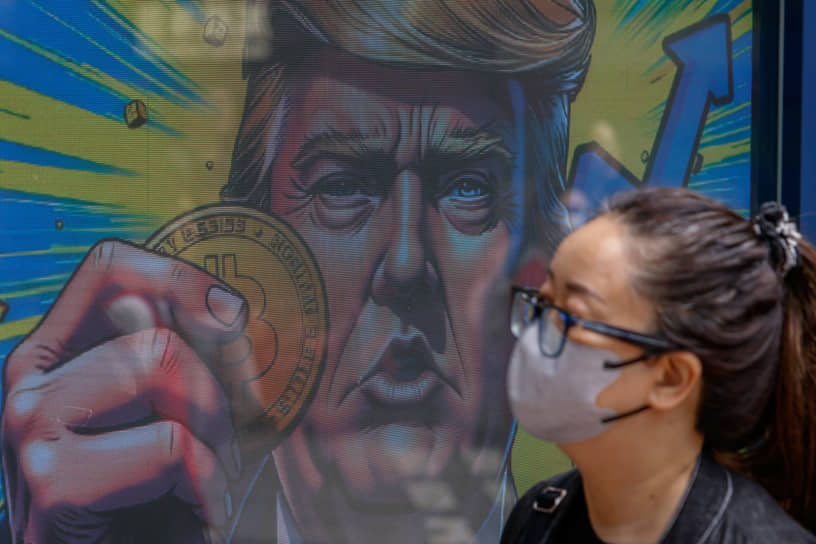
Какие прогнозы дают аналитики и инвесторы на дальнейшее поведение биткойна? Волатильность в ближайшие недели сохранится, считает консультант по криптовалютам Сергей Пушкарев: «Кажется, что это один из лучших моментов за последние восемь-девять лет и, наверное, самый большой оптимизм, который мог вообще состояться. Выход трампкойна, криптокомпании Трампа World Liberty Financial на $300 млн. формировали позитивные ожидания. Но по факту вероятна большая волатильность даже ниже $100 тыс.

Потом просадки сгладятся, и общий тренд на весну — рост, причем достаточно серьезный, потому что такая большая экономика, как Соединенные Штаты, войдет в игру.

Мемкойн от Трампа — по сути легитимизация истории с неблокчейновой "криптой". Биткойн — уже отдельный класс активов, как недвижимость или золото. Есть ли у него перспективы вырасти? Конечно. Ограниченное количество эмиссий и пользователей, а новые прибывают. Спрос будет только расти, люди в него уходят как в защиту, а потом возвращаются в более рисковые активы — остальные криптовалюты».

Собеседники “Ъ FM” полагают, что в перспективе биткойн может подорожать на 30-40%. Самые оптимистичные из озвученных оценок — $140 тыс. за монету. Ожидания инвесторов поддержал пятничный запуск мемкойна Trump. 20 января на пике он стоил почти $75 за единицу. Затем произошла коррекция до $40. Дональд Трамп в ходе своей предвыборной кампании анонсировал создание стратегического резерва в биткойнах и смягчение регулирования цифровых активов.

Крипторынок возлагает на это большие надежды, но появление новых мемкойнов делает прогнозы менее предсказуемыми, отмечает генеральный директор и основатель компании RizzGo Ольга Гончарова: «Все-таки биткойн остается "цифровым золотом". Этому способствует и его децентрализация, и то, что эмиссия ограничена. Если мы посмотрим на индекс доминирования биткойна, он продолжит сохранять свою лидирующую позицию.

Учитывая, что криптоиндустрия набирает обороты, поступательный рост биткойна продолжится и в обозримом будущем. Захотели — выпустили токен, крупные криптобиржи его сразу же залистили. Целые команды работают, бьются, чтобы был mass adoption, а к "крипте" относились как к серьезной сфере деятельности. И то, что сейчас произошло, конечно, очень сильно разочаровывает. Индустрия продемонстрировала, что она функционирует, как казино или некий гемблинг».

Пессимистически настроенные аналитики считают, что биткойн, претендующий на статус резервной валюты, разочаруют инвесторов. Он может «просесть» в цене на $20 тыс. за монету, допускает соучредитель инвестиционного клуба «Актив» Климентий Целовальников: «Могут начаться движения по продаже, не связанные с рыночными. Выход какого-то частного инвестора способен сильно повлиять на рынок. Второй момент: если будет накоплено большое количество позиций на рост, в моменте может начаться игра на понижение.

Чем больше массы ориентируются на то, что сейчас все будет расти, тем выгоднее сыграть на понижение. Люди накупили фьючерсов и опционов, а из них сейчас в основном и состоит объем торгов по биткойну. Крайне выгодно сделать резкое движение вниз.

Если биткойн просядет в моменте до $90 тыс. или до $85 тыс., многие разорятся. А он совершенно спокойно может сходить на эти цифры. Это вопрос вымывания с рынка игроков, которые не могут играть вдолгую».

В криптоиндустрии, говорят собеседники “Ъ FM”, внимательно следят за кадровыми перестановками, которые уже сделал 47-й президент США. Так, исполняющим обязанности главы Комиссии по ценным бумагам и биржам он назначил республиканца Марка Уэйда. Финансист выступает за четкие и прозрачные правила для рынка цифровых валют. По информации источников агентства Reuters, заметные изменения в политике регулятора и конкретные решения могут произойти уже на следующей неделе.


С нами все ясно — Telegram-канал "Ъ FM".

Lecturas Relacionadas

Citi Research Report Analysis: U.S. Proposed Ban on Chinese Optical Modules Has No Substantial Progress, Short-term Enforcement Faces Supply Constraints

Citi Report Analysis: U.S. Proposed Ban on Chinese Optical Modules Lacks Substantive Progress, Faces Supply Bottlenecks in Short Term. Reuters reported on August 4th that the U.S. government and FCC are considering a ban on Chinese optical modules. Citi's August 9th report clarifies that optical modules are not listed on any effective FCC ban. The FCC's Order 26-50 established two restricted list mechanisms (based on manufacturer and production location), but optical modules were only mentioned once, as an example in a disclosure requirement, not as a restricted product. The reported ban remains at a proposal stage. Citi estimates Chinese suppliers provide 60-70% of high-speed optical modules for U.S. hyperscalers. Non-Chinese suppliers cannot fill this gap in the short term, making the immediate implementation of a genuine ban unlikely. Future regulatory paths could be manufacturer-based (least likely), location-based covering all offshore production (strictest), or location-based covering only China (more feasible but with unresolved definitions). A ban would pressure U.S. AI infrastructure, conflicting with stated policy goals. Citi sees low near-term implementation probability, with the issue potentially becoming a negotiation chip in bilateral talks. U.S. domestic capacity build-out is a key long-term variable. Among Chinese companies, XSENS and Dongshan Precision have the highest U.S. exposure, while Tianfu Communication, as a passive component supplier, is relatively insulated. Citi maintains Buy ratings on all three with respective price targets. The conclusion is that Chinese modules are currently irreplaceable in the U.S. AI supply chain, creating a longer timeline for potential restrictions than the market may expect.

marsbitHace 28 min(s)

Citi Research Report Analysis: U.S. Proposed Ban on Chinese Optical Modules Has No Substantial Progress, Short-term Enforcement Faces Supply Constraints

marsbitHace 28 min(s)

Lead Analyst Claims Bitcoin is at a Critical Stage: 'We are at the Bear Market Bottom, What Happens Next…'

Renowned cryptocurrency analyst Benjamin Cowen, in his latest analysis video, examined recent events and historical cycles in the Bitcoin market. Noting Bitcoin's trading range of $64,000 to $65,000, Cowen stated that market dynamics and investor interest show similarities to past cycles, suggesting the upcoming period marks a critical turning point. Cowen observed a significant decline in public interest and investor enthusiasm for the crypto market, with social risk metrics falling to 0.2, far below levels seen four years ago. He added that market volatility has notably decreased, and a sense of distrust prevails among investors, drawing parallels to the ends of bear markets in 2018 and 2022. Historical data indicates Bitcoin markets typically bottom in summer months, followed by a period of stagnation with low volatility, implying a major move could occur in the year's final quarter. However, Cowen noted on-chain indicators like the MVRV Z-Score have not yet signaled a definitive bottom. Cowen believes an event in the coming weeks could shake the market, potentially triggering a final sell-off wave. Such an event, he argues, would bring investors back and pave the way for a new bull cycle. He predicts October as the most likely bottoming period, while acknowledging September or November are also possible, advising crypto users to remain cautious and prepared for a decisive market moment.

cryptonews.ruHace 36 min(s)

Lead Analyst Claims Bitcoin is at a Critical Stage: 'We are at the Bear Market Bottom, What Happens Next…'

cryptonews.ruHace 36 min(s)

Bitcoin Community in Uproar: Deciphering the New Scaling War Sparked by BIP-110

On August 10, Luke Dashjr, a long-time Bitcoin Improvement Proposal (BIP) editor and co-founder of Ocean mining pool, was removed from the BIP editing team for bypassing discussion protocols and preemptively assigning a number to BIP-110, a controversial soft fork proposal he helped draft. The conflict stems from Bitcoin Core's version 30 release in October 2025, which removed the default 83-byte limit on OP_RETURN, a field used for embedding non-transaction data. In response, BIP-110 aimed to enforce this limit as a consensus rule. It controversially lowered the activation threshold for miners to 55% and included a mandatory activation clause, causing significant community backlash. Major mining pools like Foundry USA and AntPool did not support it, with public criticism from figures like F2Pool's Wang Chun and Michael Saylor, who argued it compromised Bitcoin's neutrality. On August 8, at block height 961,632, nodes running the BIP-110 patch rejected the main chain block, causing a chain split. The minority chain, supported by only about 2.53% of the network's hash rate, produced just one additional block before stalling. The main chain quickly outpaced it by over 240 blocks. No major exchanges have supported the minority chain. The event highlighted Bitcoin's governance reality: while rules can be proposed by a few, ultimate authority lies with the economic majority—miners willing to expend hash power and users/exchanges recognizing a chain's validity. Following the failed split, BIP-110 proponents, including Luke Dashjr, have begun discussing a change to the proof-of-work algorithm to create a separate coin, though this remains in early discussion stages.

marsbitHace 58 min(s)

Bitcoin Community in Uproar: Deciphering the New Scaling War Sparked by BIP-110

marsbitHace 58 min(s)

Trading

Spot
活动图片