区块链的达摩克里斯之剑:一文读懂谷歌新量子芯片对区块链的影响

Odaily星球日报Publicado a 2024-12-22Actualizado a 2024-12-22

Resumen

一文读懂谷歌新量子芯片对区块链的影响。

前言:谷歌推出了量子芯片 Willow 可以在 5 分钟之内便完成了当今最快的超级计算机都需要 10 ^ 25 年才能完成的计算任务,虽暂时还无法对现实中使用的如 RSA 和 ECDSA 等算法造成威胁,但对加密货币安全体系提出了新的挑战,区块链的抗量子迁移显得日渐重要。AntChain OpenLabs 密码专家为您详细解读这项黑科技对区块链的影响。
区块链的达摩克里斯之剑:一文读懂谷歌新量子芯片对区块链的影响

谷歌推出新量子芯片 Willow

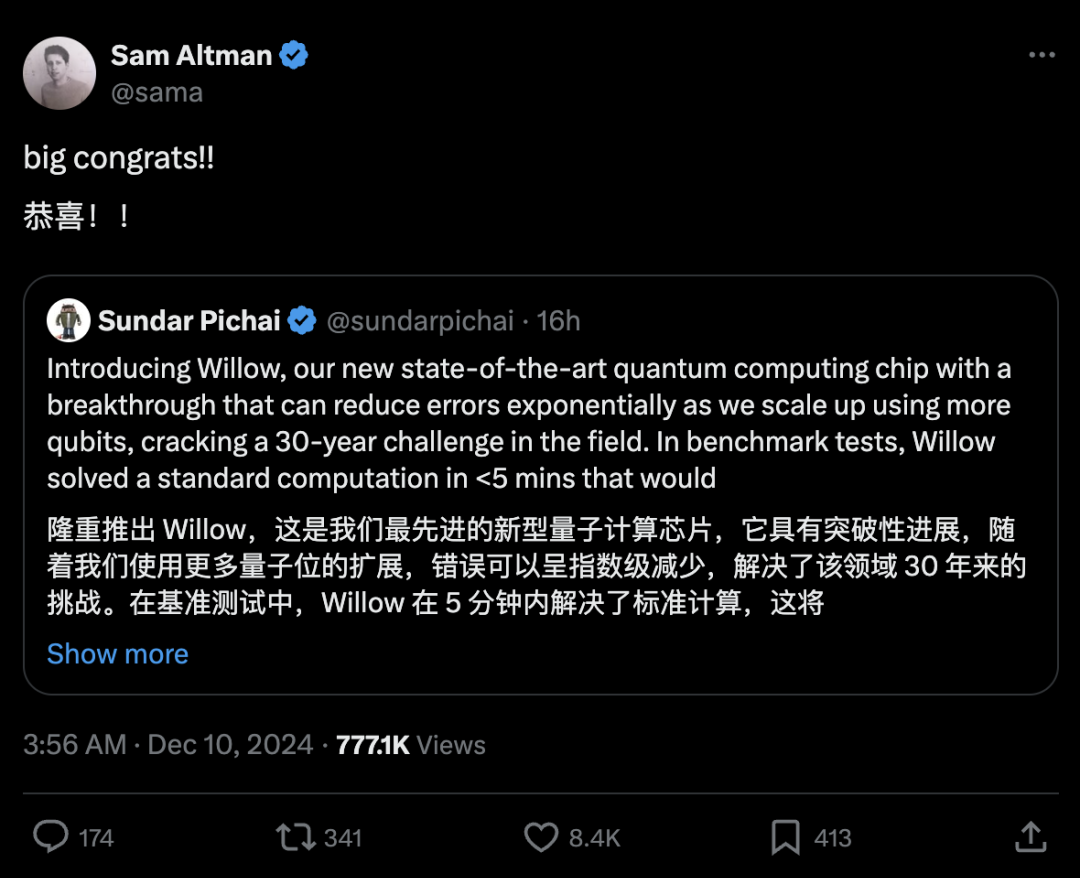
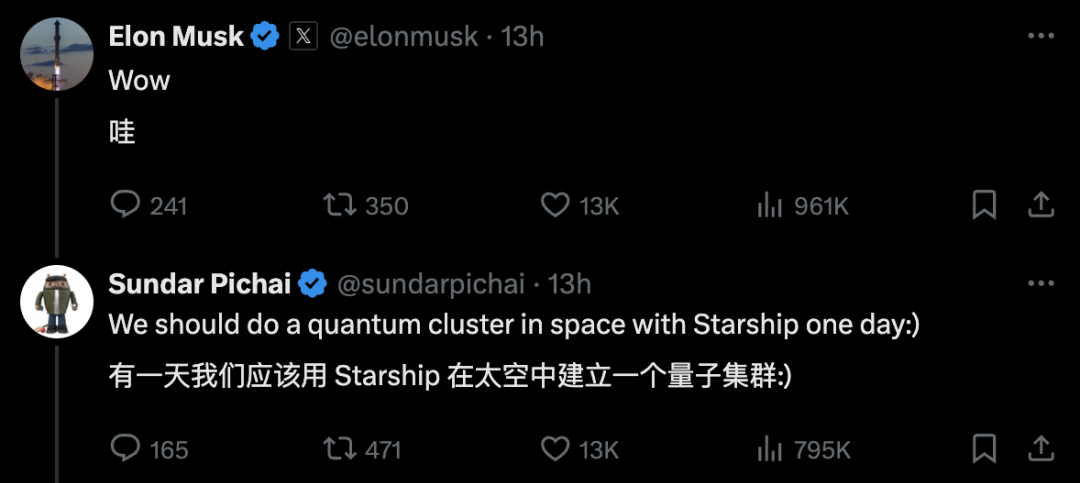
12 月 10 日,谷歌公司宣布推出其最新的量子计算芯片 Willow。这一创新性的技术是自 2019 年谷歌推出量子芯片 Sycamore 首次实现“量子霸权”之后的再一次突破。该成果已经在 Nature 上加急发表,且在社交媒体上获得了世界首富 Elon Musk 和 OpenAI 首席执行官 Sam Altman 的点赞,如图 1、 2 所示。
区块链的达摩克里斯之剑:一文读懂谷歌新量子芯片对区块链的影响

图 1 [ 1 ]

区块链的达摩克里斯之剑:一文读懂谷歌新量子芯片对区块链的影响

图 2 [ 2 ]

新芯片 Willow 拥有 105 个量子比特,在量子纠错和随机电路采样两项基准测试中都达到了同类别的最佳性能。其中,在随机电路采样基准测试中,Willow 芯片在 5 分钟之内便完成了当今最快的超级计算机都需要 10 ^ 25 年才能完成的计算任务,而这一数字超出了已知宇宙的年龄,甚至超出了物理学已知的时间尺度。

一般来说,在量子计算硬件方面,随着量子比特数量的增加,计算过程就更加容易出错。但是,Willow 能够将错误率实现指数级下降,并让错误率低于某个阈值。这往往是量子计算现实可行的重要前提。

Willow 研发团队 Google Quantum AI 的负责人 Hartmut Neven 称,作为首个低于阈值的系统,这是迄今为止最令人信服的可扩展逻辑量子比特原型,Willow 表明了大规模实用性量子计算机是可行的。

对加密货币的影响

谷歌的这一成就不仅推动了量子计算的发展,也对多个行业产生了深远影响,尤其是在区块链和加密货币领域。 比如,椭圆曲线数字签名算法(ECDSA)和哈希函数 SHA-256 被广泛用于比特币等加密货币的交易中,其中 ECDSA 被用于签署和验证交易,SHA-256 被用于确保数据完整性。研究表明,学者 Grover 提出的量子算法 [ 3 ]能够破解 SHA-256 ,但所需的量子比特非常多--需要数亿个量子比特。然而, 1994 年学者 Shor 提出的量子算法 [ 4 ]能够完全破解 ECDSA,仅需要百万个量子比特。

在比特币的交易中,比特币会从一个钱包地址转移到另一个钱包地址。比特币钱包地址分为下面的两类:

  • 第一类钱包地址是直接使用收款人的 ECDSA 公钥,对应的交易类型被称为“支付给公钥”(p2p k);

  • 第二类钱包地址是使用收款人的 ECDSA 公钥的哈希值,对应的交易类型被称为“支付给公钥的哈希”(p2p kh),但在进行交易时公钥会暴露出来。

这两种类型交易中,p2p kh 交易的占比最大。由于比特币的所有交易均是公开的,这意味着任何人都能从p2p k 历史交易中获取收款人的 ECDSA 公钥。比特币的区块间隔时间约为 10 分钟,在此期间,所有人都能够从活跃的p2p kh 交易中获取收款人的 ECDSA 公钥。一旦拥有量子计算机的攻击者获取了 ECDSA 公钥,其便能在量子计算机中运行 Shor 量子算法从 ECDSA 公钥中推导得到对应的 ECDSA 私钥,从而能够占据该私钥的所有比特币。即使p2p kh 交易仅有 10 分钟的窗口期,也够 Shor 量子算法推导出私钥。

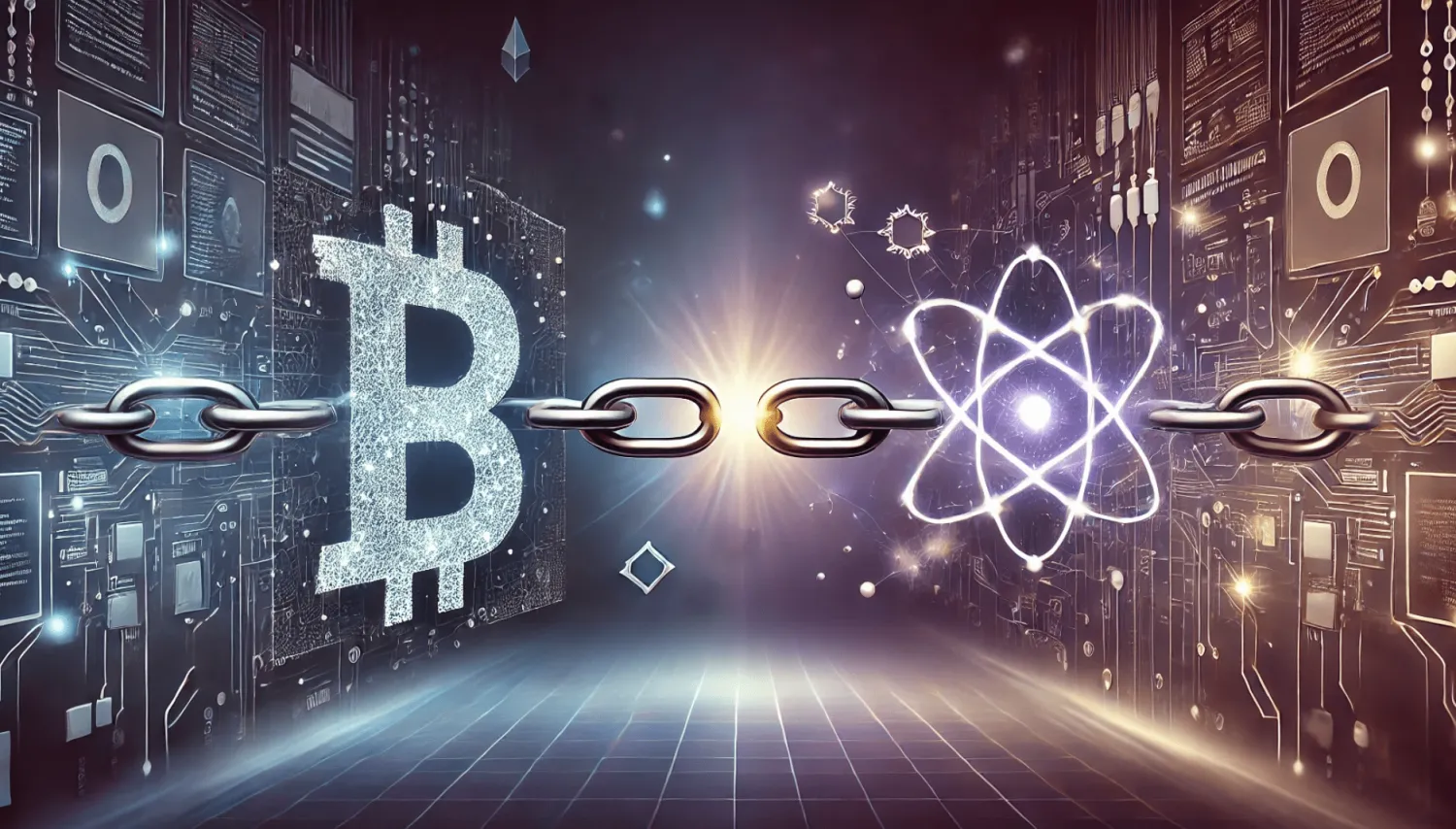
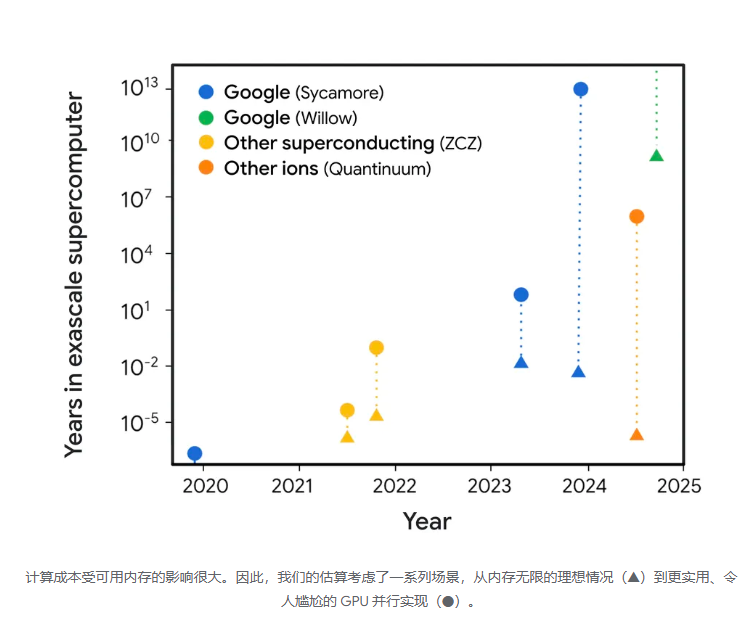
尽管谷歌的 Willow 芯片已经达到的 105 个量子比特还远小于破解比特币密码算法所需的量子比特,但即便如此,Willow 的出现预示着一条建造大规模实用性量子计算机的康庄大道,图 3 展示了 Willow 的最新成果,量子计算机在破解密码算法方面的潜力仍然令人担忧。

像比特币一样的加密货币在大规模量子计算机诞生之前能够维持交易正常运作,因为传统计算机需要 300 万亿年才能破解 ECDSA 私钥。虽然谷歌这项工作暂时还无法对现实中使用的如 RSA 和 ECDSA 等算法造成威胁,但可以看到谷歌的 Willow 芯片已经对加密货币安全体系提出了新的挑战。如何在量子计算的冲击下保护加密货币的安全性,将成为科技界和金融界共同关注的焦点,而这本质上依赖于抗量子区块链技术。这也使得开发抗量子区块链技术特别是将已有区块链进行抗量子升级成为了当务之急,以确保加密货币的安全性和稳定性。
区块链的达摩克里斯之剑:一文读懂谷歌新量子芯片对区块链的影响

图 3 [ 5 ]

抗量子区块链

后量子密码(post-quantum cryptography, PQC)[ 6 ]是一类能够抵抗量子计算攻击的新型密码算法。尽管 Shor 量子算法和 Grover 量子算法能够破解目前广泛应用在区块链和加密货币中的 ECDSA 等经典密码算法,但没法破解后量子密码算法。这使得即使量子时代来临,后量子密码算法依然安全。将区块链迁移到抗量子级别除了作为前沿技术探索,更是为了保证未来区块链长期稳健的安全性。

AntChain OpenLabs 此前已经完成区块链全流程的后量子密码能力建设,并基于 OpenSSL [ 7 ]改造了一个后量子版本密码库,支持多个 NIST 标准后量子密码算法 [ 8 ]以及后量子 TLS 通信。同时针对后量子签名较 ECDSA 有 40 倍以上存储膨胀的问题,通过优化共识流程和降低内存读取延迟,使得抗量子区块链 TPS 可达原链的 50% 左右。该密码库可以作为中间件为区块链以及政务、金融等其他场景的后量子迁移提供助力。

同时,AntChain OpenLabs 还在富功能密码算法的后量子迁移上有所布局,参与研发了一套针对 NIST 后量子签名标准算法 Dilithium 的分布式密钥管理协议,这是业界首个高效的后量子分布式门限签名协议,使用该协议可以克服业界后量子密管方案无法支持任意门限值的缺点,同时也在性能上较业界方案有 10 倍以上的提升。相关工作已经发表在安全类顶级期刊 IEEE Transactions on Information Forensics and Security 上 [ 9 ]。

区块链的达摩克里斯之剑:一文读懂谷歌新量子芯片对区块链的影响


Ref

[ 1 ] https://x.com/sundarpichai/status/1866167562373124420

[2] https://x.com/sama/status/1866210243992269271

[3] Grover L K. A fast quantum mechanical algorithm for database search[C]//Proceedings of the 28 th annual ACM symposium on Theory of computing. 1996: 212-219.

[ 4 ] Shor P W. Algorithms for quantum computation: discrete logarithms and factoring[C]//Proceedings 35 th annual symposium on foundations of computer science. 1994: 124-134.

[ 5 ] https://blog.google/technology/research/google-willow-quantum-chip/

[6] Bernstein D J, Lange T. Post-quantum cryptography[J]. Nature, 2017, 549( 7671): 188-194.

[ 7 ] https://github.com/openssl/openssl

[8] https://csrc.nist.gov/News/2022/pqc-candidates-to-be-standardized-and-round-4

[9] Tang G, Pang B, Chen L, Zhang Z. Efficient Lattice-Based Threshold Signatures With Functional Interchangeability[J]. IEEE Transactions on Information Forensics and Security. 2023, 18: 4173-4187.

[ 10 ] Cozzo D, Smart N. Sharing the LUOV: threshold post-quantum signatures[C]// Proceedings of the 17 th IMA Conference on Cryptography and Coding - IMACC. 2019: 128 – 153.

本文由 AntChain OpenLabs 撰写,同时 ZAN(X 账号@zan_team)是依托 AntChain OpenLabs 的 TrustBase 开源开放技术体系。
Lecturas Relacionadas

After Aave's Exit and TVL's Sharp Fluctuation, Where Does MegaETH's Valuation Anchor Lie?

Following the withdrawal of Aave and a sharp drop in its Total Value Locked (TVL), the valuation of the high-performance DeFi blockchain MegaETH faces scrutiny. Once a highly anticipated project with a fully diluted valuation (FDV) reaching around $2 billion, MegaETH saw its TVL plummet from a May peak of $245 million to just over $30 million in July, a roughly 70% decline. Its native token, MEGA, currently trades around $0.048 with a market cap of approximately $54 million and an FDV of about $480 million. The report identifies a core vulnerability: MegaETH's TVL was heavily dependent on a single protocol, Aave V3, which at its peak contributed around 90% of the chain's TVL. A significant portion of this capital is attributed to leveraged yield-farming strategies involving stablecoins like USDe. When the profitability of these strategies diminished, capital rapidly exited, exposing the lack of diversified, sustainable activity. Three key mismatches between MegaETH's valuation and its fundamentals are highlighted: 1. **Valuation vs. Real Usage:** With an FDV of ~$4.8B but only ~$1M in annualized protocol revenue and ~2,600 daily active addresses, the valuation appears disconnected from current economic activity. 2. **Token Narrative vs. Ecosystem Reality:** Despite its DeFi narrative, nearly 80% of the chain's recent protocol revenue comes from a trading card game, Monster, not from core DeFi applications like Aave. The chain's native stablecoin, USDM, also shows low trading volume and a declining market cap. 3. **Short-Term Hype vs. Long-Term Delivery:** Initial hype from token generation, blue-chip integrations, and influencer support has faded. Major protocols like Uniswap now hold minimal TVL on the chain, indicating that early capital was largely transient and driven by incentives rather than organic demand. The situation reflects a broader market trend where investors are becoming less tolerant of valuations based on inflated TVL and narrative, demanding clearer evidence of sustainable transactions, revenue, and ecosystem development. While MEGA's price may experience short-term rebounds from market sentiment, a fundamental re-rating likely depends on the team's ability to convert its remaining resources into tangible, user-retaining applications and genuine ecosystem growth.

链捕手Hace 4 hora(s)

After Aave's Exit and TVL's Sharp Fluctuation, Where Does MegaETH's Valuation Anchor Lie?

链捕手Hace 4 hora(s)

Goldman Sachs In-Depth Report: Who Will Be the Long-Term Winners in China's AI Large Model Industry?

Goldman Sachs Report: China's AI Models at an Inflection Point China's open-source/open-weight large language models (LLMs) have reached performance parity with top global proprietary models, according to a Goldman Sachs report. This is driven by architectural innovations and higher parameter efficiency, allowing Chinese models to achieve comparable capabilities at 2%-10% the parameter size and significantly lower cost. The market is evolving into a two-tiered structure: a high-end segment (e.g., GLM5.2, Qwen3.7 Max) with premium pricing and a low-end, price-sensitive segment for global SMEs and individual users. Key points: * **Cost & Performance:** Innovations like Mixture of Experts (MoE) enable high performance with smaller models. Projects like Meituan's LongCat 2.0, trained on domestic hardware, highlight progress in tech self-sufficiency. * **Open-Source Strategy:** Most Chinese players use open-source/open-weight models for flexibility and ecosystem growth. However, Goldman notes this may underreport actual deployment and revenue. A shift toward "open-weight + community license" models with revenue sharing (e.g., MiniMax) could improve monetization. * **Market Shift & Global Expansion:** Enterprise AI adoption is shifting from "token maximization" to "ROI-first." International expansion, especially in non-US markets, is a major growth driver. Chinese models are increasingly available on global platforms like AWS Bedrock and Microsoft Copilot. * **Competitive Landscape:** Using a framework based on pricing power, cost advantage, and financial strength, Goldman identifies **Zhipu AI and DeepSeek** as the strongest in foundational text models, and **ByteDance** as the leader in multimodal/video generation. The report maintains Buy ratings on MiniMax and Kuaishou. * **Market Growth:** China's AI model API and subscription revenue is projected to grow from an estimated ¥35 billion in 2026 to ¥879 billion by 2030.

marsbitHace 4 hora(s)

Goldman Sachs In-Depth Report: Who Will Be the Long-Term Winners in China's AI Large Model Industry?

marsbitHace 4 hora(s)

Goldman Sachs Deep Dive Report: Who Will Become the Long-Term Winners in China's AI Large Model Industry?

Goldman Sachs Report: Who Will Be the Long-Term Winners in China's AI Large Model Industry? China's AI large model sector is at a historic inflection point. Goldman Sachs argues that the intelligence of Chinese open-source/open-weight models is approaching top global proprietary models. Rapid adoption by domestic enterprises and global SMEs is creating a data flywheel effect that will further drive model iteration. The evolution is summarized as moving from "DeepSeek's cost-efficiency moment last year to GLM's model-intelligence moment this year." Chinese models achieve near-state-of-the-art performance at significantly lower cost, primarily due to architectural innovations like Mixture of Experts (MoE) and higher parameter efficiency. Models like DeepSeek V4 Pro (1.6T params), GLM5.2 (0.7T), and MiniMax M3 (0.4T) are much smaller than global leaders. Recent advancements in coding capability are attributed to better data curation and RLHF. Landmarks like Meituan's LongCat 2.0, trained fully on domestic AI chips, demonstrate progress in hardware stack independence. The market is forming a "two-tiered structure." The high-end tier (e.g., GLM5.2, Alibaba's Qwen3.7 Max) prices around $1 per million tokens, about 10-25% of US top models, with estimated inference gross margins of 10-20%. The low-end tier (priced as low as $0.06-$0.2 per million tokens) targets price-sensitive global SMEs and individuals. MiniMax derives 60-70% of revenue overseas. Goldman forecasts China's AI model API/subscription revenue to grow from an estimated RMB 35bn in 2026 to RMB 879bn by 2030. Most Chinese players adopt open-source/open-weight strategies for deployment flexibility and community feedback, though this limits monetization as deployments on third-party platforms (e.g., Alibaba Cloud) may not generate direct revenue. A shift towards "open-weight + community license" models with revenue-sharing agreements (like MiniMax's approach) could improve unit economics. International expansion, particularly in non-US markets, is the key growth driver. The global enterprise AI paradigm is shifting from "token maximization" to "ROI prioritization." Chinese models are already hosted on major global platforms like AWS Bedrock and are under consideration for integration into Microsoft Copilot. Using a competitive framework based on pricing power, cost advantage, and financial strength, Goldman identifies the strongest players: In foundational text models, Zhipu AI (initiated coverage) and DeepSeek lead. In multimodal/video generation, ByteDance's Seed is the frontrunner, with Kuaishou's Kling and MiniMax's Hailuo also well-positioned. Goldman maintains a Buy rating on MiniMax, citing its attractive valuation.

链捕手Hace 4 hora(s)

Goldman Sachs Deep Dive Report: Who Will Become the Long-Term Winners in China's AI Large Model Industry?

链捕手Hace 4 hora(s)

Trading

Spot
活动图片