Dreamcars Gives You Access to Rental Income Through Luxury Cars – Next 100x Crypto?

bitcoinistPublicado a 2024-12-17Actualizado a 2024-12-17

Resumen

"What color is your Bugatti?" These words from Andrew Tate resound in the minds of many. However, unlike this grift-ridden...

“What color is your Bugatti?” These words from Andrew Tate resound in the minds of many. However, unlike this grift-ridden statement, luxury cars serve other purposes, including rental income.

After owning them, you can rent them to everyone from newlyweds looking to add a “Just Married” tag for a stylish wedding night to people attending their first prom. The rental car economy is booming continuously. However, high costs prevent many from accessing it.

Dreamcars is a project that addresses this problem by implementing blockchain technology. The idea is simple – if an entire car is too expensive, why not digitize its ownership into small fractions? This way, even those who can only spend about $10 can become part owners of a Rolls Royce. Available on presale, Dreamcars has successfully marketed this feature to gain significant traction. It continues to engage the crypto investment community looking for utility-based tokens, and analysts believe it will reach higher values once the presale concludes. But should you care about it?

Rental Income Through Luxury Cars – Why Does it Matter?

The world is slowly realizing there is more to life than living inside the 9-to-5 grind. That realization has resulted in people looking for alternative venues to generate income. Some focus on real estate, others focus on trading. However, a few focus on luxury cars.

Luxury car ownership has always been thought of as a vanity project – and it often is – as a car’s value drops by 50% the moment it leaves the showroom. However, renting the same car does something different.

It turns a luxury car into an income generator. Often sought after by entrepreneurs and people who want to travel in style, luxury cars match their vibe, which turns these individuals into perfect clients. Therefore, the luxury car rental market is rapidly expanding. Fortune Business Insights reports that it is worth $49 billion in 2024 and could potentially grow to $89 billion by 2032.
Rental Income Through Luxury Cars - Why Does it Matter

However, therein lies the issue: this wealth is concentrated among a few dealers and car owners, as even low-tier luxury cars are very expensive. Take the cheapest Lamborghini, for instance. The 2024 Lamborghini Huracán starts at $249,000. This means the majority of people are locked out of this economy.

Dreamcars is a project bringing this form of income to the masses.

What Lies Inside the Dreamcars Ecosystem?

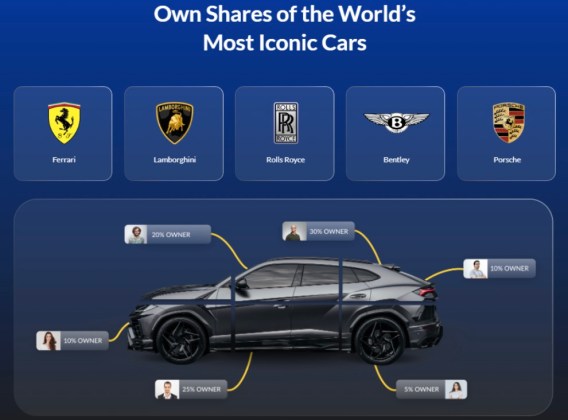
The Dreamcars ecosystem has been designed to give everyone an equal opportunity to earn from the luxury car rental market. The native token of the ecosystem, DCARS, is used to buy fractional ownership of specific cars.

Each car gets a digitized document of its ownership, which is then divided into fractional NFTs. These NFTs can be owned, making people partial owners of those cars. This form of NFT is more tangible, as they are car-backed.

What Lies Inside the Dreamcars Ecosystem

When the car is rented out to individuals, it generates rental income. This rental income is then divided among the owners of the NFTs. An added advantage is that NFT owners won’t have to worry about additional charges. Dreamcars developers take responsibility for managing ownership, insurance, maintenance, and advertising of the cars.

In addition to rental income, these NFTs can also be traded on the Dreamcars marketplace. It is a place where these fractional NFTs can be bought, sold, or even rented, giving users an additional source of income.

But what advantages does it have beyond affordability? There are two to speak of. First, there is blockchain-driven security, which ensures that each ownership is well-defined. Second, with car ownerships being digitized, this rental market can be accessed from anywhere in the world.

Dreamcars Raises Over $700k To Date

Although the project’s initial entry was lukewarm, Dreamcars has now picked up the pace. Over $700K has been raised so far, with more investors coming in to examine the project. Is the current pace indicative of how DCARS may perform after the presale concludes? Yes, it likely will, and most predictions about this token are bullish.

With Bitcoin now past the $100k mark, investors are not shying away from utility-centric projects. And Dreamcars, being an RWA-driven ecosystem, can potentially attract significant user interest. Furthermore, its presale comes with additional benefits in the form of NFTs, which further enhance investors’ gains.

Dreamcars is also offering additional tokens to investors for a limited time, provided they use the code DCAR50 when making their purchase. This will give you 50% additional tokens. Those interested in this project should visit the official website today.

Final Words

With the world’s economy moving toward a democratized front, investors are now interested in meaningful crypto projects to support. While standard meme coins have their appeal, those looking for long-term benefits should consider projects like Dreamcars. With straightforward utility and the opportunity to join a rising economy, Dreamcars could experience massive adoption.

Furthermore, the Dreamcars presale has already received multiple awards for bringing more tangible use cases to the crypto ecosystem, making it a promising investment.

Visit Dreamcars

Lecturas Relacionadas

USDC Begins Nested Issuance, Coinbase Launches Custom Stablecoin Branding Service

Coinbase has launched its "Custom Stablecoins" platform, enabling businesses to offer branded stablecoins. The first client is Flipcash, a social payments app, which has introduced USDF. USDF is a Solana-based stablecoin, pegged 1:1 to USDC, and is designed to serve as a stable pricing and settlement unit for Flipcash's user-created community currencies. This move shifts the focus of stablecoins from being standalone assets or investment products to becoming embedded payment and settlement components within broader applications. For businesses like Flipcash, the core need is not to become a stablecoin issuer, but to integrate stable, reliable digital cash functionality—handling pricing, payments, and settlements—without managing the complex underlying infrastructure of issuance, reserves, on-chain contracts, fiat on-ramps, and compliance. Coinbase's platform provides this infrastructure as a service, positioning the exchange as a stablecoin infrastructure provider. While USDC remains the foundational reserve asset, the branded token (e.g., USDF) offers applications a tailored, user-facing financial tool. This development highlights a potential path for stablecoins to become ubiquitous backend utilities in social, gaming, and e-commerce applications, though it also brings significant regulatory and operational complexities associated with handling real user funds.

链捕手Hace 1 hora(s)

USDC Begins Nested Issuance, Coinbase Launches Custom Stablecoin Branding Service

链捕手Hace 1 hora(s)

Detained for 37 Days: The First Wave of People Who Got Rich from 'AI Gateways' Are Starting to Go to Jail

A prominent AI proxy service operator was reportedly detained for 37 days and is now on bail pending trial, highlighting the legal risks in China's booming but unregulated AI intermediary market. These services act as "AI scalpers," providing domestic users with access to restricted overseas models (like OpenAI, Claude) by bundling APIs, handling payments, and bypassing network blocks, all for a fee. Their controversial profitability stems from practices like bulk-registering accounts to resell free credits, exploiting refund policies, overcharging for tokens, substituting cheaper models, and illegally selling user conversation data. Major figures, including cryptocurrency entrepreneurs, are now entering this space. Legally, these operations face severe risks. Their core model often involves unauthorized API access and operating without required telecom licenses, potentially constituting illegal business operations. They fail to meet data security obligations for the vast amounts of user data they process, risking charges for failing to fulfill network security duties. Crucially, the unauthorized collection and sale of user data, which can include personal and commercial secrets, easily meets the threshold for the crime of infringing on personal information. The case underscores a critical juncture for the AI industry. While proxies lower access barriers, they expose user data to unsecured middlemen and undermine the business models of AI developers, forcing them to divert resources to security and distorting market value perceptions. The article argues that the industry's sustainable future depends on building trust, protecting data, and fostering compliant competition, moving away from its current "wild growth" phase.

marsbitHace 1 hora(s)

Detained for 37 Days: The First Wave of People Who Got Rich from 'AI Gateways' Are Starting to Go to Jail

marsbitHace 1 hora(s)

Putting Markets On-Chain: Canton Network Quietly Becomes the New Backbone of Institutional Finance

**Title: Letting the Market Itself Go On-Chain: Canton Network Quietly Becomes the New Backbone for Institutional Finance** **Summary:** The Canton Network, a blockchain platform designed for institutional finance, is gaining significant traction. A key sign of its maturity was Visa's recent entry as a super-validator, a proposal approved in just three days—highlighting prior, extensive collaboration between traditional finance and crypto. Unlike public chains like Ethereum that prioritize transparency and asset onboarding, Canton focuses on enabling confidential, compliant business operations for regulated institutions. Its core design features built-in **data visibility control**, meaning transaction details are only shared between direct counterparties. This privacy is fundamental, allowing competing institutions (like banks Goldman Sachs, JPMorgan, and BNP Paribas, all validators) to interact on the same network without exposing sensitive positions or strategies. Developed by Wall Street veterans at Digital Asset, Canton has taken a slow, deliberate approach to onboard real financial activity. It now handles over **$9 trillion monthly** in transaction volume, primarily from real-world institutional use cases like **tokenized repo agreements**, Treasury settlements, and collateral mobility. Major live applications include **JPM Coin** for institutional payments and **DTCC's tokenized U.S. Treasuries** project. Canton's native token, **CC**, is framed as a "network utility asset" with zero pre-mine or VC allocations. Its value is intended to be driven by the volume of real financial activity on the network. Looking ahead, Canton aims to become the invisible foundational layer for global finance—enabling atomic settlement (where payment and asset delivery occur simultaneously), 24/7 capital flows, and the native issuance and settlement of various asset classes, from corporate bonds to potentially equities. The main challenges are no longer technical but involve navigating fragmented global regulations and integrating with legacy financial systems.

marsbitHace 1 hora(s)

Putting Markets On-Chain: Canton Network Quietly Becomes the New Backbone of Institutional Finance

marsbitHace 1 hora(s)

Trading

Spot
Futuros
活动图片