Aave DAO рассматривает возможность выхода из Polygon после предложения по использованию активов моста в DeFi

cryptonews.ruPublicado a 2024-06-17Actualizado a 2024-12-17

Сообщество Aave обсуждает возможность прекращения операций на Polygon, ссылаясь на опасения по поводу предстоящего обзора профиля риска мостовых активов в сети.

Предложение от 13 декабря, инициированное основателем сети Aave Марком Целлером, направлено на пересмотр параметров риска экземпляров в Aave v2 и Aave v3 в сети Polygon (MATIC).

По словам Целлера, этот шаг является ответом на предложение по управлению Polygon, в котором запрашивается использование более $1 млрд резервов стейблкоинов для фарма на других протоколах, таких как Morpho и Yearn.

Предложение включает ряд существенных корректировок параметров риска, таких как установка коэффициентов кредита к стоимости (LTV) на уровне 0%, увеличение коэффициентов резервирования и заморозка определенных резервов в развертываниях Aave v2 и v3.
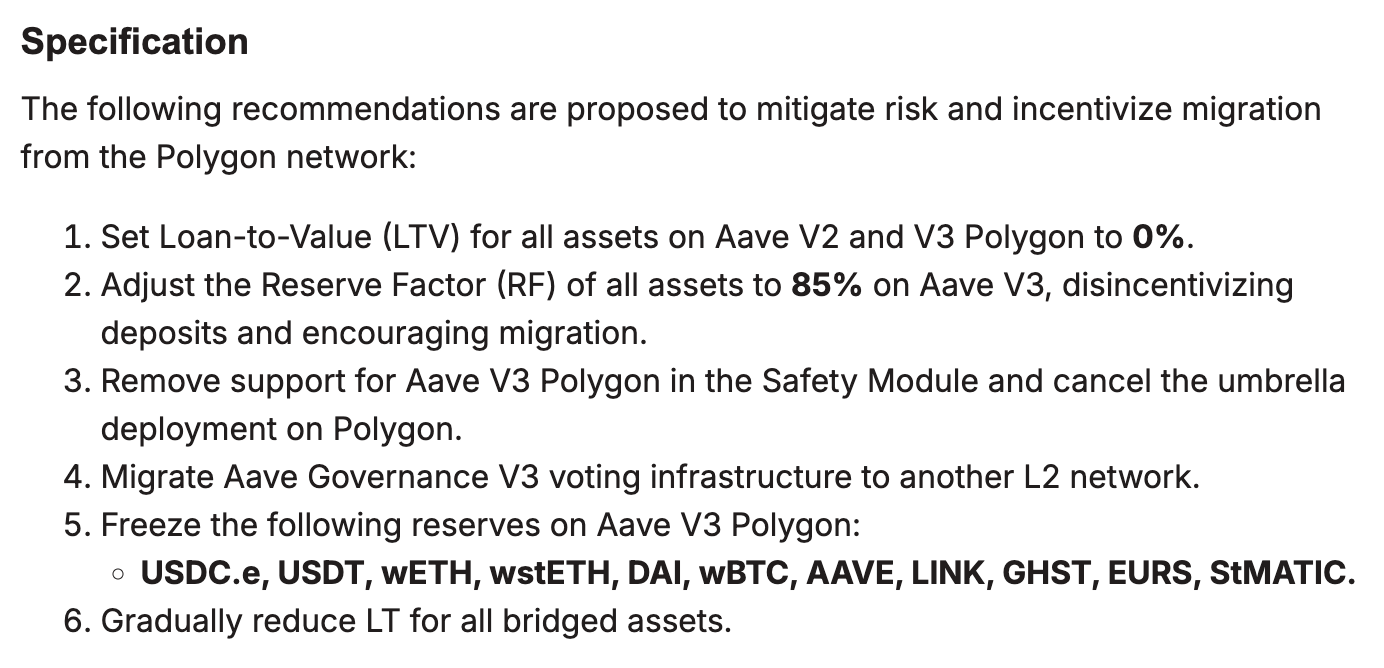

Предложение Марка Целлера на форуме управления Aave. Источник: Aave

Коэффициент LTV определяет, сколько пользователь может занять под залог. Установив LTV на 0%, пользователи больше не смогут использовать мостовые активы в качестве залога для заимствования средств, тем самым снижая риск каскадных ликвидаций в случае уязвимости моста.

Между тем, заморозка активов не позволит пользователям взаимодействовать с несколькими мостовыми токенами, включая Bridged USD Coin (USDC.e), Wrapped Ether (wETH), Wrapped Staked Ether (wstETH), Wrapped Bitcoin (WBTC), Aave (AAVE), Chainlink (LINK), Aavegotchi (GHST), Lido Staked Matic (StMATIC) и стейблкоины Tether (USDT), Stasis Euro (EURS) и Dai (DAI).

Aave (AAVE) — один из крупнейших протоколов кредитования в сети Polygon (MATIC). Согласно данным DefiLlama, пользователи Aave заблокировали на Polygon $461 млн.

С другой стороны, совокупные сборы, полученные Aave на блокчейне Polygon, на момент написания статьи составляют $122 млн.
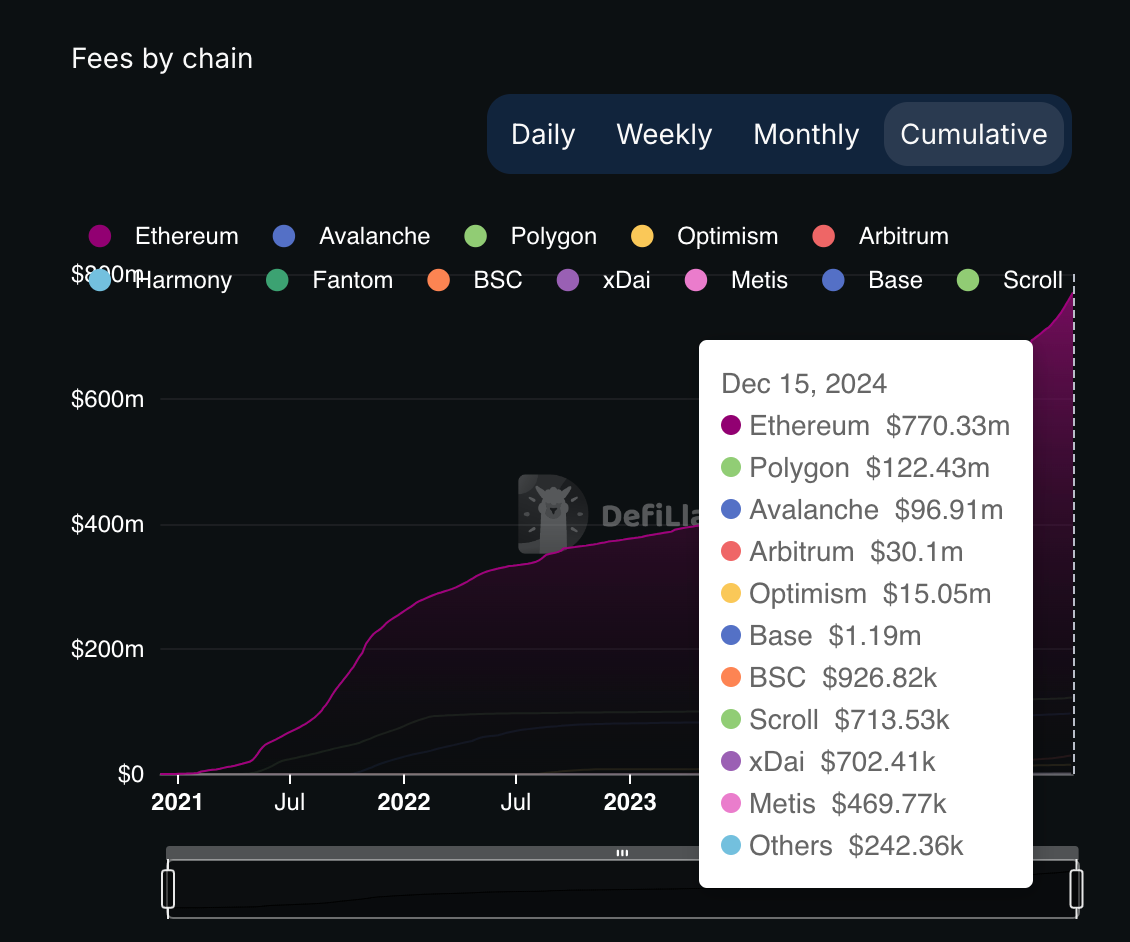

Сборы Aave по блокчейнам. Источник: DefiLlama

Ссылаясь на уязвимости мостов, Целлер сказал, что этот шаг снизит риски для активов мостов и побудит пользователей мигрировать из сети Polygon.

«Экосистема Aave испытала как косвенное, так и прямое воздействие уязвимостей мостов, в частности взломов мостов Multichain и Harmony», — сказал Целлер.

Представитель Polygon Labs сказал, что предложение все еще находится на ранней стадии и открыто для отзывов сообщества. Он также подчеркнул свою поддержку внимания сообщества к безопасности экосистемы.

«Сообщество Polygon, в которое входят разработчики dApp по всем протоколам, ценит открытый диалог и сотрудничество как неотъемлемые части процесса управления. Получение отзывов от всех заинтересованных сторон имеет важное значение, и мы поощряем непрерывный диалог, чтобы гарантировать, что эти предложения будут полностью обсуждены и оценены» , — говорится в сообщении Polygon Labs.

Блокчейн-мост позволяет пользователям передавать токены между двумя блокчейнами. Обычно он включает блокировку актива в одном блокчейне и создание эквивалентного представления в другом.

Уязвимости мостов стали популярной целью для эксплоитов децентрализованных финансов (DeFi), на которые пришлось более половины всех атак на блокчейн в период с 2021 по 2022 год.

Предложение Polygon об использовании ликвидности моста

За попыткой Aave выйти из сети Polygon стоит предложение, инициированное 12 декабря компанией Allez Labs при участии Morpho Association и протокола Yearn.finance. Предложение об управлении открывает в сообществе обсуждение о максимизации генерации доходности для примерно 1,3 млрд долларов в неактивных стейблкоинах, которые в настоящее время хранятся на мосту Polygon Portal.

Стратегия предполагает размещение активов в хранилищах, генерирующих доходность, на Ethereum, в частности в хранилищах ERC-4626, для получения предполагаемой годовой доходности около 7%, что потенциально разблокирует 81 млн долларов годового дохода для сети Polygon.

Сгенерированная доходность затем будет возвращена обратно в Polygon и реинвестирована в ее экосистему DeFi для стимулирования ликвидности и поощрения роста проектов.

Согласно предложению, хранилища и рынок Morpho будут служить протоколом ликвидности, в то время как Allez Labs будет обеспечивать управление рисками, а протокол Yearn будет выступать в качестве менеджера программы вознаграждений.

Предложение на форуме управления Polygon вызвало бурную дискуссию в сообществе, при этом большинство пользователей выступили против решения, ссылаясь на дополнительные риски безопасности для держателей стейблкоинов.

«Люди, которые в настоящее время держат стейблкоины на PoS-мосте Polygon, решили хранить там свои активы, потому что они воспринимают его как среду с низким уровнем риска. Помещая эти стейблкоины в хранилище, вы заставляете этих держателей брать на себя дополнительный риск без какой-либо соответствующей награды», — подчеркнул член сообщества.


Criptos en tendencia

Lecturas Relacionadas

MSTR Discloses Sale of 3,588 Bitcoins, Stock Price Drops Over 5% at One Point During Trading

MicroStrategy, the world's largest corporate holder of Bitcoin, has significantly shifted its business model. Between June 29 and July 5, the company sold 3,588 bitcoins for approximately $216 million to fund quarterly dividends for its preferred stock. This marks its largest-ever Bitcoin sale and signals a strategic pivot: Bitcoin is transitioning from a "buy-and-hold" reserve asset to a liquidity management tool for the company. This move follows a recent authorization allowing Bitcoin sales when equity fundraising is less attractive. The announcement contributed to a more than 5% intraday drop in MicroStrategy's stock price, while Bitcoin fell to around $61,800—below the company's average holding cost of roughly $75,700. The sale represents a major departure from MicroStrategy's long-standing "never sell" commitment, which saw its first minor breach in May with a $2.5 million sale. The latest, hundred-times-larger transaction underscores growing financial pressures. Analysts note the company faces about $1.5 billion in annual preferred dividend obligations, far exceeding cash flow from its software business. As of July 5, MicroStrategy holds 843,775 bitcoins. Its current operational logic involves buying Bitcoin during favorable financing conditions and selling portions to cover dividends when needed, creating a flexible capital management cycle amidst a challenging market environment.

华尔街日报Hace 2 hora(s)

MSTR Discloses Sale of 3,588 Bitcoins, Stock Price Drops Over 5% at One Point During Trading

华尔街日报Hace 2 hora(s)

Q-Day Countdown: Will Quantum Computing End Cryptocurrencies?

Quantum Computing's Threat to Cryptocurrency: A Countdown to Q-Day Quantum computing, specifically Shor's algorithm, poses a fundamental threat to the public-key cryptography (e.g., ECDSA, RSA) that secures blockchain networks like Bitcoin and Ethereum. This critical juncture, known as Q-Day, is estimated to occur potentially within the next 5-15 years. The core vulnerability stems from the public and immutable nature of blockchains. Assets in addresses where the public key is already exposed on-chain (e.g., spent outputs) are at direct risk, as a sufficiently powerful quantum computer could derive the private key. This threatens the very trust model of cryptocurrencies. The response lies in Post-Quantum Cryptography (PQC)—algorithms like lattice-based ML-DSA and hash-based SLH-DSA, which are resistant to quantum attacks. NIST has standardized key PQC algorithms (FIPS 203, 204, 205), providing a migration path. However, the primary challenge is not technical but socio-economic and involves complex governance: * **Bitcoin's** path is constrained by its conservative ethos. Migrating requires a soft-fork to new address types, facing hurdles like significantly larger signature sizes and, most critically, the divisive governance question of how to handle at-risk legacy UTXOs without violating core principles. * **Ethereum** is pursuing a "cryptographic agility" strategy, with a multi-layered roadmap. It leverages account abstraction for user accounts and is developing compressed hash-based signatures (e.g., leanXMSS) for its consensus layer, aiming for a full-stack upgrade over time. In conclusion, quantum computing does not spell an instant end for cryptocurrency but initiates a critical countdown. The industry has a limited "engineering comfort window" to orchestrate a coordinated, ecosystem-wide migration to PQC. The ultimate bottlenecks are the immense coordination efforts and governance decisions required for this foundational transition.

marsbitHace 3 hora(s)

Q-Day Countdown: Will Quantum Computing End Cryptocurrencies?

marsbitHace 3 hora(s)

Trump, the President Who Knows Best How to 'Trade Stocks'

Former US President Donald Trump reported a record-breaking $2.2 billion in personal income for 2025, the highest annual income ever disclosed by a sitting president. This figure, from a 927-page government ethics filing, represented a 3.5-fold increase from his $600 million income in 2024 and boosted his net worth to $6.5 billion. The primary drivers were cryptocurrency (64% of income, approximately $1.4 billion) and real estate (26%, approximately $575 million). His crypto earnings stemmed largely from the launch of his personal meme coin, $TRUMP, generating over $600 million in licensing fees, and substantial profits from the WLFI token and its parent company. Despite a sluggish property market, his Mar-a-Lago resort and associated golf clubs saw revenue surges of 50% and 27%, respectively, attributed to their use as venues for presidential events. Trump's financial disclosure also revealed an unprecedented level of stock market activity, with over 22,000 trades executed in 2025, averaging 87 trades per market day. Media analyses noted several instances where significant trading coincided with major policy announcements, such as proposed tariffs, raising questions about potential conflicts of interest. While the White House stated these trades were handled by a family-managed trust fund and not Trump directly, critics highlighted this as a departure from the blind trusts traditionally used by presidents post-Watergate. The report has intensified debate over the commercialization of the presidency. Supporters view it as a success story of a businessman-president, while critics argue it demonstrates an unprecedented conversion of public influence into private wealth, with policy decisions potentially linked to personal financial gains. The controversy centers on whether Trump's earnings represent innovative entrepreneurship or a fundamental conflict of interest, sparking renewed calls for stricter ethics reforms in US governance.

marsbitHace 3 hora(s)

Trump, the President Who Knows Best How to 'Trade Stocks'

marsbitHace 3 hora(s)

Countdown to Q-Day: Will Quantum Computing End Cryptocurrencies?

The article explores the existential threat quantum computing poses to cryptocurrencies and the urgent need for "post-quantum" migration. It outlines that quantum computers, through Shor's algorithm, could break the elliptic-curve cryptography (ECC) underlying blockchain security, potentially allowing private keys to be derived from public keys. The core challenge is not a lack of post-quantum cryptography (PQC) standards—like NIST's ML-KEM and ML-DSA—but the immense complexity of upgrading entire ecosystems before "Q-Day" (when quantum computers become capable of such attacks, estimated around 2035-2045). Key points include: * **Bitcoin's** risk is concentrated in legacy UTXOs with exposed public keys (e.g., early P2PK outputs). Migration faces massive hurdles: PQC signatures are much larger, increasing transaction size and cost, and the governance dilemma of handling un-migrated assets threatens its "code is law" ethos. * **Ethereum's** strategy focuses on "cryptographic agility," using Account Abstraction for user accounts and developing compressed hash-based signatures (like leanXMSS with SNARK aggregation) for consensus. Its migration is a complex, full-stack overhaul of execution, consensus, and data layers. * The "security debt" is enormous. The comfortable engineering window for a coordinated, ecosystem-wide upgrade is only 5-8 years. High-value infrastructure (exchanges, bridges) may face pressure before mainnet protocols. In conclusion, quantum computing is not an instant "doomsday" event but a forcing function for systemic change. Bitcoin's ultimate test is social consensus and property rights governance, while Ethereum's is technical complexity. Failure to migrate in time could lead to a fundamental re-pricing of crypto assets.

链捕手Hace 4 hora(s)

Countdown to Q-Day: Will Quantum Computing End Cryptocurrencies?

链捕手Hace 4 hora(s)

Trading

Spot

Artículos destacados

Cómo comprar DAO

¡Bienvenido a HTX.com! Hemos hecho que comprar DAO Maker (DAO) sea simple y conveniente. Sigue nuestra guía paso a paso para iniciar tu viaje de criptos.Paso 1: crea tu cuenta HTXUtiliza tu correo electrónico o número de teléfono para registrarte y obtener una cuenta gratuita en HTX. Experimenta un proceso de registro sin complicaciones y desbloquea todas las funciones.Obtener mi cuentaPaso 2: ve a Comprar cripto y elige tu método de pagoTarjeta de crédito/débito: usa tu Visa o Mastercard para comprar DAO Maker (DAO) al instante.Saldo: utiliza fondos del saldo de tu cuenta HTX para tradear sin problemas.Terceros: hemos agregado métodos de pago populares como Google Pay y Apple Pay para mejorar la comodidad.P2P: tradear directamente con otros usuarios en HTX.Over-the-Counter (OTC): ofrecemos servicios personalizados y tipos de cambio competitivos para los traders.Paso 3: guarda tu DAO Maker (DAO)Después de comprar tu DAO Maker (DAO), guárdalo en tu cuenta HTX. Alternativamente, puedes enviarlo a otro lugar mediante transferencia blockchain o utilizarlo para tradear otras criptomonedas.Paso 4: tradear DAO Maker (DAO)Tradear fácilmente con DAO Maker (DAO) en HTX's mercado spot. Simplemente accede a tu cuenta, selecciona tu par de trading, ejecuta tus trades y monitorea en tiempo real. Ofrecemos una experiencia fácil de usar tanto para principiantes como para traders experimentados.

195 Vistas totalesPublicado en 2024.12.11Actualizado en 2026.06.02

Cómo comprar DAO

Discusiones

Bienvenido a la comunidad de HTX. Aquí puedes mantenerte informado sobre los últimos desarrollos de la plataforma y acceder a análisis profesionales del mercado. A continuación se presentan las opiniones de los usuarios sobre el precio de DAO (DAO).

活动图片