Игра OpenSeason, похожая на Fortnite, сжигает 82% своих токенов

cryptonews.ruPublicado a 2024-05-03Actualizado a 2024-12-03

В шутере-королевской битве, похожем на Fortnite,OpenSeason был проведён 12-часовой конкурс, в котором игрокам обещали 350 000 долларов в виде токенов. Но вместо того, чтобы раздать эти токены на основе Ethereum, разработчики сожгли их — и сожгут ещё больше в будущем.

К концу токеномики 82% от общего количества токенов FU Money (FU) будут сожжены, сообщил разработчик Fractional Uprising Studios в интервью Decrypt’s GG. Команда утверждает, что это делается для поддержания здоровья токена… и для того, чтобы посмеяться.

На прошлой неделе создатели OpenSeason объявили о конкурсе Mega Jeet, где «jeet» — это криптосленговое слово, обозначающее человека, который быстро продаёт полученный токен. В течение 12 часов в выходные 909 игроков в общей сложности играли в шутер на выживание на основе Ethereum, в который можно играть на ПК через Epic Games Store, в надежде получить здоровую часть шестизначного airdrop.

Вместо этого команда сожгла токены, что эквивалентно 2,67% от общего объёма, изначально назвав это ошибкой, допущенной стажёром. Но это была лишь верхушка айсберга в том, что должно было стать резким сокращением предложения токенов FU.

Мы сожалеем. Мы облажались.

Стажер только что потратил все награды на конкурс Mega JEET. 350 тысяч долларов США ушли.

Мы вскоре свяжемся с вами с результатами вскрытия.

— Fractional Uprising Studios (@FU_STUDIOS) 2 декабря 2024 г.

«Это было сделано для того, чтобы показать безумие геймеров, ожидающих бесплатных денег, показать несовершенную структуру выбросов», — сказал псевдонимный соучредитель Krypticrooks в интервью Decrypt.

В свою очередь, в Discord-канале проекта начался хаос, который соучредитель назвал «чертовски забавным». Однако трудно понять, что здесь является сатирой, а что нет, особенно в случае с проектом, который создал 3D-шутер на основе криптомемов, в том числе нацелившись на OpenSea после спора с известной торговой площадкой NFT.

Многие пользователи в Discord назвали команду мошенниками после того, как стало известно о сжигании токенов, а один из них, вероятно, с сарказмом, сказал, что плачет, потому что думал, что его семья богата. Один игрок сказал, что надеялся обновить свой ПК за счёт выигрыша в лотерею, но после сжигания токенов заявил, что «никогда ни на что не надеялся».

Но такая реакция была ожидаемой и желанной, сообщили разработчики Decrypt. NFT “Дерьмовый боб” вместо этого будет отправлен игрокам соревнований в качестве части извинений, но команда “совсем” не боится потерять членов сообщества в результате трюка.

«За нами стоят настоящие сообщества, которые присоединятся к нашему проекту, объединившись со всеми конкурирующими NFT и т. д.», — сказал Krypticrooks, указывая на проекты NFT, интегрированные в игру, такие как Bored Ape Yacht Club и Milady Maker.

Да. pic.twitter.com/xJrtT5M7Ie

— Fractional Uprising Studios (@FU_STUDIOS) 2 декабря 2024 г.

Теперь начинается «большой сжигание», в ходе которого 82% от общего количества токенов будет выведено из обращения, включая 2,67%, сожжённые в ходе конкурса Mega Jeet. В результате этого шага количество токенов команды сократится с 20% до 14%, а также будут сожжены токены, выделенные на «будущие проекты» и «вознаграждения».

В чём смысл? Команда поняла, что выделила слишком много токенов для команды и для финансирования будущих проектов. Она считает, что из-за этого «избытка предложения» токен FU стал непривлекательным для инвестиций. После сжигания токенов контроль основной команды над их предложением значительно сократится, что, по их мнению, упростит «копирование» токена.

«По сути, теперь некому сбрасывать токены. Джетов вытеснили, и те, кто купил до сжигания, получат большое вознаграждение». Krypticrooks объяснил: «После этого сжигания мы раздадим почти 50% токенов из аирдропа. Это безумие».

«Большой пожар» должен начаться на этой неделе, и к следующей неделе 47% запасов должны быть уничтожены. Затем команда должна дождаться июня, чтобы разблокировать оставшиеся 35% запасов, прежде чем их бросят в огонь.

«Нам повезло, что мы можем это сделать, потому что [мы] никогда не привлекали венчурных инвесторов, — закончил Krypticrooks. — Мы сжигаем деньги!»

Lecturas Relacionadas

Doubao and Qwen Will Discontinue Agent Functionality on July 15

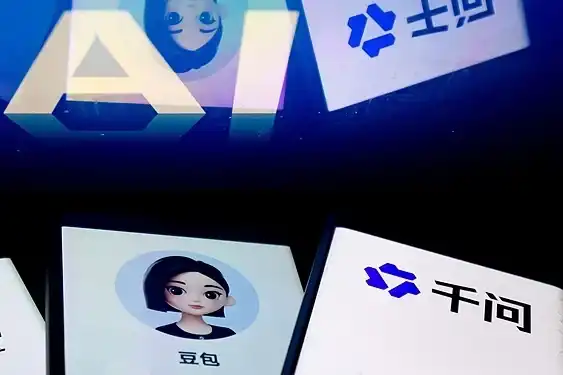
On July 4th, Doubao and Tongyi Qianwen announced the impending shutdown of their user-created "AI Agent" features. Doubao confirmed its agent feature will be taken offline on July 15, directing users to ByteDance's CatBox app for similar needs. On the same day, Tongyi Qianwen notified users, specifying that personalized interactive agents and user-built agent functions will cease on July 10, with all agent features and services completely deactivated by July 15. After this date, access to agent configurations and historical chat records will be lost. This adjustment impacts core user scenarios like role-playing, personal assistants, and vertical tool agents. The shutdown date coincides with the official implementation of China's "Interim Measures for the Administration of Artificial Intelligence Human-like Interactive Services" on July 15. The new regulations impose strict rules on "human-like emotional interaction services," requiring platforms to implement measures like anti-addiction systems, minor verification, and content moderation. This move is widely seen as a proactive step by the platforms to align with regulatory timelines and mitigate compliance risks. Additionally, commercial challenges are a key driver. Analysis suggests that casual, human-like chat agents generate high-frequency, low-value interactions, leading to high computational costs with poor monetization. As the AI application market shifts from user growth to proving value, sustaining such "high-cost, low-efficiency" user-generated content becomes difficult. Both platforms have outlined transition plans. Doubao will allow data viewing and self-backup for a period after shutdown, with data scheduled for permanent deletion by October 15. Tongyi Qianwen similarly advised users to save important content via copying or screenshots before the deadline. This strategic retreat from C-end agent features signals a broader market shift. Compliance capability and sustainable business models are replacing user scale and feature richness as the new core competitive dimensions. Tongyi Qianwen's recent move to fully open its Agent and Skill platforms to third-party enterprises and developers further underscores a strategic pivot from low-value C-end services to high-value B-end enterprise scenarios.

marsbitHace 2 hora(s)

Doubao and Qwen Will Discontinue Agent Functionality on July 15

marsbitHace 2 hora(s)

Why Did Codex and ChatGPT Merge? What's Next for Codex? OpenAI Core Leader Answers Everything

In 2026, OpenAI's Codex saw explosive growth, with weekly active users surging over 5x to 5 million since January, driven largely by the February launch of its desktop app. Codex desktop lead Andrew Ambrosino explains key shifts behind its evolution. A core change is the inversion of development costs: implementation is now cheap, while curation and taste—judging which of many AI-generated prototypes is valuable—have become the new scarcities. Ambrosino defines taste as a blend of aesthetics, systems thinking, direction, and semantic coherence in interaction. He notes AI still struggles with design because evaluating it requires human cultural context and abstract reasoning about how components relate—capabilities beyond current models. Timing is critical: the same Codex app would have failed months earlier; success hinges on the model's capabilities at launch. Roles are blurring within his team, with engineers, designers, and PMs overlapping significantly. However, Ambrosino cautions against eliminating specialized roles entirely, as each field retains deep expertise. On AI-assisted development, the focus has shifted from measuring code written by AI to distinguishing between supervised and unsupervised generation. A current challenge is teaching models to simplify code, not just add complexity. The merger of Codex and ChatGPT stems from observed user behavior: non-developers adopted Codex for general knowledge work despite its developer-centric interface. This revealed a collapsing boundary between specialized tools and universal assistants. The vision is a "home base" that orchestrates tasks across external professional tools (like Excel or Premiere Pro) via connectors, rather than rebuilding everything internally. An internal example showed Codex helping edit video by interacting with Premiere Pro's files and even writing a plugin for it. The future direction is a unified, extensible platform that serves as a central hub for automating and managing work across any specialized tool the user employs.

marsbitHace 2 hora(s)

Why Did Codex and ChatGPT Merge? What's Next for Codex? OpenAI Core Leader Answers Everything

marsbitHace 2 hora(s)

Trading

Spot
活动图片