Dogecoin Price Prediction: Will DOGE Keep Rising or Pull Back When It Reaches $1 Psychological Level?

bitcoinistPublicado a 2024-12-01Actualizado a 2024-12-02

Resumen

DOGE currently trades at $0.39, reflecting over a 170% increase in the past month. Although DOGE fell a bit after...

DOGE currently trades at $0.39, reflecting over a 170% increase in the past month. Although DOGE fell a bit after crossing $0.40, it’s still bullish. Analysts also believe its rally has just started, and Dogecoin’s price could reach $1 shortly.  However, if it reaches the $1 psychological level, will it keep rising or fall below the mark?

Dogecoin (DOGE) Price Rallies: Higher Highs Ahead

Dogecoin’s rally looks strong, and despite already gaining over 170% in the past month, analysts believe it’s yet to reach its max. According to popular analyst Alan Santana, this is the first strong bullish month for DOGE since the 2021 bull run.  In January 2021, DOGE saw a very strong bullish phase like this one. However, he believes DOGE is yet to be done, and this is simply the beginning of a bullish cycle; Dogecoin’s price will see more explosions. He also claims that Dogecoin just broke out of a three-year consolidation period. This will lead DOGE to a massive rally, but there will be short correction periods in between.  Another analyst, Kevin Capital, reiterated this stance in a post on X. He claimed that Dogecoin, the most explosive yet, is still ahead. According to him, if DOGE holds its price level and RSI, it will continue its rally with it going stronger. Yet, another notable trader has resounded this $1 optimism. If DOGE keeps surging per the predictions, it could soon rise to $1. However, it must break past the resistance at $0.43 and $0.49 before surging further. If DOGE touches $1, will it keep rising or see a strong pullback?

DOGE at $1: Will It Hold or Pull Back?

Dogecoin’s current rally can see it reach the $1 psychological mark. However, it’s hard to predict if it will stay strong above $1 or see a retracement, as many factors could work for or against it. The major factors fueling DOGE’s rise are the fear of missing out (FOMO), Elon Musk’s influence, whale activities, and BTC’s surge. If FOMO remains and whales keep buying, it will fuel bullish sentiment. Similarly, Elon Musk’s recent posts have led to a two-digit surge for DOGE. His continuous influence can also spark a frenzy, leading to more gains. Also, BTC will have to maintain its uptrend with the market remaining positive for Dogecoin to stay above $1 and surge further. If these fail, DOGE could lose the support at $1 and fall below, retracting its gains. Investors must remain cautious as DOGE relies on hype and speculation. Thus, it could fall sharply.

Click Here To Buy Rexas Finance (RXS) Presale

Rexas Finance: A Real-World Value Asset, Not a Speculative Coin

Rexas Finance (RXS) stands out as a cryptocurrency with true value, breaking away from the trend of speculative assets. Unlike meme coins like Dogecoin, which rely heavily on hype, Rexas Finance focuses on tokenizing real-world assets like real estate, commodities, artwork, and collectibles. This unique approach gives everyday investors access to assets that are typically hard to trade because of their high cost. These assets are converted into digital tokens through tokenization, making them available in smaller fractions. Also, Rexas Finance can solve other problems associated with traditional assets. These include accessibility, liquidity, transparency, and fraud. Blockchain technology makes them more liquid and globally accessible and increases security. Rexas Finance’s utility extends to its ecosystem, which features state-of-the-art asset tokenization, trading, and management tools. These include the Rexas Token Builder, which simplifies asset tokenization; Rexas Launchpad, a platform for raising and managing startup fundraising; and Rexas GenAI, which creates high-quality digital artworks.    

RXS to $10: Higher Gains Than DOGE

RXS started at just $0.03 in its first presale stage, and now the token has grown quickly to $0.10 in its eighth stage, with an anticipated listing price of $0.20. This means early investors could see a return of up to 566%. Even those joining now can benefit significantly as the project gains momentum. Upon its launch, experts have predicted it could surge explosively, going as high as $10 in 2025. Dogecoin, on the other hand, depends on hype, making it more volatile. Rexas Finance sets itself apart by offering real-world value and a clear roadmap for growth. It recently completed its Certik audit, which has assured investors of the project’s security, leading to the potential for long-term success.   Rexas Finance has gained reputation and investors’ confidence after raising more than $17 million during its presale and listings on major tracking sites such as CoinMarketCap and CoinGecko. Three main exchanges will also list the coin once it launches, therefore extending its reach and establishing it as a prominent player in the market.

Conclusion

Dogecoin’s strong rally indicates that it might soon skyrocket to $1. However, factors like whale activities, FOMO, Elon Musk’s influence, the BTC surge, and the general market momentum will determine whether it will stay above $1 or retrace its steps. Meanwhile, Rexas Finance has a stronger potential to book higher gains in 2025 and beyond. RXS’s price will go from $0.03 to $0.20 when it goes live, leading to a 566% gain. Experts also think it will go up to $10 or more in 2025. Rexas Finance is giving away a million dollars right now. Twenty lucky winners will each get fifty thousand dollars, so you can enter to win if you sign up now.

For more information about Rexas Finance (RXS) visit the links below:

Website: https://rexas.com

Win $1 Million Giveaway: https://bit.ly/Rexas1M

Whitepaper: https://rexas.com/rexas-whitepaper.pdf

Twitter/X: https://x.com/rexasfinance

Telegram: https://t.me/rexasfinance


Bitcoinist

Bitcoinist

Bitcoinist is the ultimate news and review site for the crypto currency community!

Lecturas Relacionadas

Can Alibaba Cloud Rewrite Itself?

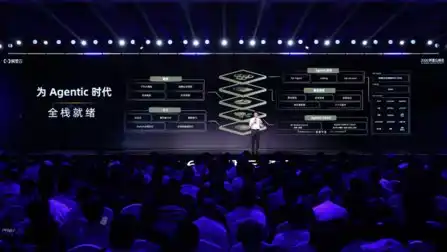
Over the past five months, Alibaba Cloud's MaaS (Model as a Service) revenue has surged 15x, marking a strategic overhaul where the company is shifting its 17-year-old system designed for "humans using cloud" to a new paradigm centered on "Agents consuming Tokens." At its recent summit, Alibaba Cloud announced a full-stack upgrade encompassing "chip-cloud-model-inference," all optimized for AI Agents. Key launches include the new AI product portal "QianWen Cloud," hyper-node servers powered by the in-house AI chip Zhenwu M890, and the latest flagship model, Qwen3.7-Max. Senior VP Liu Weiguang described this as building "China's largest AI factory," where chips are raw materials, the cloud is the workshop, models are machines, and the inference platform is the assembly line, with Tokens as the final product. The company is now emphasizing its chip strategy, unveiling the Zhenwu M890 and a two-year roadmap for future chips. With over 560,000 chips deployed across 400+ clients, Alibaba Cloud aims to control the marginal cost per Token, mirroring Google's integration of TPU and Gemini for optimal cost-performance. The cloud infrastructure itself is being rewritten. Traditional cloud interfaces are being transformed into standardized, Agent-callable Skills. A new scheduling logic focuses on "task scheduling" over "resource scheduling" to handle the unpredictable, elastic workloads of Agents. Liu noted that AI applications now automatically provision cloud resources, with one customer's daily automated provisioning equaling two weeks of manual work. For models, the focus has shifted from conversational prowess to execution capability. Qwen3.7-Max demonstrated this by autonomously writing and optimizing a production-grade AI compute kernel for the new Zhenwu M890 chip over 35 hours, achieving a 10x performance improvement. The underlying Bailian platform was upgraded for efficiency, and it maintains an open ecosystem, hosting third-party models. This restructuring extends beyond technology to sales, organization, and metrics. Alibaba Cloud has established dedicated MaaS sales teams, separated from traditional IaaS, with new KPIs focusing on high-quality Tokens that solve real problems, the number of core business systems integrated with models, and the efficiency of Agent task completion. The underlying bet is clear: AI represents an opportunity orders of magnitude larger than before. Despite the uncertainty, Alibaba Cloud is aggressively rebuilding its entire system, betting on an AI-driven future where Tokens could become its largest product line.

marsbitHace 4 min(s)

Can Alibaba Cloud Rewrite Itself?

marsbitHace 4 min(s)

Warsh's First Conundrum: Rate Cuts, Inflation, and a Fractured Fed

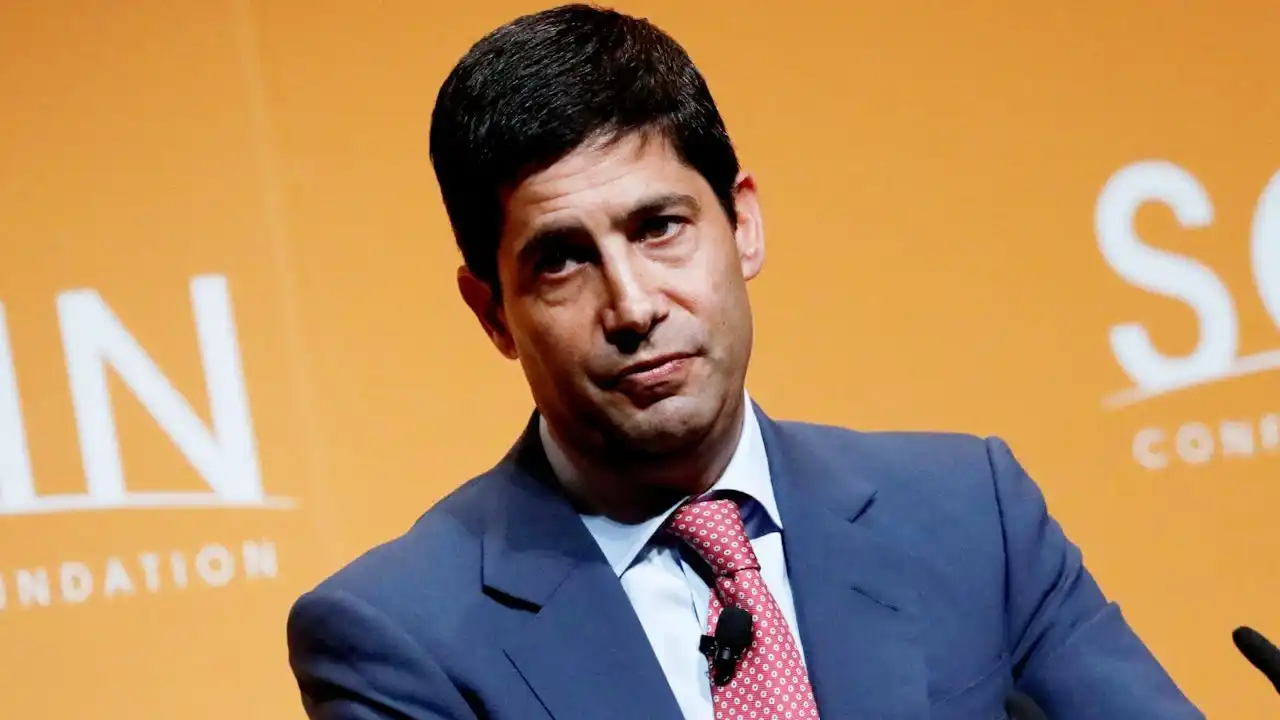
Walsh's First Dilemma: Rate Cuts, Inflation, and a Divided Fed Kevin Warsh officially assumed the Fed Chairmanship on May 15th, inheriting a central bank deeply divided over inflation. Contrary to market expectations of a dovish stance due to his appointment by President Trump, Warsh's historical record shows early and consistent hawkish concerns about inflation. The Fed he leads is fractured, with three FOMC members recently dissenting against even hinting at future rate cuts. The immediate challenge is surging inflation. While the Iran-related oil shock is a temporary factor, core CPI and services inflation are accelerating, showing signs of becoming entrenched—echoing the Fed's 2022 "transitory" misstep. Warsh faces the task of building consensus within a committee where several members believe policy may not be restrictive enough, especially if the neutral interest rate (r-star) is higher than currently estimated. Politically, Warsh is caught between Trump's desire for rate cuts and the economic reality of persistent price pressures. Any move perceived as bowing to political pressure could undermine Fed independence. Market implications are significant. Long-term Treasury yields (e.g., 30-year at 5.19%) could rise further, especially if the June FOMC statement hints at possible tightening. Tech stocks face continued valuation pressure from higher rates. The key variable is progress in Iran negotiations; a breakthrough before the June meeting could temporarily ease oil-driven inflation, but stubborn services inflation would remain. All eyes are on Warsh's first post-FOMC press conference on June 17th. His wording on inflation and policy will reveal how much the market has mispriced his stance and the Fed's likely path forward.

marsbitHace 25 min(s)

Warsh's First Conundrum: Rate Cuts, Inflation, and a Fractured Fed

marsbitHace 25 min(s)

Harvard and Others Exit, Six Core Talents Depart in a Month: What's Happening to Ethereum?

Ethereum faces significant internal and external pressures, marked by a wave of high-profile departures from its core development team and a loss of confidence from major institutional investors. Within four months, at least seven key figures—including researchers, protocol leads, and a former executive director—have left the Ethereum Foundation. This exodus, partly triggered by controversy over a new "mission statement" requiring employee sign-off, risks derailing critical roadmap upgrades like PeerDAS and Verkle trees, and has already contributed to delays in the planned Glamsterdam upgrade. Compounding the internal instability, major institutions are reducing their exposure. Goldman Sachs slashed its iShares Ethereum Trust holdings by approximately 70%, and Harvard's endowment fund completely exited its $87 million Ethereum ETF position. Concurrently, the Ethereum Foundation itself has been unstaking and selling ETH for "treasury rebalancing," further unsettling the market. These challenges emerge as Ethereum's competitive dominance erodes. Its share of the total DeFi market has fallen to around 54%, with rivals like Solana and Base gaining ground. In fee revenue, it was recently outpaced by newer chains like Hyperliquid. Furthermore, a trend of institutions exploring proprietary or hybrid blockchains (exemplified by Circle's Arc) threatens Ethereum's position as the premier settlement layer for institutional assets. While founder Vitalik Buterin's vision for Ethereum as a secure, decentralized "technical sanctuary" and "world computer" remains clear, its realization is threatened by the concurrent loss of execution capability, institutional patience, and market share during a critical competitive phase.

链捕手Hace 1 hora(s)

Harvard and Others Exit, Six Core Talents Depart in a Month: What's Happening to Ethereum?

链捕手Hace 1 hora(s)

Trading

Spot
Futuros
活动图片