$575-M Unlocks Threaten Altcoin Rally: Why You Should Monitor Cardano’s ADA, Solana’s JTO

bitcoinistPublicado a 2024-12-01Actualizado a 2024-12-02

Resumen

Certain big names in the altcoin market are gearing up for an influx of tokens as a wave of token...

Certain big names in the altcoin market are gearing up for an influx of tokens as a wave of token unlocks is approaching. According to data provided by Tokenomist, a notable number of major altcoin projects are set to experience a surge in circulating supply during the first week of December.

This upcoming wave involves an estimated $578 million worth of tokens being released into the market. Interestingly, a detailed look into various unlocking schedules shows that this is part of a total of $3.5 billion worth of token unlocks in December.

Major Altcoin Unlocks Scheduled For Early December

The first week of December is set to witness a significant wave of token unlocks across the altcoin market, totaling an impressive $574.8 million. These weekly cliff unlocks, scheduled between December 2nd and December 8th, will introduce substantial new liquidity into the market, which might threaten the brewing altcoin rally. 

Among the highlights, Solana-based JTO leads the pack with a staggering $496.71 million worth of tokens to be unlocked, representing a remarkable 103.32% increase in its circulating supply. Cardano’s ADA, a more established token, will see a modest release of $19.44 million, reflecting just 0.05% of its total supply. Although this is one too look at, it is very likely to be easily absorbed by the current buying momentum surrounding ADA. 

NEON follows with $21.15 million in unlocks, marking a 44.92% addition to its supply. Other noteworthy unlocks include TAIKO with $17.47 million (11.38%), ENA with $9.17 million (0.45%), and HFT with $3.11 million (2.87%).

How Will These Unlocks Impact Crypto Prices?

When previously locked tokens are released, they become available for trading on the open market, often leading to a sudden increase in supply. This influx can create downward pressure on prices, particularly if a significant portion of holders opt to sell immediately.

According to data from Tokenomist.ai, December is poised to see additional noteworthy token unlocks beyond those already highlighted. Among these, Hyperlink (HYPE) stands out with a staggering $1.48 billion worth of tokens set for release.

Total crypto market cap currently at $3.3 trillion. Chart: TradingView

Given its current market capitalization of $2.297 billion, the injection of such a substantial supply into the market could have a pronounced impact on its price, especially if a large number of holders decide to sell their unlocked tokens.

Sui (SUI) is another notable altcoin on the list, with $218.26 million worth of tokens, equivalent to 2.3% of its total supply, scheduled for release. Additionally, Optimism (OP) will see $73.34 million worth of tokens unlocked.

Featured image from Pexels, chart from TradingView

Scott Matherson

Scott Matherson

Scott Matherson is a leading crypto writer at Bitcoinist, who possesses a sharp analytical mind and a deep understanding of the digital currency landscape. Scott has earned a reputation for delivering thought-provoking and well-researched articles that resonate with both newcomers and seasoned crypto enthusiasts. Outside of his writing, Scott is passionate about promoting crypto literacy and often works to educate the public on the potential of blockchain.

Lecturas Relacionadas

Can Alibaba Cloud Rewrite Itself?

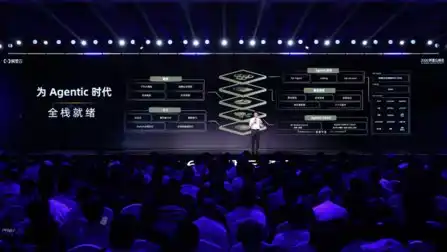
Over the past five months, Alibaba Cloud's MaaS (Model as a Service) revenue has surged 15x, marking a strategic overhaul where the company is shifting its 17-year-old system designed for "humans using cloud" to a new paradigm centered on "Agents consuming Tokens." At its recent summit, Alibaba Cloud announced a full-stack upgrade encompassing "chip-cloud-model-inference," all optimized for AI Agents. Key launches include the new AI product portal "QianWen Cloud," hyper-node servers powered by the in-house AI chip Zhenwu M890, and the latest flagship model, Qwen3.7-Max. Senior VP Liu Weiguang described this as building "China's largest AI factory," where chips are raw materials, the cloud is the workshop, models are machines, and the inference platform is the assembly line, with Tokens as the final product. The company is now emphasizing its chip strategy, unveiling the Zhenwu M890 and a two-year roadmap for future chips. With over 560,000 chips deployed across 400+ clients, Alibaba Cloud aims to control the marginal cost per Token, mirroring Google's integration of TPU and Gemini for optimal cost-performance. The cloud infrastructure itself is being rewritten. Traditional cloud interfaces are being transformed into standardized, Agent-callable Skills. A new scheduling logic focuses on "task scheduling" over "resource scheduling" to handle the unpredictable, elastic workloads of Agents. Liu noted that AI applications now automatically provision cloud resources, with one customer's daily automated provisioning equaling two weeks of manual work. For models, the focus has shifted from conversational prowess to execution capability. Qwen3.7-Max demonstrated this by autonomously writing and optimizing a production-grade AI compute kernel for the new Zhenwu M890 chip over 35 hours, achieving a 10x performance improvement. The underlying Bailian platform was upgraded for efficiency, and it maintains an open ecosystem, hosting third-party models. This restructuring extends beyond technology to sales, organization, and metrics. Alibaba Cloud has established dedicated MaaS sales teams, separated from traditional IaaS, with new KPIs focusing on high-quality Tokens that solve real problems, the number of core business systems integrated with models, and the efficiency of Agent task completion. The underlying bet is clear: AI represents an opportunity orders of magnitude larger than before. Despite the uncertainty, Alibaba Cloud is aggressively rebuilding its entire system, betting on an AI-driven future where Tokens could become its largest product line.

marsbitHace 16 min(s)

Can Alibaba Cloud Rewrite Itself?

marsbitHace 16 min(s)

Warsh's First Conundrum: Rate Cuts, Inflation, and a Fractured Fed

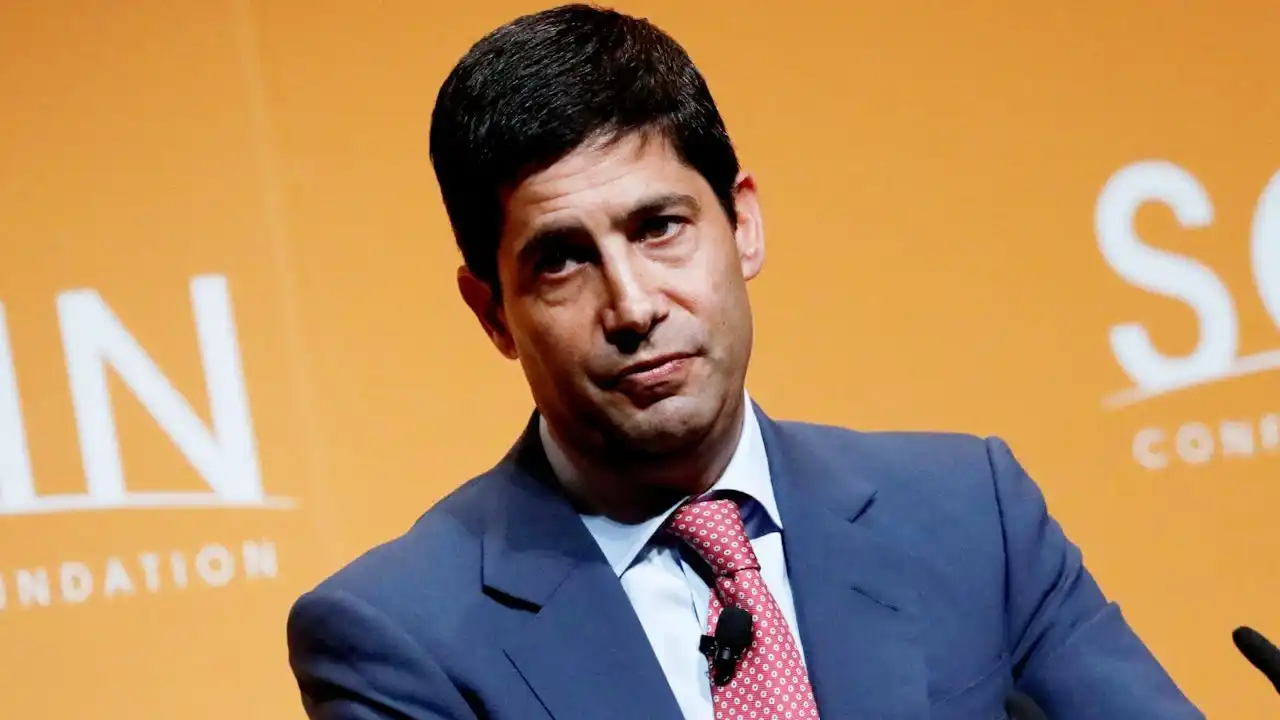
Walsh's First Dilemma: Rate Cuts, Inflation, and a Divided Fed Kevin Warsh officially assumed the Fed Chairmanship on May 15th, inheriting a central bank deeply divided over inflation. Contrary to market expectations of a dovish stance due to his appointment by President Trump, Warsh's historical record shows early and consistent hawkish concerns about inflation. The Fed he leads is fractured, with three FOMC members recently dissenting against even hinting at future rate cuts. The immediate challenge is surging inflation. While the Iran-related oil shock is a temporary factor, core CPI and services inflation are accelerating, showing signs of becoming entrenched—echoing the Fed's 2022 "transitory" misstep. Warsh faces the task of building consensus within a committee where several members believe policy may not be restrictive enough, especially if the neutral interest rate (r-star) is higher than currently estimated. Politically, Warsh is caught between Trump's desire for rate cuts and the economic reality of persistent price pressures. Any move perceived as bowing to political pressure could undermine Fed independence. Market implications are significant. Long-term Treasury yields (e.g., 30-year at 5.19%) could rise further, especially if the June FOMC statement hints at possible tightening. Tech stocks face continued valuation pressure from higher rates. The key variable is progress in Iran negotiations; a breakthrough before the June meeting could temporarily ease oil-driven inflation, but stubborn services inflation would remain. All eyes are on Warsh's first post-FOMC press conference on June 17th. His wording on inflation and policy will reveal how much the market has mispriced his stance and the Fed's likely path forward.

marsbitHace 37 min(s)

Warsh's First Conundrum: Rate Cuts, Inflation, and a Fractured Fed

marsbitHace 37 min(s)

Trading

Spot
Futuros

Artículos destacados

Cómo comprar JTO

¡Bienvenido a HTX.com! Hemos hecho que comprar Jito (JTO) sea simple y conveniente. Sigue nuestra guía paso a paso para iniciar tu viaje de criptos.Paso 1: crea tu cuenta HTXUtiliza tu correo electrónico o número de teléfono para registrarte y obtener una cuenta gratuita en HTX. Experimenta un proceso de registro sin complicaciones y desbloquea todas las funciones.Obtener mi cuentaPaso 2: ve a Comprar cripto y elige tu método de pagoTarjeta de crédito/débito: usa tu Visa o Mastercard para comprar Jito (JTO) al instante.Saldo: utiliza fondos del saldo de tu cuenta HTX para tradear sin problemas.Terceros: hemos agregado métodos de pago populares como Google Pay y Apple Pay para mejorar la comodidad.P2P: tradear directamente con otros usuarios en HTX.Over-the-Counter (OTC): ofrecemos servicios personalizados y tipos de cambio competitivos para los traders.Paso 3: guarda tu Jito (JTO)Después de comprar tu Jito (JTO), guárdalo en tu cuenta HTX. Alternativamente, puedes enviarlo a otro lugar mediante transferencia blockchain o utilizarlo para tradear otras criptomonedas.Paso 4: tradear Jito (JTO)Tradear fácilmente con Jito (JTO) en HTX's mercado spot. Simplemente accede a tu cuenta, selecciona tu par de trading, ejecuta tus trades y monitorea en tiempo real. Ofrecemos una experiencia fácil de usar tanto para principiantes como para traders experimentados.

93 Vistas totalesPublicado en 2024.12.11Actualizado en 2025.03.21

Cómo comprar JTO

Discusiones

Bienvenido a la comunidad de HTX. Aquí puedes mantenerte informado sobre los últimos desarrollos de la plataforma y acceder a análisis profesionales del mercado. A continuación se presentan las opiniones de los usuarios sobre el precio de JTO (JTO).

活动图片