巨鲸动向追踪:过去 3 天里,Tether 累计增发 50 亿枚 USDT

marsbitPublicado a 2024-11-24Actualizado a 2024-11-25

在过去 3 天里,Tether 累计增发 50 亿枚 USDT

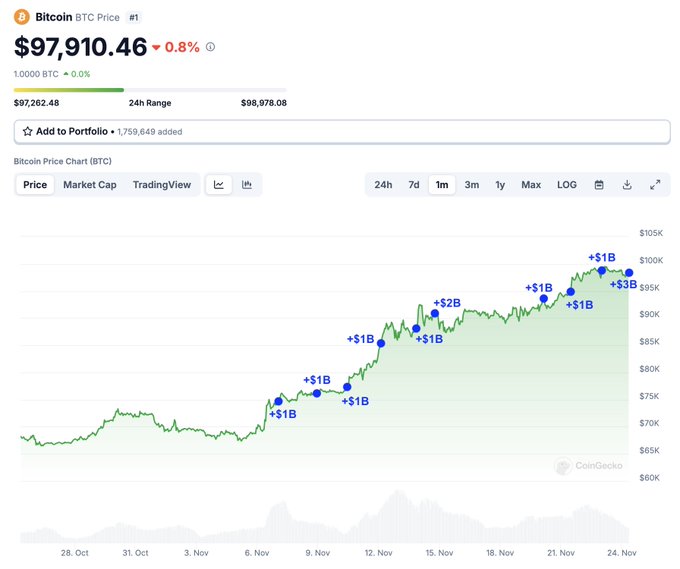
并向加密货币市场注入了 28.3 亿枚 USDT,自 11 月 6 日以来,其总净增发量已达到 130 亿枚 USDT。
美元


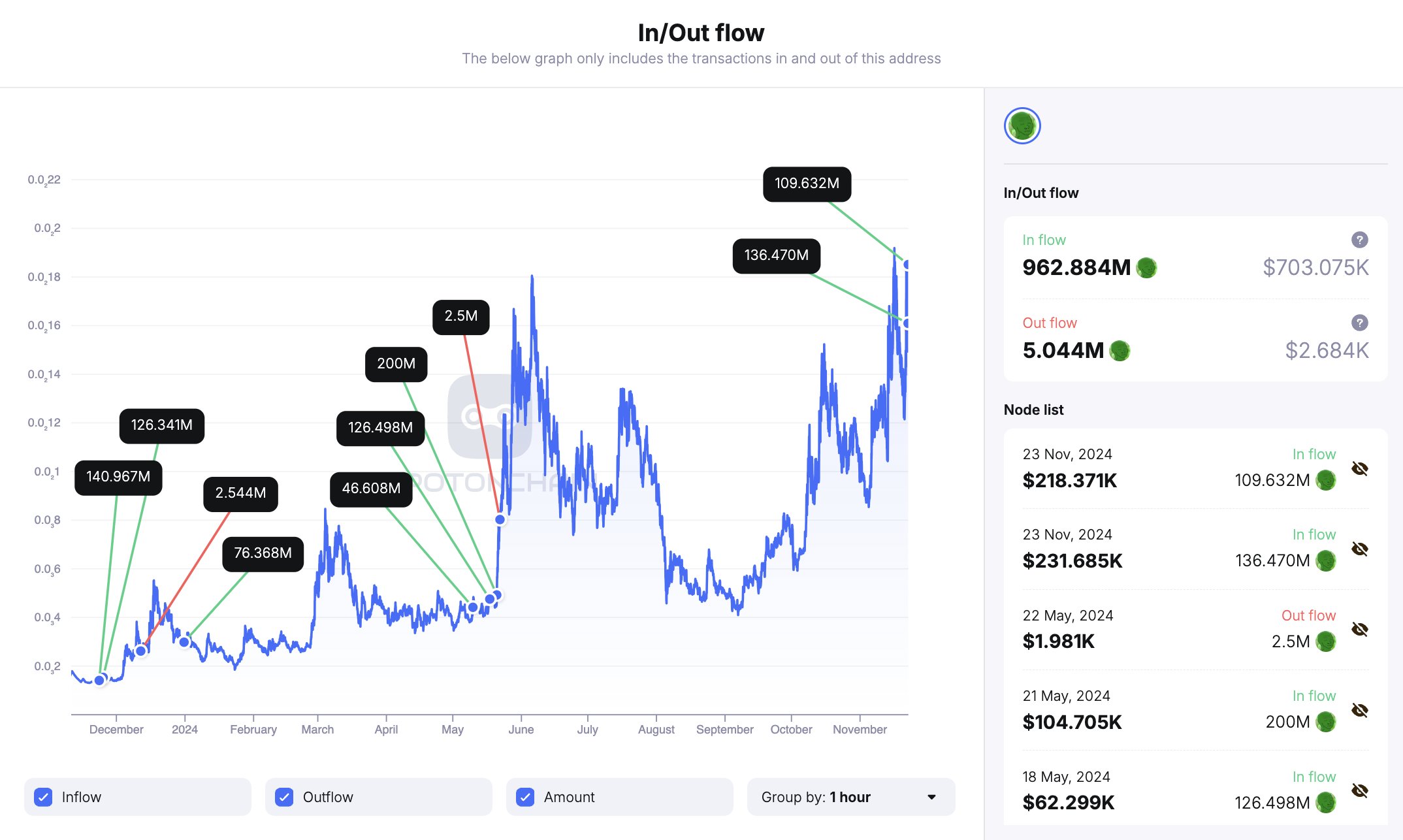
某聪明钱过去 24 小时将所有 MOODENG 兑换为 WOJAK

曾交易 PEPE 将 4.5 万美元变成 469 万美元的传奇 Meme 币交易者——dimethyltryptamine.eth 过去 12 小时将全部 MOODENG 换仓 WOJAK。该地址以 134.4 ETH(约合 44.3 万美元)的价格出售 21.05 亿枚 MOODENG,在 1.5 个月内获利 77.4 枚 ETH(约合 25.5 万美元,+135%)。此后花费 136.5 枚 ETH(约合 45 万美元)购买 2.46 亿枚 WOJAK,将持仓总量增加到 9.57 亿枚 WOJAK(约合 175 万美元),当前利润为 105 万美元(+149%)。
美元


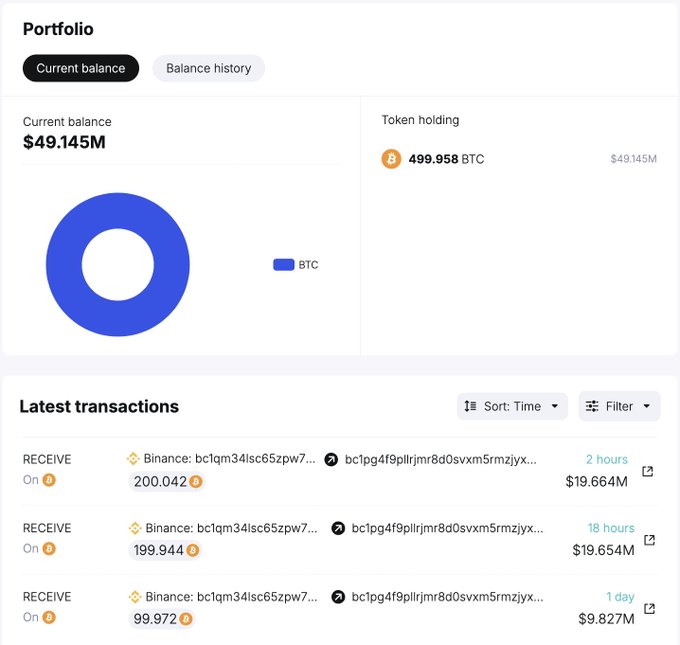
某新地址25小时前以97888美元均价建仓约499.96枚BTC

某巨鲸在25小时前创建了一个新钱包,并且已经从币安中提取了499.96枚BTC(约合4894万美元),平均价格为97,888美元。
美元


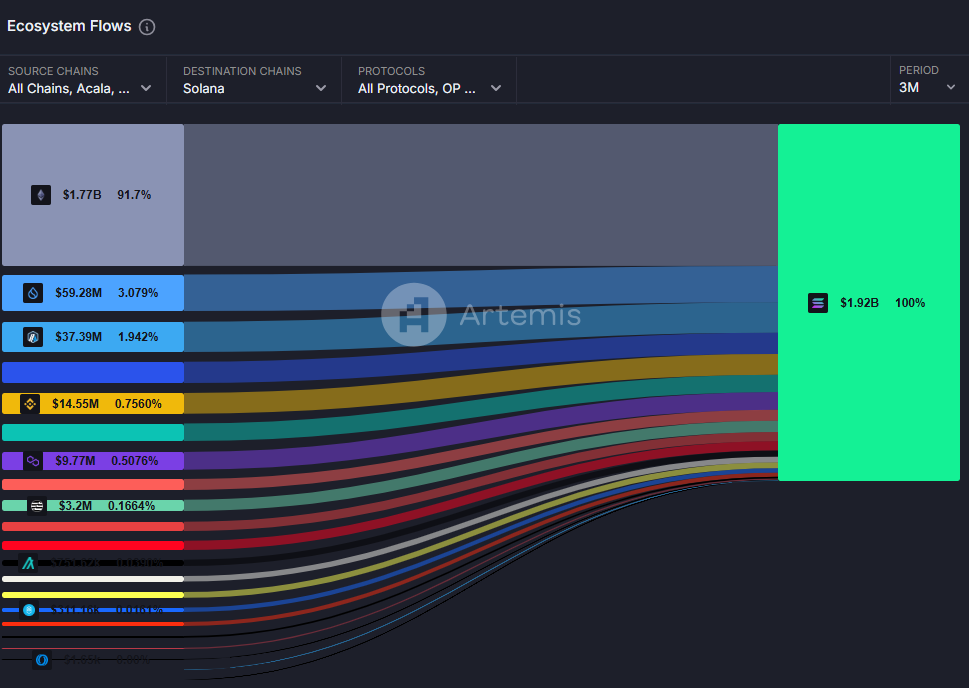
过去7天有超3亿美元资产从其他链跨桥转入Solana

据 Solana Floor 披露,过去 7 天有超 3 亿美元资产从其他链跨桥转入 Solana,仅以太坊上就有超 2.5 亿美元资产转入 Solana。
美元


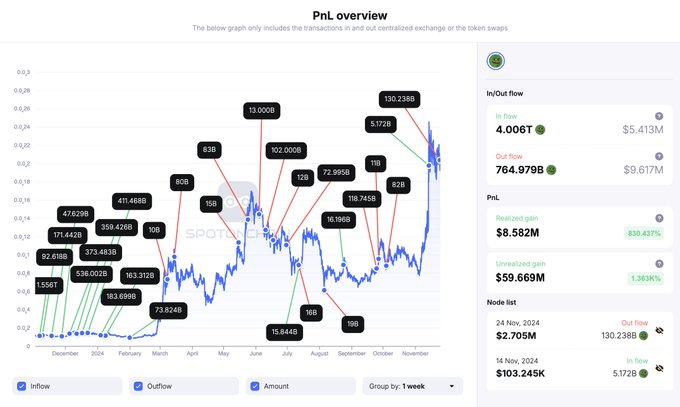
某巨鲸今日卖出价值约153万美元的PEPE,剩余PEPE持仓价值6410万美元

某PEPE巨鲸今日卖出740.7亿枚PEPE(153万美元)获得448.1枚ETH。在过去3天里,该巨鲸以891枚ETH的价格卖出1302亿枚PEPE(271万美元),剩下3.241万亿枚PEPE(6410万美元),获利6830万美元(12.6倍)。
美元


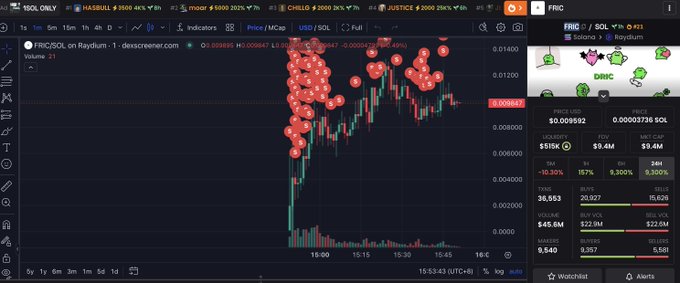
数据:某地址交易 FRIC 1 小时内赚取超 150 万美元利润

某地址交易 FRIC 在 1 小时内赚取超 150 万美元利润,该地址花费 25 枚 SOL(约 6300 美元)购买了 2.97 亿枚 FRIC(占总供应量的 29.7%),随后卖出了 2.58 亿枚 FRIC,获得 4693 枚 SOL(约 118 万美元),仍剩余 3908 万枚 FRIC(约 38 万美元)持仓。
美元

数据来源:

1.https://x.com/lookonchain

2.https://x.com/ai_9684xtpa

3.https://x.com/EmberCN

Lecturas Relacionadas

Preferred Stock Is Not the Trigger for Corporate Bankruptcy, MicroStrategy's Dollar Reserves Can Cover Dividend and Interest Payments Until February 2027

Preferred Shares Are Not the Catalyst for Corporate Bankruptcy; MicroStrategy's Dollar Reserves Can Cover Dividend and Interest Payments Until February 2027. This article analyzes the nature of preferred shares used by MicroStrategy (MSTR). Legally equity but economically similar to debt, these shares, including its Bitcoin-linked STR convertible preferred notes (STRC), offer fixed or floating dividends. Crucially, MicroStrategy's preferred shares lack rigid redemption clauses, meaning they are not classified as traditional debt. This eliminates principal repayment pressure and means missed dividends do not constitute default or trigger bankruptcy, creating a "self-contradictory virtuous cycle." The article clarifies that if funds are short, MicroStrategy can defer or suspend preferred share dividends (except for non-cumulative types like STRD) without immediate risk. The real potential crisis point lies with its convertible bonds. If a prolonged bear market prevents conversion, MicroStrategy might need to sell Bitcoin to repay these bonds starting from the earliest maturity in September 2027, potentially creating a downward spiral. Preferred dividend suspensions would only exacerbate market panic in such a scenario. Recent financial activity shows MicroStrategy strengthened its position through four weeks of common stock (MSTR) issuances, raising over $851 million without issuing new preferred shares. It increased its dollar reserves to approximately $1.4 billion, which is sufficient to cover all preferred share dividends and interest until around March 2027. While Bitcoin purchases slowed recently, this prioritization of cash reserves enhances the company's near-term financial safety. The analysis concludes that if the Bitcoin bear market ends by early 2025 as anticipated, MicroStrategy can resume issuing MSTR stock in a rising market to replenish reserves and manage future dividend obligations, thereby reducing the long-term pressure from its preferred share structure.

marsbitHace 1 hora(s)

Preferred Stock Is Not the Trigger for Corporate Bankruptcy, MicroStrategy's Dollar Reserves Can Cover Dividend and Interest Payments Until February 2027

marsbitHace 1 hora(s)

Giants Wage the Context War, Reconstructing AI Moats

The article "Giants Launch the Context War, Reconstructing AI's Moat" discusses how leading AI companies—OpenAI, Anthropic, and Google—are shifting their competitive focus from model size to acquiring, managing, and utilizing user context (Context). Initially, Context referred to the length of text a model could process, leading to a "arms race" for longer context windows. However, the competition has evolved through three key phases: expanding text capacity (long context windows), enabling memory across sessions, and finally, integrating AI into real user environments like browsers and desktops to capture dynamic task states. Each company is pursuing a distinct strategy. OpenAI is building Context around the ChatGPT account, turning it into a central hub that accumulates user understanding across various integrated applications and tools. Anthropic, lacking a major user base, focuses on high-value verticals like coding, empowering its Claude model to actively gather Context through GUI interaction (Computer Use) and system connections (MCP protocol). Google, with vast existing user data from products like Search and Gmail, faces the challenge of restructuring this data into actionable, AI-understandable Context for its Gemini model within its ecosystem. The core argument is that the nature of competitive advantage in AI is changing. The internet era prized network effects—connecting more users. The AI era values "individual depth": the ability to build deep, task-specific understanding of a user. This creates a new moat through 1) the compounding value of accumulated Context, 2) deep integration with user tools and permissions, and 3) the establishment of trust for complex tasks. Therefore, the battle for Context is fundamentally about capturing "task entry points" and converting existing digital ecosystems into environments where AI can effectively understand and act, rather than merely scaling user numbers.

marsbitHace 1 hora(s)

Giants Wage the Context War, Reconstructing AI Moats

marsbitHace 1 hora(s)

Foundation Steps Back, Ethlabs Steps Forward: Ethereum Undergoes Its Largest Restructuring in History

On June 23rd, the Ethereum ecosystem witnessed two major shifts, signaling a significant governance realignment. First, former Ethereum Foundation researchers established Ethlabs, a new independent non-profit. Backed by major ETH holders like Bitmine and SharpLink, Ethlabs aims to address practical needs for institutional adoption, including faster settlement, native asset issuance, cross-chain transactions, and mainnet scaling. Secondly, the Ethereum Foundation announced a major restructuring, laying off 54 employees (20% of its staff) to become a leaner entity focused on protocol governance and maintenance rather than being the primary builder. This move represents a pivotal correction. Criticisms had mounted over the Foundation's perceived slowness, lack of clear strategy, and over-reliance on Vitalik Buterin's influence. Ethlabs emerges as a more execution-oriented, "industrialized" layer focused on market adoption—bridging the gap between research and real-world use. Notably, Vitalik Buterin is absent from its list of supporters, interpreted as an intentional step to avoid excessive personal endorsement and allow the organization to build independent credibility. The Ethereum Foundation's downsizing and redefinition mark a retreat from its former central coordinating role. It now aims to share the "privilege of stewarding Ethereum" with other emerging groups like Ethlabs, the Ethereum Applications Guild, and The Ethereum Economic Zone. Analysts frame this dual shift as the Foundation ensuring Ethereum remains "correct" (credibly neutral), while Ethlabs must prove it remains "effective" (competitive and attractive for capital and adoption). This addresses community "shareholder-like anxiety" about ETH's market performance. While risks exist—such as concerns over shifting from Foundation centrality to large-holder influence—the consensus is that the greater risk for Ethereum was inaction, caught between technical idealism and organizational inertia. These steps aim to create a more multi-stakeholder, execution-driven future for the network.

链捕手Hace 9 hora(s)

Foundation Steps Back, Ethlabs Steps Forward: Ethereum Undergoes Its Largest Restructuring in History

链捕手Hace 9 hora(s)

Second Half of U.S. Crypto Policy: The Clarity Act Aims for 60 Votes, CFTC's "One-Person Commission" Becomes Biggest Variable

In a pivotal year for US crypto policy, the "CLARITY Act" is advancing in the Senate but faces a high hurdle, needing 60 votes to pass. Key challenges include bridging partisan divides on ethics and swaying undecided Republican senators within a tight legislative calendar of only about 40 working days. The policy "second half" involves intense negotiations on a broader framework for Web3 and DeFi, including crypto tax reforms and the Blockchain Regulatory Certainty Act. A significant uncertainty is the understaffed CFTC, operating with four commissioner vacancies, which complicates regulatory clarity. Meanwhile, the departure of key "crypto champions"—SEC Commissioner Hester Peirce and Senator Cynthia Lummis—will impact ongoing policy efforts. Industry experts are cautiously optimistic but realistic. Sara K. Weed notes that while progress is being made, CLARITY is unlikely to pass this Congress, pushing agencies like the SEC and CFTC to provide more guidance. Sulolit Mukherjee suggests meaningful crypto tax legislation is more likely to be attached to larger must-pass bills. Rashan Colbert discusses the jurisdictional debate over prediction markets, emphasizing the need for a regulatory framework that fosters their development as financial tools rather than treating them broadly as gambling. The clock is ticking, but opportunities remain for substantive progress through continued bipartisan dialogue and pragmatic efforts.

marsbitHace 12 hora(s)

Second Half of U.S. Crypto Policy: The Clarity Act Aims for 60 Votes, CFTC's "One-Person Commission" Becomes Biggest Variable

marsbitHace 12 hora(s)

Trading

Spot
Futuros
活动图片