3 альткоина, за которыми стоит следить на этой неделе

cryptonews.ruPublicado a 2021-01-05Actualizado a 2024-11-05

В октябре крипторынок показал восходящий тренд, но последняя неделя разочаровала инвесторов. Альткоины значительно потеряли в цене. Разбираемся, чего ждать дальше

Редакция BeInCrypto рассмотрела три альткоина, за которыми стоит понаблюдать на этой неделе. Запланированные на первую неделю ноября разлоки токенов могут повлиять на рынок.

Читайте также: 5 разлоков токенов, за которыми стоит следить на этой неделе

Aptos (APT)

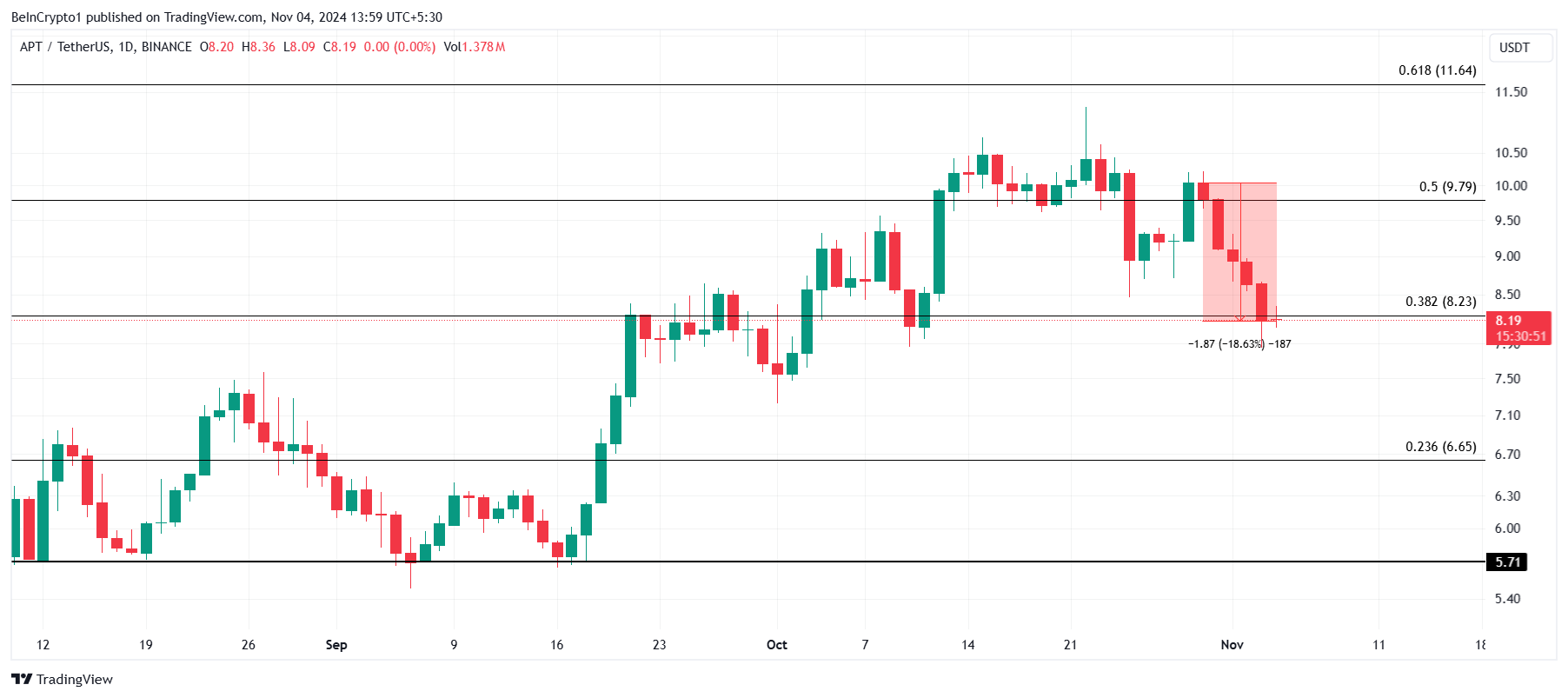
Цена альткоина Aptos упала на 18% за последние пять дней, что отражает общее ослабление рынка. Сейчас APT пытается удержаться выше уровня Фибоначчи 38,2% коррекции на отметке $8,23. Это ключевой уровень поддержки, и он может стабилизировать недавнюю просадку.

Ожидаемая 11 ноября разблокировка токенов должна высвободить 11,31 млн APT на сумму почти $93 млн. Это может привести к волатильности, если инвесторы решат продать активы, ожидая падения цены после разлока.
Анализ цены APT. Источник: TradingView

Если Aptos утратит поддержку на $8,23, цена может упасть до $6,65 (уровня Фибоначчи 23,6%). Однако если поддержка на $8,23 выстоит, возможный отскок поможет отыграть недавние потери. Это поставит под сомнение медвежий сценарий, суля потенциальное восстановление APT.

Читайте также: Аналитики рекомендуют готовиться к коррекции на рынке альткоинов

Cardano (ADA)

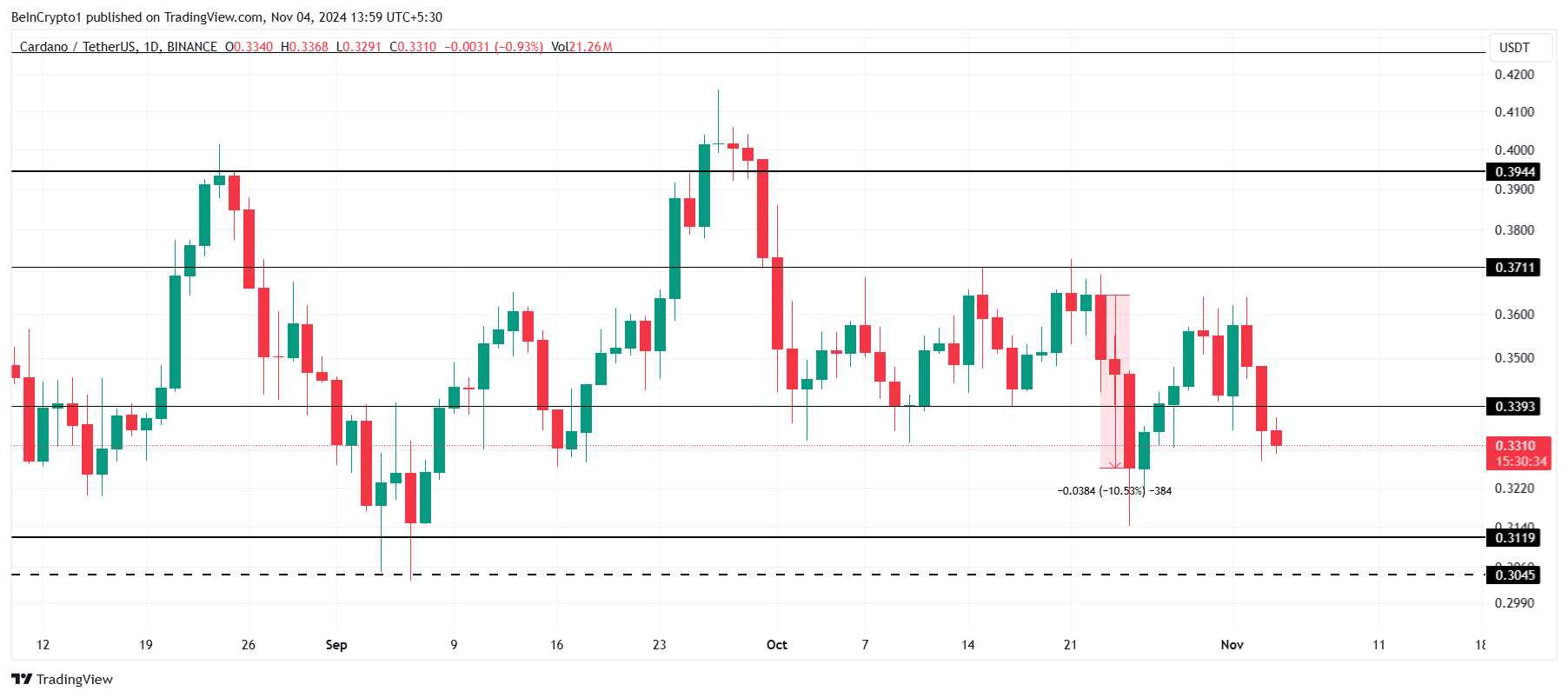
Цена Cardano оставалась нестабильной с октября, не показывая значительного прироста. Сейчас ADA торгуется ниже критического уровня поддержки $0,339, что подчеркивает сохраняющиеся трудности в поддержании импульса. Утрата этой поддержки заставляет рынок оставаться настороже.

Предстоящий разлок 18,53 млн токенов ADA на сумму примерно $6,16 млн может привести к волатильности, как это уже было с недавней разблокировкой 1 ноября. Такие события часто вызывают краткосрочные колебания в цене Cardano из-за увеличения предложения.
Анализ цены ADA. Источник: TradingView

Инвесторы надеются, что волатильность обусловит рост цены. Однако существует вероятность, что ADA рискует продолжить снижение и упасть до $0,311. Впрочем, если настроения на рынке улучшатся, ADA может превратить уровень $0,339 в поддержку. Это отменит медвежий сценарий и укажет на потенциал роста.

Banana Gun (BANANA)

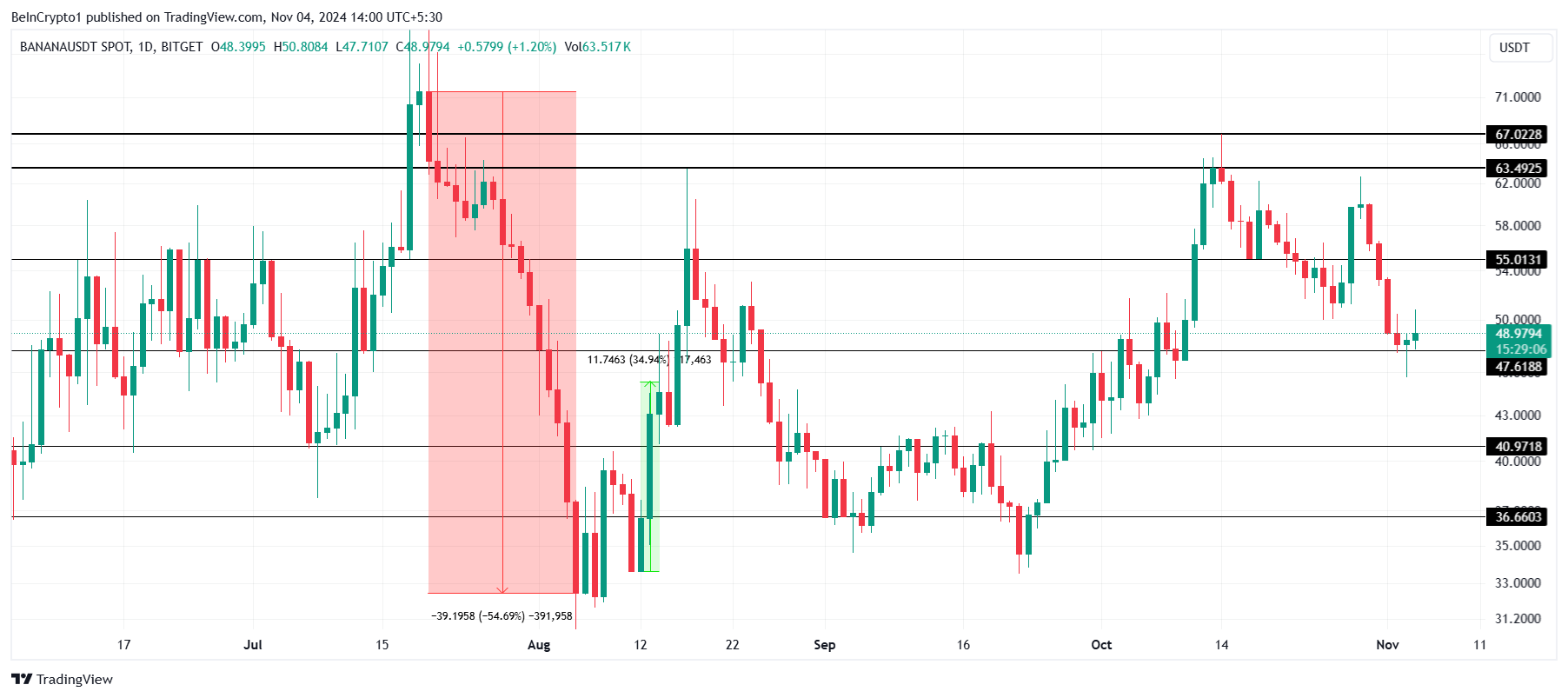
Banana Gun — один из популярных токенов Телеграм-ботов. Цена почти отыграла июльские потери после падения на 54%, но не смогла преодолеть уровень сопротивления $63,49 и забуксовала. С тех пор альткоин снизился, а медвежье давление усилилось.

Ожидается, что предстоящая разблокировка 250 тыс. токенов BANANA на сумму $12,28 млн значительно увеличит объем предложения. Такие всплески предложения часто усиливают краткосрочную волатильность, влияя на динамику спроса и настроения инвесторов.
Анализ цены BANANA. Источник: TradingView

Исторически BANANA показывала минимальные изменения цены во время предыдущих разблокировок. Это предполагает, что она может продолжить попытки отскока от поддержки $47,61 с целью на $55,01. Однако если поддержка не устоит, возможно падение до $40,97, что укажет на более глубокую коррекцию.


Lecturas Relacionadas

CPU Makes a Comeback to the Table, A $170 Billion "Power Seizure" Drama Begins

A new era is dawning for the server CPU (Central Processing Unit), driven by the shift from AI model training to large-scale reasoning and the rise of Agentic AI. This article explores how the CPU is reclaiming a central role in the AI data center. For years, the focus has been on the GPU (Graphics Processing Unit) for AI training. However, as AI moves to the inference and Agent phase—where tasks involve complex, multi-step reasoning, tool calls, and data management—the workload balance is flipping. Studies show CPUs now handle over 70% of the workload in Agentic AI, up from 10-30% in training. This is because Agent tasks generate massive intermediate data (KV Cache) that exceeds GPU memory, forcing it to be offloaded to the CPU's larger, more scalable memory pools. This increased importance is translating into market changes. Major players are taking note: NVIDIA launched its first standalone CPU line, Vera, based on ARM architecture and optimized for Agent performance. AMD doubled its server CPU market forecast to over $1200 billion by 2030. Analyst reports project the total server CPU market could reach $1700 billion by 2030, with AI-driven demand being a primary driver. Furthermore, the classic ratio of CPUs to GPUs in AI servers is rapidly changing, converging from 1:8 toward 1:1 for Agent deployments. This surge in demand has led to a rare industry-wide price increase of 10-15% for server CPUs from Intel and AMD, breaking a decade-long trend of "more performance for the same price." Demand is bifurcating into high-core-count CPUs for in-rack GPU support and moderate-core CPUs for standalone Agent task orchestration. In China, this global trend presents an opportunity for domestic CPU manufacturers like Hygon (海光信息) and Huawei Kunpeng, who are bolstered by both growing AI infrastructure needs and national policies promoting technological self-reliance ("xin chuang"). The maturity of their software ecosystems is also accelerating, evidenced by faster adaptation to new AI models. In conclusion, the narrative is shifting from a GPU-centric view to one where CPU-GPU synergy is critical. The CPU is no longer a peripheral component but a performance-defining bottleneck and a key growth driver in the AI hardware stack, opening a massive new market estimated in the hundreds of billions of dollars.

marsbitHace 2 hora(s)

CPU Makes a Comeback to the Table, A $170 Billion "Power Seizure" Drama Begins

marsbitHace 2 hora(s)

TechFlow Intelligence: AMD AI Director Publicly Criticizes Claude Code for "Becoming Dumber and Lazier", Trump Claims Full Ceasefire in Hormuz But Strait Still Has 80 Unexploded Mines

TechFlow Intelligence Report: This daily digest covers key developments in AI, crypto, hardware, and geopolitics. In AI, SK Telecom faces US export control scrutiny over its partnership with Anthropic, while a Gemini user reports being misled in a scam scenario, sparking safety debates. China's Z.AI launches the GLM-5.2 model, rivaling Claude Opus without NVIDIA chips. In crypto, Bithumb lists ReProtocol, and Upbit delists KernelDAO. On the hardware front, MIT researchers build a custom OS to study chips, ASML denies US claims its advanced lithography machines are in China, and Amazon considers selling its in-house AI chips. Apple's future A21 Pro chip may use TSMC's latest N2P process. Major tech issues include 10,000 GitHub repositories distributing malware and Apple patching a critical eavesdropping flaw in Beats earbuds. US stocks rise, led by semiconductors, with Intel surging 10.6%, while SpaceX falls 3.5%. Geopolitically, despite a US-Iran deal, the Strait of Hormuz remains risky with ~80 uncleared mines, stalling 80M barrels of oil on standby tankers. Iran postpones Switzerland talks, and Trump calls the agreement an "unconditional surrender." The report highlights a contrast: temporary geopolitical calm versus the ongoing, fundamental restructuring of tech supply chains and chip independence.

marsbitHace 2 hora(s)

TechFlow Intelligence: AMD AI Director Publicly Criticizes Claude Code for "Becoming Dumber and Lazier", Trump Claims Full Ceasefire in Hormuz But Strait Still Has 80 Unexploded Mines

marsbitHace 2 hora(s)

Trading

Spot
Futuros
活动图片