GRASS лидирует в сегменте DePin — цена токена пробилась выше $1

cryptonews.ruPublicado a 2024-08-30Actualizado a 2024-10-30

После завершения аирдропа токен GRASS от DePin-проекта Grass Network наконец появился на биржах. После листинга цена криптовалюты в моменте пробила психологически важную отметку $1

По состоянию на момент написания суточный объем торгов токенов GRASS превышает аналогичный показатель всех остальных DePin-криптовалют рынка. Это делает новый альткоин абсолютным лидером в своей нише.

GRASS лидирует в секторе DePIN

На премаркете запущенный несколькими днями ранее токен GRASS торговался $0,65. Однако после листинга его цена резко пробила психологически важную отметку $1, в моменте поднявшись даже до $1,10.

К моменту написания цена криптовалюты скорректировалась и сейчас торгуется на уровне $0,8444. За прошедшие 24 часа GRASS снизился на 19,5%.

Тем не менее токен по-прежнему держится выше цены, по которой он торговался на предпродаже. Это означает, что рынок смотрит на перспективы новой криптовалюты с оптимизмом.

Читайте также: Топ DePIN-проектов для инвестиций 2024
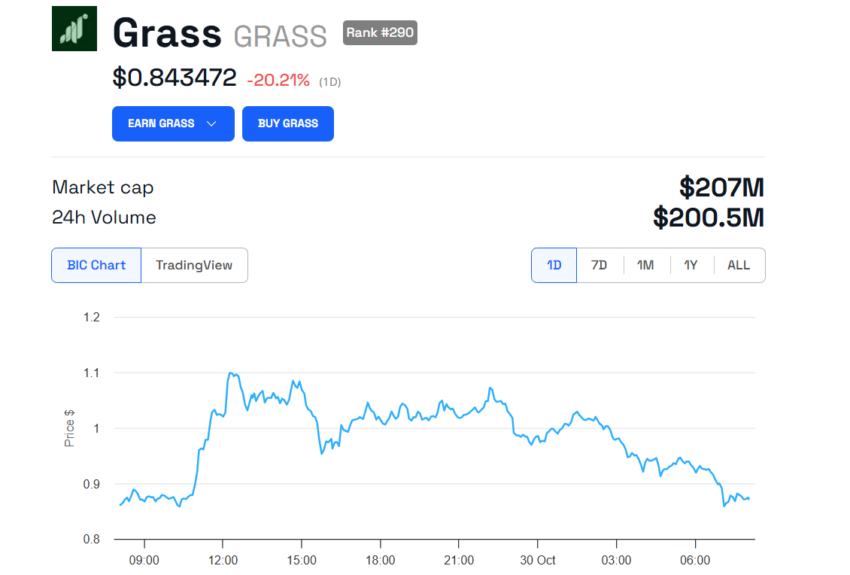
Динамика курса GRASS за последние сутки. Источник: BeInCrypto

Еще один сильный аргумент в поддержку бычьих настроений — анализ суточного торгового объема. Согласно CoinGecko, в течение последних 24 часов GRASS лидирует в сегменте DePIN-токенов по этому показателю. К моменту написания торговый объем токена превышает $200 млн.

Недавно запущенная криптовалюта обогнала даже таких гигантов сектора, как Filecoin (FIL), Render (RENDER), io.net (IO), Internet Computer (ICP) и Bittensor (TAO).
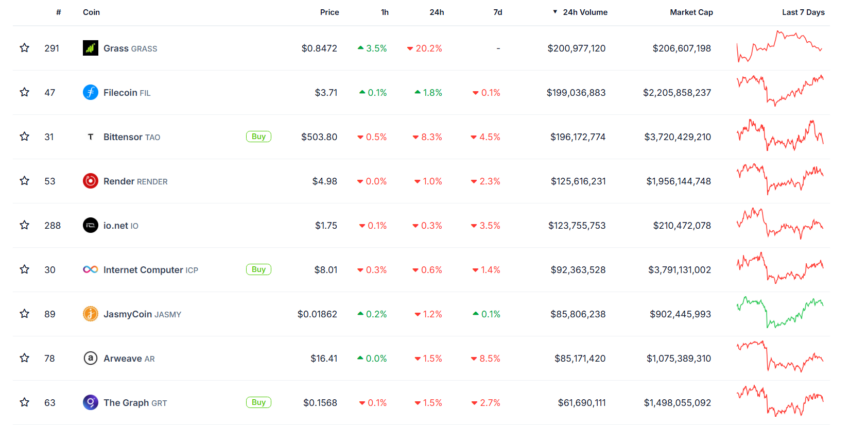
Лидеры сегмента DePIN по торговому объему. Источник: CoinGecko

Ранее редакция BIC выяснила, какие альткоины могут выиграть от растущей популярности DePin, RWA и ИИ. Все подробности читайте в нашем специальном материале.

Трудный выход на рынок

Команда популярного DePIN-проекта Grass объявила о проведении аирдропа относительно недавно, 25 октября. Еще до начала раздачи планы проекта уже столкнулись с критикой сообщества. Пользователей возмутило то, что на них выделили всего 10% от общего количества токенов GRASS в 1 млрд. Криптаны сочли такое распределение вознаграждений крайне несправедливым.

Согласно ежемесячному расписанию распределения токенов GRASS, первоначально в обращение должно было поступить 25% из 1 млрд токенов, предназначенных для аирдропа. Однако реальное количество монет в обращении может быть гораздо меньше заявленного:

«На самом деле в обращении не 25%, а всего 5-6%. Примерно 10% выделены на первый аирдроп, который уже наполовину завершен, и заявки принимаются до середины января. Еще 10% идут на вознаграждения маршрутизаторам и стейкерам, а также на будущие раздачи, которые будут проводиться в течение еще нескольких лет. При этом 1,37% отведены фонду для листингов, стимулирования пар LP и прочего. Так что в обращении сейчас всего около 5-6% токенов», — прокомментировал пользователь X (бывш. «Твиттер»).

Читайте также: Большинство токенов обесцениваются в течение 15 дней после аирдропа

Позднее масла в огонь подлил и непосредственно сам аирдроп. Юзеры массово жаловались, что не могут получить доступ к заработанным наградам из-за перегрузов сети и ошибки в кошельке Phantom. Кроме того, некоторых криптанов дисквалифицировали прямо во время раздачи.

Grass — это блокчейн-протокол из сектора децентрализованных сетей физической инфраструктуры (DePIN). Проект предназначен для обучения искусственного интеллекта (ИИ).


Criptos en tendencia

Lecturas Relacionadas

The Networking Game in Silicon Valley's Elite Circles: Those with Connections Get $50 Million, While the Truly Talented Can't Raise Money?

"Silicon Valley's Meritocracy to Relationship Game: How Networks Now Trump Talent." The article argues that Silicon Valley has shifted from a meritocracy to a "kingmaker" system where connections and background outweigh true ability. Key factors driving this change include: 1. **AI-Distorted Expectations:** Unprecedented growth curves (e.g., Anthropic) have led VCs to seek only "sure things" or pattern-match against past successes. 2. **Capital Concentration:** LP funds are concentrated in a few large, multi-stage funds, pushing VCs to overpay for hot deals to secure capital. 3. **VC Professionalization:** The industry has become a standardized career path, attracting conformist "NPCs" rather than independent thinkers. The long IPO timeline incentivizes safe, consensus bets for career advancement over risky, fund-returning outliers. This consensus capital fuels consensus founders. Startups are now a standard career option, with accelerators pressuring uniform ideas (e.g., 81% AI). Founders from elite schools (Stanford, OpenAI) easily raise millions based on pedigree, not proof. Large funds preemptively back "centrally cast" teams with $10-50M war chests to dominate categories, sidelining outsiders. The "kingmaker" strategy has downstream effects: it encourages aggressive, sometimes fraudulent, revenue reporting and allows founders to sell significant secondary shares early, attracting grifters. The author predicts a mean reversion. History shows the hottest trends rarely produce the most valuable companies. They advocate backing underestimated outsiders with "a chip on their shoulder" over anointed insiders, believing true meritocracy will ultimately win. "Those chasing the herd are set up for slaughter."

marsbitHace 3 min(s)

The Networking Game in Silicon Valley's Elite Circles: Those with Connections Get $50 Million, While the Truly Talented Can't Raise Money?

marsbitHace 3 min(s)

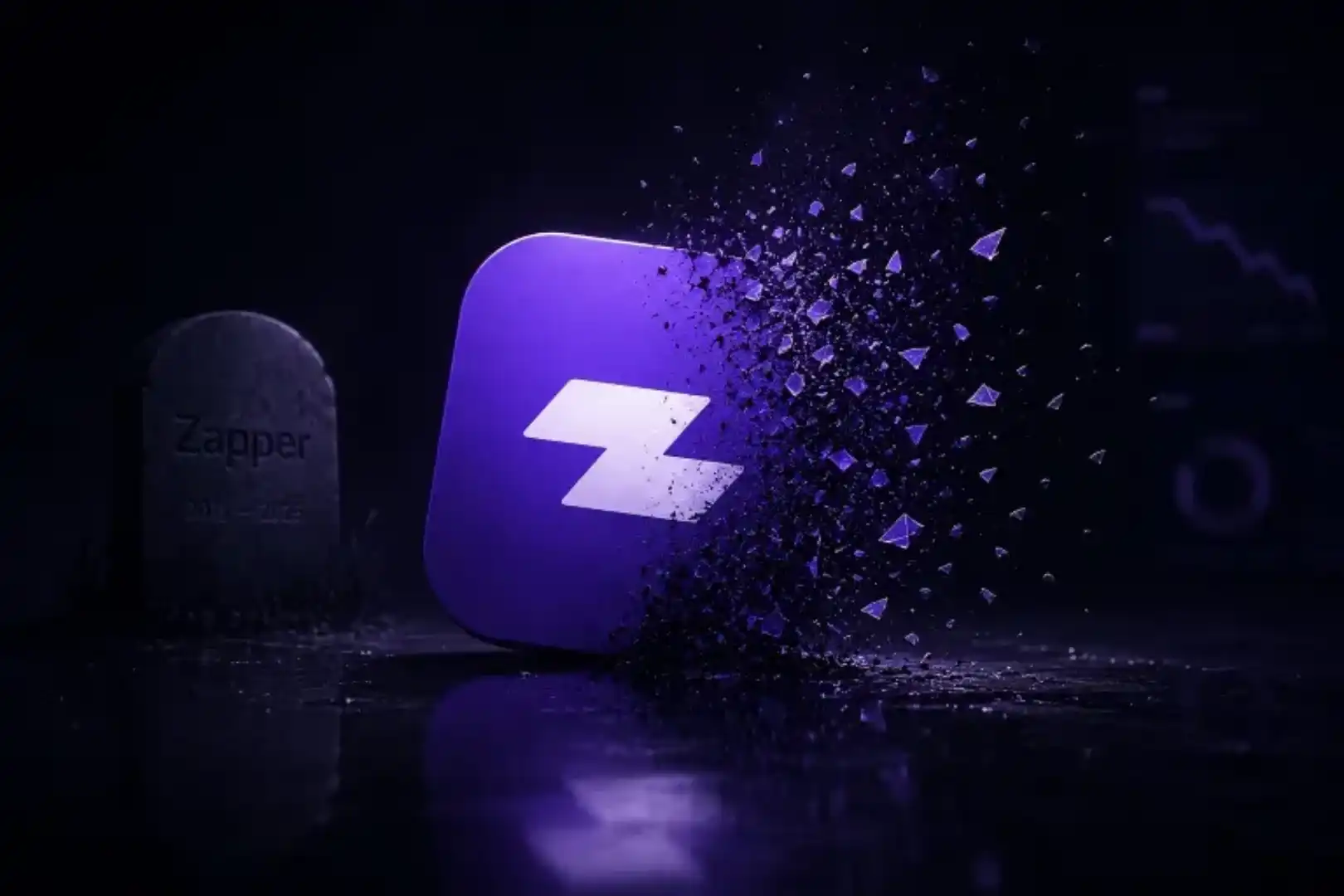
From 2 Million Monthly Active Users to Zero: Zapper's Demise in the "Maturation" of DeFi

From 2M MAU to Zero: The Demise of Zapper in a Maturing DeFi Landscape On July 8, 2026, Zapper co-founder Seb Audet announced the platform's full shutdown. Once a DeFi star with 2 million monthly active users, $13B in processed transactions, and $16.5M in funding, Zapper's journey ends. Born in 2020 from the merger of DeFiZap and DeFiSnap, Zapper rode the "DeFi Summer" wave. It became essential for users to track complex, multi-protocol yield farming positions across chains. At its peak, it supported 14 chains, 450+ protocols, and 7000+ tokens, with its signature "Zap" feature simplifying multi-step DeFi actions. However, sustainable revenue never materialized. Its primary model—taking small fees from DEX aggregation—faced fierce competition and squeezed margins. Meanwhile, maintaining its extensive, real-time data indexing system was costly. Crucially, the DeFi ecosystem matured, with activity and liquidity concentrating in fewer top protocols. The core demand for a complex, multi-protocol dashboard waned as user behavior simplified. Zapper attempted multiple pivots that failed to gain traction: an NFT-based points system (2021), a social app called Chainchat (2023), and plans for a ZAP token and open protocol (2024). These efforts reflected a persistent "blockchain-native" mindset focused on creating new C端 (consumer) needs rather than addressing existing pain points or bolstering its revenue-generating products. The article contrasts Zapper with DeBank, which successfully narrowed its asset-tracking focus while developing Rabby Wallet—a revenue-stabilizing, competitive product. Zapper's story serves as a cautionary tale for tooling projects: over-immersion in a purist vision, coupled with an inability to adapt business models to market shifts—like the consolidation of DeFi activity—can be fatal, even for once-dominant platforms.

marsbitHace 27 min(s)

From 2 Million Monthly Active Users to Zero: Zapper's Demise in the "Maturation" of DeFi

marsbitHace 27 min(s)

Goldman Sachs Bans It, Google Bans It Too: The Gray Zone of Prediction Markets Is Shrinking Fast

Goldman Sachs has updated its personal trading policy, prohibiting employees from trading event contracts on prediction markets involving specific companies (including whether Goldman itself might restructure or initiate acquisitions in a quarter), election outcomes, financial market performance (including Bitcoin prices), macroeconomic data, geopolitical events, and regulatory results for pending M&A deals. Sports and entertainment bets remain allowed. Violations can lead to dismissal or account closure, and the firm may reclaim profits over $200 or donate them to charity. This follows a CFTC case against a Google engineer who allegedly used non-public data to profit $1.2 million on Polymarket. Simultaneously, Google's Chrome Web Store updated its policy, banning extensions that facilitate real-money trading on prediction market outcomes, effective August 1, 2026. While not affecting platforms' websites or mobile apps directly, this restricts a key user access channel. These actions occur amid growing regulatory pressure on prediction markets. The CFTC is investigating Polymarket for alleged misconduct, and a consumer group has filed a lawsuit. Over 30 countries, including Argentina, have blocked access. Despite this, trading volume has hit record highs, and major investments continue, such as ICE's $2 billion stake in Polymarket. The core debate remains whether prediction markets are financial instruments or gambling. CFTC argues for federal oversight as derivatives, while some states seek to regulate them under gambling laws. Multiple fronts—federal probes, political pressure, internal corporate bans, and platform restrictions—are narrowing the operational space for these markets.

Foresight NewsHace 33 min(s)

Goldman Sachs Bans It, Google Bans It Too: The Gray Zone of Prediction Markets Is Shrinking Fast

Foresight NewsHace 33 min(s)

Trading

Spot

Artículos destacados

Cómo comprar GRASS

¡Bienvenido a HTX.com! Hemos hecho que comprar Grass (GRASS) sea simple y conveniente. Sigue nuestra guía paso a paso para iniciar tu viaje de criptos.Paso 1: crea tu cuenta HTXUtiliza tu correo electrónico o número de teléfono para registrarte y obtener una cuenta gratuita en HTX. Experimenta un proceso de registro sin complicaciones y desbloquea todas las funciones.Obtener mi cuentaPaso 2: ve a Comprar cripto y elige tu método de pagoTarjeta de crédito/débito: usa tu Visa o Mastercard para comprar Grass (GRASS) al instante.Saldo: utiliza fondos del saldo de tu cuenta HTX para tradear sin problemas.Terceros: hemos agregado métodos de pago populares como Google Pay y Apple Pay para mejorar la comodidad.P2P: tradear directamente con otros usuarios en HTX.Over-the-Counter (OTC): ofrecemos servicios personalizados y tipos de cambio competitivos para los traders.Paso 3: guarda tu Grass (GRASS)Después de comprar tu Grass (GRASS), guárdalo en tu cuenta HTX. Alternativamente, puedes enviarlo a otro lugar mediante transferencia blockchain o utilizarlo para tradear otras criptomonedas.Paso 4: tradear Grass (GRASS)Tradear fácilmente con Grass (GRASS) en HTX's mercado spot. Simplemente accede a tu cuenta, selecciona tu par de trading, ejecuta tus trades y monitorea en tiempo real. Ofrecemos una experiencia fácil de usar tanto para principiantes como para traders experimentados.

324 Vistas totalesPublicado en 2024.12.11Actualizado en 2026.06.02

Cómo comprar GRASS

Discusiones

Bienvenido a la comunidad de HTX. Aquí puedes mantenerte informado sobre los últimos desarrollos de la plataforma y acceder a análisis profesionales del mercado. A continuación se presentan las opiniones de los usuarios sobre el precio de GRASS (GRASS).

活动图片