This Under the Radar Crypto Will Put the Shiba Inu and XRP Price to Shame with an 8000x Run by 2025

bitcoinistPublicado a 2024-10-18Actualizado a 2024-10-18

Resumen

While past Shiba Inu and XRP price surges have made the tokens a darling to most crypto investors, a new...

While past Shiba Inu and XRP price surges have made the tokens a darling to most crypto investors, a new AI token has emerged and has already seen a significant price surge in its ongoing presale.

With its innovative features and potential for explosive growth, this new AI token could easily outperform well-known coins like Shiba Inu and XRP.

Shiba Inu and XRP Price Movements

Shiba Inu (SHIB) has established itself as a meme-based cryptocurrency, often compared to Dogecoin. Currently, SHIB is trading at $0.0000184, having experienced significant fluctuations over time.

While SHIB has garnered considerable attention and a robust community, it remains down approximately 74.65% from its all-time high (ATH) of $0.0000725, and its short-term price projection does not clearly show a path to reclaiming its ATH.

On the other hand, XRP is recognized for its potential in facilitating cross-border payments and has positioned itself as a leading cryptocurrency, currently priced at around $0.5402.

Despite its prominent position, down approximately 83.73% from its all-time high of $3.32, XRP price faces bearish sentiment in the short term, which raises questions about its future performance.

The Under the Radar Crypto Poised to Surpass Shiba Inu and XRP

Among the many projects emerging in the crypto space, RCO Finance (RCOF) stands out as a potential game-changer. Currently in its second presale stage, RCOF has seen a remarkable surge of 169% from its initial price, which is now $0.0344.

As the presale progresses, the token’s price will rise to $0.05588 in the next stage.

RCOF is projected to achieve an astonishing increase of over 1,644% through the remaining presale stages, with an expected listing price between $0.4 and $0.6.

The momentum generated during the presale points to a strong potential for further gains post-listing.

As RCO Finance prepares to launch its native platform, early investors have a unique opportunity to significantly multiply their investments.

Why RCO Finance (RCOF) Could Soar 8000x by 2025

RCO Finance (RCOF) is not just another token but the native cryptocurrency of a revolutionary decentralized trading platform dubbed RCO Finance.

The RCO Finance platform harnesses the power of artificial intelligence (AI), making it a significant player in the evolving crypto landscape. The anticipated growth of the RCO Finance platform could result in a substantial increase in RCOF’s price within weeks of launch.

With features such as an AI-powered Robo Advisor that tailors investment strategies to users’ needs, access to over 120,000 assets across 12,500 asset classes, and tokenizing real-world assets (RWAs), RCO Finance is designed to cater to novice and seasoned investors.

The platform offers a unique opportunity for users to engage with previously inaccessible markets, enhancing the overall investment experience.

Moreover, the platform has undergone smart contract auditing by SolidProof to ensure safety and reliability, which builds trust among investors.

These features of RCO Finance, coupled with the strong market demand for AI solutions, suggest that the RCOF token could easily surpass the $1 mark post-listing, making it a prime candidate for explosive growth.

Why RCO Finance (RCOF) Could Be the Best Investment Option Right Now

When comparing investment opportunities in the current market, RCOF emerges as the best alternative to established players like Shiba Inu and XRP.

With its multifaceted use cases within the AI-powered RCO Finance ecosystem, RCOF presents a unique value proposition that sets it apart from its competitors. The hype surrounding AI projects further positions RCO Finance for considerable growth.

RCOF’s tokenomics are designed for long-term sustainability. With 50% of tokens allocated for public sale, the company demonstrates a commitment to community development and fair distribution. Additionally, 12% of tokens are locked for three years to mitigate volatility and prevent pump-and-dump scenarios.

While Shiba Inu and the XRP price have shown significant movements, the RCO Finance (RCOF) price surge in the ongoing presale stages presents a compelling case for investment.

Investors looking for an opportunity to capitalize on the next big thing in crypto should consider RCOF a top contender, with the possibility of an incredible 8,000x return by 2025.

For more information about the RCO Finance Presale:

Visit RCO Finance Presale

Join The RCO Finance Community


Bitcoinist

Bitcoinist

Bitcoinist is the ultimate news and review site for the crypto currency community!

Lecturas Relacionadas

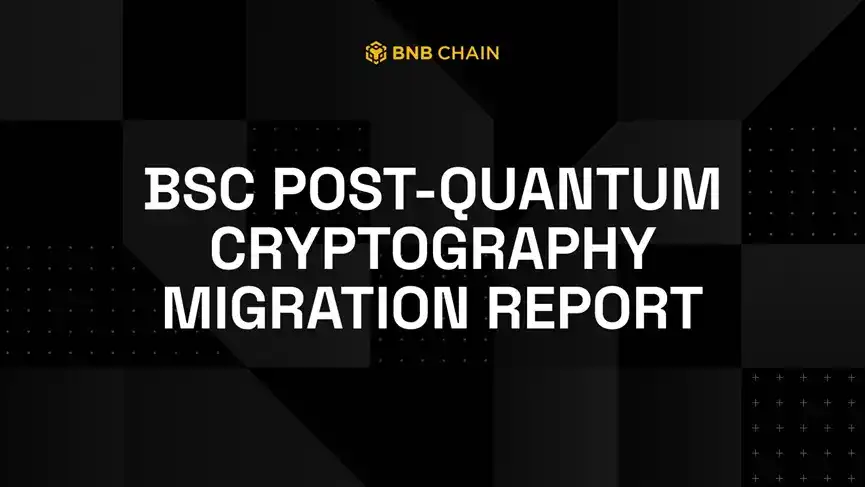
BNB Chain Releases Research Report, Exploring Post-Quantum Cryptography Migration Path for BSC

BNB Chain, a leading Layer-1 blockchain ecosystem, has released a research report exploring the potential migration path for BNB Smart Chain (BSC) to post-quantum cryptography. The study evaluates replacing traditional cryptographic systems with quantum-resistant alternatives, specifically examining the use of ML-DSA-44 for transaction signing and pqSTARK for aggregating validator consensus signatures. While quantum computers are not currently a practical threat to existing blockchain cryptography, the research represents a proactive effort to ensure long-term network security and infrastructure resilience. The report assessed several core areas of the BSC tech stack, including post-quantum transaction signing, validator signature aggregation, transaction validation, public key storage, and network performance under increased data loads. A key finding is that achieving post-quantum readiness is technically feasible today but requires significant trade-offs in scalability. Test data indicates: • Transaction size would increase from ~110 bytes to ~2.5 kilobytes. • Block size would grow from ~110 kilobytes to ~2 megabytes. • Native transfer TPS would decrease from 4,973 to 2,997. The primary performance bottleneck is not signature verification itself, but the increased network transmission overhead caused by larger transaction and block sizes. Conversely, the pqSTARK aggregation technology proved highly efficient, compressing validator signatures by an approximately 43:1 ratio, which helps manage consensus-layer overhead. The report notes that post-quantum alternatives for areas like P2P handshakes and KZG commitments were not within the scope of this evaluation and require further research and broader ecosystem coordination. BNB Chain emphasizes this work is a research-oriented exploration and not a response to any imminent security threat.

marsbitHace 39 min(s)

BNB Chain Releases Research Report, Exploring Post-Quantum Cryptography Migration Path for BSC

marsbitHace 39 min(s)

After Developer Numbers Halved: Crypto Isn't Dead, It's Just Giving Up Talent to AI

The title "After a 50% Drop in Developer Count: Crypto Isn't Dead, It's Just Ceding Talent to AI" suggests a shift, not an end. The article analyzes GitHub data showing a significant drop in overall Crypto developer activity from a peak of 45K monthly active developers in 2022 to about 23K in 2026. However, this masks a deeper trend of "talent deleveraging." The exodus consists mainly of newcomers who entered during the bull market for hype-driven roles (e.g., NFT contracts, forked DeFi protocols), with over 50% of developers with less than one year of experience leaving. In contrast, established developers (2+ years of experience) have hit record highs, contributing roughly 70% of the code. They are consolidating in ecosystems with real users and revenue, like Bitcoin and Solana. These experienced builders possess unique skills forged in Crypto's "code is law" environment: the ability to build trust and functional systems from scratch in the absence of external authority or rules, with zero tolerance for error. The article argues that AI's scaling faces structurally similar trust, coordination, and verification problems—particularly regarding compute aggregation, multi-agent incentive alignment, and autonomous payments. Crypto builders are already applying these skills in AI. Examples include CoreWeave (mining to AI compute), OpenRouter (NFT marketplace routing to AI model routing), and projects like Hyperbolic (using crypto-native mechanisms for decentralized compute verification) and EigenLayer (applying restaking logic to AI agent governance). Stablecoin infrastructure is becoming critical for AI agent micro-payments (e.g., x402 protocol). The role of these builders is evolving from writing smart contracts to "designing trusted mechanisms for autonomous AI systems." This shift is reflected in new hiring trends at major exchanges and significant venture capital flowing into the crypto-AI convergence (e.g., funds from Paradigm, Haun Ventures). The article concludes that while developer numbers have halved, the core density of talent has increased, and their uniquely cultivated skills are finding a new, larger stage in the AI era.

marsbitHace 48 min(s)

After Developer Numbers Halved: Crypto Isn't Dead, It's Just Giving Up Talent to AI

marsbitHace 48 min(s)

After the Developer Count Halved: Crypto Is Not Dead, It's Just Ceding Talent to AI

Following a significant decline in the total number of open-source crypto developers, from a peak of 45K in 2022 to approximately 23K by 2026, this article argues the industry is undergoing a "talent deleveraging" rather than a collapse. The exodus primarily consists of newcomers who entered during the bull market, while the core of experienced developers (2+ years) has grown to a record high, contributing around 70% of code. These established builders are concentrating in ecosystems with real users and revenue, like Bitcoin and Solana. The article posits that crypto has cultivated a unique skill set in building trustless, autonomous systems with near-zero tolerance for error—a capability now finding high demand in the AI era. As AI scales, it faces structural gaps in decentralized compute aggregation, multi-agent coordination/incentive alignment, and autonomous payment infrastructure. Crypto builders are transitioning their expertise to address these exact problems. Examples include CoreWeave (mining to AI compute), Hyperbolic (decentralized compute verification), EigenLayer (extending restaking mechanisms to AI agent governance), and the x402 protocol (enabling AI agent micro-payments via stablecoins). The role of the crypto builder is evolving from writing smart contracts to designing the rule-based, trust-minimized frameworks necessary for AI-native systems. Venture capital is increasingly funding this convergence, viewing it as a structural opportunity rather than a narrative shift. The core talent and systemic design principles from crypto are not disappearing but being re-priced and applied to the foundational challenges of scalable AI.

链捕手Hace 52 min(s)

After the Developer Count Halved: Crypto Is Not Dead, It's Just Ceding Talent to AI

链捕手Hace 52 min(s)

Trading

Spot
Futuros
活动图片