CoinEx Research представила отчёт о состоянии крипторынка за сентябрь

cryptonews.ruPublicado a 2024-06-17Actualizado a 2024-10-17

Команда криптобиржи CoinEx Research опубликовала комплексный отчёт о рынке криптовалют за сентябрь 2024 года. Главным событием стало снижение ставки Федеральной резервной системы на 50 базисных пунктов, что вселило оптимизм и спровоцировало сильный рост рисковых активов, включая криптовалюты. Эта мягкая позиция, взятая на вооружение Европейским центральным банком (ЕЦБ) и Банком Англии (BoE), развернула тренд и обеспечила биткоину лидерство.

Бычий прорыв биткоина

Месяц начался с нестабильности биткоина, торгующегося всего за $52 700. Однако после заявления ФРС биткоин поднялся с уровня $58 000 до недавнего максимума в $66 000 и закрыл месяц на уровне $63 300 с приростом более 20%. Этот отскок отразился на всём рынке криптовалют.

Учитывая, что сейчас биткоин стремится преодолеть критический уровень сопротивления на $70000, макроэкономические перспективы на оставшуюся часть 2024 года выглядят конструктивными, особенно при условии дальнейшего снижения ставки ФРС.
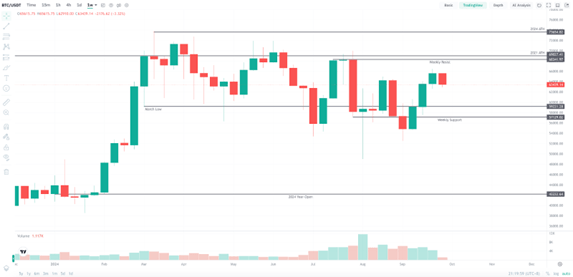
Рисунок1

Риски рецессии

Глобальные рынки внимательно следили за политикой центральных банков в сентябре. Последние прогнозы Федеральной резервной системы, которые сохранили оценки роста ВВП на уровне 2% на 2025 и 2026 годы, предполагали уверенность в экономической устойчивости. Кроме того, темпы инфляции оставались управляемыми.
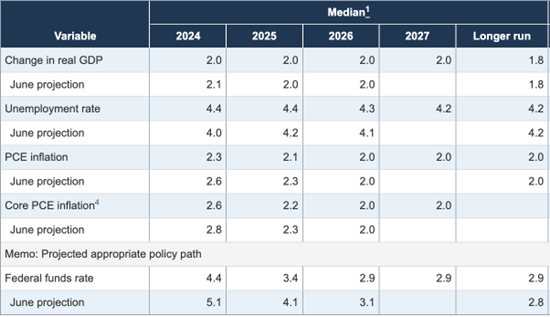
Рисунок2

Источник: данные Федеральной резервной системы по состоянию на 18 сентября 2024 г.

USD/JPY — ключевая переменная для отслеживания

Участники рынка внимательно следят за такими переменными, как поведение валютной пары USD/JPY, которая может повлиять на мировые потоки ликвидности, особенно если центральный банк Японии продолжит повышать ставки.
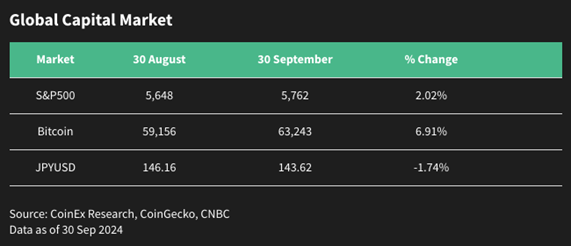
Рисунок3

Технологические инновации: основная сеть Fractal Bitcoin

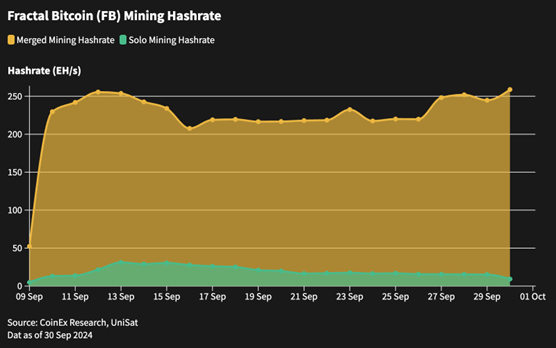
Одним из самых значимых технологических достижений месяца стал запуск 9 сентября основной сети Fractal Bitcoin. Это решение уровня 2 повышает эффективность транзакций в сети биткоина, сохраняя совместимость с основной сетью биткоина. Оно обеспечивает расширенные функции, такие как код операции OP_CAT, что позволяет разработчикам тестировать новые функции без ущерба для базовой системы.

Это нововведение поместило Fractal Bitcoin в тройку лучших сетей Proof-of-Work по хешрейту, поддерживаемых майнинговым пулом ViaBTC. Кстати, CoinEx стала первой биржей, разместившей нативный токен FB. Анализ Fractal Bitcoin от CoinEx можно найти в статье «Fractal Bitcoin: The Pioneering Network of Bitcoin — Analysis of Technical Innovation and Challenges».
Проблемы в экосистеме Ton

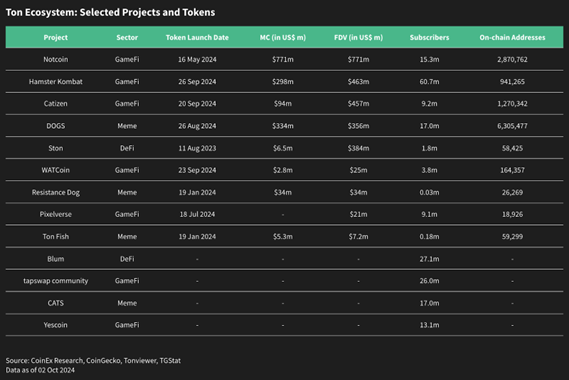
Когда весь рынок криптовалют был полон оптимизма, блокчейн Ton столкнулся с проблемами новыми токенами CATI и HMSTR. Оба токена показали себя неэффективно после запуска, снизившись на 55% и 35% соответственно.

Опасения по поводу устойчивости модели «tap-to-earn» усилились, поскольку насыщение рынка может ограничить привлекательность подобных проектов. Будущее экосистемы Ton будет в значительной степени зависеть от её способности предлагать уникальные ценностные предложения для поддержания долгосрочного роста.
Социальные сети спровоцировали ажиотаж вокруг токенов-мемов

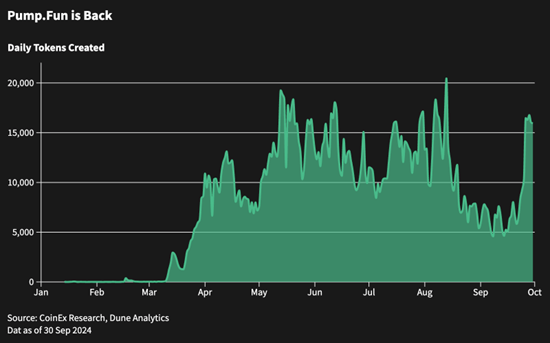
В сентябре наблюдалось возрождение мемкоинов, вызванное вирусными тенденциями в социальных сетях. Токены на тему животных, такие как Moo Deng (карликовый бегемот из Таиланда), пингвины (PESTO), лягушки (OMOCI), подстегнули спекулятивный интерес, особенно на блокчейне Solana. Уровень ежедневного создания токенов на Pump.Fun вернулся к рекордным значениям этого года.
Взгляд в будущее: экономические данные и рыночные настроения

Несмотря на замедление выпуска стейблкоинов, сентябрь закрылся с $2,9 млрд, что отражает устойчивую уверенность инвесторов в рынке. В октябре участники рынка будут внимательно следить за экономическими данными и выборами в США, которые могут подстегнуть следующую волну активности в криптовалютном пространстве.
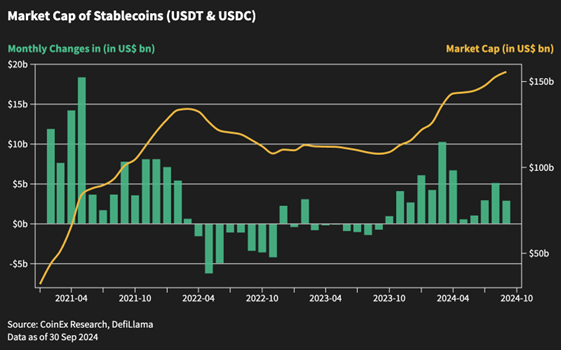
В заключение, сентябрь 2024 года стал ключевым месяцем для криптовалют, поскольку макроэкономическая ситуация, технологические инновации и спекулятивные тенденции сыграли значительную роль в формировании траектории рынка. С более гибкой глобальной денежно-кредитной позицией и технологическими достижениями перспективы остаются позитивными по мере приближения 2025 года.

О CoinEx

Основанная в 2017 году CoinEx является глобальной криптовалютной биржей, стремящейся сделать криптовалютную торговлю проще. Платформа предоставляет ряд услуг, включая спотовую и фьючерсную торговлю, маржинальную торговлю, свопы, автоматизированные маркет-мейкеров (AMM) и услуги по финансовому управлению для более чем 10 миллионов пользователей в более чем 200 странах и регионах.

С момента своего создания CoinEx неуклонно придерживается принципа обслуживания «пользователь на первом месте». С намерением развивать справедливую, уважительную и безопасную среду криптовалютной торговли CoinEx позволяет людям с разным уровнем опыта легко получать доступ к миру криптовалют, предлагая простые в использовании продукты.

Её подразделение CoinEx Research стремится предоставлять углублённый анализ развивающегося рынка криптовалют, помогая инвесторам ориентироваться в потенциальных рисках и возможностях.
Lecturas Relacionadas

MSTR Discloses Sale of 3,588 Bitcoins, Stock Price Drops Over 5% at One Point During Trading

MicroStrategy, the world's largest corporate holder of Bitcoin, has significantly shifted its business model. Between June 29 and July 5, the company sold 3,588 bitcoins for approximately $216 million to fund quarterly dividends for its preferred stock. This marks its largest-ever Bitcoin sale and signals a strategic pivot: Bitcoin is transitioning from a "buy-and-hold" reserve asset to a liquidity management tool for the company. This move follows a recent authorization allowing Bitcoin sales when equity fundraising is less attractive. The announcement contributed to a more than 5% intraday drop in MicroStrategy's stock price, while Bitcoin fell to around $61,800—below the company's average holding cost of roughly $75,700. The sale represents a major departure from MicroStrategy's long-standing "never sell" commitment, which saw its first minor breach in May with a $2.5 million sale. The latest, hundred-times-larger transaction underscores growing financial pressures. Analysts note the company faces about $1.5 billion in annual preferred dividend obligations, far exceeding cash flow from its software business. As of July 5, MicroStrategy holds 843,775 bitcoins. Its current operational logic involves buying Bitcoin during favorable financing conditions and selling portions to cover dividends when needed, creating a flexible capital management cycle amidst a challenging market environment.

华尔街日报Hace 3 hora(s)

MSTR Discloses Sale of 3,588 Bitcoins, Stock Price Drops Over 5% at One Point During Trading

华尔街日报Hace 3 hora(s)

Q-Day Countdown: Will Quantum Computing End Cryptocurrencies?

Quantum Computing's Threat to Cryptocurrency: A Countdown to Q-Day Quantum computing, specifically Shor's algorithm, poses a fundamental threat to the public-key cryptography (e.g., ECDSA, RSA) that secures blockchain networks like Bitcoin and Ethereum. This critical juncture, known as Q-Day, is estimated to occur potentially within the next 5-15 years. The core vulnerability stems from the public and immutable nature of blockchains. Assets in addresses where the public key is already exposed on-chain (e.g., spent outputs) are at direct risk, as a sufficiently powerful quantum computer could derive the private key. This threatens the very trust model of cryptocurrencies. The response lies in Post-Quantum Cryptography (PQC)—algorithms like lattice-based ML-DSA and hash-based SLH-DSA, which are resistant to quantum attacks. NIST has standardized key PQC algorithms (FIPS 203, 204, 205), providing a migration path. However, the primary challenge is not technical but socio-economic and involves complex governance: * **Bitcoin's** path is constrained by its conservative ethos. Migrating requires a soft-fork to new address types, facing hurdles like significantly larger signature sizes and, most critically, the divisive governance question of how to handle at-risk legacy UTXOs without violating core principles. * **Ethereum** is pursuing a "cryptographic agility" strategy, with a multi-layered roadmap. It leverages account abstraction for user accounts and is developing compressed hash-based signatures (e.g., leanXMSS) for its consensus layer, aiming for a full-stack upgrade over time. In conclusion, quantum computing does not spell an instant end for cryptocurrency but initiates a critical countdown. The industry has a limited "engineering comfort window" to orchestrate a coordinated, ecosystem-wide migration to PQC. The ultimate bottlenecks are the immense coordination efforts and governance decisions required for this foundational transition.

marsbitHace 4 hora(s)

Q-Day Countdown: Will Quantum Computing End Cryptocurrencies?

marsbitHace 4 hora(s)

Trump, the President Who Knows Best How to 'Trade Stocks'

Former US President Donald Trump reported a record-breaking $2.2 billion in personal income for 2025, the highest annual income ever disclosed by a sitting president. This figure, from a 927-page government ethics filing, represented a 3.5-fold increase from his $600 million income in 2024 and boosted his net worth to $6.5 billion. The primary drivers were cryptocurrency (64% of income, approximately $1.4 billion) and real estate (26%, approximately $575 million). His crypto earnings stemmed largely from the launch of his personal meme coin, $TRUMP, generating over $600 million in licensing fees, and substantial profits from the WLFI token and its parent company. Despite a sluggish property market, his Mar-a-Lago resort and associated golf clubs saw revenue surges of 50% and 27%, respectively, attributed to their use as venues for presidential events. Trump's financial disclosure also revealed an unprecedented level of stock market activity, with over 22,000 trades executed in 2025, averaging 87 trades per market day. Media analyses noted several instances where significant trading coincided with major policy announcements, such as proposed tariffs, raising questions about potential conflicts of interest. While the White House stated these trades were handled by a family-managed trust fund and not Trump directly, critics highlighted this as a departure from the blind trusts traditionally used by presidents post-Watergate. The report has intensified debate over the commercialization of the presidency. Supporters view it as a success story of a businessman-president, while critics argue it demonstrates an unprecedented conversion of public influence into private wealth, with policy decisions potentially linked to personal financial gains. The controversy centers on whether Trump's earnings represent innovative entrepreneurship or a fundamental conflict of interest, sparking renewed calls for stricter ethics reforms in US governance.

marsbitHace 4 hora(s)

Trump, the President Who Knows Best How to 'Trade Stocks'

marsbitHace 4 hora(s)

Countdown to Q-Day: Will Quantum Computing End Cryptocurrencies?

The article explores the existential threat quantum computing poses to cryptocurrencies and the urgent need for "post-quantum" migration. It outlines that quantum computers, through Shor's algorithm, could break the elliptic-curve cryptography (ECC) underlying blockchain security, potentially allowing private keys to be derived from public keys. The core challenge is not a lack of post-quantum cryptography (PQC) standards—like NIST's ML-KEM and ML-DSA—but the immense complexity of upgrading entire ecosystems before "Q-Day" (when quantum computers become capable of such attacks, estimated around 2035-2045). Key points include: * **Bitcoin's** risk is concentrated in legacy UTXOs with exposed public keys (e.g., early P2PK outputs). Migration faces massive hurdles: PQC signatures are much larger, increasing transaction size and cost, and the governance dilemma of handling un-migrated assets threatens its "code is law" ethos. * **Ethereum's** strategy focuses on "cryptographic agility," using Account Abstraction for user accounts and developing compressed hash-based signatures (like leanXMSS with SNARK aggregation) for consensus. Its migration is a complex, full-stack overhaul of execution, consensus, and data layers. * The "security debt" is enormous. The comfortable engineering window for a coordinated, ecosystem-wide upgrade is only 5-8 years. High-value infrastructure (exchanges, bridges) may face pressure before mainnet protocols. In conclusion, quantum computing is not an instant "doomsday" event but a forcing function for systemic change. Bitcoin's ultimate test is social consensus and property rights governance, while Ethereum's is technical complexity. Failure to migrate in time could lead to a fundamental re-pricing of crypto assets.

链捕手Hace 4 hora(s)

Countdown to Q-Day: Will Quantum Computing End Cryptocurrencies?

链捕手Hace 4 hora(s)

Trading

Spot
活动图片