一文盘点比特币生态的 「Pump.fun」

Odaily星球日报Publicado a 2024-10-08Actualizado a 2024-10-08

Resumen

比特币生态也有「Pump.fun」?

原文作者:shaofaye 123 ,Foresight news

2024 年回报率最高的投资是什么?毫无疑问当属 Memecoin。从 Base 的 Degen 到 Solana 的 Bome,千万倍神话在 Memecoin 上接连诞生。大小写 Neiro 之争,河马引发的动物园热潮,Memecoin 似乎从不缺炒作角度,不断带来新的财富效应,吸引各链纷纷入局。Sunpump 拉高 TRX 前高,Vista 带领 ETH Gas 回暖,在今年仅有的 42 个表现优于 BTC 的项目中,Memecoin 就占有 15 个之多。如今各链 Pump.fun 仿盘已是百花齐放,作为加密货币真正的黄金,比特币生态和 「Pump.fun」 结合,又会有什么样的火花?

本文将带你盘点那些比特币生态下的 「Pump.fun」。

BounceBit

BounceBit Club

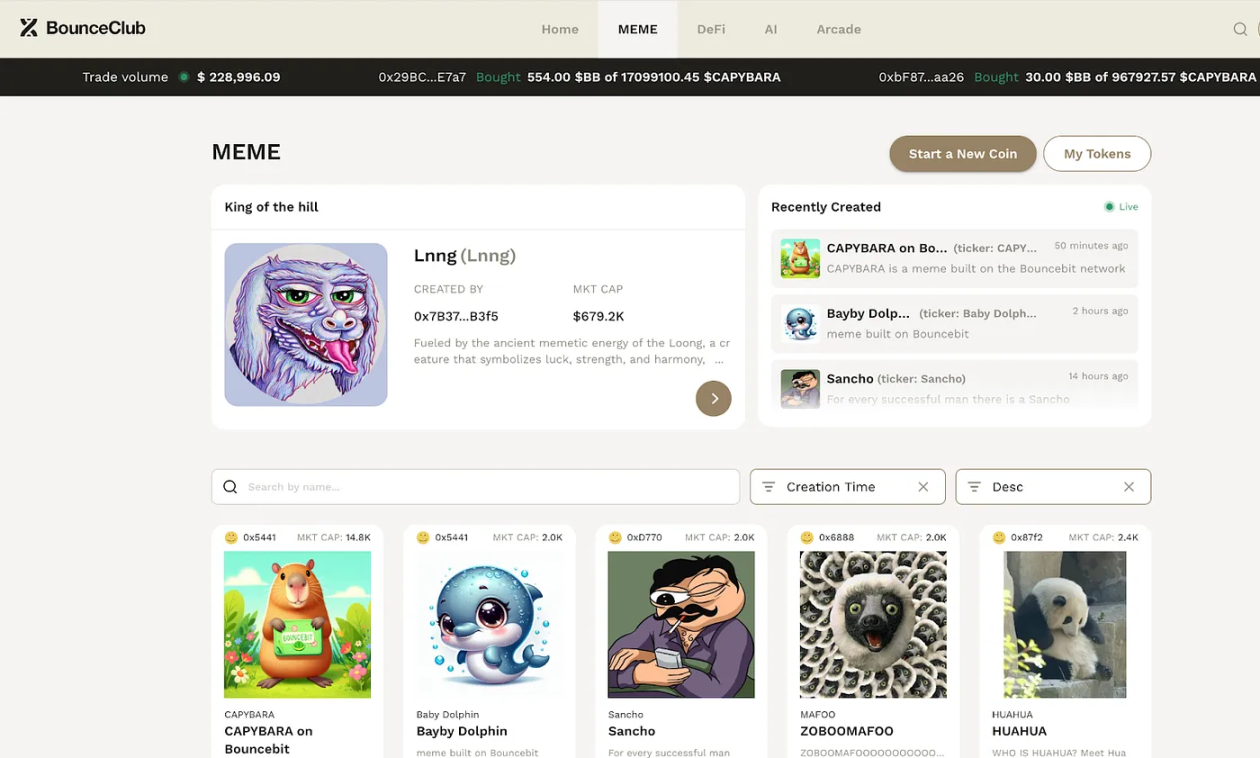
BounceBit 是 BTC 原生再质押链,主要为不同的再质押产品提供基础层。BounceBit Club 是 BounceBit Chain 上的生态系统。它集成了交易、AI、GameFi、DeFi Farm 等元素。同时也提供 Memecoin 的创建和发行。相比于其他发行平台,BounceBit Club 上的 Memecoin 发行平台则更系统更简洁。同时,BounceClub 还宣布将加入现有的 Memecoin 社区,来促进 BounceBit 原生 Memecoin 的发展,其发射阶段采用与 Pump.fun 类似的 Bonding curve,市值达到 72000 个 BB 后将加池子,销毁全部 LP 底池。
一文盘点比特币生态的 「Pump.fun」

Fractal Bitcoin

Satspump.fun

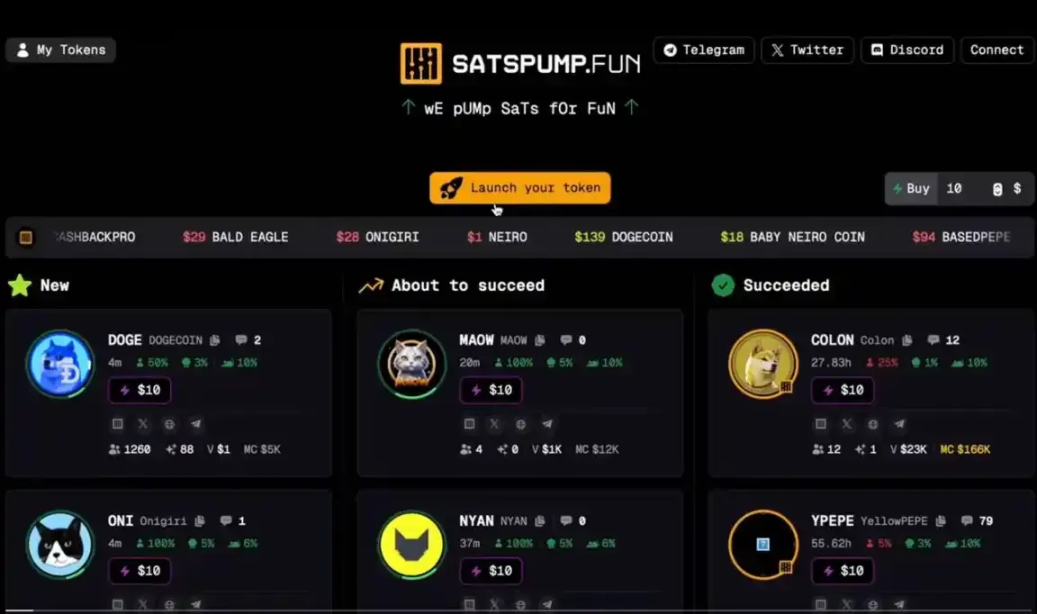
Satspump.fun 是比特币扩展网络 Fractal Bitcoin 上的 Memecoin 发行平台,目前该平台已与比特币生态链游基础设施 UniWorlds、Nodino BTC 等平台达成合作。官方曾于 8 月 9 日宣布进行一次 BRC-20 空投,凡在钱包中持有价值 300 美元的白名单 BRC-20 代币(ORDI、SATS、PIZZA、SHNT、WZRD、HONK、RATS)或 3 个位图的用户均有资格获得本次空投。Satspump.fun 声称采用了 CAT_ 20 技术,在代币市值达到联合曲线目标后将把流动性迁移至 DotSwap V3 AMM Swap 进行交易。
一文盘点比特币生态的 「Pump.fun」

Lightning Network

Lnpump.fun

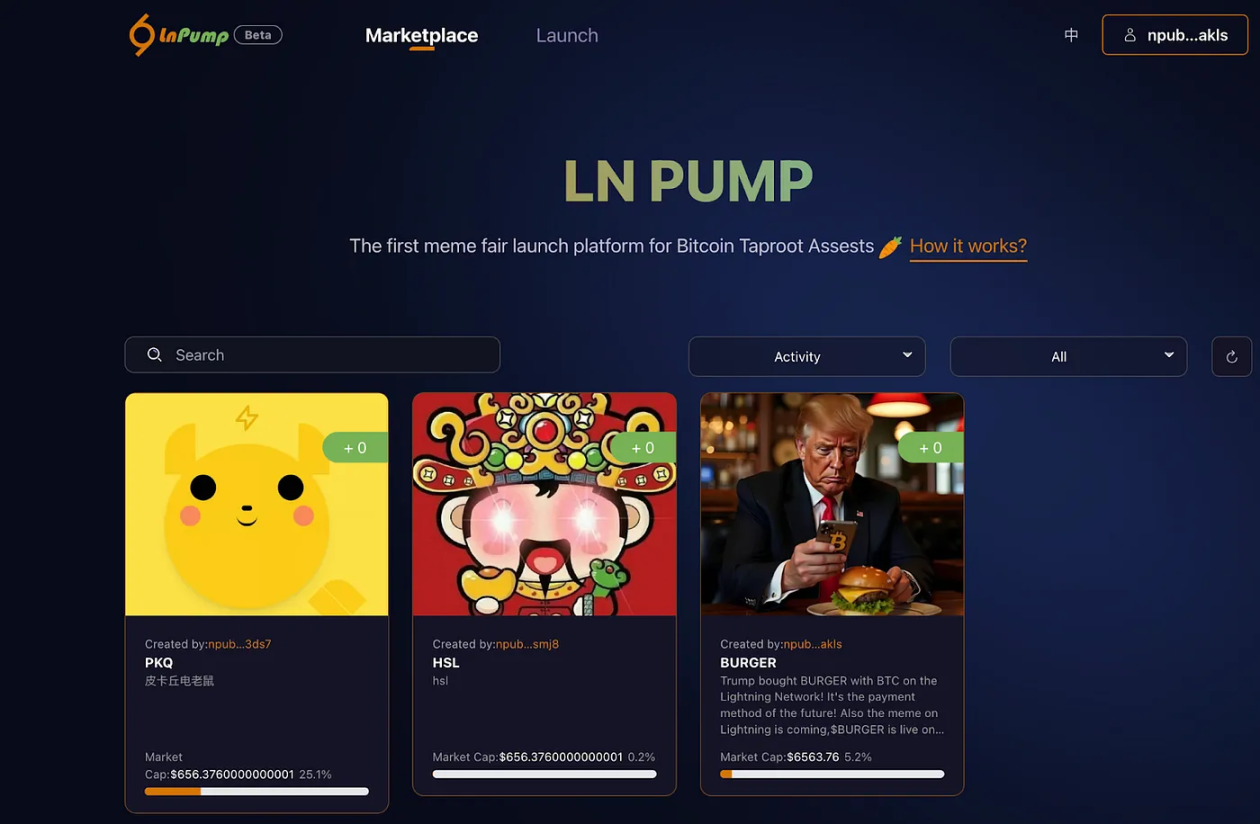
2023 年 10 月,Lightning Labs 发布了 Taproot Assets 协议。Taproot Assets 支持在比特币和闪电网络上发行稳定币和其他资产,且这类资产基于比特币 Script 脚本可编程特性控制发行,完全去中心化,并最终通过闪电网络落地应用。Lnpump.meme 是在闪电网络的 Meme 发行平台。相较于 pump.fun,Lnpump 采用的是相同价格公平发射铸造的方式分发代币,避免内池 PVP。发射完毕后,所有铸造费用进入底池,用涨价拍卖的方式回购已铸造的代币,当底池价格与拍卖价格持平后拍卖结束,开始公开交易。(该项目处于极其早期阶段,随时有 RUG 风险。)
一文盘点比特币生态的 「Pump.fun」

Botanix

Bitzy.app

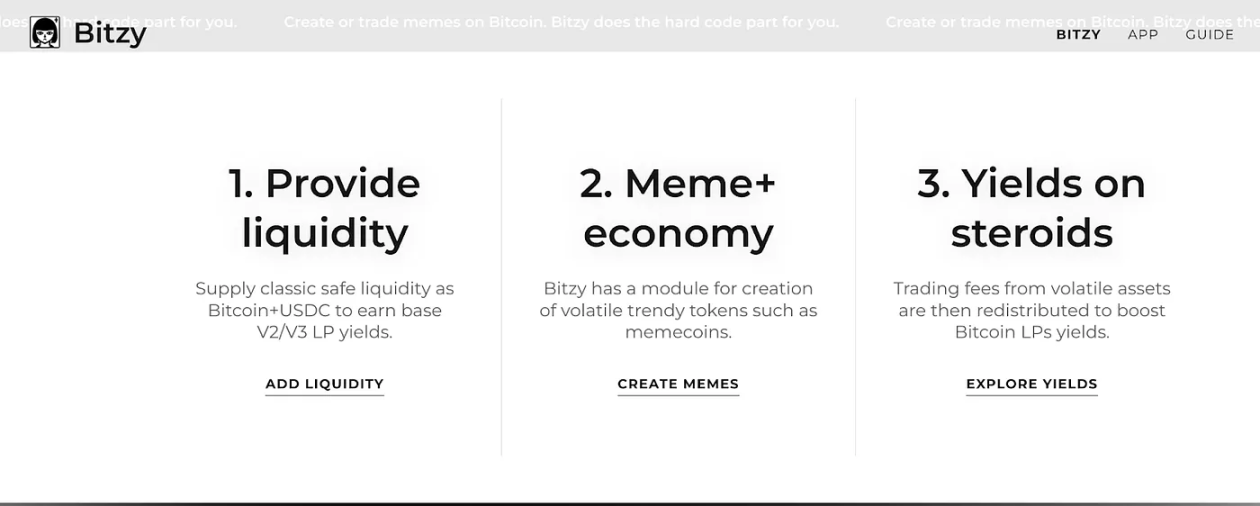
Botanix 是比特币上去中心化的 2 层 EVM,将比特币的安全性和去中心化与 EVM 的易用性和多功能性结合,目前已经上线测试网。该生态的 Meme 发行平台是 Bitzy.app,其宣称「点击两次和零代码」创建代币,有一定空投预期。
一文盘点比特币生态的 「Pump.fun」

CORE

Cpump.fun

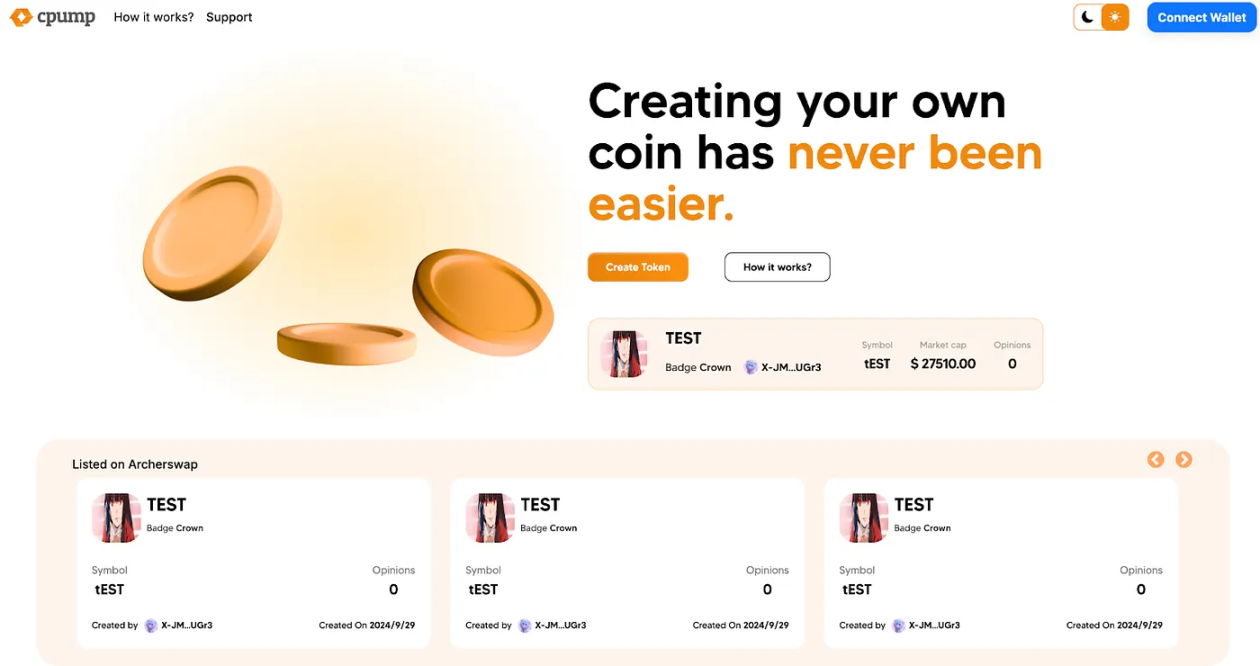
CORE 在宣布进军比特币生态以后,主链代币一个月内达 6 倍涨幅,其下生态也相对丰富。Cpump.fun 作为基于 CORE 链的的 Meme 发射平台,基本玩法与 Pump.fun 类似,初始阶段按照 Bonding curve 进行交易。相比于 Pump.fun,Cpump.fun 在市值达到 23 K 就可以加底池进行流动性迁移,将迁移至 Archerswap 进行交易。
一文盘点比特币生态的 「Pump.fun」

Stacks

Stx.city

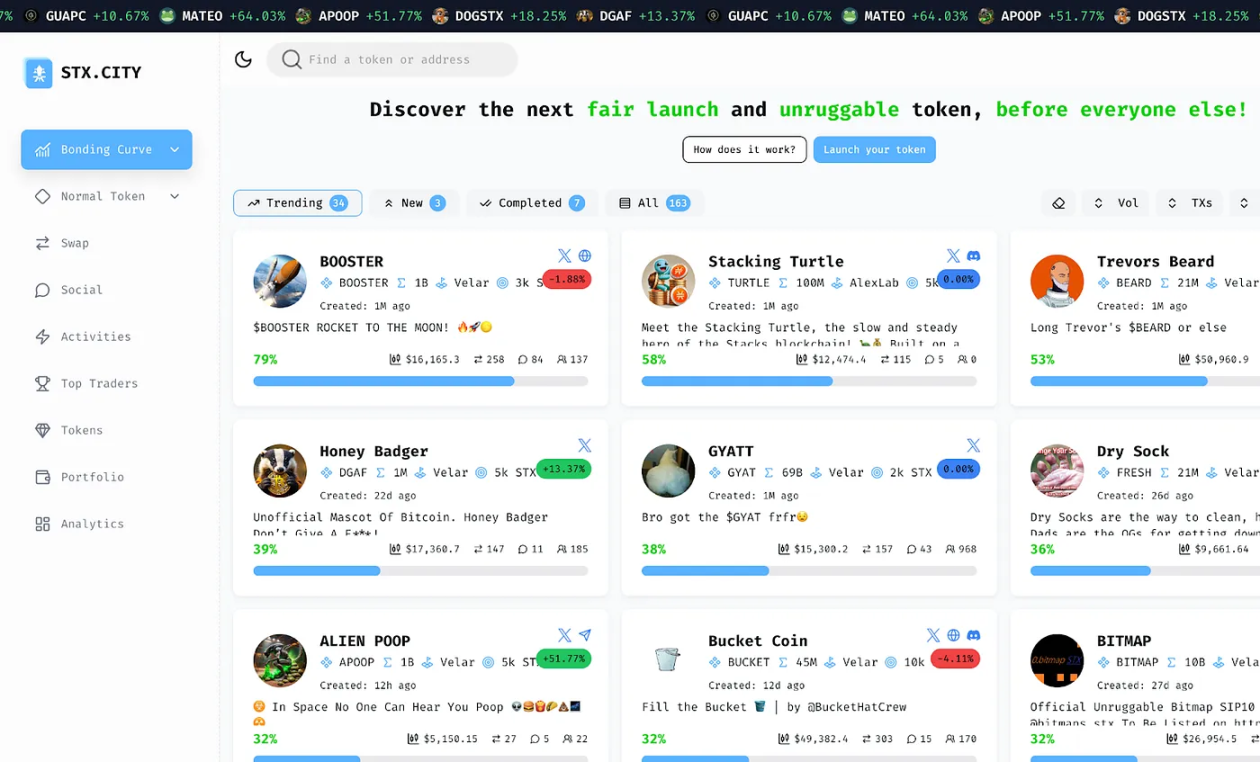
Stacks 是比特币 L2,采用金字塔方法,在底部有基础结算层,可添加智能合约和可编程性层。Stx.city 是该链 Meme 发射平台。在原有的 Bonding curve 交易完成之后,合约会燃烧剩余代币的 20% ,并与收到的 STX 配对添加初始流动性,底池 LP 全部销毁。在销毁代币和 LP 双重利好加持下,早期更易推高代币价格。
一文盘点比特币生态的 「Pump.fun」

结语

在加密用户呼唤公平发射和厌倦了 VC 币的社区情绪下,Meme 发行平台已成为每条公链传统标配四件套(稳定币、跨链桥、Swap、借贷)后新增的「第五件套」。从铭文和符文来看,比特币生态存在并且需要 Memecoin,但似乎并不一定建立在 Pump.fun 上,比特币生态需要自己独特的 Memecoin 发行方式。

本文特别感谢: 1783 DAO.eth
Lecturas Relacionadas

a16z: RWA Has Passed the Proof of Concept, but the Real Challenges Are Just Beginning

a16z highlights that the tokenized real-world asset (RWA) market, excluding stablecoins, has grown tenfold in under two years to roughly $340 billion. This surge is primarily driven by US Treasury bonds and gold, offering investors yield on idle stablecoins and providing institutions with more efficient settlement and collateral flows. However, the core insight is that most tokenized assets today are simply digital certificates for off-chain holdings—used for ownership and transfer but not deeply integrated into DeFi as composable financial building blocks. For instance, only about 5% of tokenized bonds ($8B) are actively used in DeFi protocols. Smaller categories like reinsurance tokens show much higher DeFi utilization (84%), indicating they were designed for on-chain composability from the start. The market remains concentrated, with US Treasuries and commodities comprising two-thirds of the total. Gold dominates the commodities segment. While Ethereum holds over half the market, activity is spreading across multiple chains like BNB Chain and Solana. Predictions for the market's future size vary widely (from $2 trillion to over $30 trillion by 2030/2034), reflecting different definitions of what constitutes tokenization. All agree on significant growth. The current market is minuscule compared to traditional finance (e.g., tokenized bonds are 0.01% of the global bond market). The key takeaway is that the initial "proof-of-concept" phase for moving familiar assets on-chain is proving successful. The next, harder challenge is moving more complex financial instruments onto blockchains and enabling true on-chain composability, where these assets become programmable components within a native digital financial system, rather than just digitized records.

marsbitHace 18 min(s)

a16z: RWA Has Passed the Proof of Concept, but the Real Challenges Are Just Beginning

marsbitHace 18 min(s)

The Wind of 'Proactive' AI Blows into Silicon Valley: Hark Secures $700 Million in Funding

Hark, an AI startup founded in late 2025, has raised $700 million in Series A funding at a $6 billion valuation. Led by Parkway Venture Capital with participation from NVIDIA, AMD Ventures, Intel Capital, Qualcomm Ventures, and Salesforce Ventures, the company aims to develop next-generation human-computer interfaces using a combination of proprietary foundational models and custom-built AI-native hardware. Founded by serial entrepreneur Brett Adcock, Hark envisions a system of multimodal devices equipped with agentic capabilities, end-to-end voice models, and personalized memory. This "active" AI approach seeks to move beyond passive chatbots, creating collaborative companions that anticipate needs and interact naturally within the real world. Adcock's experience with Figure, a humanoid robotics company, informs this hardware-focused venture. The article argues that while current AI is powerful, it remains confined to screens and traditional interfaces like chat. The next paradigm shift requires dedicated hardware that is always-on, possesses persistent memory, and enables intuitive interaction, potentially rivaling the impact of the iPhone. Hark is assembling a team with talent from Apple, Meta, Google, and Tesla to tackle this complex engineering challenge across models, hardware, and interaction design. Finally, the piece suggests Chinese startups may have an advantage in this "active" AI hardware space due to strong manufacturing ecosystems, a vast domestic market, and supportive government policies, framing the competition as one that requires integrated progress in models, operating systems, and devices.

marsbitHace 22 min(s)

The Wind of 'Proactive' AI Blows into Silicon Valley: Hark Secures $700 Million in Funding

marsbitHace 22 min(s)

Competitors Going Public, Kimi Can't Sit Still

Competitors Go Public, Kimi Feels the Pressure Yue Zhi An Mian (Moonshot AI), the company behind the AI assistant Kimi, has begun dismantling its VIE and red-chip structure, clearing a key obstacle for a potential Hong Kong IPO. This marks a significant shift from six months ago when founder Yang Zhilin stated the company was in "no hurry" to list. The move comes as rivals like Zhipu AI and MiniMax have successfully listed on the Hong Kong Stock Exchange in early 2026, experiencing massive surges in market value. This has reset valuation logic for AI companies, turning "going public" from an end goal into a competitive necessity. Analysts suggest Kimi is both seizing a favorable market window and responding to competitive pressure. Kimi's valuation has skyrocketed from around $3 billion at its 2023 founding to over $20 billion by May 2026. Capital is betting on its potential as a future AI platform and gateway, though some caution this "emotional valuation" depends on sustained technological leadership and successful commercialization. Traditionally focused on core model R&D over user growth, Kimi has recently pivoted strategy. While its monthly active users declined through 2025, it shifted focus to Agent development and reducing marketing spend. The release of its K2.5 model in early 2026 reportedly generated substantial revenue, with annual recurring revenue reaching $200 million by April, driven by subscriptions and API services. A $2 billion D-round financing in May signaled investor approval of this commercial shift. However, listing will bring new pressures. Experts predict a listed Kimi would face stricter scrutiny on financial controls, compliance, and R&D efficiency. The narrative must evolve from pure technological breakthroughs to demonstrating clear commercialization paths, sustainable income, and a defensible valuation, balancing model superiority with business performance.

marsbitHace 42 min(s)

Competitors Going Public, Kimi Can't Sit Still

marsbitHace 42 min(s)

Trading

Spot
Futuros

Artículos destacados

Cómo comprar PUMP

¡Bienvenido a HTX.com! Hemos hecho que comprar Pump.fun (PUMP) sea simple y conveniente. Sigue nuestra guía paso a paso para iniciar tu viaje de criptos.Paso 1: crea tu cuenta HTXUtiliza tu correo electrónico o número de teléfono para registrarte y obtener una cuenta gratuita en HTX. Experimenta un proceso de registro sin complicaciones y desbloquea todas las funciones.Obtener mi cuentaPaso 2: ve a Comprar cripto y elige tu método de pagoTarjeta de crédito/débito: usa tu Visa o Mastercard para comprar Pump.fun (PUMP) al instante.Saldo: utiliza fondos del saldo de tu cuenta HTX para tradear sin problemas.Terceros: hemos agregado métodos de pago populares como Google Pay y Apple Pay para mejorar la comodidad.P2P: tradear directamente con otros usuarios en HTX.Over-the-Counter (OTC): ofrecemos servicios personalizados y tipos de cambio competitivos para los traders.Paso 3: guarda tu Pump.fun (PUMP)Después de comprar tu Pump.fun (PUMP), guárdalo en tu cuenta HTX. Alternativamente, puedes enviarlo a otro lugar mediante transferencia blockchain o utilizarlo para tradear otras criptomonedas.Paso 4: tradear Pump.fun (PUMP)Tradear fácilmente con Pump.fun (PUMP) en HTX's mercado spot. Simplemente accede a tu cuenta, selecciona tu par de trading, ejecuta tus trades y monitorea en tiempo real. Ofrecemos una experiencia fácil de usar tanto para principiantes como para traders experimentados.

229 Vistas totalesPublicado en 2024.12.12Actualizado en 2026.05.09

Cómo comprar PUMP

Discusiones

Bienvenido a la comunidad de HTX. Aquí puedes mantenerte informado sobre los últimos desarrollos de la plataforma y acceder a análisis profesionales del mercado. A continuación se presentan las opiniones de los usuarios sobre el precio de PUMP (PUMP).

活动图片