Эти два фактора помогут Toncoin (TON) вернуться к $6

cryptonews.ruPublicado a 2023-06-06Actualizado a 2024-10-06

Toncoin (TON) столкнулся с трудностями при попытке преодолеть барьер в $6,00, что привело к снижению цены альткоина на 11%.

На момент написания токен торгуется в районе $5,36 и пытается восстановить важный уровень поддержки.

Toncoin на пути к восстановлению

Один из ключевых факторов, влияющих на рыночное настроение вокруг Toncoin — это доля инвесторов, которые находятся в прибыли. В настоящее время их число составляет менее 3%.

Обычно большее количество адресов в прибыли намекает на скорую распродажу, которая может спровоцировать снижение цены. Однако обратная ситуация предполагает, что инвесторы будут удерживать свои позиции в ожидании будущего роста.

Читайте также: Как купить Toncoin за рубли — инструкция
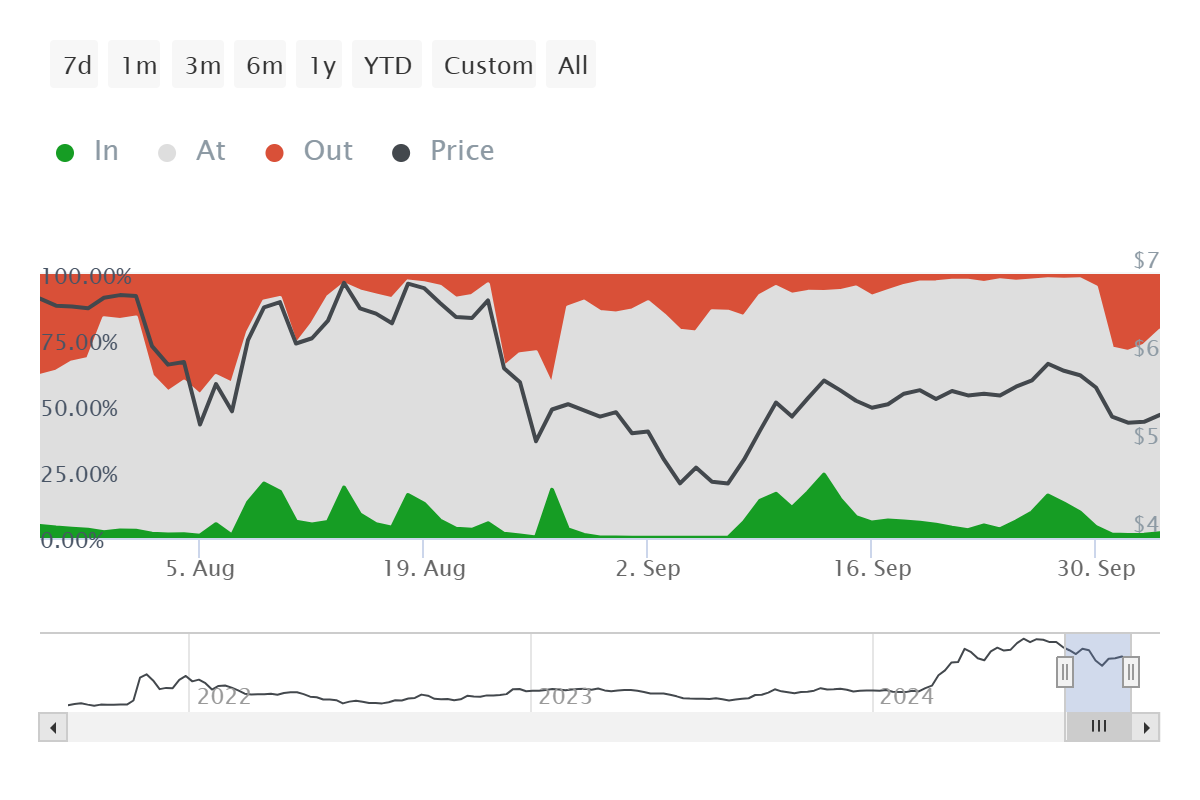
Активные адреса Toncoin в прибыли. Источник: IntoTheBlock

Технические индикаторы также демонстрируют признаки восстановления. Индикатор потока денежных средств Чайкина (CMF), который отслеживает притоки и оттоки капитала, отскочил от нулевой линии. Это говорит о том, что инвесторы снова начинают покупать Toncoin, что важно для роста цены.
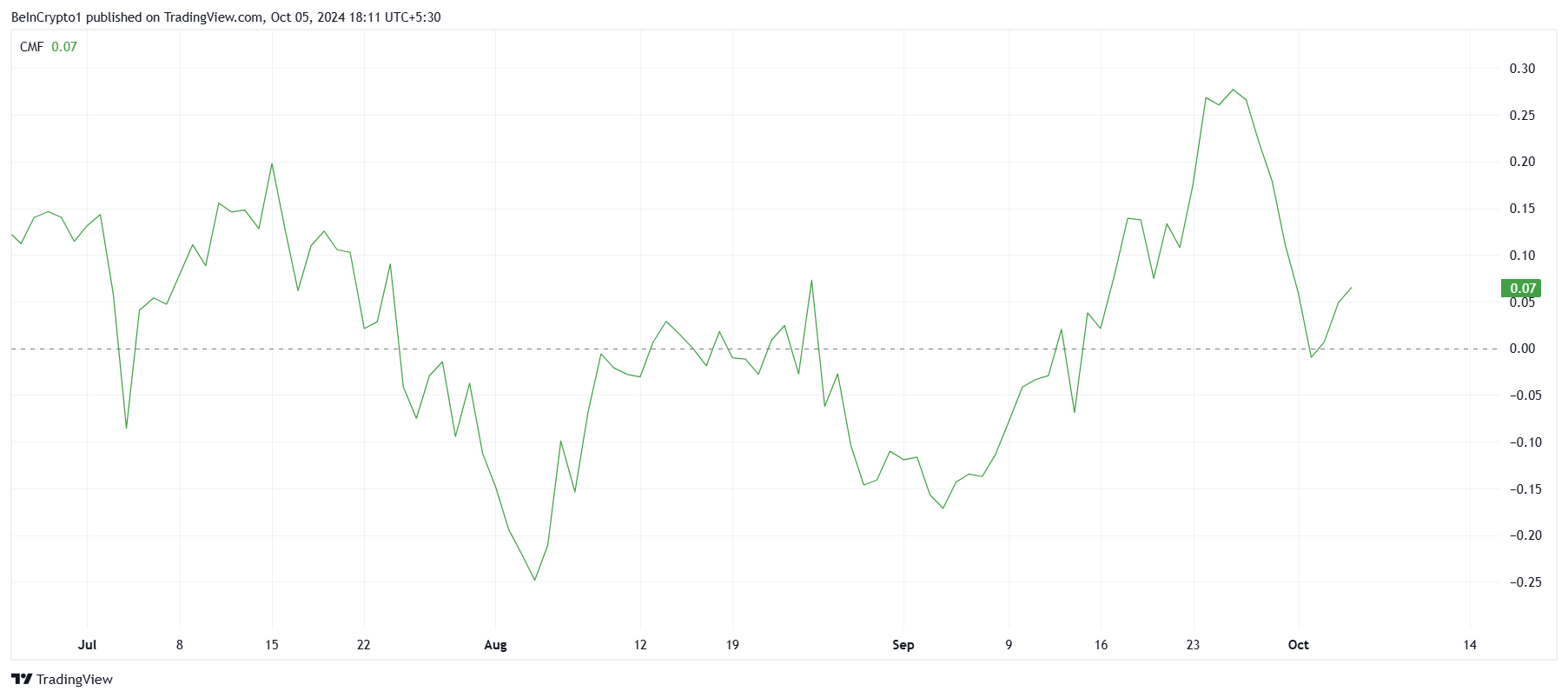
Toncoin CMF. Источник: TradingView

Прогноз цены TON: впереди устойчивый рост

В настоящее время TON пытается восстановить уровень $5,37 в качестве поддержки. Успешное закрепление выше этой отметки крайне важно для того, чтобы актив смог подняться к $5,96, ключевой точке сопротивления.

Текущие рыночные и макроэкономические факторы поддерживают возможность прорыва следующего важного барьера в $5,96. Постоянный приток капитала и низкое давление продаж создают благоприятные условия для восстановления Toncoin.

Читайте также: Что такое TON — обзор проекта и криптовалюты Toncoin
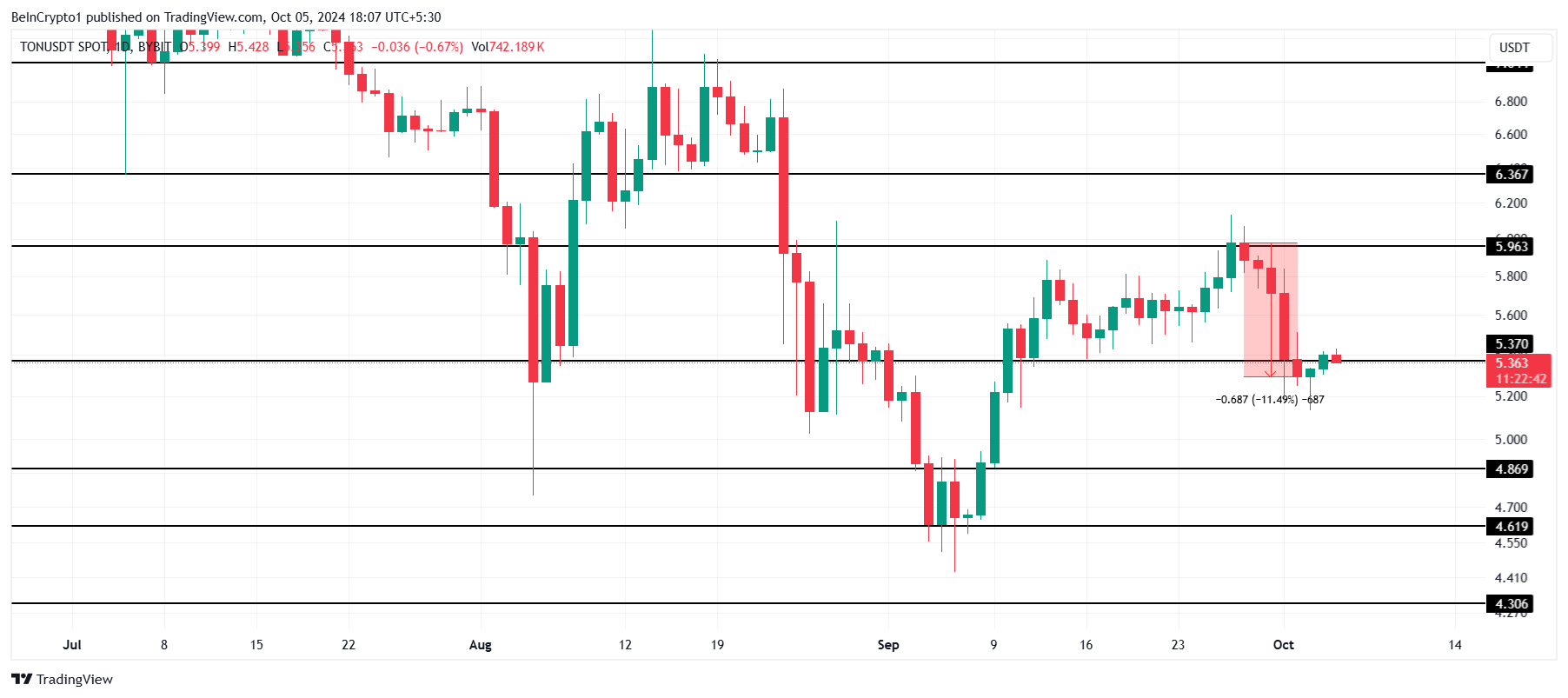
Анализ цены Toncoin. Источник: TradingView

Однако если инвесторы начнут фиксировать прибыль после того закрепления выше $5,37, бычий тренд значительно ослабнет. В таком случае TON может остаться ниже отметки $6,00, что снизит его возможности для дальнейшего роста.
Lecturas Relacionadas

The Domestic Answer to Space Computing Power: Photonics Are More Efficient, Musk and Huang's Approaches Are Too Roundabout

The Space Computing Race: A Photonic Advantage The competition for space-based computing has intensified, with figures like Elon Musk and NVIDIA's Jensen Huang highlighting its potential. Musk predicts solar-powered AI satellites could offer the most cost-effective computing by 2032. However, space presents extreme challenges for traditional electronic chips: radiation from cosmic particles can cause errors, the vacuum environment hinders heat dissipation, and limited solar power constrains energy-hungry systems. Photonic computing, using light instead of electrons, offers a promising solution. Its core advantages for space are threefold: 1) **Radiation Resistance**: Photons are charge-neutral, making them inherently immune to particle interference. 2) **Low Heat Generation**: Light propagation in waveguides generates minimal heat, bypassing critical thermal management issues. 3) **Low Power Consumption**: Photonic chips have near-zero static power draw, aligning perfectly with the energy constraints of satellites. Furthermore, for a given payload weight and volume, photonic systems can potentially deliver higher total compute density. Since they require less bulky cooling and power infrastructure, more space can be allocated to the compute units themselves. While photonic computing holds great promise, current industry approaches face hurdles like the memory-compute bottleneck (separate storage and processing) and challenges in large-scale integration. Engineering for space—withstanding launch vibrations and validating full system operation in orbit—remains a critical step. The path forward resembles the evolution from single GPUs to computing clusters, but via a photonic route. As electronic chips approach physical limits in miniaturization, photonic computing and optical interconnects (光算光联) may provide a key alternative to bypass these constraints and define the next generation of space-based computing capabilities.

marsbitHace 35 min(s)

The Domestic Answer to Space Computing Power: Photonics Are More Efficient, Musk and Huang's Approaches Are Too Roundabout

marsbitHace 35 min(s)

Trading

Spot
活动图片