Mark Cuban Slams Gary Gensler For SEC’s Crypto Crackdown: ‘FTX Would Still Be In Business’

bitcoinistPublicado a 2024-10-05Actualizado a 2024-10-05

Resumen

Billionaire and crypto advocate Mark Cuban criticized the US Securities and Exchange Commission (SEC) Chairman for his crackdown on the...

Billionaire and crypto advocate Mark Cuban criticized the US Securities and Exchange Commission (SEC) Chairman for his crackdown on the industry, arguing that FTX and Three Arrows Capital (3AC) would still be in business if it weren’t for the US regulator.

SEC Chairman Under Fire For Crypto Crackdown

Mark Cuban recently joined two podcasts on Thursday to discuss industry-related topics, including the US elections, crypto adoption, and the SEC’s regulatory stance. The billionaire heavily criticized the US regulator and its chairman, Gary Gensler, for their “regulation via enforcement” approach to the sector.

In an interview with Farokh Sarmad, Cuban reiterated his long-standing discontent with the Commission, asserting he is a “big fan of bright line regulation” rather than “regulation via litigation.”

The crypto advocate slammed the SEC’s lack of transparency and argued that the Commission has been trying to make the law based on the rulings of its lawsuits instead of setting clear rules from the start, which has been a common criticism for the regulatory agency.

He revealed he confronted Gensler last week in CNBC’s green room, detailing the reasons for his criticism. “I told him this: You’re screwing the whole thing up you’re pushing Industries overseas (…) that’s just wrong because it starts with crypto but expands into other applications,” he recalled.

However, Cuban believes the SEC’s chairman did not “really get it.” The billionaire suggested that Gensler “got some of that Elizabeth Warren in him,” explaining that the SEC’s chair might be “trying to be a public servant that’s saving the world” with his attempt to crack down on the sector and its “bad actors.”

In the All-In podcast, the entrepreneur continued to slam the US regulator, claiming that if it weren’t for Gensler, crypto companies like FTX and 3AC wouldn’t be out of business. He argued that if the US regulator had taken the appropriate approach, companies would have been able to operate responsibly and protect investors:

What he should be doing is saying here’s the bright line regulations. If FTX wants to loan out all their Ethereum, you have to do what they did in Japan and have 95% collateral, and 95% of anything needs to be put in Cold Storage. If he had followed the same rules for crypto that Japan did, FTX would still be in business. Bankman-Fried might still be in jail, but FTX and 3AC would still be in business.

Harris’ Campaign ‘Knows Gensler Screwed It Up’

The billionaire shared the details of his conversations with US Vice President Kamala Harris and her campaign. Cuban has publicly endorsed the Democratic nominee for the upcoming November Presidential elections.

In the interview with Farokh, he shared that, despite his bias, he considers that having Gensler as SEC’s chairman was a bad look for the Biden-Harris administration as it automatically makes all the resolutions “f*cked up.”

Cuban also claims that Harris and her campaign are aware of it, “they understand that he screwed it up, that’s why you haven’t heard her say anything positive to support him.” He considers not endorsing Gensler as a “huge” and positive signal for her crypto stance, which has been heavily questioned.

Lastly, he revealed he was “trolling” when he offered to be the SEC’s new chairman under Harris’ administration. Instead, the billionaire wanted to open a conversation and send a message to Gensler: “that he’s doing it all wrong.”
crypto, bitcoin, btc, btcusdt

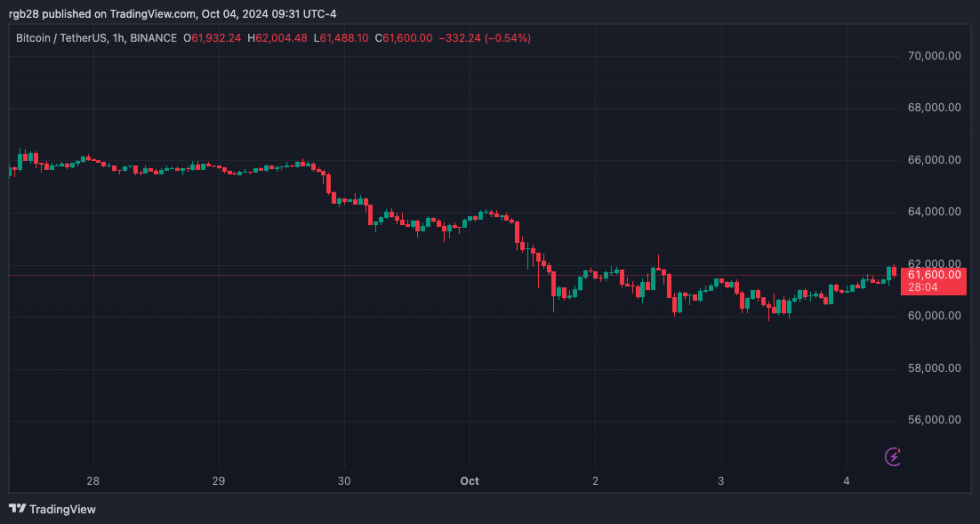
Bitcoin (BTC) is trading at $61,600 in the weekly chart. Source: BTCUSDT on TradingView
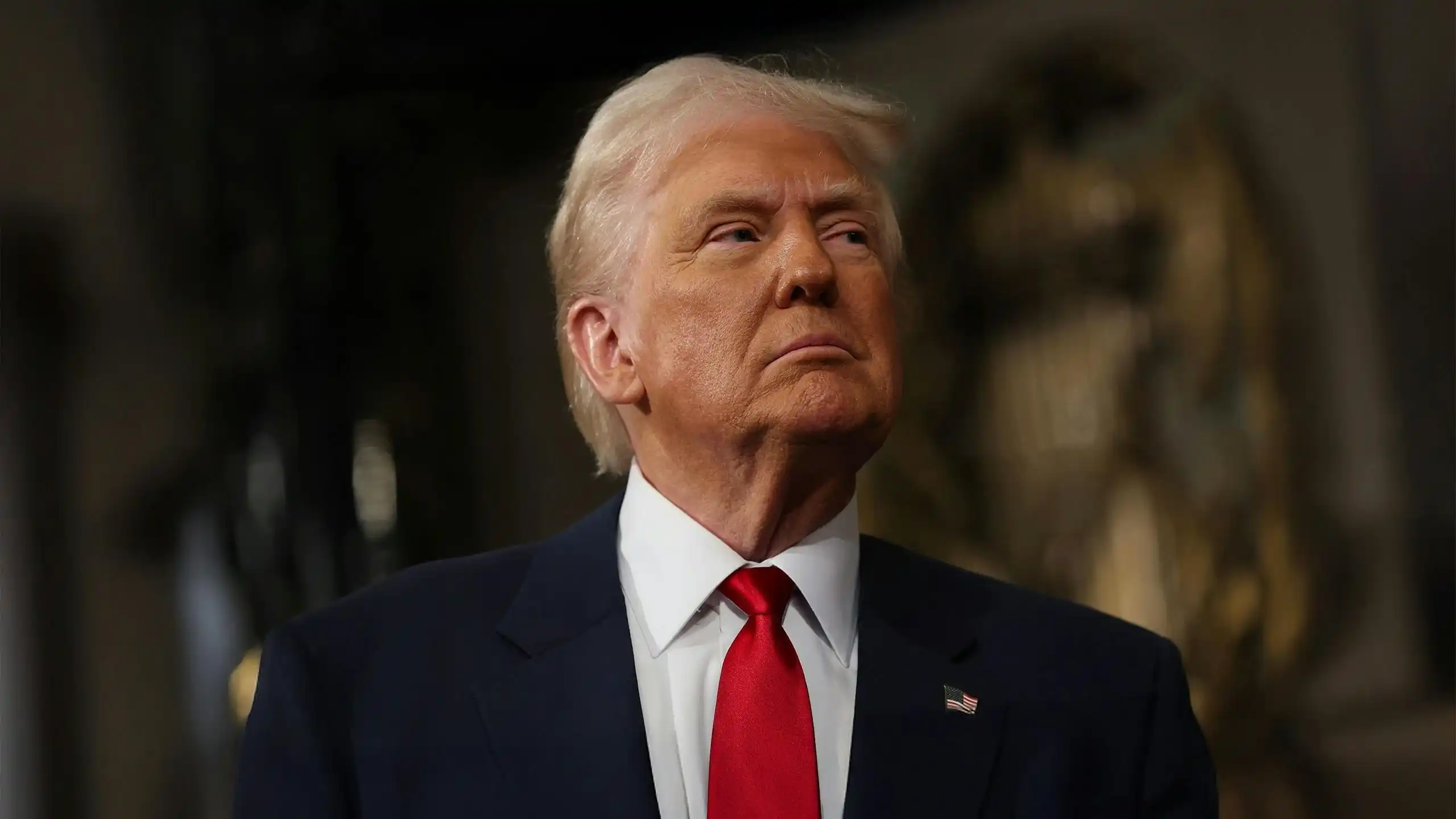
Featured Image from NBC News, Chart from TradingView.com
Rubmar Garcia

Rubmar Garcia

Rubmar is a crypto enthusiast who likes learning and improving constantly. She enjoys reporting on the latest news and developments in the crypto industry. Rubmar also enjoys scrapbooking, crafting, simulation games, and watching football.

Lecturas Relacionadas

Who is the Most Profitable Man in the Crypto World? Trump Rakes in Over $1.427 Billion in 2025

Who is the most profitable man in crypto? President Trump's 2025 financial disclosure, filed with the Office of Government Ethics, reveals crypto-related earnings exceeding $1.427 billion, starkly contrasting the broader market downturn. The bulk of this wealth stems not from passive investment but from his entities' roles as issuers and licensors. CIC Digital LLC, his memecoin operation, generated approximately $636 million in 2025, primarily from "Celebration Coins" royalty fees. DT Marks Defi LLC, a stakeholder in World Liberty Financial, earned about $594 million from asset sales and token distribution proceeds. Other entities held significant Bitcoin, Ethereum, and various altcoin wallets, along with substantial income from stablecoin ventures and his wife's NFT sales. This "issuer model" shields him from market downturns. While his namesake memecoin plummeted from ~$74 to ~$1.68, leaving many retail investors at a loss, his royalty income remained unaffected. The disclosure emerges as the U.S. Senate debates the CLARITY Act, which includes contentious ethics provisions aimed at preventing officials from profiting from the crypto sector they regulate. Critics argue Trump's earnings exemplify a critical conflict of interest, fueling demands for stricter rules to separate regulatory power from personal financial gain in the industry.

Foresight NewsHace 5 min(s)

Who is the Most Profitable Man in the Crypto World? Trump Rakes in Over $1.427 Billion in 2025

Foresight NewsHace 5 min(s)

Trump's 25-Year Financial Report: Family Earns Over $1 Billion Annually from Crypto, While Retail Investors Lose Money on $TRUMP

Former President Donald Trump's family earned approximately $1.2 billion from cryptocurrency ventures in 2025, according to a financial disclosure report. This revenue stream, outlined in a 927-page filing, now surpasses income from most of his long-established real estate holdings. The crypto earnings originated from two main sources: over $500 million from the sale of products like "governance tokens" by World Liberty Financial, a DeFi project co-owned by the Trump family, and roughly $635 million in royalties from the Trump-themed meme coin $TRUMP, issued by CIC Digital LLC. While Trump's entities profited, retail investors faced significant losses. The $TRUMP token, which peaked above $74 shortly after its January 2025 launch, has plummeted to around $1.68. World Liberty Financial's token has also fallen roughly 80% since its debut. Reports indicate that the majority of meme coin buyers have lost money, with Trump-linked entities still holding about 80% of $TRUMP's supply under vesting plans. The disclosure highlights a stark contrast: Trump's crypto and real estate businesses flourished—with new international property deals bringing in tens of millions—even as his administration shifted to crypto-friendly policies, relaxing the stringent regulatory stance of the previous Biden administration. The White House maintains that Trump acts only in the public interest, with his businesses placed in a trust managed by his sons, denying any conflict of interest. However, the report notes the difficulty of assessing such conflicts, particularly regarding foreign business dealings with countries that later received favorable U.S. policy decisions.

marsbitHace 6 min(s)

Trump's 25-Year Financial Report: Family Earns Over $1 Billion Annually from Crypto, While Retail Investors Lose Money on $TRUMP

marsbitHace 6 min(s)

From 'Address Clustering' to 'Evidence Standards': Why is Chainalysis Redefining Blockchain Tracing?

**Summary:** In June 2026, Chainalysis introduced the **Blockchain Tracing Ontology (BTO)**, a proposed data framework aiming to establish standardized, transparent, and verifiable models for blockchain analysis. This initiative addresses a core industry issue: despite public blockchain data, different firms often produce inconsistent results (e.g., differing entity labels for the same address) due to non-uniform methodologies, particularly in **address clustering**. This lack of standardization poses challenges for judicial investigations, AML, and enforcement. The BTO is not a new clustering algorithm but a **common "language" or conceptual framework**. It moves beyond the simplistic "cluster" model by introducing a hierarchical structure: **Entity → Wallet → Wallet Segment → Address**, which better reflects complex organizational wallet management. A key shift is from presenting mere results to ensuring **process trust and explainability**. The framework emphasizes documenting the **Evidence** and **Confidence** behind each analytical claim—specifying the on-chain/off-chain data, rules applied, and certainty levels—enabling third-party verification. This focus is partly informed by legal precedents like the **Bitcoin Fog** case, where Chainalysis's methods underwent rigorous judicial scrutiny (Daubert hearing), highlighting the need for reproducible, scientifically sound analysis. The proposal clarifies that on-chain analysis identifies address relationships and flow patterns, not real-world identities, which still require off-chain evidence (e.g., KYC data). Ultimately, Chainalysis envisions steering the industry from an "experience-driven" to a **"standards-driven"** future, where competition centers on **data quality, analytical transparency, and judicial admissibility** rather than just label coverage. Widespread adoption could facilitate cross-agency collaboration, reduce disputes, and provide a more reliable foundation for global compliance and enforcement.

marsbitHace 34 min(s)

From 'Address Clustering' to 'Evidence Standards': Why is Chainalysis Redefining Blockchain Tracing?

marsbitHace 34 min(s)

The 'Conference Circuit' for the Second Half of the Year Begins! A Complete Overview of the 2026 Web3 Global Summit Schedule

"Web3 Global Summit Calendar for the Second Half of 2026" provides a comprehensive list of major Web3 and blockchain conferences worldwide, focusing on events from July to December 2026. The schedule starts in July with IVS in Kyoto, WebX in Tokyo, Canada Crypto Week in Toronto, and Malaysia Blockchain Week in Kuala Lumpur. August features Conviction in Ho Chi Minh City, Coinfest Asia in Bali, and Bitcoin Hong Kong. September is the most intense month, with notable events like NFT NYC in New York, ETHRome in Rome, Money20/20 in Saudi Arabia, European Blockchain Convention in Barcelona, and Korea Blockchain Week in Seoul. The fourth quarter begins with the significant TOKEN2049 Singapore in October, which will be the sole TOKEN2049 event of the year following the cancellation of the Dubai edition. November includes Devcon 8 and Bitcoin Amsterdam in Amsterdam, Digital Asset Summit and Solana Breakpoint in London. The year concludes in December with Blockchain Life in Dubai and Bitcoin MENA in Abu Dhabi. The article also lists key events from the first half of the year (January to June, marked as concluded) for reference, including Consensus Hong Kong, ETHDenver, and Paris Blockchain Week. The guide serves as a resource for planning attendance at these industry gatherings across Asia, Europe, North America, and the Middle East.

Foresight NewsHace 44 min(s)

The 'Conference Circuit' for the Second Half of the Year Begins! A Complete Overview of the 2026 Web3 Global Summit Schedule

Foresight NewsHace 44 min(s)

Video Edition Nano Banana Arrives: Built-in Gemini World Knowledge, Original Banana Generates Images in Just 4 Seconds

Google has unveiled two new multimodal AI models: Gemini Omni Flash and Nano Banana 2 Lite. Gemini Omni Flash is a video generation and editing model that leverages Gemini's world knowledge. It allows for conversational video editing using natural language prompts, maintains scene consistency, and integrates text/graphics with video actions. Priced at $0.10 per second of output, its current limitations include a 10-second video cap. Nano Banana 2 Lite (gemini-3.1-flash-lite-image) is an optimized image generation model focused on speed and cost. It produces a 1K resolution image in about 4 seconds at a cost of roughly $0.034, making it significantly faster and cheaper than its predecessor. It retains strong text rendering capabilities. A key highlight is the combined workflow: users can rapidly generate images with Nano Banana 2 Lite and then seamlessly feed them into Gemini Omni Flash to create videos. Google demonstrated this with three application demos: "Anywhere" for creating travel videos from photos, "Space Lift" for generating interior design walkthroughs, and "Omni Product Studio" for automating e-commerce ad creation from product photos. The release underscores Google's strategic focus on advancing multimodal AI for practical, commercial applications in areas like marketing, design, and content creation, despite competitive pressures in other AI domains.

marsbitHace 52 min(s)

Video Edition Nano Banana Arrives: Built-in Gemini World Knowledge, Original Banana Generates Images in Just 4 Seconds

marsbitHace 52 min(s)

Trading

Spot
活动图片