Африканцы совершают почти половину криптопереводов в стейблкоинах

cryptonews.ruPublicado a 2024-04-03Actualizado a 2024-10-03

Согласно данным Chainalysis, в настоящее время на долю стейблкоинов приходится около 43% всех криптовалютных транзакций, совершаемых в странах Африки, расположенных к югу от пустыни Сахары. Аналитики связывают такой высокий показатель с экономической нестабильностью в регионе и стремительным обесцениванием местных национальных валют.
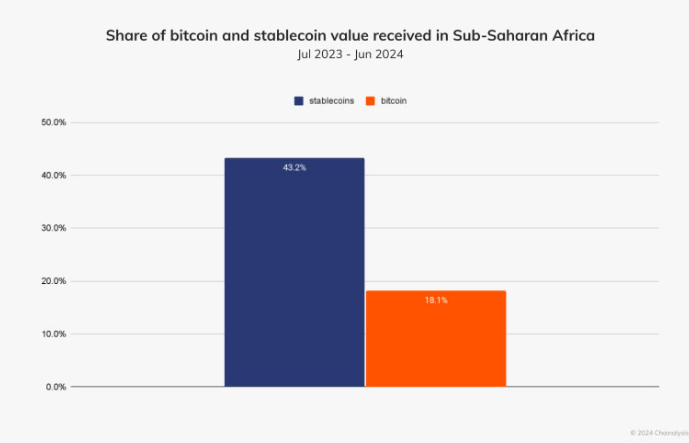
рис 2

Доля транзакций в стейблкоинах (синий столбик) и биткоинах (оранжевый) в странах Африки

Жители региона всё чаще выбирают стейблкоины благодаря тому, что их курс привязан к более стабильным валютам, например, американскому доллару.

Рискну предположить, что использование стейблкоинов будет стремительно расти по мере обесценивания национальных валют. Но популярность этого класса активов может быть связана и с другими обстоятельствами, — считает аналитик Chainalysis Эрик Джардин.

Чаще всего стейблкоинами пользуются в Нигерии. В период с июля 2023-го по июнь 2024-го в стране выполнили криптовалютные транзакций на сумму более чем $59 млрд. Причём количество переводов небольших сумм, сделанных рядовыми гражданами, заметно выросло.
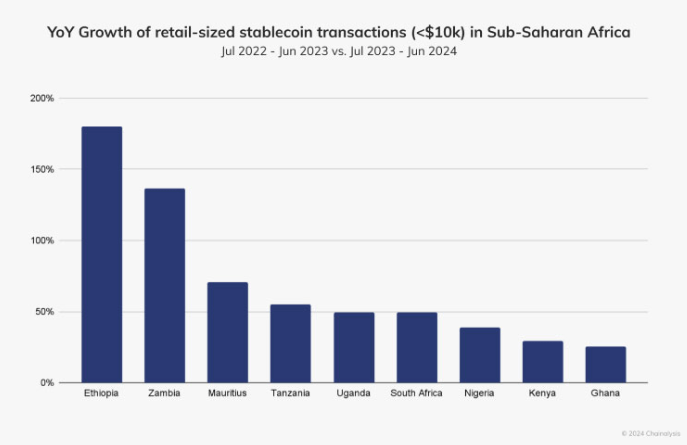
рис 3

Использование стейблкоинов в разных странах Африки

Стремительный рост использования стейблкоинов наблюдается в Эфиопии. За прошедший год показатель увеличился на 180%. И всё благодаря решению властей африканского государства ослабить валютные ограничения для получения поддержки от МВФ. Кроме того, эфиопский бирр обесценился более чем на 30% за последние 12 месяцев.


Lecturas Relacionadas

USD 34 Billion Valuation: Li Yanhong's Biggest IPO, Kunlunxin's Allocation Shares Are in Short Supply

"Kunlun Xin Aims for Landmark $50 Billion IPO, Backed by Baidu" Kunlun Xin, Baidu's AI chip arm, is preparing for a highly anticipated dual listing in Hong Kong and on China's STAR Market. According to reports, the company is targeting a valuation of approximately $50 billion (340 billion RMB), which would surpass Baidu's own market capitalization and represent CEO Robin Li's largest IPO to date. Demand from cornerstone investors is intense, with shares described as "hard to get." The company is reportedly prioritizing strategic investors who commit to purchasing its chips, requiring procurement worth 3 to 7 times their investment amount. Originating from Baidu's internal chip division in 2011, Kunlun Xin was spun off in 2021. It has since attracted a prestigious roster of over 50 investors, including CPE, IDG Capital, China Mobile's fund, and various government-backed funds. Its current flagship product, the P800, rivals Nvidia's A800. Crucially, external customer business now exceeds internal supply to Baidu, with major clients including China Mobile, which awarded a billion-yuan order. For Baidu, an early proponent of "All in AI," Kunlun Xin's success is pivotal. While its large language model, Ernie, faced stiff competition, the AI chip unit is seen as its most valuable underlying asset. A successful IPO would provide a significant valuation boost and mark a critical turnaround in Baidu's AI narrative.

链捕手Hace 2 min(s)

USD 34 Billion Valuation: Li Yanhong's Biggest IPO, Kunlunxin's Allocation Shares Are in Short Supply

链捕手Hace 2 min(s)

Stablecoins Are the 'Royalists' of the Crypto World: Open USD Brings the Old Monetary System into the Fray

Title: Stablecoins Are the "Royalists" of the Crypto World: Open USD Brings the Old Monetary System into the Fray The article analyzes the launch of Open USD, a new dollar-pegged stablecoin backed by a coalition of over 140 traditional financial, payment, and tech giants like Visa, BlackRock, and Google. Author Hu Yilin argues that stablecoins like Open USD represent not a "moderate" wing of the crypto revolution, but a "royalist reform" within the old monetary system. He posits that while stablecoins adopt blockchain's efficiency, programmability, and borderless nature, they fundamentally reinforce the US dollar's centrality and the Federal Reserve's authority. They aim to replace inefficient "bureaucrats" (like traditional payment networks) rather than challenge the "monarch" (the dollar-based system). Thus, Open USD symbolizes the old system co-opting blockchain technology to upgrade dollar hegemony, potentially marginalizing native crypto projects like Circle's USDC. Hu contrasts this with more revolutionary paths, like a "Bitcoin standard," which seeks to change the monetary base itself. He warns that if the crypto ecosystem's unit of account, collateral, and value anchor remain dollar-denominated stablecoins,链上繁荣 may enrich the traditional financial system ("off-chain") rather than granting monetary premium to native crypto assets like ETH. Projects with civilizational ambitions, he argues, cannot reduce their narrative to mere "fuel" or transaction fees but must grapple with the core revolutionary idea: that a decentralized market does not require a central bank as the anchor of monetary order.

marsbitHace 3 hora(s)

Stablecoins Are the 'Royalists' of the Crypto World: Open USD Brings the Old Monetary System into the Fray

marsbitHace 3 hora(s)

Trading

Spot
活动图片