DeSci+生物科技,BIO Protocol将加密货币带入新应用场景

链得得Publicado a 2024-10-02Actualizado a 2024-10-03

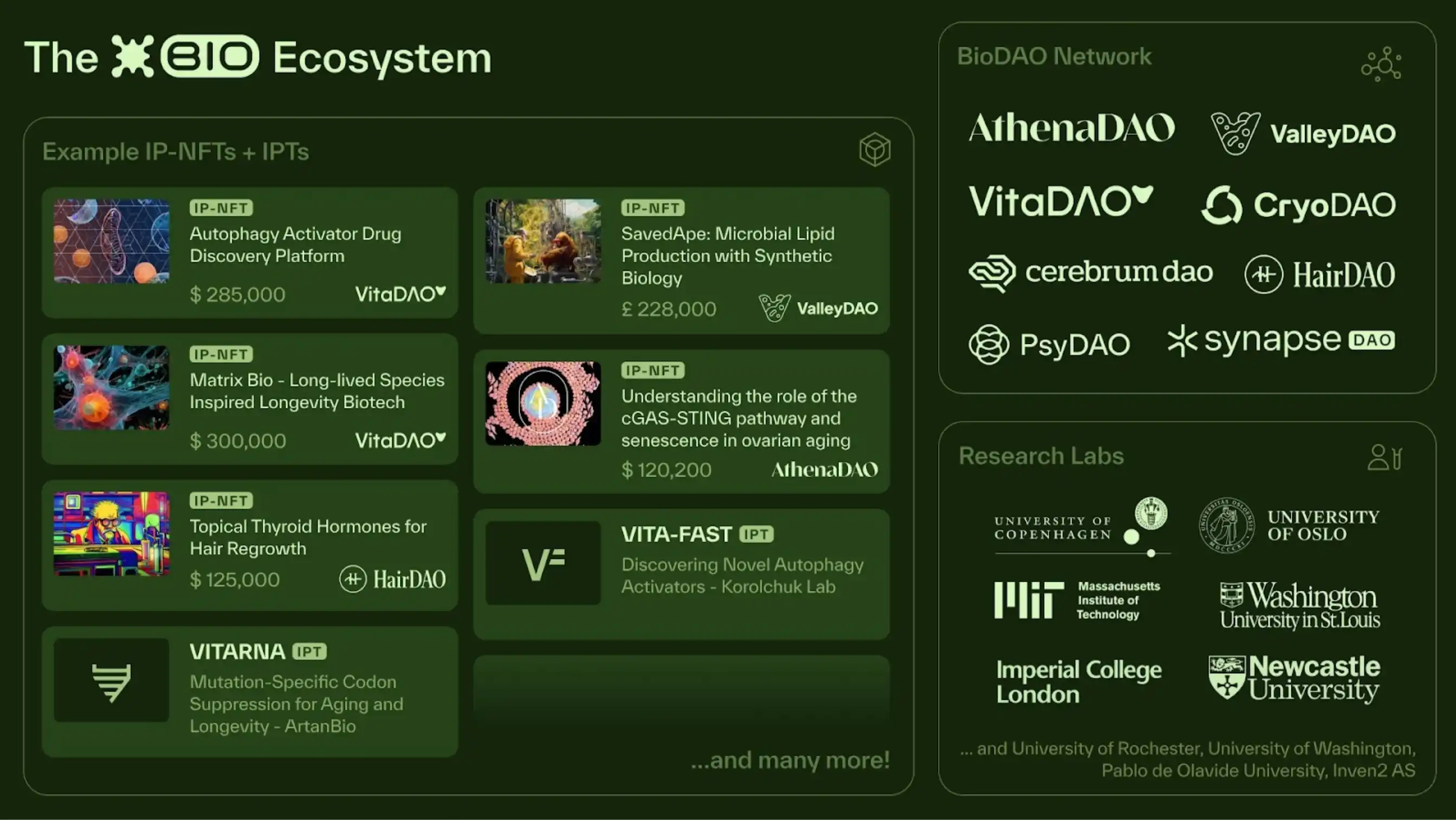
BIO 协会(BIO Association)今天正式宣布了其社区启动和公平发射,BIO 协会是由 VitaDAO 主要成员创立的一家瑞士非营利组织,VitaDAO是辉瑞风投部门和 Balaji Srinivasan 支持的 DeSci 去中心化科学组织。BIO 协会旨在开发一个去中心化的生物技术网络,并作为链上科学社区的启动平台,连接生物技术和加密货币领域。目前,BIO 网络由八个不同的科学社区组成,专注于长寿、女性健康、神经退行性疾病和合成生物学等领域。

BIO 的此次发布让公众有机会在 BIO 协议上线之前使用 ETH 或其他 DeSci 代币换取 $BIO 代币。

实现科学研究和资金获取的民主化

BIO 有潜力通过实现科学研究和资金获取的民主化来彻底改变生物技术行业,利用 DeSci 和区块链技术能够创建 BioDAO,即社区拥有的组织,在全球范围内合作开发和资助科学知识产权。这种方法打破了生物技术领域的传统障碍,加速了创新,并允许来自世界各地的研究人员、患者和爱好者更加透明和公平地参与。

公平发射和社区创世计划

秉承以太坊、Solana 和 Arweave 等早期加密货币发布的精神,BIO 协会选择公平公开的启动方式。这种方法反映了社区对快速发展的 DeSci 领域透明度和平等机会的承诺。

BIO 代币给予使持有者筛选未来 BIO 网络孵化的新 BioDAO的权力,以及获得资助顶尖大学和研究人员的新科研项目的白名单访问权限,从而使任何人都可以成为 BIO 网络中新型药物和产品研发的早期获利者。

随着对 DeSci 的关注度不断提高,BIO 生态系统中的创新正在以越来越快的速度吸引资金。成功案例包括针对衰老的新基因疗法 VitaRNA,最近在体外测试取得积极结果后,其价值在一天内上涨了 150%。与此同时,BIO 生态系统中的 DeSci DAO 代币也在不断上涨,例如 HairDAO 的 HAIR 代币,自 2023 年推出以来已增长了 10 倍以上。

创世代币持有者名单

BIO 协会得到了来自生物技术、加密货币和风险投资领域的众多投资者的支持。从 Molecule AG(一家为 DeSci 组织构建代币化基础设施的瑞士公司)分离出来后,BIO 创世代币持有者包括:ZeePrime Capital、Beaker DAO、Boost VC、1kx、ID Theory、Compound、Cherry Crypto、L1D、Fifty Years、Northpond Ventures、KdT Ventures、Sora Ventures 和 The LAO。

创新的启动机制

BIO 协会推出了创新的公平启动机制,首次拍卖于 8 月熊市期间举行,并成功筹集了超 500 万美元。主网启动计划在以太坊上进行,与其他著名的 DeSci 项目保持一致。

展望未来

未来几周,BIO 协会将宣布选定的战略参与者,进一步巩固其在行业中的地位。这些即将发布的公告将突出该项目在生物技术和加密领域的紧密联系。

在 BIO 的社区创世活动期间,用户可以通过 ETH 或 BIO 网络中的 DeSci DAO 代币来换取 BIO 代币。创世活动将持续 45 天,或者当融资金额使 BIO 代币的完全稀释估值(FDV)达到 1 亿美元上限时提前结束。活动结束后,BIO 代币将暂时不可转让,直至通过社区治理投票解锁流通权限。
DeSci+生物科技,BIO Protocol将加密货币带入新应用场景

关于 BIO 协会

BIO 协会是一个非盈利组织,专注于开发BIO协议,这是一项旨在引导资本和人才进入去中心化科学 (DeSci) 领域的创新协议。BIO 协议为链上科学社区(即「BioDAO」)提供去中心化的资金、流动性和激励机制,通过结合 DeFi 技术与现实世界的 IP 知识产权,推动临床前研究的进展。IP 的销售、许可以及健康产品的收入会循环回网络,为下一代生物医学研发提供持续的资金支持。此去中心化模式让全球研究人员、支持者和社区爱好者能够在科学创新方面紧密合作,更高效地将生物技术成果转化为现实。BIO 由 VitaDAO 的核心成员创立,VitaDAO 是由辉瑞风险投资和 Balaji Srinivasan 支持的去中心化科学组织。

作者:PANews;来自链得得内容开放平台“得得号”,本文仅代表作者观点,不代表链得得官方立场凡“得得号”文章,原创性和内容的真实性由投稿人保证,如果稿件因抄袭、作假等行为导致的法律后果,由投稿人本人负责得得号平台发布文章,如有侵权、违规及其他不当言论内容,请广大读者监督,一经证实,平台会立即下线。如遇文章内容问题,请联系微信:chaindd123


链得得仅提供相关信息展示,不构成任何投资建议

Lecturas Relacionadas

Morning News | Coinbase Partners with Standard Chartered to Expand Multi-Currency Fiat Channels; Sharplink and Forward to be Included in Russell Indices; JPMorgan May Issue Stablecoin in the Future

Daily Crypto Recap: Key Developments Institutional adoption continues: Coinbase partners with Standard Chartered to expand multi-currency fiat rails for institutions via Coinbase Prime, supporting AUD, SGD, CAD, CHF, EUR, and GBP. Meanwhile, Sharplink and Forward Industries, companies holding significant ETH and SOL reserves respectively, are set to be included in the Russell indexes, providing indirect crypto exposure to traditional index investors. Regulatory and compliance moves are in focus. Hong Kong's monetary authority announced new measures for investment accounts of mainland Chinese investors, including retroactive document checks to January 2023. Prediction market Polymarket is considering implementing KYC requirements to address sanctions and legal risks. Major financial players signal deeper involvement. JPMorgan Chase CEO Jamie Dimon suggested the bank might issue a stablecoin in the future. Concurrently, Falcon Finance and Anchorage Digital launched fUSD, a compliant, institution-focused stablecoin. Market sentiment presents a mixed picture. Bitmine's Tom Lee predicts an incoming crypto "supercycle," driven by Wall Street tokenization and AI agents, with Ethereum as a key beneficiary. However, a prominent trader cautions that the current period of investor losses may not be long enough to confirm a bear market bottom, and TD Cowen analysts note diminished chances for U.S. crypto market structure legislation this year due to a worsening political climate. Other notable news includes a16z crypto's observation that most tokenized assets are merely "digitized" and not actively used in DeFi, South Korea's crypto trading volume falling to about 8% of KOSPI's, and the Chinese Supreme Court stating it will research judicial rules for virtual currency cases.

链捕手Hace 1 hora(s)

Morning News | Coinbase Partners with Standard Chartered to Expand Multi-Currency Fiat Channels; Sharplink and Forward to be Included in Russell Indices; JPMorgan May Issue Stablecoin in the Future

链捕手Hace 1 hora(s)

Sitting on a Trillion-Dollar Market, Why Hasn't Real Estate Tokenization Taken Off?

For years, real estate tokenization has been hailed as a breakthrough technology poised to democratize property investment. In theory, it promises fractional ownership of premium assets, rapid transactions, and enhanced liquidity. Yet, in practice, it has failed to gain traction, accounting for less than 0.1% of the global real estate market. The core issue is not a lack of tokens, but the absence of a robust legal, operational, and compliant framework that grants them credibility as financial instruments. The industry initially erred by prioritizing technology over investor needs, creating products with unclear ownership and unreliable liquidity. Key infrastructure remains missing: legally sound ownership structures, compliant transfer mechanisms, professional servicing, and interoperability with traditional finance. This regulatory ambiguity and operational complexity deter institutional investors, who already have access to established, well-governed investment channels. A mature model would feature low minimum investments in institutional-grade assets, transparent rental income distribution, and genuine liquidity through regulated secondary markets. While regulatory progress in regions like the UAE and growth in other tokenized asset sectors (like treasuries) are positive signs, the focus must shift from issuing tokens to building foundational systems. The investment proposition of tokenized real estate is not to create new returns, but to improve access, efficiency, and liquidity for existing income-generating properties. For mainstream adoption, the sector must demonstrate tangible economic advantages over traditional models, not just technical novelty. The next phase depends on proving scalable, compliant operations with auditable track records. The barrier is no longer technology, but infrastructure and regulation. The vision remains unfulfilled until this gap is bridged.

marsbitHace 1 hora(s)

Sitting on a Trillion-Dollar Market, Why Hasn't Real Estate Tokenization Taken Off?

marsbitHace 1 hora(s)

Trading

Spot
Futuros
活动图片