Vice President Kamala Harris, who recently vowed to embrace the development of artificial intelligence and cryptocurrencies, shook the political stratum.
Speaking in New York City at a high-profile fund-raising event, she sold her economic agenda, which promises to strengthen innovation while safeguarding consumer protections.
Harris stressed that when elected, she would work with stakeholders ranging from labor groups and small business founders to major corporations.
Her point is simple: America’s future is to be invested in by embracing modern technologies like digital assets.
A Vision For Innovation
Harris’s emphasis on an enabling environment for AI and crypto comes at a pivotal moment. The tech space is growing at a rapid pace, and more people feel that the US has to move ahead at the same pace as the rest of the world.
By encouraging investment in those sectors, Harris wants to make America an innovation hub. She had said, “We will partner together to invest in America’s competitiveness while promising to create a collaborative ecosystem that allows for technological growth.”
This is an important and constructive statement from @KamalaHarris.
It’s not nearly as forward leaning as the concrete and visionary positions taken by @realDonaldTrump, but it’s still notable because:
– she recognizes digital asset innovation as being important and on par… https://t.co/sIzq06a4lU— Faryar Shirzad 🛡️ (@faryarshirzad) September 22, 2024
The vice president is playing not only the economic card but also the consumer-protection and investor-safeguarding one at the same time. Harris is pushing for clear and effective rules to foster the development of the emerging industries without stifling innovation.
For many voters seeking change but avoiding taking that leap of faith on new technologies, this combined innovation and protection appeal could be a winning package.
This is progress and progress is good…
…but “while protecting our consumers and investors” could mean a lot of things.
The anti-crypto army uses “consumer protection” as a smoke screen to conceal their attempts to destroy our industry.
I, for one, want to see policy details. https://t.co/Zc1aUdOYzl
— Jake Chervinsky (@jchervinsky) September 22, 2024
Kamala Harris: Crypto’s Brightest Hope?
The timing of Harris’s statements couldn’t be better for the cryptocurrency market. After her comments, the price of Bitcoin rose on optimism among investors. More people are now convinced that her support can change things for the sector, which has received much criticism from regulators lately.
Public endorsement by Harris could improve the perception of crypto as a sustainable investment opportunity and encourage more to engage with digital assets.
As of today, the market cap of cryptocurrencies stood at $2.18 trillion. Chart: TradingView.com
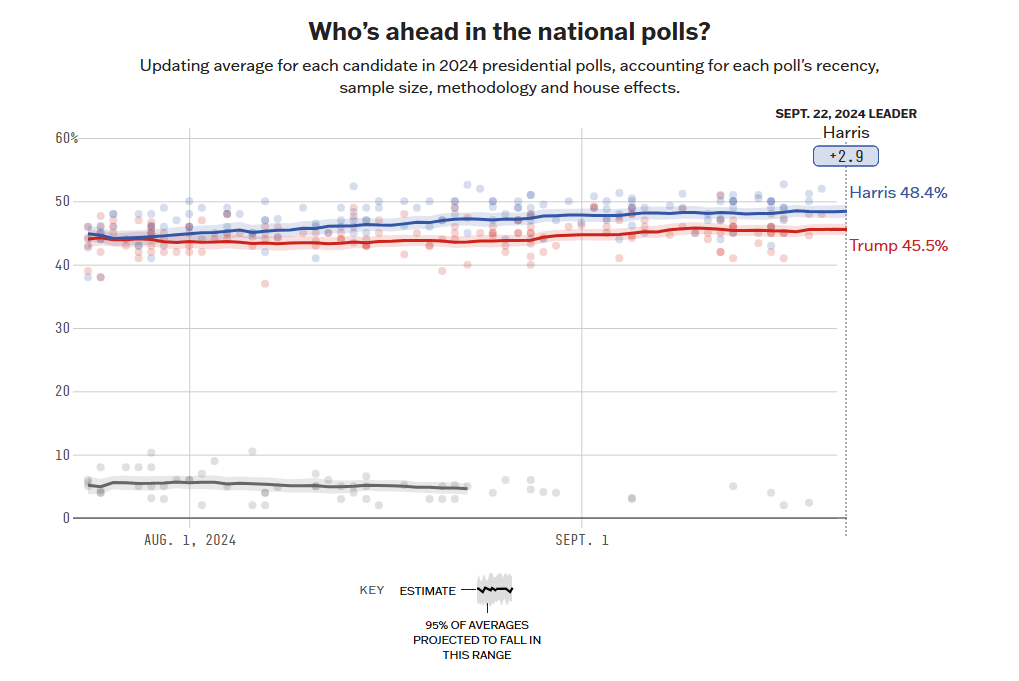
Interestingly, recent polls show that she might be helping herself by actively supporting the sectors as they are slowly starting to get her an electoral edge. The probability of Harris winning the presidency, based on data from 538, has risen to 48.4% as that of former President Trump is still at 45%.
This new trend shows how appreciation of digital currencies might generally appeal to a broader electorate with, of course, younger voters more disposed towards digital currencies.
The Way Forward
As Harris continues her campaign, the focus on AI and cryptocurrency will likely intensify. She appears to present herself more as a political figure aware of the need to embrace technological advancement but assures measures for protection in place before the public. This balance may play a key role in her policy direction should she become president.
Of course, challenges remain as well. The crypto industry remains under regulatory uncertainty, and most stakeholders eagerly look forward to clarity on how policies would likely unfold under a new administration.
Harris’s promise of clear regulations is appealing, but this has to be translated into action in policies that spur growth without compromising safety.
In her drive to back AI and cryptocurrencies, Kamala Harris has significantly altered the political lexicon on the subject of technology. Harris will be an advocate for innovation at the same time as she promises consumer protection with the aim of creating an environment where both succeed.
It will be interesting to see how the voters’ outlook will translate during election time into her proposals and shape the course that digital assets take in America in the future.
Featured image from Los Angeles Times, chart from TradingView

Related Posts