3 ИИ-токена, которые отличились на этой неделе

cryptonews.ruPublicado a 2020-09-13Actualizado a 2024-09-13

Начало сентября оказалось непростым для ряда ИИ-токенов. Однако вторая неделя месяца заметно изменило ситуацию

Текущее оживление в сегменте ИИ-токенов может быть связано с выдающимися событиями, связанными с OpenAI. Вот 3 монеты сегмента искусственного интеллекта, которые показали лучшие результаты по итогам уходящей недели.

NodeAI (GPU)

NodeAI — это децентрализованная платформа, предоставляющая доступ к ресурсам ИИ и GPU. Она использует технологию блокчейн, чтобы пользователи могли подключаться к ИИ-нодам и арендовать узлы для доступа к серверам ИИ. Проект также поддерживает стейкинг токенов GPU.

За период с 8 по 12 сентября цена GPU выросла на 26%. Рост совпал с новостями о намерениях OpenAI привлечь $6,5 млрд инвестиций, что увеличит ее оценочную стоимость до $150 млрд. Цена ИИ-токена достигла $0,74, но затем упала до $0,71 на момент написания статьи.
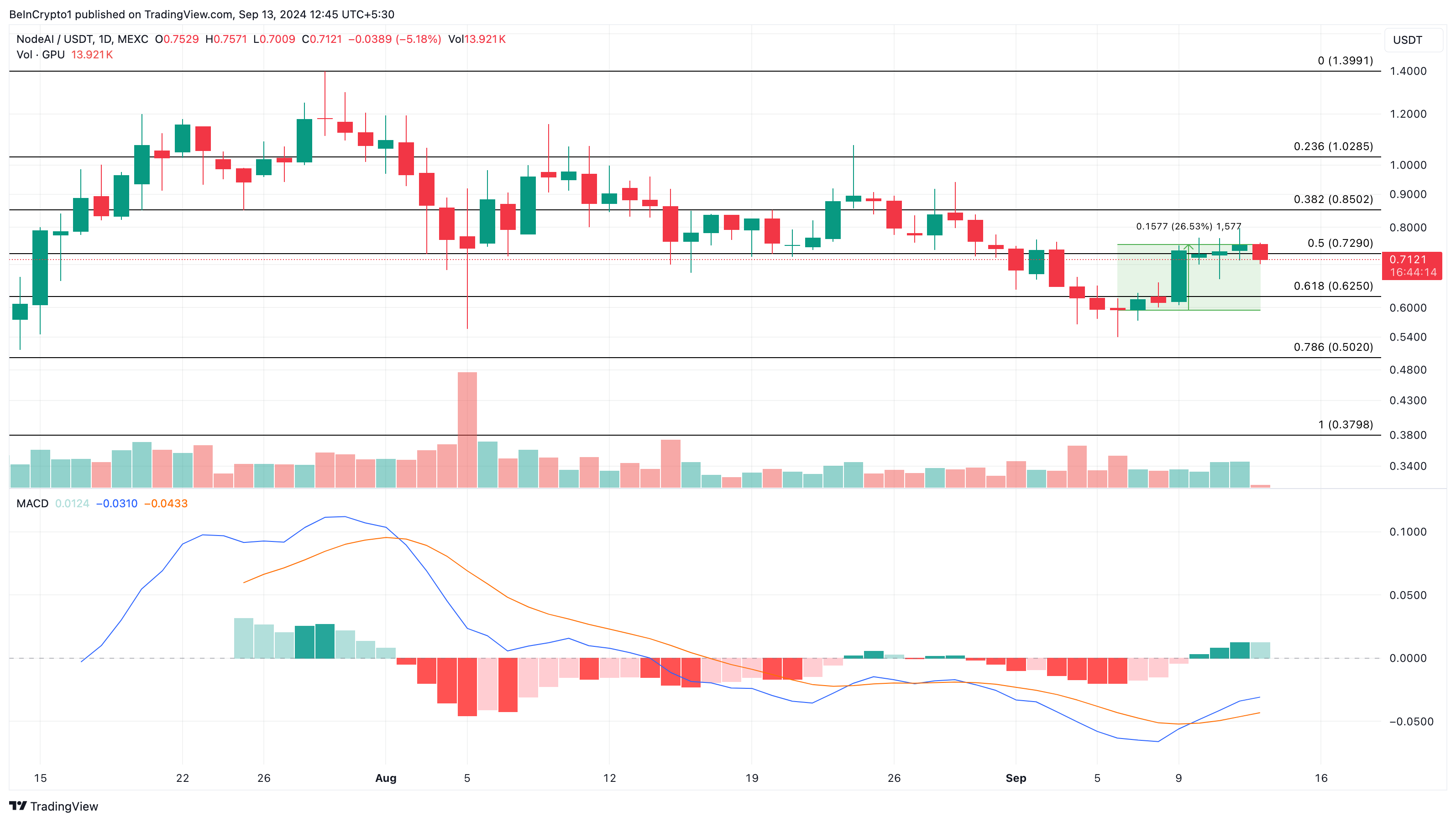
Дневной анализ NodeAI. Источник: TradingView

Впрочем, согласно индикатору схождения-расхождения скользящих средних (MACD), актив может быть готов к отскоку. Дневной график показывает, что MACD остается в положительной зоне. Если этот импульс сохранится, GPU может подняться до $0,85. Однако если начнется фиксация прибыли, этот прогноз может оказаться неверным, что приведет к падению цены до $0,62.

Читайте также: Цена Worldcoin (WLD) взлетела на 16% после анонса новой модели ChatGPT от OpenAI

Bittensor (TAO)

TAO, токен децентрализованного протокола машинного обучения Bittensor, вырос на 26%. Шестого сентября TAO торговался в районе ключевого уровня поддержки $231,24. Согласно дневному графику, отскок от этой поддержки помог монете взять следующий барьер на $255,46. Теперь она торгуется в районе $288,97. При этом индекс относительной силы (RSI) находится выше сигнальной линии, что указывает на растущий бычий импульс.

Если эта тенденция сохранится, цена TAO может подняться до $312,17. Однако если быки не смогут поддерживать импульс, восходящий тренд может забуксовать. Потенциально это приведет к падению цены обратно к базовому уровню поддержки.

Читайте также: Презентация Apple запустила ралли ИИ-токенов
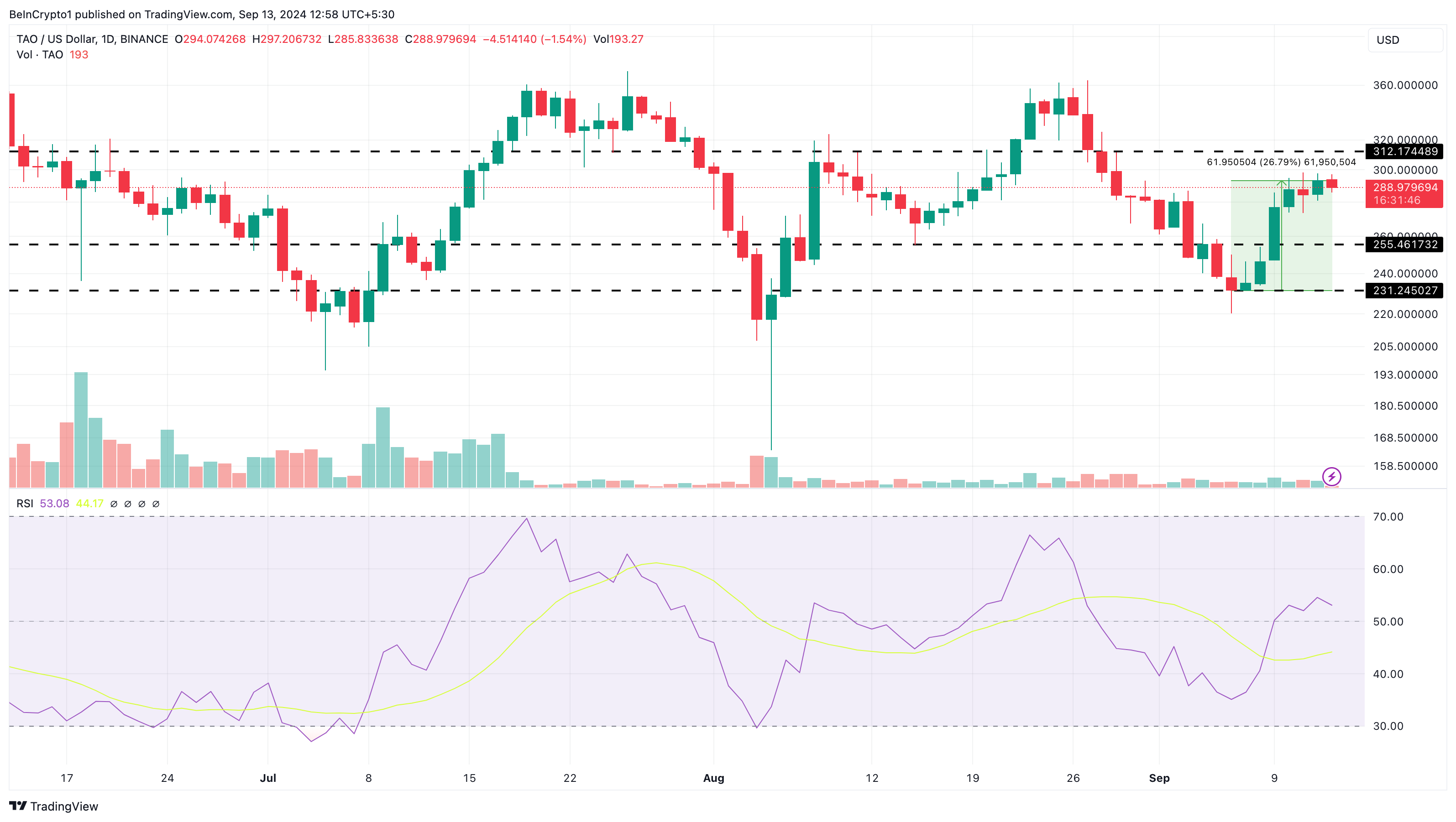
Дневной анализ Bittensor. Источник: TradingView

Aleph.im (ALEPH)

Aleph.im — децентрализованный блокчейн-проект, ориентированный на идентификацию и хранение файлов. Недавно его нативная валюта ALEPH выросла на 28%, что сделало ее одним из лидеров в сегменте ИИ-токенов

Сейчас ALEPH стоит $0,16. Индикатор Bull Bear Power (BBP) показывает сильное положительное значение, говоря о том, что рынок контролируют покупатели. Положительный BBP вкупе с новостями о новой модели ChatGPT может способствовать росту цены.
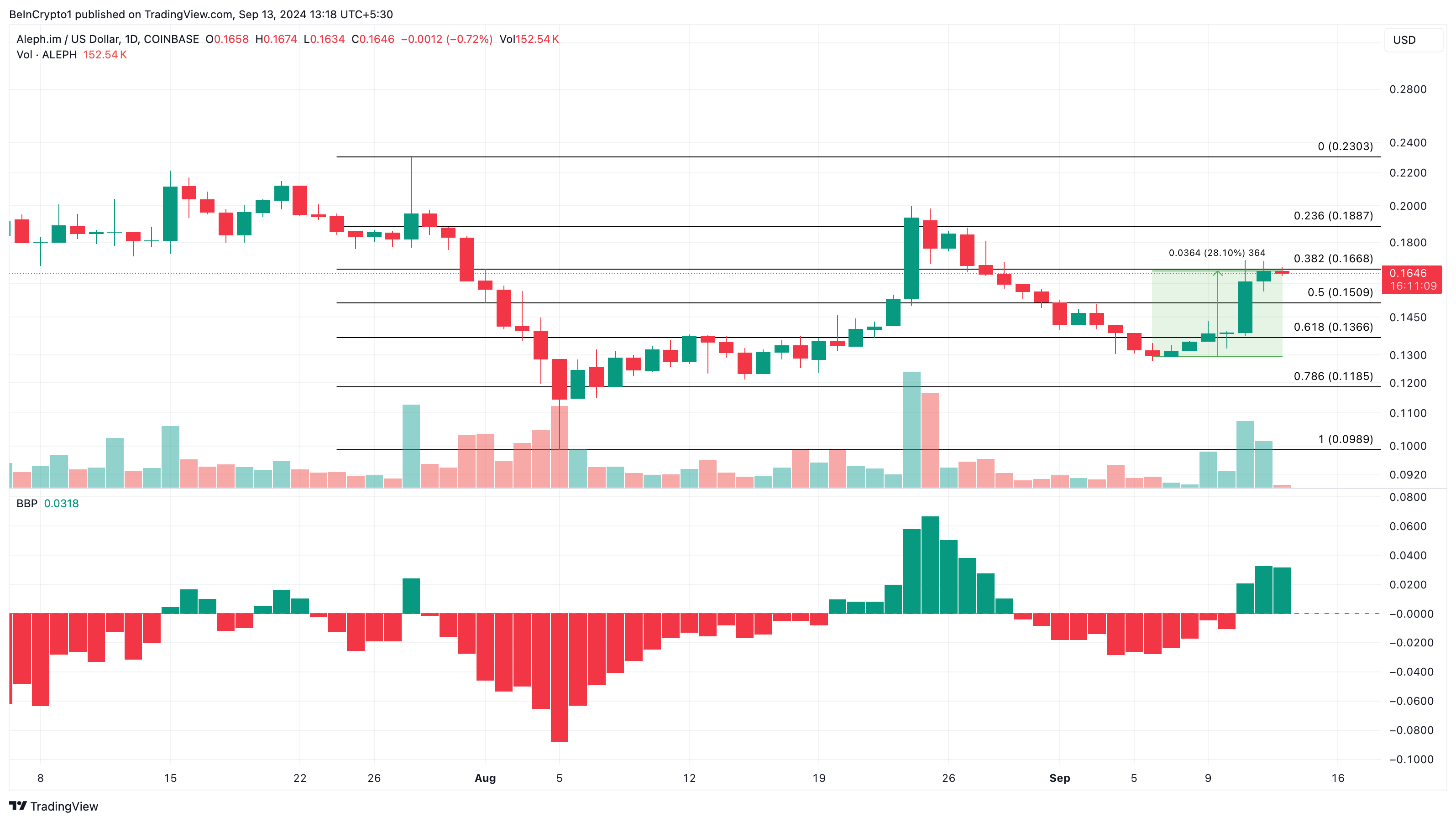
Дневной анализ Aleph.im. Источник: TradingView

Если тренд продолжится, ALEPH может подняться до $0,23. Однако уменьшение покупательского интереса может развернуть цену и отправить ее к $0,13.
Lecturas Relacionadas

STRC Hits Historic Low, Saylor's Perpetual Motion Machine Grinds to a Halt

STRC, the perpetual preferred stock issued by MicroStrategy to fund its Bitcoin purchases, hit a historic low of $85.32, a 17% discount to its $100 par value. Designed as a "digital credit engine" to trade stably near par and enable continuous share issuance for buying Bitcoin, its plunge signals a breakdown in this model. Three key factors drove the decline: 1. Bitcoin's price fell over 50% from its peak, trading around $63,000 amid hawkish Fed signals. 2. MicroStrategy's cash reserves were depleted after a $1.5 billion convertible note repayment, slashing the dividend coverage for STRC's 11.5% yield to ~7 months. The company then sold 32 BTC to cover dividends—Michael Saylor's first Bitcoin sale since 2022—damaging the "never sell" narrative. 3. A competing Bitcoin-backed preferred stock, Strive's SATA, offers a higher yield (~13%) and daily dividends, drawing investors away from STRC. The drop triggers a negative cycle: STRC below par halts ATM share issuances, cutting off a key funding source for Bitcoin buys and potentially forcing more BTC sales for dividends, further eroding confidence. While Saylor argues the model is mathematically sound—needing only 2.3% annual Bitcoin growth to sustain itself—the market is testing the resilience of the leveraged Bitcoin treasury strategy in a bear market. The STRC price now reflects rising skepticism about this financial machinery's durability during downturns.

marsbitHace 21 min(s)

STRC Hits Historic Low, Saylor's Perpetual Motion Machine Grinds to a Halt

marsbitHace 21 min(s)

A Guide to Grayscale’s ‘Bottom Fishing’: Using Cash Flow to Assess Cryptocurrency Value

**Title:** Grayscale's Guide to Bottom-Fishing: Valuing Cryptoassets Using Cash Flows **Summary:** This report by Grayscale Research presents a fundamental valuation framework for cryptocurrency assets, moving beyond pure speculation to analyze those with underlying cash flows. It distinguishes between "commodity-like" assets (e.g., Bitcoin) and "cash-flow" assets, primarily within DeFi. Using the leading decentralized lending protocol Aave as a case study, the analysis applies traditional financial methodologies like Discounted Cash Flow (DCF) and Price-to-Earnings (P/E) multiples. Key findings indicate that AAVE tokens are currently undervalued. Despite recent challenges, the protocol's strong revenue growth, ~50% net profit margin, and diversified treasury support a fundamental valuation range of $80-$100 per token (compared to a ~$75 market price at the time of writing). In a base-case scenario driven by stablecoin adoption and regulatory clarity, the fair value could rise to around $175 within a year. The report emphasizes that protocol success does not automatically translate to token value. It critically examines the "value capture" mechanisms—such as buybacks, burns, and staking rewards—that channel protocol profits to token holders. Furthermore, it addresses the legal and governance complexities of Decentralized Autonomous Organizations (DAOs), noting their difference from traditional corporate equity but highlighting how robust, transparent governance can align protocol economics with holder interests. The conclusion is that the crypto market is maturing, with capital increasingly flowing towards projects with demonstrable fundamentals, real adoption, and disciplined capital allocation, creating opportunities for value-based investors.

marsbitHace 1 hora(s)

A Guide to Grayscale’s ‘Bottom Fishing’: Using Cash Flow to Assess Cryptocurrency Value

marsbitHace 1 hora(s)

After semiconductors lead the gains, are funds buying into AI orders or a macroeconomic rebound?

After US-Iran talks led to a temporary ceasefire and framework for reopening the strategic Strait of Hormuz, U.S. stocks rose on June 18, with the Nasdaq gaining 1.9%. The semiconductor and AI hardware sectors outperformed. This rally stemmed primarily from reduced geopolitical risk, which lowered oil prices and inflation expectations, easing discount rate pressure on high-valuation growth stocks like tech. The key question is not whether tech rebounded, but the nature of the rebound. The market appears to be selectively repricing AI infrastructure plays rather than broadly chasing AI narratives. Gains were concentrated in chips, optical interconnects, memory, and domestic manufacturing—segments tied to tangible data center build-outs and capital expenditure. Intel's ~10% surge, fueled by a Trump statement about potential Apple collaboration, exemplifies this mixed dynamic. It reflects policy catalysts and domestic manufacturing sentiment more than confirmed fundamentals. Meanwhile, strong earnings from companies like Astera Labs (revenue up 93% YoY) provided concrete evidence of AI-driven demand in hardware. In essence, the rally represents a risk-premium recalibration. Lower Middle East tensions opened a valuation repair window, and capital flowed first into AI infrastructure segments with visible near-term revenue streams. The sustainability of this move hinges on upcoming Q2 earnings, specifically continued strength in cloud provider capex, AI server orders, and hardware company guidance. Policy hopes alone are insufficient; the cycle needs validation from orders and financials.

marsbitHace 1 hora(s)

After semiconductors lead the gains, are funds buying into AI orders or a macroeconomic rebound?

marsbitHace 1 hora(s)

Trading

Spot
Futuros
活动图片