Джастин Сан критикует cbBTC от Coinbase

cryptonews.ruPublicado a 2022-10-13Actualizado a 2024-09-13

Основатель блокчейна Tron (TRX) Джастин Сан считает, что недавно запущенный «обернутый» биткоин от Coinbase под тикером cbBTC — начало темных времен для первой по капитализации криптовалюты

Coinbase Wrapped Bitcoin (cbBTC) — это «обернутая» версия биткоина в виде токена стандарта ERC-20. Новый продукт американской криптобиржи доступен в сетях Ethereum и Base, а также может использоваться на различных платформах децентрализованных финансов (DeFi).

Джастин Сан критикует cbBTC

По словам Джастина Сана, cbBTC — это «темный день для биткоина». Актив представляет огромные риски для всего сектора DeFi из-за проблем с централизацией, связанных с Coinbase.

«У cbBTC нет доказательства резервов, аудитов, и если с этим продуктом что-то случится, пользователи не смогут вернуть свои деньги […] Любой судебный приказ правительства США приведет к тому, что все ваши BTC конфискуют. Это наглядно демонстрирует, как централизация может подорвать основы биткоина. Темный день для BTC», — написал Сан в X.

Впрочем, почти никто и не ожидал, что основатель Tron поддержит cbBTC. Новый «обернутый» биткоин от Coinbase станет значительной угрозой для Wrapped Bitcoin (WBTC) от BitGo.

В августе этого года криптовалютный кастодиан BitGo объявил о том, что переводит WBTC на мультиинституциональную систему хранения. В проект по хранению «обернутого» биткоина вошли инвестиционный менеджер BiT Global и экосистема Tron под руководством Джастина Сана.

На слова Сана о cbBTC криптосообщество отреагировало неоднозначно. Многие указали на то, что аналогичные риски централизации преследуют и блокчейн Tron.

«А чем от этого отличается Tron? Вы все время майните WBTC/USDT без резервов. А еще вас контролирует китайское правительство», — отметил один из пользователей.

Читайте также: Что такое Wrapped Bitcoin (WBTC) и зачем нужны «обернутые» активы

Участие Сана в проекте WBTC от BitGo вызвало споры из-за его прошлых проблем с прозрачностью. Основателя Tron неоднократно обвиняли в манипуляциях токенами. На фоне разгоревшихся обсуждений возрос интерес к альтернативам WBTC: например, к «обернутому» биткоину от 21shares — 21BTC. При этом особое внимание привлек именно cbBTC от Coinbase.

По словам венчурного капиталиста Дэна Элицера, появление cbBTC было для Coinbase неизбежным. Он прогнозирует, что новый продукт криптобиржи превзойдет по объемам WBTC всего за шесть месяцев после запуска.

Впервые Coinbase намекнула на создание cbBTC в августе этого года. Запуск состоятся на этой неделе, 12 августа.

«Будучи старейшей и наиболее распространенной криптовалютой, биткоин играет важную роль в привлечении пользователей в мир цифровых активов. Coinbase продолжает повышать полезность биткоина, сначала за счет интеграции Lightning Network для осуществления мгновенных дешевых платежей, а теперь и за счет cbBTC. Теперь миллионы клиентов Coinbase могут безопасно и легко использовать финансовые приложения в экосистеме Ethereum, используя уже имеющиеся у них биткоины», — отметили представители Coinbase в комментарии для BeInCrypto.

MakerDAO откажется от WBTC

От новой модели хранения пострадал протокол MakerDAO, недавно ребрендированный в Sky. Проанализировав все связанные с новой стратегией риски, DeFi-платформа решила провести голосование по отказу от хранения WBTC. В основном опасения связаны с участием Джастина Сана.

Компания по управлению рисками в DeFi и ключевой участник управления протоколом Sky — BA Labs — предложила пятиэтапный процесс вывода WBTC из залоговых активов.

Читайте также: Самая безопасная криптобиржа — топ вариантов
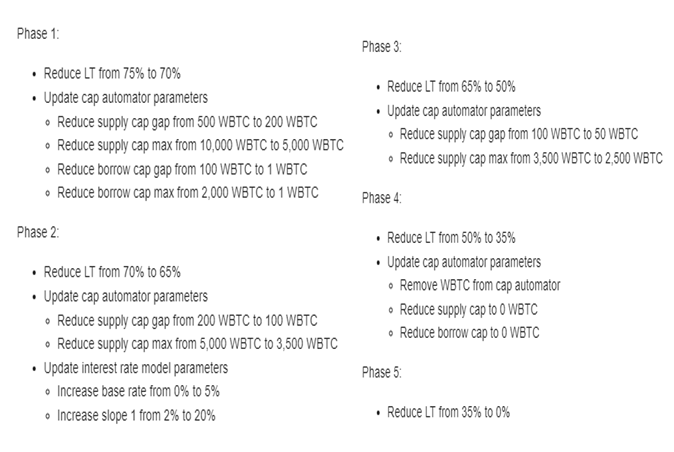
Предложение BA Labs по выводу WBTC. Источник: Форум управления MakerDAO

Если предложение одобрят, на Sky появятся другие альтернативы «обернутого» биткоина — например, dlcBTC, tBTC и FBTC.

Criptos en tendencia

Lecturas Relacionadas

Super Spiral Mega-Boom, Micron's Earnings Report Rekindles the Semiconductor Bull Run

On June 25, 2026, Micron Technology released its blockbuster Q3 FY2026 results, significantly exceeding market expectations and reigniting confidence in the semiconductor bull market. Revenue soared to $41.456 billion (vs. ~$35.4B expected), up 346% year-over-year, while GAAP net profit surged nearly 15 times to $28.243 billion. Guidance for Q4 was even more striking, with projected revenue of approximately $50 billion, far surpassing prior estimates. The report highlighted that the AI boom is now fueling growth across Micron's entire product stack, not just HBM. Cloud memory, core data center, SSD, mobile, and automotive businesses all saw revenue growth exceeding 250-600%, with margins hovering around 80%. While HBM4 is already in volume shipment and 2026 capacity is sold out, AI-driven demand is also tightening supply for traditional DRAM and NAND, sustaining a strong pricing cycle. A pivotal development is Micron's shift toward a "demand-first" model. The company disclosed 16 long-term strategic customer agreements (SCAs), most spanning 5 years to 2030, covering about 20% of DRAM and one-third of NAND shipments. These are take-or-pay contracts, with 14 agreements already securing roughly $100 billion in guaranteed future revenue and $22 billion in customer performance assurances. To fulfill this locked-in demand, Micron plans substantial capacity expansion, with Q4 capital expenditure projected at ~$10 billion. This investment, backed by concrete long-term orders rather than cyclical speculation, marks a historic change for the memory industry. Following the earnings release, Micron's stock surged 16% after-hours, lifting the broader semiconductor sector globally. The report served as a powerful signal that AI infrastructure build-out is accelerating, with memory positioned as a central protagonist in the ongoing narrative.

Odaily星球日报Hace 10 min(s)

Super Spiral Mega-Boom, Micron's Earnings Report Rekindles the Semiconductor Bull Run

Odaily星球日报Hace 10 min(s)

Deciphering the Ethereum Foundation's New Structure: Reaffirming Self-Sovereignty Amid Institutionalization Trends

Summary: The Ethereum Foundation (EF) has announced a major restructuring, laying off 20% of its staff and introducing a new five-layer operational framework. This move aims to clarify the EF's mission and reaffirm Ethereum's core principle of self-sovereignty amidst growing institutionalization in the crypto space. The five layers are: 1. **Protocol Layer**: Focuses on maintaining Ethereum's foundational "CROPS" values—Censorship-resistant, Robust, Open, Private, and Secure. This involves core technical work like secure hard forks and mitigating toxic MEV. 2. **Access Layer**: Ensures users can practically exercise self-sovereignty through actions like reading the chain and making transactions. A key principle is the "zero option," meaning a trusted, non-intermediated path must always exist as an alternative to any centralized service. 3. **User Layer**: Bridges the protocol and access layers by grounding EF's work in the real needs of users and organizations. This is seen as crucial for moving beyond a purely research-driven approach and ensuring development effectively serves the ecosystem. 4. **Community Layer**: Responsible for building and maintaining consensus around Ethereum's core values both internally and externally. This involves guarding against centralization, upholding technological neutrality, and preventing short-term commercial interests from undermining CROPS principles. 5. **Institutional Layer**: Manages EF's engagement with institutions, but with the precondition of self-sovereignty. The goal is not to make it easier for institutions to control users, but to demonstrate how Ethereum's technology can enable better integrations. The article argues that while institutional adoption brings legitimacy, it also risks diluting crypto's foundational ethos of decentralization. The new structure represents EF's effort to navigate this tension, upholding its core mission while actively engaging with a broader, more complex ecosystem.

marsbitHace 29 min(s)

Deciphering the Ethereum Foundation's New Structure: Reaffirming Self-Sovereignty Amid Institutionalization Trends

marsbitHace 29 min(s)

OpenRouter: How Did This 'AI Model Relay Station' Achieve a $10 Billion Valuation?

OpenRouter: The Model Router Building a $10B+ Company This article explores OpenRouter, a platform that aggregates access to over 400 AI models from 70+ providers (like OpenAI, Claude, Gemini) through a single API. It has grown into a unicorn with a $1.3B valuation by 2026, processing massive scale—reaching 100 trillion tokens monthly. Its core value isn't just being a "model supermarket." For developers building real-world AI applications, managing multiple models for different tasks (e.g., cheap models for titles, powerful ones for long articles) is complex. OpenRouter acts as a critical "model scheduling layer," handling routing, failover between providers, cost optimization, and enterprise features like zero-data-retention policies and budget controls. OpenRouter's business model is a "toll fee": it charges a small platform fee (5.5%) on purchased credits while passing model costs directly to users. Its revenue scales with the tokens flowing through its system, which saw explosive growth as AI apps evolved. Key growth drivers include: 1) The explosion of specialized models, increasing choice complexity; 2) AI apps shifting focus from performance to cost optimization; 3) The rise of AI agents that require more reliable, multi-step model calls. However, risks remain. Large enterprises or cloud providers (AWS, Google Cloud) could build similar internal gateways. Its position between model suppliers and developers could also create future tension over pricing and data control. To stay ahead, OpenRouter must deepen its enterprise features and prove it's more than just a request forwarder.

marsbitHace 48 min(s)

OpenRouter: How Did This 'AI Model Relay Station' Achieve a $10 Billion Valuation?

marsbitHace 48 min(s)

Bitcoin Falls Below $60,000 Again; After 20 Months, We've Reached a New Low

Bitcoin Drops Below $60,000, Hitting a 20-Month Low Bitcoin fell below the key $60,000 psychological level again, reaching a low of $59,023—its lowest point in approximately 20 months, dating back to October 2024. While it later recovered slightly to around $60,600, this marks its third significant breach of $60,000 this year. The downturn is attributed to two primary factors. First, U.S. spot Bitcoin ETFs are experiencing their longest streak of net outflows since launch, with nearly $5.94 billion withdrawn over 30 days. This creates sustained selling pressure as Authorized Participants sell Bitcoin to meet redemptions. Second, shifting macroeconomic expectations are adding pressure. Strong U.S. job data and hawkish remarks from Fed officials have increased market pricing for potential rate hikes, reversing the earlier liquidity-driven bullish sentiment and prompting a shift away from risk assets like Bitcoin. Analyst views are mixed. 21Shares maintains a bullish long-term outlook, expecting prices to recover towards $100,000, citing historical post-halving cycles and substantial ETF holdings as a base. In contrast, Arthur Hayes predicts a potential bottom around $40,000 within six months due to persistent Fed hawkishness. CryptoQuant suggests, based on on-chain data, that the market may not find a bottom until prices fall below the average investor cost basis around $53,000, potentially extending the bearish phase into late 2026 or early 2027. The immediate focus is on upcoming U.S. inflation data and Fed signals. Lower-than-expected CPI could offer relief, but confirmation of sticky inflation or continued ETF outflows may lead to further downside pressure. Bitcoin's ability to hold above $60,000 remains a critical test for the near-term market direction.

Odaily星球日报Hace 1 hora(s)

Bitcoin Falls Below $60,000 Again; After 20 Months, We've Reached a New Low

Odaily星球日报Hace 1 hora(s)

Trading

Spot
Futuros

Artículos destacados

Cómo comprar TRX

¡Bienvenido a HTX.com! Hemos hecho que comprar TRON (TRX) sea simple y conveniente. Sigue nuestra guía paso a paso para iniciar tu viaje de criptos.Paso 1: crea tu cuenta HTXUtiliza tu correo electrónico o número de teléfono para registrarte y obtener una cuenta gratuita en HTX. Experimenta un proceso de registro sin complicaciones y desbloquea todas las funciones.Obtener mi cuentaPaso 2: ve a Comprar cripto y elige tu método de pagoTarjeta de crédito/débito: usa tu Visa o Mastercard para comprar TRON (TRX) al instante.Saldo: utiliza fondos del saldo de tu cuenta HTX para tradear sin problemas.Terceros: hemos agregado métodos de pago populares como Google Pay y Apple Pay para mejorar la comodidad.P2P: tradear directamente con otros usuarios en HTX.Over-the-Counter (OTC): ofrecemos servicios personalizados y tipos de cambio competitivos para los traders.Paso 3: guarda tu TRON (TRX)Después de comprar tu TRON (TRX), guárdalo en tu cuenta HTX. Alternativamente, puedes enviarlo a otro lugar mediante transferencia blockchain o utilizarlo para tradear otras criptomonedas.Paso 4: tradear TRON (TRX)Tradear fácilmente con TRON (TRX) en HTX's mercado spot. Simplemente accede a tu cuenta, selecciona tu par de trading, ejecuta tus trades y monitorea en tiempo real. Ofrecemos una experiencia fácil de usar tanto para principiantes como para traders experimentados.

1.8k Vistas totalesPublicado en 2024.12.10Actualizado en 2026.06.02

Cómo comprar TRX

Discusiones

Bienvenido a la comunidad de HTX. Aquí puedes mantenerte informado sobre los últimos desarrollos de la plataforma y acceder a análisis profesionales del mercado. A continuación se presentan las opiniones de los usuarios sobre el precio de TRX (TRX).

活动图片