UNI价格进入需求区:是否有机会重返20美元大关?

金色财经Publicado a 2024-09-12Actualizado a 2024-09-12

自 2022 年以来,Uniswap (UNI) 的价格一直难以维持在 7 美元以上。在2024 年第一季度,UNI 买家成功突破了 7 美元大关,但未能维持在该水平之上。Uniswap 价格测试了需求区并经历了缓慢而稳定的增长。

UNI 代币价格已从狭窄的下行通道中突破。突破后,价格保持了适当的重新测试并获得看涨势头。如果价格超过 200 日 EMA,则最有可能吸引投资者并可能重新夺回 20 美元大关。

Uniswap 价格准备好上涨了吗?

UNI 加密货币价格突破了 20 日 EMA,并可能接近 200 日 EMA。这种势头缓慢而稳定。因此,可以预期会出现小幅回调。

根据技术K线走势图,看跌趋势已在 6 美元区域附近停止。由于需求区域,该区域的购买势头可能会吸引买家进行重大看涨行动。

Uniswap 加密货币一直在中间区域以下增持。由于技术K线走势图看起来很强劲,UNI 代币可能是一项不错的未来投资。预计的中期目标可能是 13.45 美元,长期价格目标可能是 32.30 美元和 70.70 美元。

UNI价格本周能否突破10美元大关?

截至发稿时,UNI 交易价格为 6.78 美元,在过去 24 小时内上涨了 2.28 %。其市值为 40.4 亿美元,24 小时交易量为 1.0813 亿美元。

从 2024 年初开始,UNI 卖家在 8 美元关口表现强劲。几乎每次,Uniswap 价格都会从熊市主导的水平获得看跌势头。Uniswap 价格必须以巨大的交易量主导这一区域,才能形成稳固的看涨势头。

我们可以看到,势头并不太强劲,截至发稿时,买家看起来也比较弱。如果价格跌破 20 日均线,则可能是卖出机会。假设价格开始跌破 6 美元大关,卖家可能会顺势买入,并可能将价格拖至多年低点。

根据技术指标,MACD 已与信号线形成看涨交叉,且直方图已变为绿色。

UNI 价格分析和预测

Uniswap 价格显示出潜在看涨势头的积极迹象。撰写本文时有迹象表明可能出现反弹。

UNI 价格突破了 20 日 EMA,并瞄准 200 日 EMA。不过,重要的是要关注 8 美元大关,因为卖家过去曾表现出这一水平的强势。

此外,MACD 已显示看涨交叉,这也表明价格可能上涨。总体而言,似乎存在增长机会。不过,密切监测市场和价格走势对于做出明智的决策至关重要。

Lecturas Relacionadas

τ Scaling: Huawei's New Growth Engine Designed for the Post-Moore Era

**Tau Scaling: Huawei's New Growth Engine for the Post-Moore Era** For 60 years, progress in semiconductors was driven by Moore's Law – making transistors smaller, denser, and cheaper. This path has now stalled due to plummeting returns below 7nm, astronomical lithography costs, and rising per-transistor expenses. After six years and testing 381 production chips, Huawei’s semiconductor team proposes a fundamental shift: **stop competing on size, start competing on time**. This is the core of their "τ (Tau) Scaling" theory. It treats *time* as the key optimization metric, compressing characteristic delays (τ) across all levels – from transistor switching (picoseconds) to data center tasks (seconds), spanning 12 orders of magnitude. **What is τ Scaling?** It holistically minimizes delay/time constants (τ) across four layers: transistors (switching speed), circuits (signal delay), chips (compute/memory access), and systems (end-to-end communication). The goal is to align optimization from process and circuit design to architecture and systems using this unified metric. **Mobile Application: LogicFolding** Without advancing the process node, this technique vertically stacks chips using ultra-precision hybrid bonding, distributing critical paths across layers ("stacking floors"). Results include a 55% transistor density increase, 41% better energy efficiency, over 40% higher SRAM frequency, and a roadmap targeting 4GHz by 2029. **AI Data Center Application: Full-Link Latency Compression** With 80% of AI cluster energy and 70% cost spent on data movement, the focus is slashing communication time. Key innovations include: 1. **Unified Bus:** Cuts multi-layer protocols, reducing remote access latency from microseconds to ~100 nanoseconds – 500x faster. 2. **Hi-ONE Optical Interconnect:** Replaces copper with fiber, enabling 8Tb/s per module and scaling distances from 1m to 100m for 10,000-chip clusters. 3. **3D Folding:** Solves the "interface bottleneck" of 2.5D packaging by vertically integrating memory, power, and optical I/O alongside compute, predicting over 100x integration density gain by 2035. **Re-fusion of Logic and Memory** The AI era, where data movement is more critical than computation, demands tight 3D integration of logic and memory, shifting industry influence towards memory and advanced packaging. **Remaining Challenges** include adapting EDA tools for 3D design, optimizing wafer-to-wafer process variation and vertical interconnect losses, and establishing new energy efficiency and benchmarking standards. **Conclusion:** The era of scaling physical dimensions is over. The era of scaling time has begun. By leveraging 3D stacking, system architecture, and interconnect optimization—rather than solely chasing advanced lithography—performance and efficiency can continue to advance. This is poised to be the semiconductor industry's core roadmap for the next decade.

marsbitHace 9 min(s)
τ Scaling: Huawei's New Growth Engine Designed for the Post-Moore Era

marsbitHace 9 min(s)

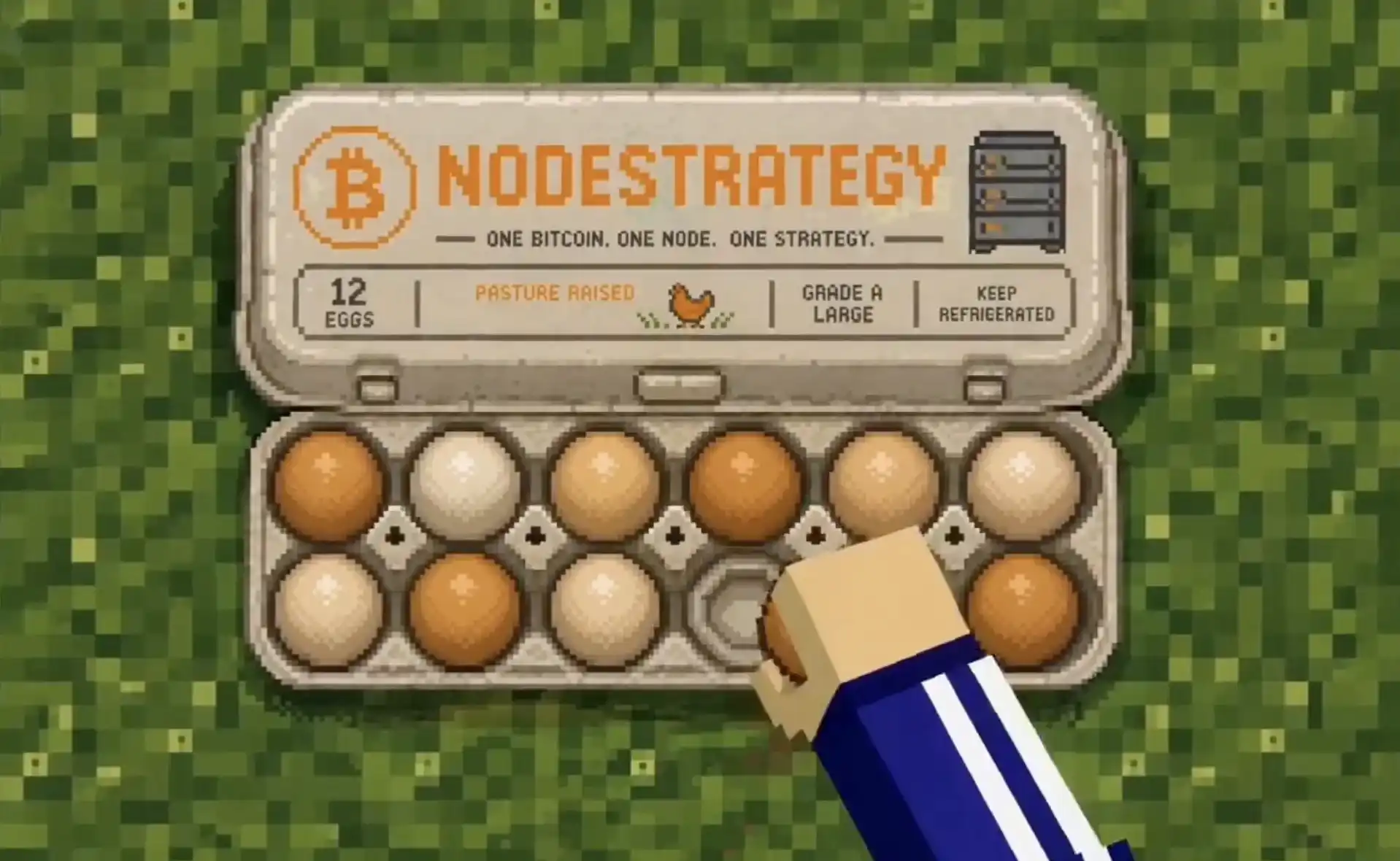
NodeStrategy: The First Ordinals DAT Project, Bringing the Strategy Treasury Narrative to NFTs

**Summary: The Fundamental Flaws of NodeStrategy, the 'First Ordinals DAT'** NodeStrategy presents itself as the first Ordinals Digital Asset Treasury (DAT) on Bitcoin. Its model mirrors MicroStrategy's treasury narrative but for NFTs, specifically targeting the NodeMonkes collection (not officially affiliated). The project's core mechanism is a four-step flywheel: a 10% fee on all trades (90% to treasury, 10% to radFi/Bound marketplace) is used to buy NodeMonkes. These NFTs are then listed for sale on Satflow, with 100% of the sale proceeds used to buy back and burn the project's token, NODESTRAT, aiming to create a perpetual value cycle. However, the design contains critical, self-defeating flaws: 1. **Platform Lock-In:** As a Bitcoin Rune, NODESTRAT lacks smart contract functionality and cannot natively enforce the 10% fee. The fee can only be collected on the radFi/Bound marketplace itself. This makes the entire flywheel dependent on a single platform. If liquidity moves elsewhere, fee revenue drops to zero, halting the mechanism. 2. **Self-Suffocating Economics:** The 10% fee acts both as the flywheel's fuel and a major drag on demand. A buy/sell roundtrip incurs a 20% cost, creating a massive hurdle for traders. This strangles the very trading volume needed to generate fees. 3. **Ineffective Value Support:** The flywheel is starved. Low daily volume (~$9K) generates minimal fees for NFT purchases. The NFT "ladder" sales are slow and unpredictable (only 39 total sold), meaning buybacks are infrequent. While 30.77% of the supply has been burned, this supply reduction cannot lift price without corresponding demand, which is suppressed by the high transaction tax. 4. **Meaningless NAV:** The Net Asset Value (NAV), currently at a 0.46x discount to market cap, is merely a marketing figure. There is no redemption mechanism for token holders to claim the underlying NodeMonkes assets. Price is set by market liquidity flows, not by this theoretical backing. In essence, NodeStrategy's design forces its revenue source (trading fees) to simultaneously cripple the demand and liquidity required for its own success, trapping the project in a stagnant state.

marsbitHace 16 min(s)

NodeStrategy: The First Ordinals DAT Project, Bringing the Strategy Treasury Narrative to NFTs

marsbitHace 16 min(s)

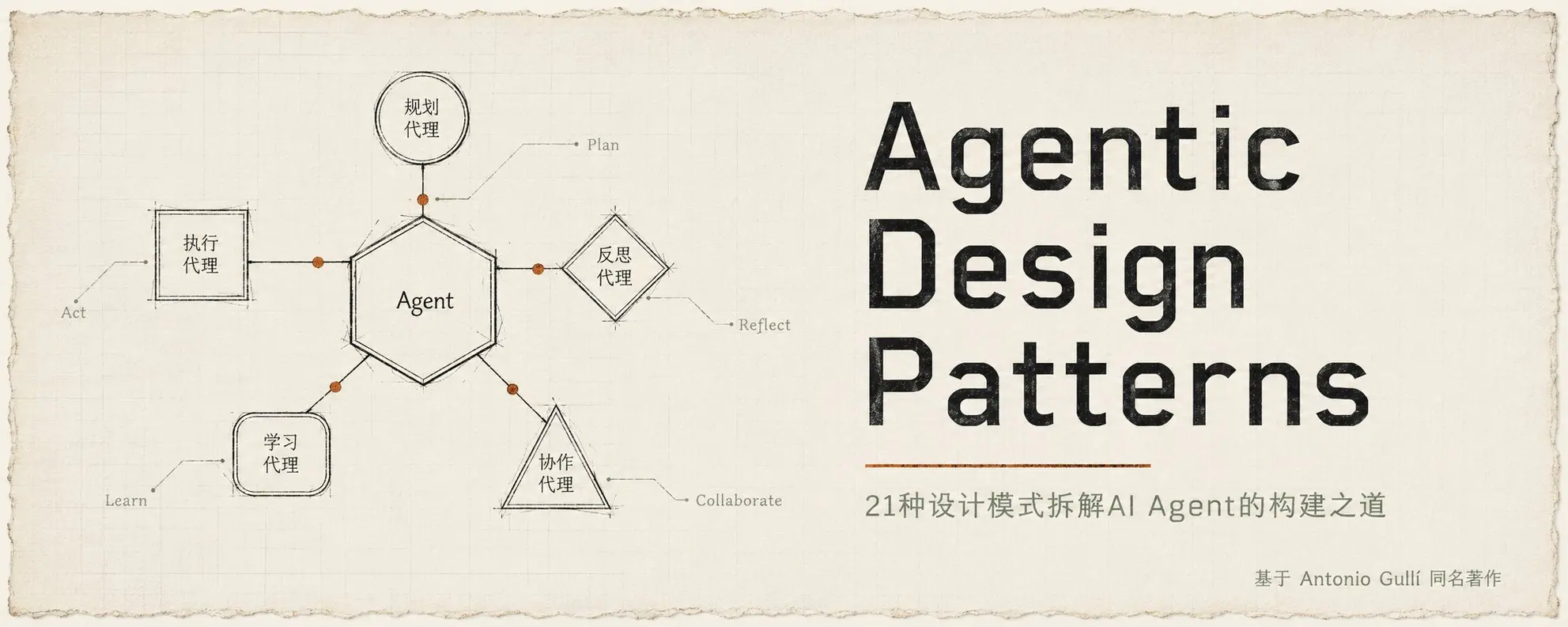
Agentic Design Patterns: A Book That Made Me Re-Understand "What Is an Agent, Really?"

"Agentic Design Patterns" is a 2025 book by Antonio Gullí, a Google engineering director, which offers a systematic framework for AI Agent development through 21 design patterns. A core contribution is the "Four Levels of Agency": Level 0 (bare LLMs) are not true agents. Level 1 agents actively decide when and how to use tools. Level 2 agents engage in strategic planning, context engineering (curating and filtering information), and self-reflection. Level 3 involves multi-agent collaboration with defined communication topologies. The book introduces **Context Engineering** as a superset of prompt engineering, managing four layers of information for the agent: system prompts, external data, implicit context (user history, environment), and feedback loops for automated optimization. A key pattern is **Reflection (Producer-Critic)**, where two distinct agents with different prompts collaborate iteratively—one produces output, the other critiques it—until quality is satisfactory or a max iteration limit is reached. For **Memory**, a three-layer model is proposed: Session (ephemeral conversation context), State (temporary task data), and Memory (persistent, long-term storage). Regarding **Multi-Agent Systems**, the book advises against unnecessary complexity, recommending simple topologies like Supervisor or Peer-to-Peer based on task needs. It emphasizes perfecting a single Level 2 agent before moving to multi-agent setups. The author concludes with three actionable takeaways: 1) Add a Critic agent to existing workflows, 2) Practice Context Engineering beyond simple prompts, and 3) Avoid premature multi-agent complexity; first master a robust single agent. The book provides a practical map, codifying common challenges like reflection, memory, and coordination into reusable patterns, saving developers from reinventing foundational solutions.

链捕手Hace 1 hora(s)

Agentic Design Patterns: A Book That Made Me Re-Understand "What Is an Agent, Really?"

链捕手Hace 1 hora(s)

An AI Read SpaceX's Prospectus and Wrote This Investment Memo in 12 Minutes

An AI agent autonomously analyzed SpaceX's 226MB S-1 filing, purchased real-time market data on-chain for $1.87, and generated a comprehensive investment memo in 12 minutes. The memo concludes a "Hold" recommendation. Bull Thesis: SpaceX holds a near-monopoly in commercial launch (80% of global orbital mass since 2023), operates the profitable Starlink business (10.3M subscribers, $7.2B adj. EBITDA), and is vertically integrated from rockets to AI via the xAI acquisition. Starlink alone is a standout, high-margin business. Bear Thesis: The AI division is a massive cash burn ($6.4B operating loss on $3.2B revenue in 2025). True debt obligations approach ~$42B, not the headline $29B, due to bridge loans and X-related debt. Significant contingent liabilities exist, including a potential $10B fee from a Cursor option agreement. The company faces concentrated counterparty risk (e.g., a $45B Anthropic contract), slowing revenue growth, and complex governance as a controlled company with four share classes. Valuation anchors Starlink's standalone value at ~$84B (applying Iridium's 7.4x sales multiple), suggesting the current ~$500B+ IPO target prices in immense future execution risk for Starship and AI. Key risks include Starship delays, accelerating AI losses, and underwriter conflicts (the IPO's lead banks are also lenders on the $20B bridge loan it aims to refinance). Investment triggers: upgrade to "Overweight" if priced ≤$350B and Starship meets milestones; downgrade to "Pass" if priced >$510B or key risks materialize.

marsbitHace 1 hora(s)

An AI Read SpaceX's Prospectus and Wrote This Investment Memo in 12 Minutes

marsbitHace 1 hora(s)

Trading

Spot
Futuros

Artículos destacados

Cómo comprar UNI

¡Bienvenido a HTX.com! Hemos hecho que comprar Uniswap (UNI) sea simple y conveniente. Sigue nuestra guía paso a paso para iniciar tu viaje de criptos.Paso 1: crea tu cuenta HTXUtiliza tu correo electrónico o número de teléfono para registrarte y obtener una cuenta gratuita en HTX. Experimenta un proceso de registro sin complicaciones y desbloquea todas las funciones.Obtener mi cuentaPaso 2: ve a Comprar cripto y elige tu método de pagoTarjeta de crédito/débito: usa tu Visa o Mastercard para comprar Uniswap (UNI) al instante.Saldo: utiliza fondos del saldo de tu cuenta HTX para tradear sin problemas.Terceros: hemos agregado métodos de pago populares como Google Pay y Apple Pay para mejorar la comodidad.P2P: tradear directamente con otros usuarios en HTX.Over-the-Counter (OTC): ofrecemos servicios personalizados y tipos de cambio competitivos para los traders.Paso 3: guarda tu Uniswap (UNI)Después de comprar tu Uniswap (UNI), guárdalo en tu cuenta HTX. Alternativamente, puedes enviarlo a otro lugar mediante transferencia blockchain o utilizarlo para tradear otras criptomonedas.Paso 4: tradear Uniswap (UNI)Tradear fácilmente con Uniswap (UNI) en HTX's mercado spot. Simplemente accede a tu cuenta, selecciona tu par de trading, ejecuta tus trades y monitorea en tiempo real. Ofrecemos una experiencia fácil de usar tanto para principiantes como para traders experimentados.

423 Vistas totalesPublicado en 2024.12.12Actualizado en 2025.03.21

Cómo comprar UNI

Discusiones

Bienvenido a la comunidad de HTX. Aquí puedes mantenerte informado sobre los últimos desarrollos de la plataforma y acceder a análisis profesionales del mercado. A continuación se presentan las opiniones de los usuarios sobre el precio de UNI (UNI).

活动图片