降低交易风险的 20 条铁律

深潮Publicado a 2024-09-12Actualizado a 2024-09-12

如果你不主动管理风险,市场就会替你管理。

作者:Edgy - The DeFi Edge

编译:深潮TechFlow

在加密货币领域,风险管理是最重要的技能。

如果你不主动管理风险,市场就会替你管理。

以下是 20 条聪明的规则,可以帮助你降低风险并增加利润:

1. 快速轮换

市场叙事和情绪变化非常快。新的协议可能在短短几周内取代市场领头羊。

时刻关注市场动态。尽早入场,并在大多数人之前退出。

把最后 20% 留给别人

当你获利时,很容易想要精准把握最高点,榨取每一个百分点的利润。

但这是不可能的,错误的时机可能会让你成为长期持币者。

不要贪心。

2. 尽早止损

我们都会犯错,但区别在于,有些人在亏损 15% 时就卖出,而有些人一直持有到亏损 80% 才卖。

在交易前就要制定好退出计划和规则。这样资金可以重新投入到更有潜力的投资中。

例如:如果亏损超过 15%,就卖出。

3. 获利的心理学

你可能会因为害怕错失“100 倍”的机会而不敢获利了结。

但即便你提早卖出,而它涨了 100 倍,你仍然获利。关键在于,你保护了自己免受可能的损失。

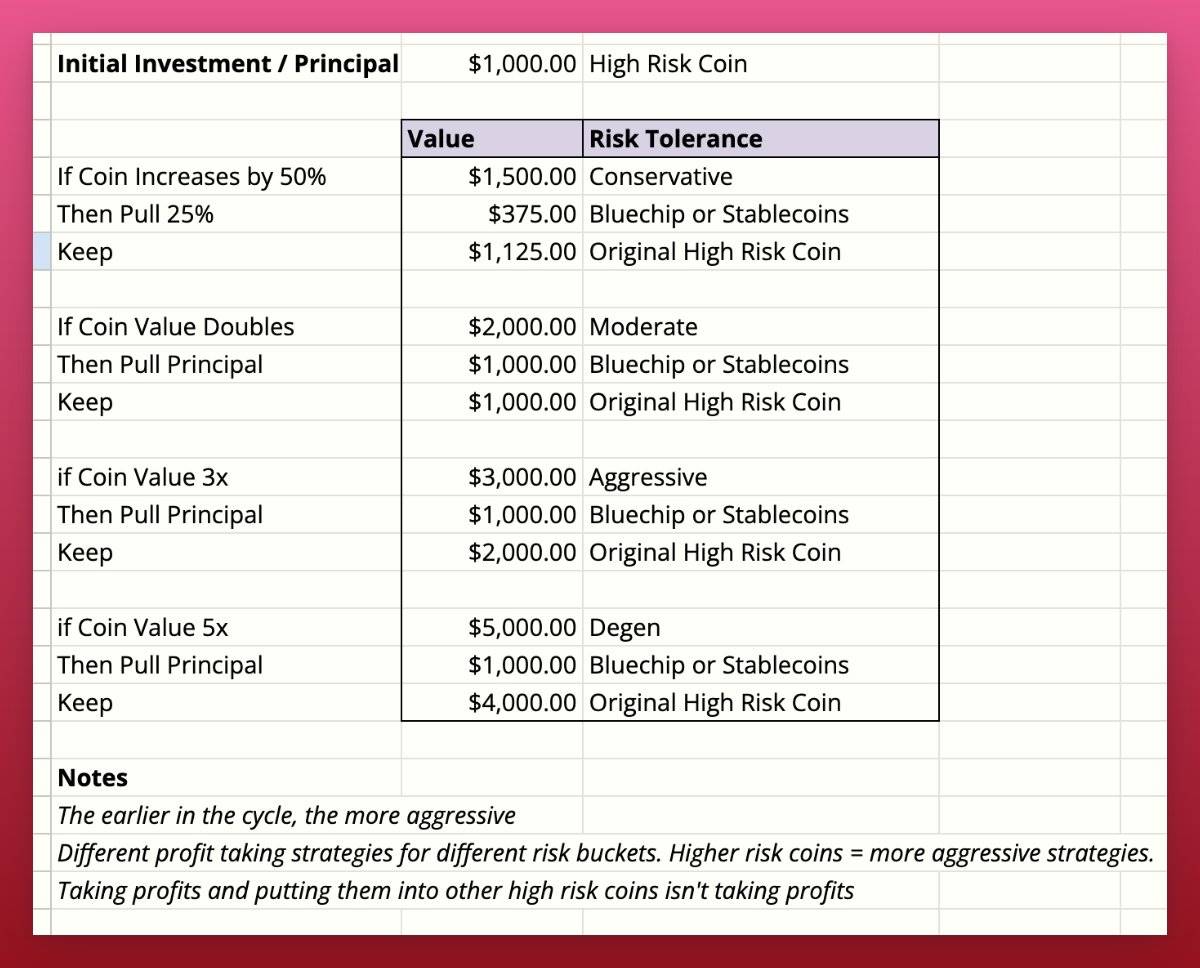
4. 获利了结

在你锁定利润之前,一切都只是屏幕上的数字。

当你收回初始投资时,会有一种心理上的满足感,而剩下的利润则可以继续增长。

用简单的公式来指导你的操作。
5. 等待市场稳定期

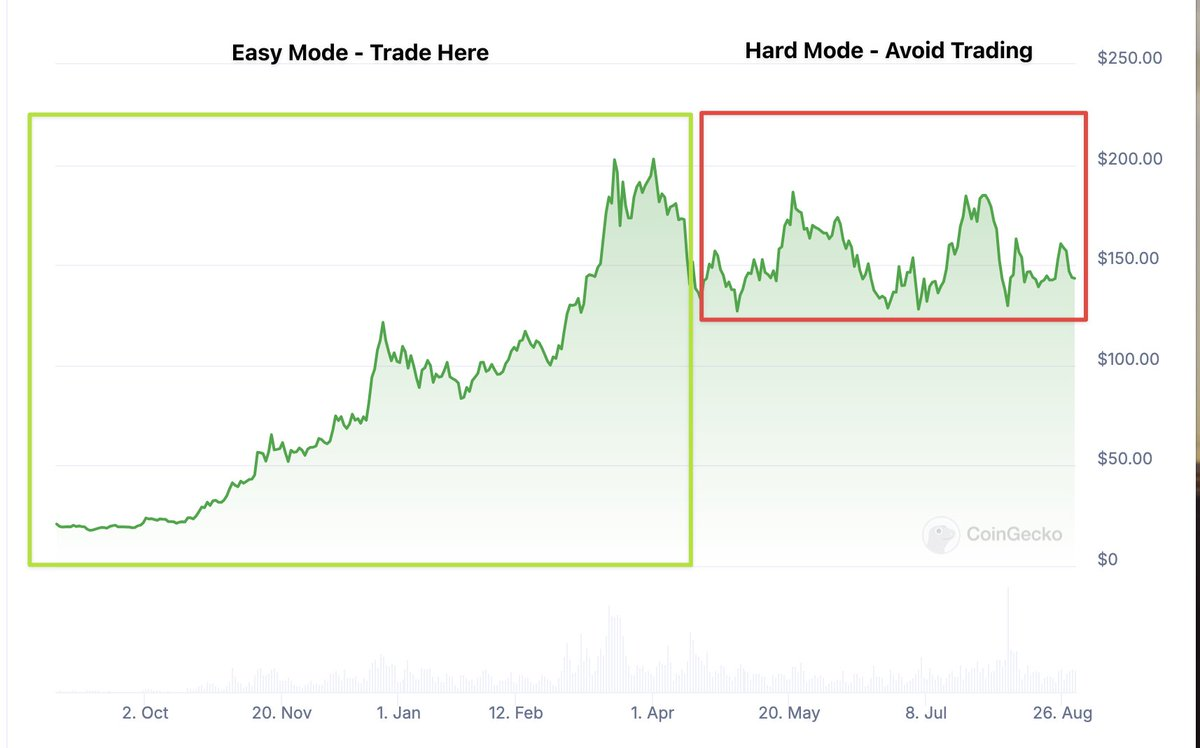
市场稳定期是指当流动性进入市场,整个行业呈现积极趋势。这种情况每年会发生几次。不要因为感到无聊或寻求刺激而参与波动市场。你不需要每天都进行交易。(如图所示的 Solana)
6. 创建一个平衡的投资组合

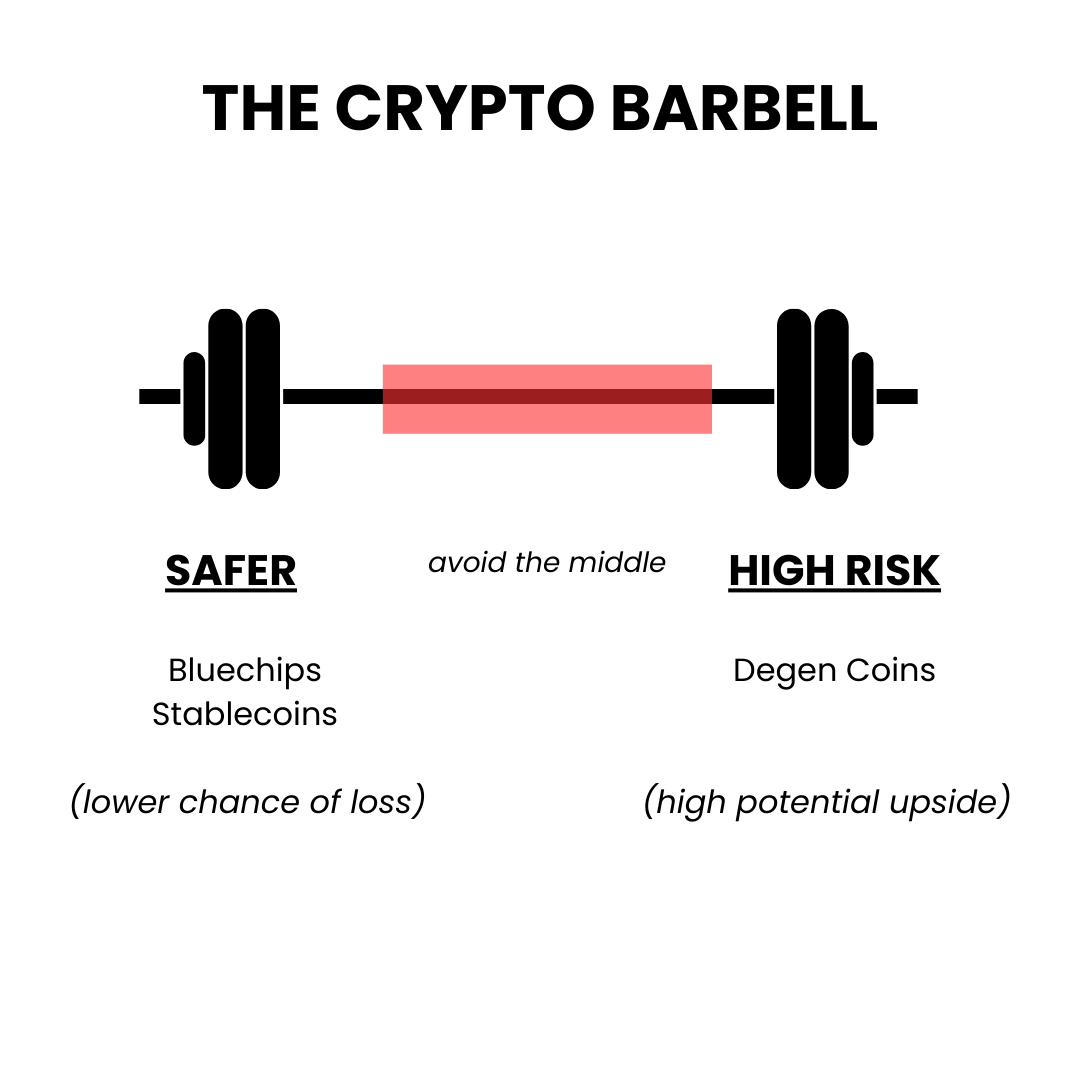
我的长期投资组合主要包括 ETH,并保留了一些稳定币。这些安全资产让我能够更从容地承担较大风险。我喜欢以杠铃策略来构建投资组合——一边是安全资产,另一边是高风险投资。
7. 追求 Alpha 投资

许多人因不断追逐高风险的贝塔投资而亏损。一个替代策略是选择市场领导者:

  • Pendle 用于真实世界资产 (RWA)

  • Bananagun 用于 Telegram 机器人 (TG Bots)

  • 选择 ETH 而不是 ETH 的贝塔投资

潜在的强劲回报和较低风险。

8. 不要随意改变目标

2021年,我的朋友实现了他的目标:将15万美元变成了100万美元。但随后他又设立了新的目标,“再过几个月,我就可以一劳永逸了。”他错误地判断了市场顶点,最终资产回落到15万美元。要知道什么时候是“足够”。

9. 切勿将资产锁定

我见过太多人为了额外收益或积分将 Token 锁定,结果被协议“收割”。重视可选择性——你不希望在市场变化比预期更快时,Token 被锁定而无法使用。

10. 避免单点故障

1)将你的稳定币分散在 USDC、USDT 和 Dai 之间

2)使用多个中心化交易所进行入金,以防其中一个被锁定

3)将你的加密货币分散在多个钱包中

11. 将利润投入 Degen 币并不算是真正的获利

获利意味着你要从市场中撤出资金,将利润转入稳定币、长期持有或兑现。将利润投入 Degen 币更像是在进行复式押注。

12. 不要将超过 15% 的资金投入非蓝筹或非稳定币资产中

在加密货币领域,没有任何保证,也没有什么是大而不倒的。

  • Terra 和 FTX 都曾失败。

  • Euler 和 Curve 也曾遭黑客攻击。 黑天鹅事件比你想象中更常见——要保护好你的下行风险,以免一切归零。

13. 坚持在你的能力圈内行动

选择 2-3 个领域进行深入研究。每周在一个领域专注研究 10 小时将使你位列前 1%。许多风险源于投资你不熟悉的领域,仅仅因为害怕错过机会而盲目投资。

14. 定期调整投资组合

你应该为投资组合设定一个目标分配比例,这会因市场周期阶段的不同而有所变化。市场火热时,高风险 Token 表现优异,容易导致投资组合失衡,因此要养成定期调整的习惯。

15. 在加密货币领域之外进行多元化投资

我常常将获利资金投入加密货币以外的领域,包括最大化退休基金、建立充足的应急基金以及再投资于业务。这让我更能从容应对加密货币的波动性。

16. 尽量避免在现实生活中谈论加密货币

在发展中国家旅行时,佩戴金饰的人比低调的人更容易成为抢劫目标。同样,在现实生活中谈论加密货币越多,就越可能成为目标。

如果有人问我是否从事加密货币,我会说我在 FTX 崩盘时失去了一切,现在从事电子商务供应链工作。富有的人往往高调,而真正的财富则是低调的。不要给自己或家人招来不必要的注意。避免参与地位竞争。

17. 使用合适的安全工具

你应该使用 Rabby Wallet、Brave 浏览器、DeFiLlama 扩展、Wallet Guard 等。通过 DeFiLlama 扩展的绿色 Llama,我能确认自己在正确的协议网站上。
18. 使用临时钱包

我常常尝试新的协议,因此配备了一个临时钱包。这样即便协议是恶意的,我最多也只会损失 100 美元。把临时钱包视作在 Tinder 约会时使用的安全措施。

19. 不要试图在一个周期内实现成功。

• 大量使用杠杆。

• 借钱投资加密货币。

• 过度投资于高风险币种。

这些行为都是因为急于在一个周期内成功而承担过多风险。

20. 最终,整个行业都在鼓励你更加乐观并承担更多风险。为什么?

因为如果你进行风险管理,他们就赚不到钱。他们希望你购买他们手中的资产。

你必须对自己的财富负责。

学会防守才能赢得胜利。

Lecturas Relacionadas

Vitalik on the Future of the Ethereum Foundation: A Smaller, More Distinct, but Longer-Lasting Ship

Vitalik discusses the future direction of the Ethereum Foundation (EF), emphasizing a shift towards a smaller, more focused, and longer-lasting organization. He clarifies this is his personal view and that his own influence within EF is diminishing, which he welcomes. The key driver is aligning EF's actions with its stated values of decentralization, privacy, and being a "sanctuary technology," addressing criticism that its operations haven't fully reflected these ideals. He argues that EF should not be the "center" of Ethereum but one node among many with a specific mandate. With limited resources (holding only ~0.16% of all ETH), EF must focus its remaining efforts on long-term, mission-critical activities that wouldn't happen without its push, particularly those reinforcing Ethereum's core CROPS values (Censorship-Resistance, Resilience, Openness, Privacy, Security). This means making hard choices, potentially spinning out even respected projects to attract external capital, and cultivating a distinct cultural stance. The core technical vision is for Ethereum to be "amazing" not by chasing maximal throughput, but by excelling in the CROPS dimension. Key goals include: a provably bug-free Ethereum via AI-assisted formal verification; high-availability chain consensus combining the best of BFT and Bitcoin-style security; and minimization of intermediaries in transaction sending and user experience. These "unreasonable" ambitions aim to make Ethereum profoundly impressive in its core values, which also support ETH as a robust asset. The future EF will be a smaller, more opinionated ship built for longevity and meaningful impact.

链捕手Hace 3 min(s)

Vitalik on the Future of the Ethereum Foundation: A Smaller, More Distinct, but Longer-Lasting Ship

链捕手Hace 3 min(s)

Leading Players in Large Models Drain the Primary Market

The AI industry is witnessing an unprecedented concentration of capital into a handful of leading players, signaling what insiders call the "eve of a final shakeout." A staggering funding surge exceeding $7 billion hit just three Chinese companies in May alone—Kimi, StepFun (接近完成融资), and DeepSeek—with the latter's valuation reaching $45-$50 billion. Globally, giants like OpenAI, Anthropic, and SpaceX (set to merge with xAI) are preparing for public listings, collectively eyeing valuations over $3 trillion. This capital is no longer fueling a broad "hundred-model war" but is being funneled to "refuel" the final few contenders, following a sector-wide attrition rate exceeding 90%. This frenzy is driven by a fundamental shift in industry logic. The focus has moved from比拼模型智商 (competing on model intelligence) to "token factory economics." The explosion of long-context AI agents has massively increased token consumption per task. With token supply constrained by bottlenecks in HBM memory and power infrastructure—key factors in production costs—dominance now hinges on owning and efficiently operating large-scale compute resources. Major tech firms are investing hundreds of billions annually in this AI "power grid." Consequently, competition pivots to three core areas: 1) **Monetization** as the "AGI premium" cools, forcing a shift from user growth to revenue; 2) **Cost efficiency**, where reducing inference costs becomes the ultimate KPI as model capabilities commoditize; and 3) **Strategic path divergence** between enterprise-focused AI (prioritizing integration and reliability) and consumer-facing applications (betting on scale and user engagement). The message is clear: the final capital injections are determining the endgame lineup. Success will depend not just on technical prowess, but on transforming technology into a sustainable, profitable business model with demonstrable return on massive compute investments.

marsbitHace 12 min(s)

Leading Players in Large Models Drain the Primary Market

marsbitHace 12 min(s)

AI Giants Queueing Up for IPOs: Is This the 'Last Dance' for the U.S. Stock Market?

A massive wave of IPOs from AI giants like OpenAI, Anthropic, and SpaceX is taking shape, potentially reshaping the U.S. stock market. OpenAI is reportedly preparing for a historic IPO, targeting a valuation over $1 trillion and raising roughly $60 billion, which would dwarf previous records. Anthropic is also advancing its own IPO plans, projecting significant revenue growth and achieving quarterly operating profit. However, their financial profiles starkly differ. While Anthropic is nearing profitability with a focus on enterprise clients, OpenAI continues to report substantial losses, with a negative operating margin and expectations for positive cash flow only by 2029-2030. Analysts warn these listings could trigger a major "passive fund reshuffle," forcing index funds to sell holdings in established tech giants to make room for the new entrants, potentially pressuring the broader market. Some observers view the IPO rush as a "risk transfer," allowing early private investors to cash out at peak valuations while passing future financial uncertainty to public market investors. The divergent paths of Anthropic's near-term profitability versus OpenAI's long-term, high-cost growth narrative present a critical choice for investors. The outcome of these IPOs is seen as a major swing factor for risk assets in 2026, testing whether this surge marks a new cycle or a potential peak.

marsbitHace 20 min(s)

AI Giants Queueing Up for IPOs: Is This the 'Last Dance' for the U.S. Stock Market?

marsbitHace 20 min(s)

The Richest Fed Chair in 112 Years Is Here: Kevin Warsh Is Rewriting the Rules

Kevin Warsh, with a personal fortune exceeding $130 million, became the 112nd and wealthiest Chair of the U.S. Federal Reserve on May 22nd. A former Wall Street investment banker and key figure during the 2008 financial crisis, Warsh lacks a traditional academic background for a central banker but brings deep market experience. He proposes an unconventional policy approach of simultaneously reducing the Fed's balance sheet ("quantitative tightening") while cutting interest rates, arguing that a smaller balance sheet would allow for more effective rate policy. His ascent marks a potential regime change at the Fed. Warsh aims to reform the institution's decision-making processes, tighten communication discipline among officials, and reduce reliance on forward guidance like the "dot plot." This shift responds to the Fed's current dilemma: fiscal policy is expanding the government's balance sheet through deficits, while monetary policy's ability to shrink its own $6.7 trillion balance sheet is severely constrained, creating pressure on long-term interest rates. Analysts expect Warsh's tenure to sustain high volatility in the U.S. Treasury market due to persistent supply pressures. Furthermore, his leadership coincides with a gradual, structural erosion of dollar dominance, evidenced by its declining share in global reserves and cracks in the petrodollar system, with increased use of alternatives like the Chinese yuan in oil trade. For investors, this environment underscores the importance of portfolio diversification, including assets like gold and Chinese sovereign bonds, amid a fluctuating dollar credit anchor.

链捕手Hace 34 min(s)

The Richest Fed Chair in 112 Years Is Here: Kevin Warsh Is Rewriting the Rules

链捕手Hace 34 min(s)

Trading

Spot
Futuros
活动图片