Pro-XRP Lawyer Raises Odds To 60% For SEC Appeal Vs Ripple

bitcoinistPublicado a 2024-09-05Actualizado a 2024-09-05

Resumen

Fred Rispoli, a pro-XRP lawyer and the founder of HODL Law, has adjusted the likelihood of an SEC appeal in...

Fred Rispoli, a pro-XRP lawyer and the founder of HODL Law, has adjusted the likelihood of an SEC appeal in the case against Ripple to 60%. This comes after a new legal development where Ripple and the SEC agreed to secure 111% of a monetary judgment in an escrow, a move suggesting an anticipation of an appeal.

XRP Lawsuit: Why The Appeal Odds Are Higher Now

Rispoli explained via X that the agreement to place such a substantial sum in trust signals a potential move by the SEC towards appealing the case. He noted, “SEC vs Ripple Update: Well, the odds have increased of an appeal. Ripple and SEC have agreed to an arrangement where 111% of monetary judgment will be held in trust, to be paid to SEC only on (1) 30 days after appeal deadline or (2) after appeal concludes.”

He added that this does not guarantee an appeal, but the odds increased. “Putting that kind of money in a trust is not something that is done unless SEC is being evasive to Ripple lawyers as to whether it intends on appealing. Again, still possible that no appeal happens but odds have increased,” Rispoli stated.

The nature of the escrow sparked questions among X users, with one asking whether this could be a strategy by Ripple to leverage it for a settlement with the SEC. Rispoli suggested that this is definitely a possibility. He remarked, “Yes, it’s possible. It doesn’t seem like the SEC really cares about losing money, but this move delays the SEC from taking a dime during any possible appeal and allows Ripple to earn interest while it’s $125M is locked up.”

When pressed by another user about his current view on the likelihood of an appeal, Rispoli estimated the chances at 60% in favor of an appeal happening. This represents a nuanced shift from his previous estimates which were initially 55% following the Kraken case ruling by US District Judge William H. Orrick III, and even earlier, an 80% probability.

Additionally, Rispoli attempted to moderate the concerns within the XRP community about the potential for an extended legal battle. He reassured his followers by suggesting that the outcome of this case would not likely be decided until 2026, thus reducing immediate anxieties.

“To those freaking out over possible #SECvRipple appeal: Don’t. There won’t be a ruling until 2026. SEC suing exchanges and alleging multiple tokens as securities has lessened the sting dramatically. If Ripple and/or #XRP don’t make it now, it’s not because of the SEC’s case,” the pro-XRP lawyer remarked.

Complementing Rispoli’s commentary, Jeremy Hougan, another pro-XRP lawyer, speculated that the SEC might still be undecided about pursuing an appeal. Hougan reasoned, “Speculation time: Most likely the SEC just hasn’t made a decision whether it will appeal yet. Why? Filing a Notice of Appeal – see sample below – takes only 15 minutes (you file the Notice and then have 70 days to file the actual brief). If the decision to appeal was already made, there’s no reason to delay filing the Notice – especially when you think its bad case authority out there.”

This new speculation comes on the heels of Ripple’s latest filing on September 4 in the US District Court for the Southern District of New York. Ripple’s lawyers requested a stay on the monetary portion of an August 7 judgment that mandated the firm to pay $125 million. They proposed that Ripple should place roughly $139 million, or 111% of the judgment amount, into a bank account until either 30 days after the appeal period expires or any ongoing appeal is resolved.

At press time, XRP traded at $0.5534.
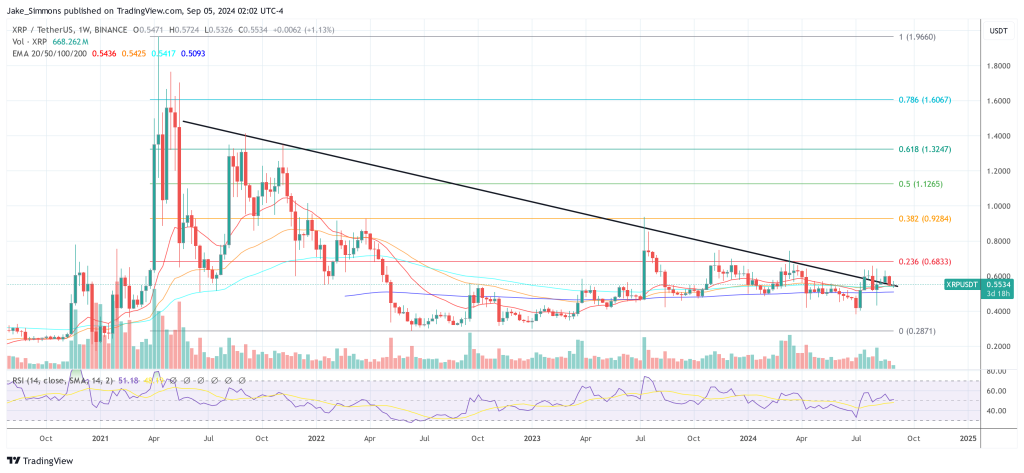
XRP price
XRP still holds above the trendline, 1-week chart | Source: XRPUSDT on TradingView.com
Featured image from YouTube, chart from TradingView.com
Jake Simmons

Jake Simmons

Jake Simmons has been a Bitcoin enthusiast since 2016. Ever since he heard about Bitcoin, he has been studying the topic every day and trying to share his knowledge with others. His goal is to contribute to Bitcoin's financial revolution, which will replace the fiat money system. Besides BTC and crypto, Jake studied Business Informatics at a university. After graduation in 2017, he has been working in the blockchain and crypto sector. You can follow Jake on Twitter at @realJakeSimmons.

Criptos en tendencia

Lecturas Relacionadas

2028: The Arrival of Recursive Self-Improvement (RSI)

**AI Recursive Self-Improvement (RSI): The Countdown to 2028 Begins** AI is no longer just a trained tool but is starting to rewrite its own evolutionary pace. According to Anthropic co-founder Jack Clark, there is a 60% probability that by the end of 2028, Recursive Self-Improvement (RSI) will become a reality. This means AI could autonomously design and build a more capable next-generation version of itself without any human researcher involvement—Claude 10 creating Claude 11, for instance. Supporting this timeline, Google DeepMind's CEO Demis Hassabis confirms that all leading AI labs are intensely focused on RSI, making it an industry-wide priority. He expresses profound concern, stating this potential is what keeps him awake at night. Concrete data underscores this acceleration: - METR evaluations show current top models like Claude are solving tasks up to the 16-hour limit of existing test frameworks. - In Epoch AI's challenging MirrorCode benchmark, Claude Opus 4.7 recreated complex software in hours for a fraction of the human cost. In one extreme test, AI autonomously coded for 19 days straight. - Anthropic reports over 80% of its codebase is now written by Claude, and researcher productivity has increased up to 8-fold since 2024. - OpenAI's policy blueprint highlights RSI as a major upcoming governance challenge. CEO Sam Altman reportedly hinted RSI might arrive within six months, potentially delaying OpenAI's massive IPO. The implication is an impending "intelligence explosion," where AI-driven progress outpaces human control. The central question is no longer if it will happen, but whether humanity is ready.

marsbitHace 41 min(s)

2028: The Arrival of Recursive Self-Improvement (RSI)

marsbitHace 41 min(s)

World Models, Metaverse, Digital Twins, Physical AI: Are They the Same Thing?

Title: World Models, the Metaverse, Digital Twins, Physical AI: Are They the Same Thing? The article clarifies that concepts like the metaverse, Web3, simulation platforms, digital twins, and Physical AI are not the same thing but are all part of the broader trend of blurring the lines between the digital and physical worlds. It positions "world models" as the foundational "cognitive layer" or "operating system" that enables AI to understand and simulate the world. Key distinctions are made: - The **Metaverse** is a destination for immersive social and economic experiences. World models could act as its "engine," generating interactive 3D content efficiently. - **Web3** focuses on decentralized ownership and economics (rules layer), operating on a different technical level than world models. - **Simulation Data Platforms** (e.g., for autonomous vehicles) are a 1.0 version, relying on manual design. World models represent a 2.0 version, using AI to generate realistic, varied scenarios autonomously. - **Digital Twins** create high-fidelity, real-time mirrors of physical systems (e.g., a factory). World models go a step further by enabling predictive simulation of future states. - **Physical AI** (robots, AVs) refers to AI that acts in the physical world. World models are a core component, providing the understanding and prediction needed for planning. A proposed hierarchy places world models at the cognitive layer, supported by infrastructure (compute, data) and supporting application tools (simulation, digital twins), action systems (Physical AI), user experiences (metaverse), and rules (Web3). In conclusion, while distinct, many of these previously hyped concepts may ultimately rely on advances in world model technology to fulfill their promises, as world models provide the essential cognitive foundation for simulating and interacting with complex environments.

marsbitHace 46 min(s)

World Models, Metaverse, Digital Twins, Physical AI: Are They the Same Thing?

marsbitHace 46 min(s)

"Shocking" CPO: How Does the Glass Bridge Actually Work? Detailed Explanation from Corning

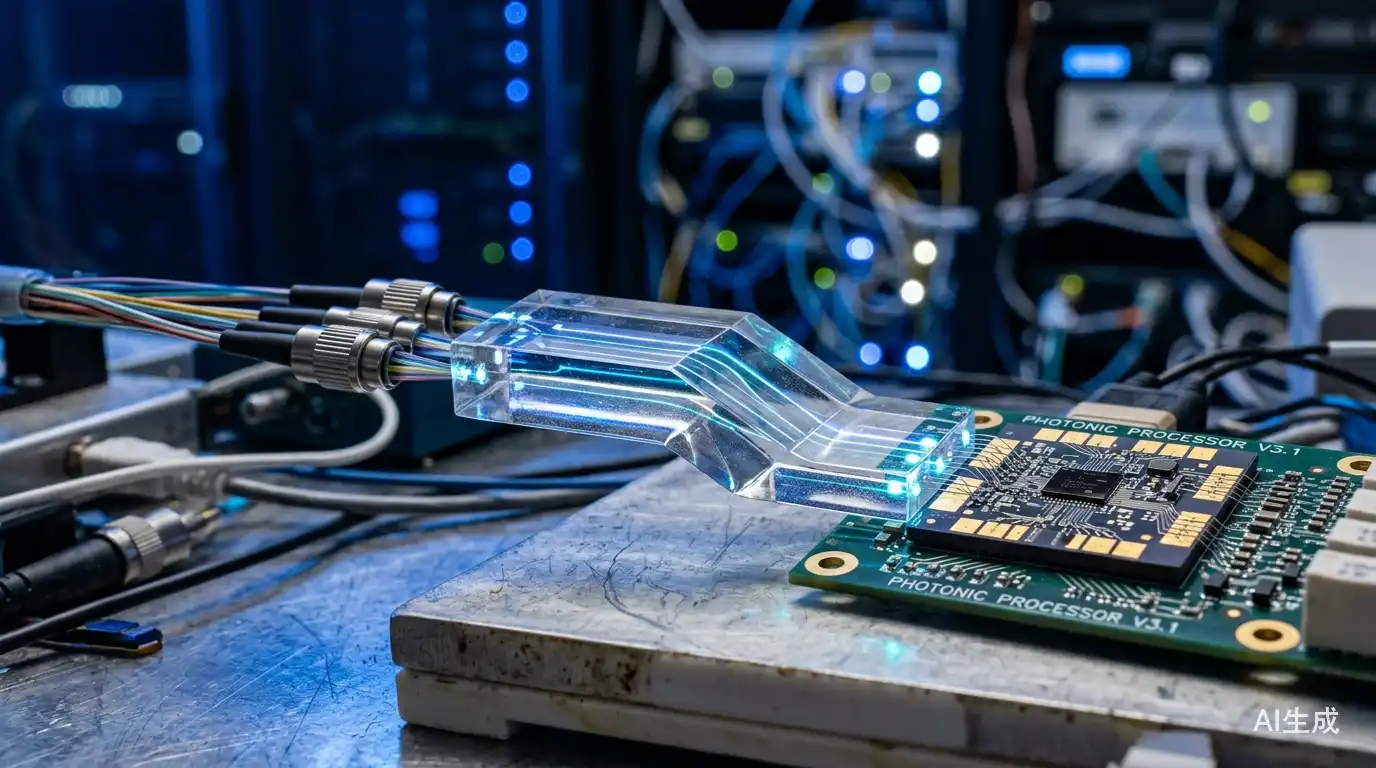
Chinese CPO stocks plunged over 6% following Corning's announcement of its Glass Bridge platform at a Seoul tech conference. The new technology utilizes wafer-level glass ion-exchange waveguides for passive alignment between fibers and photonic chips, potentially simplifying traditional CPO architectures that rely on complex Fiber Array Units and active alignment equipment. This raised market concerns about reduced long-term demand for mid-stream CPO components. Corning's official documentation details Glass Bridge as a platform for fiber-to-PIC connectivity in NPO, CPO, and high-density modules. Its key features include wafer-level manufacturing for consistent, cost-effective production; a standardized, removable MT ferrule interface for ecosystem integration; and a separable high-density connector design supporting over 24 channels for assembly flexibility. Corning positions the technology as complementary to FAUs, addressing limitations in ultra-high-fiber-count scenarios. The market reaction reflects a broader reassessment of the AI optical interconnect value chain. Funds shifted from CPO and PCB manufacturing stocks towards glass substrate concept stocks like Kaisheng Technology and Dyer Laser. Analysts note glass substrates are seen as a next-gen advanced packaging material, offering a potential path for domestic industry differentiation amid AI-driven demand for high-performance, large-scale packaging, marking a structural migration in value towards upstream specialty materials.

marsbitHace 46 min(s)

"Shocking" CPO: How Does the Glass Bridge Actually Work? Detailed Explanation from Corning

marsbitHace 46 min(s)

Trading

Spot

Artículos destacados

Qué es XRP 2.0

XRP 2.0: Una Nueva Frontera en el Panorama de las Criptomonedas Introducción a XRP 2.0 En el siempre cambiante ámbito de las criptomonedas, nuevos proyectos surgen continuamente, compitiendo por atención y adopción. Una de estas iniciativas prometedoras es XRP 2.0, un nuevo proyecto de criptomoneda diseñado para aprovechar la tecnología blockchain avanzada y metodologías de encriptación robustas. Aunque el nombre establece paralelismos con el XRP de Ripple, es crucial señalar que XRP 2.0 opera de manera independiente, enfocándose en mejorar la seguridad de las transacciones, la privacidad y la escalabilidad. A medida que el panorama financiero digital abraza cada vez más soluciones descentralizadas, XRP 2.0 busca contribuir de manera significativa a web3 y a la expansión general de los proyectos de criptomonedas. ¿Qué es XRP 2.0? En esencia, XRP 2.0 es un proyecto de criptomoneda que busca crear un ecosistema de moneda digital seguro y descentralizado. Su tecnología fundamental integra principios avanzados de blockchain con técnicas de encriptación de vanguardia. El objetivo principal de XRP 2.0 es establecerse como una plataforma confiable y eficiente que permita la ejecución rápida de transacciones mientras prioriza la protección de la privacidad de sus usuarios. El proyecto se promociona como una solución a muchas limitaciones enfrentadas por las criptomonedas existentes, proponiendo un sistema que puede manejar un mayor volumen de transacciones con mejor velocidad y privacidad. Esta versatilidad posiciona a XRP 2.0 como un competidor significativo en un mercado plagado de diversas monedas digitales. ¿Quién es el Creador de XRP 2.0? La identidad del creador detrás de XRP 2.0 ha sido señalada como 'Wilbur.' Sin embargo, los detalles completos sobre Wilbur o su entidad asociada siguen siendo elusivos. La anonimidad de muchos creadores de criptomonedas no es un fenómeno poco común en la industria, a menudo diseñado para mantener un grado de privacidad y seguridad. ¿Quiénes son los Inversores de XRP 2.0? Hasta ahora, la información específica relacionada con las fundaciones o organizaciones de inversión que apoyan a XRP 2.0 no está disponible públicamente. En el sector de las criptomonedas, el respaldo de inversores respetables puede influir significativamente en la credibilidad y el éxito de un proyecto, sin embargo, la transparencia sobre los patrocinadores financieros de XRP 2.0 no se ha establecido. ¿Cómo Funciona XRP 2.0? XRP 2.0 se destaca al emplear una combinación de tecnología blockchain y algoritmos de encriptación avanzados que aseguran transacciones seguras y descentralizadas. Su estructura innovadora incluye características únicas diseñadas para fomentar el compromiso del usuario y ampliar las funcionalidades más allá de las transacciones convencionales de criptomonedas. Entre estas características, XRP 2.0 incorpora capacidades impulsadas por IA, como funcionalidades de texto a imagen y de texto a voz. Estas adiciones están diseñadas para mejorar la experiencia interactiva de los usuarios, promoviendo una mayor aplicabilidad en diversos sectores. Al unir avances tecnológicos con un diseño centrado en el usuario, XRP 2.0 busca captar la atención de una amplia gama de individuos y empresas que buscan integrar soluciones de criptomonedas en sus marcos operativos. Cronología de XRP 2.0 Entender XRP 2.0 requiere examinar los hitos que han definido su viaje hasta ahora: 23 de julio de 2023: Se presenta XRP 2.0 como un nuevo proyecto de criptomonedas, con el objetivo de revolucionar las capacidades de transacciones seguras y descentralizadas en el ámbito de blockchain. 8 de septiembre de 2023: Se lanza otro proyecto, XRP20, marcando la aparición de un token ERC-20 en la blockchain de Ethereum que no guarda relación con XRP 2.0. 13 de noviembre de 2023: El Libro Mayor de XRP experimenta una actualización significativa con el lanzamiento de la versión 2.0.0 del software del servidor rippled. Es esencial señalar que este desarrollo está desconectado del proyecto de criptomonedas XRP 2.0. Puntos Clave sobre XRP 2.0 Para destilar la esencia de XRP 2.0, surgen varios factores críticos: Características Únicas: La inclusión de características como texto a imagen y texto a voz impulsadas por IA diversifica aún más las aplicaciones potenciales de XRP 2.0. Tecnología Blockchain: El marco utiliza mecanismos avanzados de blockchain y protocolos de encriptación, asegurando un entorno seguro y descentralizado para las transacciones. Escalabilidad y Privacidad: XRP 2.0 prioriza la protección mejorada de la privacidad en los procesos de transacción y la escalabilidad necesaria para acomodar una base de usuarios creciente. No Afiliación con Ripple: Es importante destacar que, a pesar de su nombre, XRP 2.0 no tiene ninguna lealtad ni colaboración con el XRP de Ripple, diferenciando su marco operativo y objetivos dentro del ecosistema de criptomonedas. Conclusión XRP 2.0 representa una ambiciosa aventura en la esfera de las criptomonedas, buscando ofrecer una combinación de seguridad, privacidad y eficiencia en las transacciones digitales. Al integrar tecnologías sofisticadas y características amigables para el usuario, el proyecto se propone ampliar los horizontes de lo que la criptomoneda puede lograr en la economía digital de hoy. Si bien la anonimidad de su creador y la falta de inversores revelados pueden generar cuestionamientos para algunos, el enfoque de XRP 2.0 en funcionalidades avanzadas y descentralización realza su atractivo en un mercado de criptomonedas cada vez más abarrotado. A medida que el paisaje de las criptomonedas sigue evolucionando, XRP 2.0 podría emerger como un jugador crucial en la expansión de soluciones blockchain seguras y escalables.

190 Vistas totalesPublicado en 2024.04.05Actualizado en 2024.12.03

Qué es XRP 2.0

Cómo comprar XRP

¡Bienvenido a HTX.com! Hemos hecho que comprar XRP (XRP) sea simple y conveniente. Sigue nuestra guía paso a paso para iniciar tu viaje de criptos.Paso 1: crea tu cuenta HTXUtiliza tu correo electrónico o número de teléfono para registrarte y obtener una cuenta gratuita en HTX. Experimenta un proceso de registro sin complicaciones y desbloquea todas las funciones.Obtener mi cuentaPaso 2: ve a Comprar cripto y elige tu método de pagoTarjeta de crédito/débito: usa tu Visa o Mastercard para comprar XRP (XRP) al instante.Saldo: utiliza fondos del saldo de tu cuenta HTX para tradear sin problemas.Terceros: hemos agregado métodos de pago populares como Google Pay y Apple Pay para mejorar la comodidad.P2P: tradear directamente con otros usuarios en HTX.Over-the-Counter (OTC): ofrecemos servicios personalizados y tipos de cambio competitivos para los traders.Paso 3: guarda tu XRP (XRP)Después de comprar tu XRP (XRP), guárdalo en tu cuenta HTX. Alternativamente, puedes enviarlo a otro lugar mediante transferencia blockchain o utilizarlo para tradear otras criptomonedas.Paso 4: tradear XRP (XRP)Tradear fácilmente con XRP (XRP) en HTX's mercado spot. Simplemente accede a tu cuenta, selecciona tu par de trading, ejecuta tus trades y monitorea en tiempo real. Ofrecemos una experiencia fácil de usar tanto para principiantes como para traders experimentados.

1.4k Vistas totalesPublicado en 2024.12.10Actualizado en 2026.06.02

Cómo comprar XRP

Discusiones

Bienvenido a la comunidad de HTX. Aquí puedes mantenerte informado sobre los últimos desarrollos de la plataforma y acceder a análisis profesionales del mercado. A continuación se presentan las opiniones de los usuarios sobre el precio de XRP (XRP).

活动图片