存储板块AR区块链存储新星降息后潜力无限涨幅预测惊人

金色财经Publicado a 2024-09-03Actualizado a 2024-09-03

项目简介

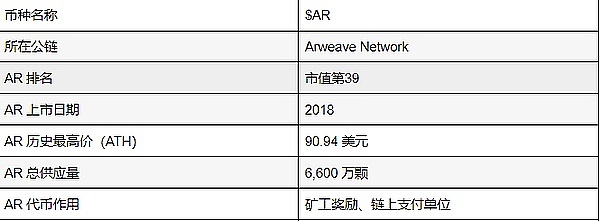
Arweave 是一个去中心化的数据存储解决方案,通过其区块编织(Blockweave)技术和原生加密货币 AR 代币,提供永久且不可变的数据存储服务。用户可以支付一次性费用,以永久存储数据,并通过贡献未使用的存储空间来获得奖励。EsaEFGQNH5AhewzlE5rCHM6t6GINlWyGOa0QZtxN.png

AR 代币的基本功能

  • 支付数据存储费用:用户在 Arweave 网络上存储数据时,需要使用 AR 代币支付一次性存储费用。这些费用保证了数据的永久存储。

  • 激励矿工:矿工通过存储和验证数据来获得 AR 代币作为奖励。这个机制激励矿工积极参与数据存储和维护,确保网络的安全性和可靠性。

代币供应

AR 是Arweave Network上的原生代币

  • 初始供应量:6600 万枚 AR 代币。

  • 流通供应量: 5500 万枚 AR 代币

其余1,100 万枚将会以作为区块奖励的方式逐渐产出,目前流通量已经来到6 千5 百多万枚,相当于大部分的筹码都已经在市场上。

  • 逐步减半:类似于比特币的减半机制,确保代币供应的稀缺性和长期价值。但与之不同的是,AR 代币采用的是逐步减半机制,这意味着代币的发行量会在每一个小周期内逐步减少。

AR 代币分配

JSUWthHhOn0pQIH9yWqQw8Q4D8Pd71QgwksGMDbl.png

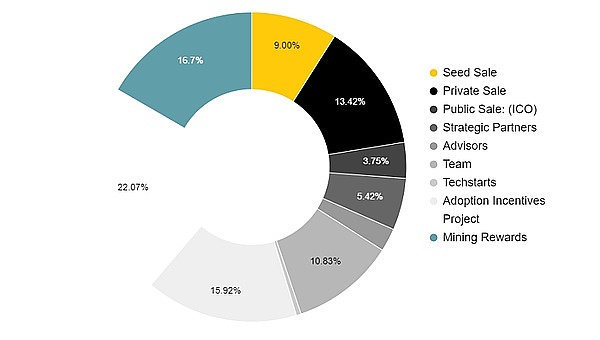
  • 种子销售:9%。 私人出售:13.42%。

  • 公开发售(ICO):3.75%。战略合作伙伴:5.42%。

  • 顾问:2.42%。 团队:10.83%。科技初创公司:0.5%。

  • 采用激励:15.92%。项目:22.07%。挖矿奖励:16.67%。

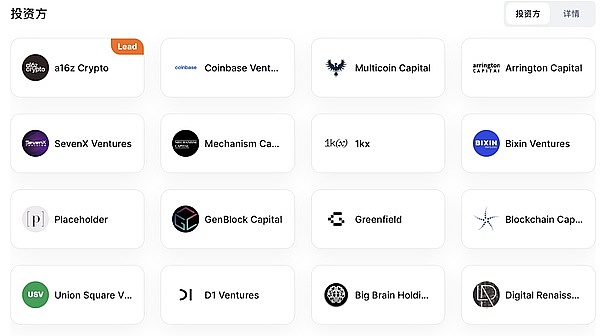
  • 融资情况Arweave 自成立以来,通过多轮融资,成功筹集了 3730 万美元的资金,主要投资方包括 Andreessen Horowitz(a16z)、Union Square Ventures、Multicoin Capital、Coinbase Ventures 等知名机构。

    IFet8LdzPb6GocM3RkUHdlO0pvNoUAFjwLoKAoC3.png

    赛道优势分析Arweave 属于去中心化数据存储赛道,通过其创新的区块编织(Blockweave)技术,实现了永久存储数据的功能。该项目的核心目标是提供一个高效、安全且可扩展的数据存储解决方案,使数据能够永久保存且不可篡改。

  • 永久存储:用户只需支付一次性费用,即可将数据永久存储在 Permaweb 上,无需每月订阅费用。

  • 去中心化:通过去中心化的方式存储数据,减少了依赖中心化服务器的风险。

  • 强大的支持:Arweave 获得了包括 a16z、Coinbase Ventures 和 Union Square Ventures 等知名投资者的支持。

  • 广泛应用:被 OpenSea 和 Solana 的 NFT 项目 Metaplex 用作默认元数据存储平台,确保了 NFT 数据的长期有效性。

未来展望

AR币的未来展望取决于多种因素,包括:

数据存储市场的增长:如果数据存储市场持续增长,Arweave可能会从中受益,从而推动AR币的需求和价格上涨。网络的持续发展:Arweave网络的持续发展和创新将增强其竞争力,并进一步提高AR币的价值。加密货币市场的波动:AR币作为一种加密货币,其价格仍将受到加密货币市场波动性的影响。监管环境:监管环境的变化,例如加密货币交易所的监管,可能会影响AR币的流通性和价格。总体而言,AR币的前景看好,但其价格可能会继续面临波动性。长期来看,Arweave网络的持续发展和对数据存储需求的增长有望提振AR币的价格。

Lecturas Relacionadas

Has Microsoft Lost Its Way in the AI Race, and Can Copilot Bring It Back on Track?

Microsoft, once seen as an early AI frontrunner due to its investment in OpenAI, is navigating a strategic shift amid increased competition. Its initial reliance on OpenAI’s GPT models has been complicated by OpenAI’s growing ambitions as a direct competitor, rapid advancements from rivals like Claude and Gemini, and the disruptive rise of AI agents, which challenge its traditional SaaS business model. These factors contributed to stock declines and slower-than-expected adoption of its flagship Copilot products. In response, CEO Satya Nadella has taken a hands-on role in product development, signaling the urgency of change. Microsoft is pivoting from a model-centric strategy to a "model-agnostic" enterprise platform approach. It aims to become the foundational layer connecting various AI models—from OpenAI, Anthropic, or its own new "Superintelligence" team—with enterprise workflows, data, security, and cloud services. Recent organizational changes merged consumer and enterprise Copilot teams to accelerate innovation, exemplified by new products like Copilot Tasks and Copilot Cowork. However, this transformation comes at a high cost. Microsoft faces massive capital expenditures, potentially reaching ~$190 billion by 2026, to support AI infrastructure. While its platform strategy shows early signs of traction with growing Azure AI revenue, it must balance startup-like agility with the reliability expected by enterprise clients. The core challenge is no longer being the sole AI winner but defending its position as the essential enterprise software entry point amidst rapid technological commoditization and the shift towards always-on AI agents.

marsbitHace 7 min(s)

Has Microsoft Lost Its Way in the AI Race, and Can Copilot Bring It Back on Track?

marsbitHace 7 min(s)

Why Haven't Forex Stablecoins Taken Off?

Why FX Stablecoins Never Took Off: A Path Forward via Synthetic FX Despite the explosive growth of stablecoin-powered digital banking, which has seen ~$6B in VC investment and a 24x surge in crypto card spending in under a year, a major limitation persists: these banks are essentially dollar-only accounts. This leaves 95-99% of global accounts, which are denominated in non-USD currencies, underserved. Attempts to create native foreign currency (FX) stablecoins (like EURC) have largely failed, with total FX stablecoin TVL at ~$600M compared to $400B for USD stablecoins—a 700x gap. These FX tokens face critical challenges: fragile pegs due to low liquidity, limited exchange/FinTech acceptance, poor on/off-ramps, complex regional compliance, and a chicken-and-egg adoption problem. The article argues that the solution lies not in competing with entrenched USD stablecoin networks (USDT/USDC), but in adopting a synthetic FX model inspired by traditional finance. Specifically, it advocates for Mark-to-Market Non-Deliverable Forwards (NDFs)—cash-settled FX derivatives that allow users to maintain underlying USD stablecoin holdings while having their account balance and P&L denominated in a foreign currency. This approach offers key advantages: strong oracle-based pegs, retention of deep USD stablecoin liquidity and yield, superior on/off-ramps, scalability to any currency with a reliable feed, and capital efficiency. It mirrors how modern institutional FX markets operate. Primary use cases for on-chain NDFs include: 1. **Digital Banks/Wallets:** Enabling multi-currency accounts for international users without leaving the USD stablecoin ecosystem, boosting deposits and retention. 2. **FX Carry Trade Vaults:** Offering access to sovereign interest rate differentials (e.g., earning yield on BRL) in a more stable and scalable format than crypto-native products like Ethena. 3. **Global Enterprise Payments:** Allowing merchants to receive payments in local currency equivalents while settling in USD stablecoins, similar to services offered by Stripe for fiat. The conclusion is that synthetic FX, not native FX stablecoins, is the viable path to integrating foreign exchange into the growing stablecoin digital banking landscape, potentially unlocking the next phase of institutional DeFi and multi-trillion-dollar global adoption.

链捕手Hace 42 min(s)

Why Haven't Forex Stablecoins Taken Off?

链捕手Hace 42 min(s)

IOSG Founder: Web3 Is 'Losing Blood,' How Can Practitioners Survive Better?

IOSG Founder: Web3 Is "Bleeding Out" – How Can Practitioners Survive Better? In a candid reflection, the founder of IOSG Ventures voices deep concerns about the current state of Web3, describing an ecosystem experiencing severe "blood loss." Despite the recent MuShanghai event showcasing a successful pivot towards a more diverse, global community, a somber reality persists: many crypto-native attendees were there exploring exits or new labels in biotech, AI, and robotics. The core issue is identified as a breakdown in the ecosystem's positive feedback loop. Alarmingly, underestimated "low-probability bad events" are occurring simultaneously: a significant brain drain of Chinese developers to AI, a lack of breakout applications despite massive funding, and a widening credibility gap for practitioners globally, often stigmatized as scam artists. This has created a dire接班人 (successor) problem, with the next generation seeing little professional prestige or financial upside in crypto compared to fields like AI. A significant portion of the critique focuses on Ethereum and Vitalik Buterin. While not pessimistic about Ethereum's technology, the founder worries that critical development windows were missed by focusing on niche technical narratives like ZK and L2 instead of mass-market applications. A more urgent concern is that Vitalik may be isolated in an "information bubble," shielded from the grassroots community's hardships by layers of intermediaries, preventing crucial feedback from reaching him. The call is for Vitalik to return to a founder's mindset, re-engage directly with the community, and rally efforts for the next decade. The divergence between U.S. and Chinese OG (Original Gangster) ecosystems is stark. While many U.S. builders reinvest their wealth into the ecosystem, the Chinese scene suffers from a severe lack of "造血能力" (blood-making ability), with most market-driven funds struggling and many early success stories cashing out entirely. This threatens the entire Asian Web3 ecosystem's survival. For individual practitioners, survival advice is pragmatic: find your core "why," maintain life balance beyond token prices, continuously learn new skills (like AI), form small, trusted alliances for mutual support, and practice self-compassion. The industry's greatest need is not money or tech, but lighthouses—individuals at all levels who offer mentorship, grants, referrals, and honest reflection to guide others. The piece concludes with a direct appeal: OGs must pay forward the opportunities the industry gave them; founders must not struggle alone; and builders must continue their work, ensuring it remains a viable profession. The survival of Web3's "cathedral" depends not on any single leader but on the collective responsibility of everyone who remains.

marsbitHace 1 hora(s)
IOSG Founder: Web3 Is 'Losing Blood,' How Can Practitioners Survive Better?

marsbitHace 1 hora(s)

Deficits, Inflation, and the New Fed: The Deep Logic Behind US Bond Yields Breaking 5% and the Market Reset

In the week of May 15-19, 2026, U.S. long-term Treasury yields surged to multi-year highs, with the 30-year yield hitting 5.2%, a level unseen since 2007, and the 10-year yield climbing to 4.687%. Equity markets declined in response. Four primary factors are driving the rise in yields. First, stubborn inflation persists, with April wholesale prices rising 6% year-over-year, fueling expectations of potential future Fed rate hikes instead of cuts. Second, newly confirmed Fed Chair Kevin Warsh inherits a complex inflation battle, with markets closely awaiting his first FOMC meeting. Third, deteriorating U.S. fiscal health, marked by large deficits and rising debt servicing costs, is eroding the traditional "safe-haven" premium for Treasuries. Fourth, the "One Big Beautiful Bill" tax cuts are projected to add trillions to the national debt, contributing to Moody's recent credit rating downgrade. Rising yields pressure stocks through several channels: a higher discount rate reduces the present value of future earnings (especially for growth stocks); rising risk-free rates compress equity risk premiums, making bonds relatively more attractive; higher borrowing costs impact consumers and corporations; and a stronger dollar affects multinational earnings. For investors, the environment favors value and financial stocks over long-duration growth stocks. Bond investors find attractive yields in short to intermediate maturities, while income investors see the best fixed-income opportunities in over a decade. Key developments to watch include Chair Warsh's first FOMC meeting, upcoming inflation data, Treasury auction demand, and whether the 30-year yield approaches 6%, a level that could trigger a more sustained equity valuation reset. The bond market's message is clear: the era of cheap government borrowing is over, posing a central challenge for markets in late 2026.

marsbitHace 1 hora(s)

Deficits, Inflation, and the New Fed: The Deep Logic Behind US Bond Yields Breaking 5% and the Market Reset

marsbitHace 1 hora(s)

Trading

Spot
Futuros

Artículos destacados

Cómo comprar AR

¡Bienvenido a HTX.com! Hemos hecho que comprar Arweave (AR) sea simple y conveniente. Sigue nuestra guía paso a paso para iniciar tu viaje de criptos.Paso 1: crea tu cuenta HTXUtiliza tu correo electrónico o número de teléfono para registrarte y obtener una cuenta gratuita en HTX. Experimenta un proceso de registro sin complicaciones y desbloquea todas las funciones.Obtener mi cuentaPaso 2: ve a Comprar cripto y elige tu método de pagoTarjeta de crédito/débito: usa tu Visa o Mastercard para comprar Arweave (AR) al instante.Saldo: utiliza fondos del saldo de tu cuenta HTX para tradear sin problemas.Terceros: hemos agregado métodos de pago populares como Google Pay y Apple Pay para mejorar la comodidad.P2P: tradear directamente con otros usuarios en HTX.Over-the-Counter (OTC): ofrecemos servicios personalizados y tipos de cambio competitivos para los traders.Paso 3: guarda tu Arweave (AR)Después de comprar tu Arweave (AR), guárdalo en tu cuenta HTX. Alternativamente, puedes enviarlo a otro lugar mediante transferencia blockchain o utilizarlo para tradear otras criptomonedas.Paso 4: tradear Arweave (AR)Tradear fácilmente con Arweave (AR) en HTX's mercado spot. Simplemente accede a tu cuenta, selecciona tu par de trading, ejecuta tus trades y monitorea en tiempo real. Ofrecemos una experiencia fácil de usar tanto para principiantes como para traders experimentados.

674 Vistas totalesPublicado en 2024.12.11Actualizado en 2025.03.21

Cómo comprar AR

Discusiones

Bienvenido a la comunidad de HTX. Aquí puedes mantenerte informado sobre los últimos desarrollos de la plataforma y acceder a análisis profesionales del mercado. A continuación se presentan las opiniones de los usuarios sobre el precio de AR (AR).

活动图片