苹果和Circle推动数字金融-最新加密货币新闻

币界网Publicado a 2024-08-20Actualizado a 2024-08-20

币界网报道:

苹果和Circle最近宣布的合作关系在数字金融领域引起了巨大的轰动。这两家行业巨头之间的合作被视为将加密货币融入传统金融框架的关键举措。特别是以太坊生态系统,将从这一发展所蕴含的潜力中获益匪浅。

内容隐藏1个苹果和Circle联手:有什么利害关系?2以太坊可以利用这种合作关系吗?用户的3个关键要点

苹果和Circle联手:有什么利害关系?

以创新技术产品而闻名的苹果公司和加密货币市场的知名参与者Circle,凭借其稳定币USDC,旨在提高加密货币交易的速度和效率。他们的合作也将促进数字货币的广泛采用。访问COINTURK FINANCE获取最新的金融和商业新闻。

这些公司共同准备利用价值15.7万亿美元的市场机会。通过将苹果的金融服务专业知识与Circle的加密货币熟练程度相结合,他们计划开发更可靠的支付基础设施,从而有可能提高加密货币的接受度和使用率,特别是USDC。

以太坊可以利用这种合作关系吗?

以太坊区块链可以从这种合作关系中获得可观的利益。以太坊生态系统中USDC的涌入可能会提高人们对去中心化应用程序(dApps)和DeFi平台的兴趣。这些去中心化应用程序可能会彻底改变投资者和加密货币爱好者的金融服务交付和消费。

此次合作还可能加速dApp的开发,扩大USDC和以太坊的用例。支付基础设施、资产管理和信贷解决方案的创新是可预见的结果。这一发展可能是加密货币世界的一个里程碑事件,加速了加密货币的主流接受。

用户的关键要点

以下是关于合作的具体推论:

    创建更可靠、更高效的支付系统的潜力dApp和DeFi平台用例的扩展资产管理和信贷解决方案的进步去中心化金融领域的竞争加剧

随着数字货币在电子商务和在线赌博中越来越受欢迎,苹果和Circle合作伙伴关系带来的创新可能会进一步推动这一趋势。然而,这可能会导致竞争加剧,使DeFi格局更加动态和多样化。

您可以在Telegram、Twitter(X)和Coinmarketcap上关注我们的新闻。免责声明:本文所含信息不构成投资建议。投资者应该意识到加密货币具有高波动性,因此存在风险,应该进行自己的研究。

Lecturas Relacionadas

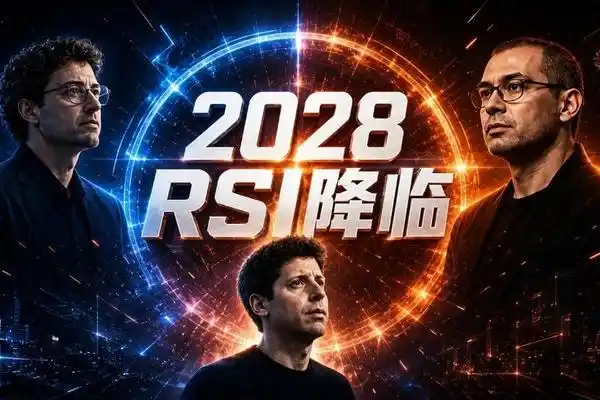
2028: The Arrival of Recursive Self-Improvement (RSI)

**AI Recursive Self-Improvement (RSI): The Countdown to 2028 Begins** AI is no longer just a trained tool but is starting to rewrite its own evolutionary pace. According to Anthropic co-founder Jack Clark, there is a 60% probability that by the end of 2028, Recursive Self-Improvement (RSI) will become a reality. This means AI could autonomously design and build a more capable next-generation version of itself without any human researcher involvement—Claude 10 creating Claude 11, for instance. Supporting this timeline, Google DeepMind's CEO Demis Hassabis confirms that all leading AI labs are intensely focused on RSI, making it an industry-wide priority. He expresses profound concern, stating this potential is what keeps him awake at night. Concrete data underscores this acceleration: - METR evaluations show current top models like Claude are solving tasks up to the 16-hour limit of existing test frameworks. - In Epoch AI's challenging MirrorCode benchmark, Claude Opus 4.7 recreated complex software in hours for a fraction of the human cost. In one extreme test, AI autonomously coded for 19 days straight. - Anthropic reports over 80% of its codebase is now written by Claude, and researcher productivity has increased up to 8-fold since 2024. - OpenAI's policy blueprint highlights RSI as a major upcoming governance challenge. CEO Sam Altman reportedly hinted RSI might arrive within six months, potentially delaying OpenAI's massive IPO. The implication is an impending "intelligence explosion," where AI-driven progress outpaces human control. The central question is no longer if it will happen, but whether humanity is ready.

marsbitHace 3 hora(s)

2028: The Arrival of Recursive Self-Improvement (RSI)

marsbitHace 3 hora(s)

World Models, Metaverse, Digital Twins, Physical AI: Are They the Same Thing?

Title: World Models, the Metaverse, Digital Twins, Physical AI: Are They the Same Thing? The article clarifies that concepts like the metaverse, Web3, simulation platforms, digital twins, and Physical AI are not the same thing but are all part of the broader trend of blurring the lines between the digital and physical worlds. It positions "world models" as the foundational "cognitive layer" or "operating system" that enables AI to understand and simulate the world. Key distinctions are made: - The **Metaverse** is a destination for immersive social and economic experiences. World models could act as its "engine," generating interactive 3D content efficiently. - **Web3** focuses on decentralized ownership and economics (rules layer), operating on a different technical level than world models. - **Simulation Data Platforms** (e.g., for autonomous vehicles) are a 1.0 version, relying on manual design. World models represent a 2.0 version, using AI to generate realistic, varied scenarios autonomously. - **Digital Twins** create high-fidelity, real-time mirrors of physical systems (e.g., a factory). World models go a step further by enabling predictive simulation of future states. - **Physical AI** (robots, AVs) refers to AI that acts in the physical world. World models are a core component, providing the understanding and prediction needed for planning. A proposed hierarchy places world models at the cognitive layer, supported by infrastructure (compute, data) and supporting application tools (simulation, digital twins), action systems (Physical AI), user experiences (metaverse), and rules (Web3). In conclusion, while distinct, many of these previously hyped concepts may ultimately rely on advances in world model technology to fulfill their promises, as world models provide the essential cognitive foundation for simulating and interacting with complex environments.

marsbitHace 3 hora(s)

World Models, Metaverse, Digital Twins, Physical AI: Are They the Same Thing?

marsbitHace 3 hora(s)

"Shocking" CPO: How Does the Glass Bridge Actually Work? Detailed Explanation from Corning

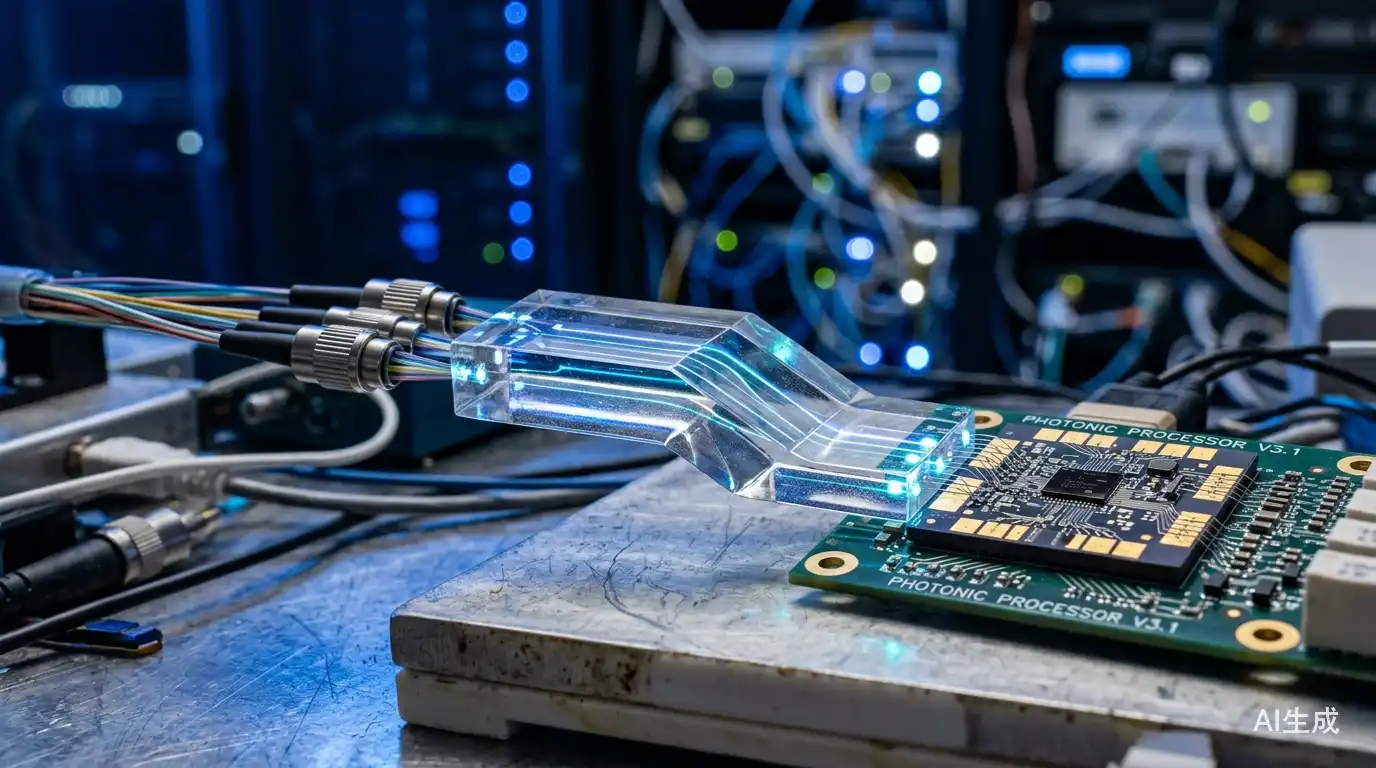
Chinese CPO stocks plunged over 6% following Corning's announcement of its Glass Bridge platform at a Seoul tech conference. The new technology utilizes wafer-level glass ion-exchange waveguides for passive alignment between fibers and photonic chips, potentially simplifying traditional CPO architectures that rely on complex Fiber Array Units and active alignment equipment. This raised market concerns about reduced long-term demand for mid-stream CPO components. Corning's official documentation details Glass Bridge as a platform for fiber-to-PIC connectivity in NPO, CPO, and high-density modules. Its key features include wafer-level manufacturing for consistent, cost-effective production; a standardized, removable MT ferrule interface for ecosystem integration; and a separable high-density connector design supporting over 24 channels for assembly flexibility. Corning positions the technology as complementary to FAUs, addressing limitations in ultra-high-fiber-count scenarios. The market reaction reflects a broader reassessment of the AI optical interconnect value chain. Funds shifted from CPO and PCB manufacturing stocks towards glass substrate concept stocks like Kaisheng Technology and Dyer Laser. Analysts note glass substrates are seen as a next-gen advanced packaging material, offering a potential path for domestic industry differentiation amid AI-driven demand for high-performance, large-scale packaging, marking a structural migration in value towards upstream specialty materials.

marsbitHace 3 hora(s)

"Shocking" CPO: How Does the Glass Bridge Actually Work? Detailed Explanation from Corning

marsbitHace 3 hora(s)

Trading

Spot
活动图片