Vitalik铸造ENS域名dacc.eth d/acc概念到底是什么?

币界网Publicado a 2024-08-19Actualizado a 2024-08-19

币界网报道:

作者:James,来源:Block Tempo

以太坊共同创办人Vitalik Buterin 曾称赞,以太坊域名服务ENS 是以太坊中最成功的非金融应用,如今据链上数据显示,他在今日中午12 时突然铸造新ENS 域名dacc.eth,并预告将在8 月22 日在X 的音讯空间谈论d/acc 的概念。
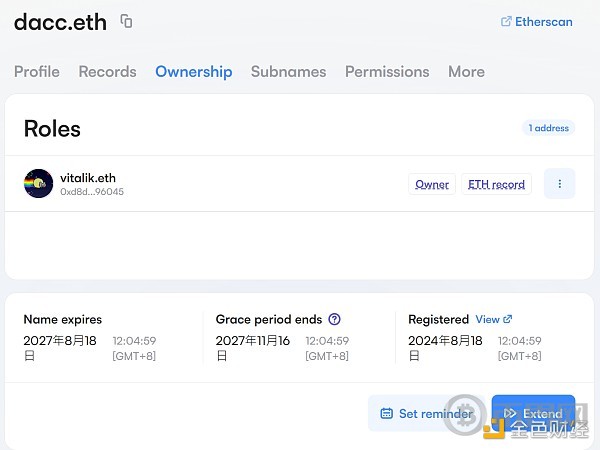
Ruk7dg39PKQR6IdHRonR0VKUJJq63bY20M0mYDLJ.jpeg

图源:app.ens.domains

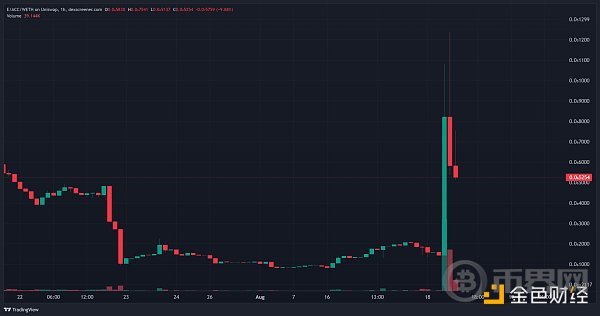
没想到,据DEX Screener数据显示,同名迷因币E/ACC 闻讯暴涨,在上述消息传出之后的15 分钟内飙涨超7 倍,使其市值达到500 万美元,不过目前已较高点回落超过63%,市值回跌至191 万美元。
S6tELAM8wBdyKezhKjsOJ0u0WxgZx63EcGGF7OPT.png
图源:DEX Screener

d/acc 是Vitalik Buterin 在去年11 月撰文提出的一个新概念,随后同名迷因币d/acc 便横空出世,不过到了去年12 月,便传出项目方已放弃营运,币价趋近归零,尽管今日因Vitalik 而暴涨,但官网已经消失。

d/acc 是什么?

去年11 月,Vitalik Buterin 在该篇文章探讨了他对技术乐观主义(techno-optimism)、 AI 风险和在当今世界的环境中如何避免中心化的方法。

Vitalik Buterin 认为,虽然技术进步有其风险,但它的益处远大于它可能带来的危害,人们不应只是盲目追求利润,而应有意识地选择技术发展的方向,以确保技术进步能够为人类带来更好的未来。

针对如何解决技术发展与中心化的矛盾, Vitalik Buterin 提出防御加速主义「d/acc」,与矽谷流行的有效加速主义「e/acc」之间,对技术发展的态度有显著差异:

  1. e/acc:这个词由ChatGPT 诞生后,在矽谷新创圈广为流传,这一观点强调技术进步的巨大好处,并渴望加速这种趋势以更快带来这些好处,e/acc 支持者通常对现有监管机构如FDA 在药品和新技术审核上的保守态度表示不满,认为这延迟了生命拯救治疗的推出。

  2. d/acc:强调防御、去中心化、民主和差异化,寻求创建并维护一个更民主的世界,并试图避免将中心化作为解决问题的首选方法。 d/acc 主张详细的风险处理计划,但旨在避免过度集中权力。

Vitalik Buterin 主张建立「防御优先」的世界观,认为一个偏向防御的世界是一个更好的世界,因为它不仅直接提高了安全性,减少了冲突,还使健康、开放和尊重自由的治理形式更容易蓬勃发展,他在文章中对「d」所代表的涵意做了以下延伸:

『D』可以是防御(Defence)、去中心化(Decentralization)、民主(Democoracy)和差异(Differential)。 」

两者对AI 威胁人类看法有何不同?

d/acc 对AI 潜在威胁抱持较谨慎态度,认为权力集中可能导致AI 被滥用,因此强调去中心化和多元参与,让更多人能监督和影响AI 的发展。 d/acc 认为,透过分散式技术和开放透明的决策过程,可以降低AI 被少数人控制并用于危害人类的风险。

e/acc 则对AI 潜在威胁较为乐观,认为AI 发展是不可避免的趋势,只要加速发展,就能及早实现超级智能,解决人类面临的各种挑战。 e/acc 较少关注AI 可能带来的风险,更倾向于相信科技进步最终能造福人类。


Criptos en tendencia

Lecturas Relacionadas

Just now, DeepSeek V4 updates with DSpark, improving inference speed by 80%

DeepSeek has updated its DeepSeek V4 model with the DSpark speculative decoding framework, achieving a significant 60-85% speedup in generation for Flash models and 57-78% for Pro models while maintaining the same overall throughput. This engineering-focused update, rather than a core architectural change, introduces DSpark to address latency and throughput bottlenecks in high-concurrency production environments. DSpark combines high-throughput parallel generation with adaptive load-aware verification. Its key innovations include a semi-autoregressive generation architecture to model dependencies within token blocks and a hardware-aware confidence-scheduled verification system. This system uses a confidence head to predict token acceptance probabilities, allowing it to dynamically optimize verification length per request and allocate compute only to tokens with the highest expected payoff. The asynchronous scheduler is designed for real-world deployment, ensuring zero-overhead scheduling and continuous CUDA graph replay while preserving the target model's output distribution. In tests across mathematical reasoning, code generation, and daily dialogue, DSpark outperformed state-of-the-art models like Eagle3 and DFlash, increasing average acceptance length by 26.7%-30.9% and 16.3%-18.4% respectively on Qwen3 target models. DeepSeek also open-sourced DeepSpec, a full-stack codebase for training and evaluating speculative decoding draft models, providing a standardized toolkit that includes data preparation tools, model implementations, training code, and evaluation scripts.

marsbitHace 3 hora(s)

Just now, DeepSeek V4 updates with DSpark, improving inference speed by 80%

marsbitHace 3 hora(s)

BIT Research: The 2028 Halving Is Not the End, the Real Shake-Up of the Bitcoin Mining Industry Is Just Beginning

The Bitcoin mining industry is undergoing its most complex structural adjustment since inception. Despite Bitcoin's price holding near $61,000 and the network hash rate approaching a record 1 ZH/s, miner profitability is deteriorating. The industry is operating close to its breakeven point, with the 2028 halving expected to accelerate consolidation. The challenges extend beyond the halving's subsidy reduction; the industry's revenue model has yet to successfully transition towards a fee-driven structure. Increasingly, mining companies are evolving from simple Bitcoin producers into infrastructure and energy operators, including providers of AI/HPC computing power. Competition is shifting from pure hash rate expansion to business model upgrades. Economic pressure is evident. The theoretical daily mining revenue at current prices is around $78 million, yet the actual figure is only about $33 million—a 136% gap. Transaction fees remain low at roughly $220k daily, far below historical implied levels. With a current estimated industry-wide breakeven price near $65,000, mining alone is struggling to generate ideal profits. The 2028 halving is projected to push the fundamental production cost floor to approximately $93,289. This will likely accelerate a shift towards consolidation among larger, well-capitalized miners with diversified revenue streams. Competitive advantage will belong to institutionalized players with access to low-cost energy, AI/HPC hosting operations, and stronger balance sheets. In essence, Bitcoin mining is transitioning from a "mining business" to an "infrastructure business." Future profitability and resilience will depend less on block rewards and more on diversified income sources like energy management and computational infrastructure services. For investors, the key question is not the halving itself, but which miners can successfully navigate this business model transformation.

marsbitHace 4 hora(s)

BIT Research: The 2028 Halving Is Not the End, the Real Shake-Up of the Bitcoin Mining Industry Is Just Beginning

marsbitHace 4 hora(s)

This is How God Karpathy Uses Claude?

Andrej Karpathy, a prominent figure in AI, has reportedly joined Anthropic, leading to a noticeable decrease in his open-source contributions and social media activity. A document claiming to be his personal "CLAUDE.md" file—a set of instructions for the Claude AI to follow within a specific codebase—has been circulating online. While its authenticity is unverified, the content aligns closely with Karpathy's publicly shared principles on effective AI-assisted programming. The document outlines key rules for AI coding assistants, emphasizing the importance of reading existing code thoroughly before writing new code to maintain consistency. It advises against over-engineering, advocating for simple, surgical modifications that match the project's existing style. Other guidelines include clarifying assumptions upfront, writing meaningful tests, thoughtful debugging, and carefully considering dependencies. The core message is that these principles help prevent common AI coding failures, such as introducing unnecessary abstractions, style drift, or making invisible architectural decisions. The community has noted that even experts like Karpathy require detailed instructions to guide AI effectively, akin to managing a junior developer. A related GitHub repository, "andrej-karpathy-skills," which encapsulates these ideas, is reported to significantly reduce Claude's code error rate. Ultimately, the advice stresses that the best CLAUDE.md is tailored to one's own tech stack and coding practices.

marsbitHace 4 hora(s)

This is How God Karpathy Uses Claude?

marsbitHace 4 hora(s)

Trading

Spot

Artículos destacados

Cómo comprar ENS

¡Bienvenido a HTX.com! Hemos hecho que comprar Ethereum Name Service (ENS) sea simple y conveniente. Sigue nuestra guía paso a paso para iniciar tu viaje de criptos.Paso 1: crea tu cuenta HTXUtiliza tu correo electrónico o número de teléfono para registrarte y obtener una cuenta gratuita en HTX. Experimenta un proceso de registro sin complicaciones y desbloquea todas las funciones.Obtener mi cuentaPaso 2: ve a Comprar cripto y elige tu método de pagoTarjeta de crédito/débito: usa tu Visa o Mastercard para comprar Ethereum Name Service (ENS) al instante.Saldo: utiliza fondos del saldo de tu cuenta HTX para tradear sin problemas.Terceros: hemos agregado métodos de pago populares como Google Pay y Apple Pay para mejorar la comodidad.P2P: tradear directamente con otros usuarios en HTX.Over-the-Counter (OTC): ofrecemos servicios personalizados y tipos de cambio competitivos para los traders.Paso 3: guarda tu Ethereum Name Service (ENS)Después de comprar tu Ethereum Name Service (ENS), guárdalo en tu cuenta HTX. Alternativamente, puedes enviarlo a otro lugar mediante transferencia blockchain o utilizarlo para tradear otras criptomonedas.Paso 4: tradear Ethereum Name Service (ENS)Tradear fácilmente con Ethereum Name Service (ENS) en HTX's mercado spot. Simplemente accede a tu cuenta, selecciona tu par de trading, ejecuta tus trades y monitorea en tiempo real. Ofrecemos una experiencia fácil de usar tanto para principiantes como para traders experimentados.

202 Vistas totalesPublicado en 2024.12.10Actualizado en 2026.06.02

Cómo comprar ENS

Discusiones

Bienvenido a la comunidad de HTX. Aquí puedes mantenerte informado sobre los últimos desarrollos de la plataforma y acceder a análisis profesionales del mercado. A continuación se presentan las opiniones de los usuarios sobre el precio de ENS (ENS).

活动图片