加密友好银行Customers Bank受联邦储备审查 揭示加密货币行业与银行系统的深层互动

币界网Publicado a 2024-08-14Actualizado a 2024-08-14

币界网报道:

来源:AiYing Compliance

随着加密货币行业在美国的不断扩展,监管机构的关注也日益增加。上周8月8日,美国联邦储备委员会对总部位于宾夕法尼亚州的Customers Bank采取了一项重大的执法行动,这标志着美国政府在加密货币相关业务上逐步加大了监管力度。

Customers Bank作为一家服务于加密货币行业的金融机构,近年来通过其数字资产服务和基于分布式账本的Customer BankInstantTransfer (CBIT) 平台吸引了大量客户。Customers Bank是继Signature Bank和Silvergate Bank后仅存不多的几家能支持较大规模业务的美国银行,加密行业的一些大牌公司,包括Galaxy Digital、Coinbase和Circle也是它的主要客户。

然而,这也引起了监管机构的密切关注。联邦储备委员会在对该银行进行的“近期检查和审查”中发现了管理和反洗钱(AML)合规方面的“重大缺陷”,这些问题被认为是可能对金融系统构成威胁的隐患。这与之前Aiying艾盈在6月份写的一篇文章《加密友好银行Customers Bank清理不活跃账户:加密对冲基金或面临开户难问题》——根据三位知情人士透露,Customers Bank已经通知了一些对冲基金客户,无法再为他们提供银行服务。现在有更清晰的原因了。

具体来说,联邦储备委员会下达了13页执法文件要求Customers Bank在未来与任何加密货币公司建立新的银行关系之前,必须提前30天通知。更为严厉的是,该银行必须彻底改革其风险管理和反洗钱合规计划,特别是在处理与加密货币相关的业务时。这不仅是对Customers Bank的严格约束,也是对整个加密货币行业的警示,显示出美国政府正在采取更加严厉的措施来控制这一新兴领域。以下是Aiying艾盈梳理执法文件的主要要求:

  • 董事会监督:Bancorp和Bank的董事会需在60天内提交计划,加强对机构管理层和运营的监督,确保遵守BSA/AML和OFAC规定。

  • 风险管理:需制定改善数字资产战略的风险管理计划,包括制定政策、确保人员具备专业知识、提供足够资源等。

  • BSA/AML合规计划:Bank需在60天内提交修订后的BSA/AML合规计划,确保符合相关法规要求,并进行全面的风险评估。

  • 客户尽职调查:需修订客户尽职调查程序,确保收集、分析和保存所有客户的完整和准确信息。

  • 可疑活动监控与报告:需改进监控系统,确保及时、准确地识别并报告所有已知或可疑的违法或可疑交易。

  • 交易审查:Bank需聘请第三方独立顾问审查指定时间段内的交易监控活动,确保可疑活动被适当地识别和报告。

  • OFAC合规:需提交增强OFAC合规的计划,包括改进筛选程序和风险评估方法。

  • Bancorp和Bank的董事会需在每个季度末后45天内提交进展报告,详细说明为遵守本协议所采取的措施及其结果。

据Aiying了解这一监管行动对Customers Bank造成了直接的冲击。在联邦储备委员会宣布这一决定后,该银行的股价一度下跌超过20%,虽然最终跌幅收窄至13.3%,但这一市场反应无疑反映了投资者对监管压力的担忧。

后面Customers Bank随即表示,它正在采取一系列措施来应对联邦储备委员会的要求,承诺将加强其风险管理实践和反洗钱合规程序。该银行的首席风险官乔安·切尼(Joan Cheney)在声明中表示,银行致力于满足监管机构的期望,并正在努力纠正发现的问题。

加密行业与银行业流动性压力测试的互为影响

最近Tether的首席执行官保罗·阿尔多伊诺在接受采访时表达了他对MiCA法规的强烈不满。MiCA法规于2023年6月30日正式生效,对稳定币和加密货币业务施加了严格的限制。该法规规定,所有在欧盟经济区运营的稳定币发行商必须确保至少60%的储备资金存放在欧盟银行账户中。详情可阅读《欧盟MiCA法案对稳定币使用限制的深度解析与最新调整》,《欧洲MiCA法案万字研报:全面解读对Web3行业、DeFi、稳定币与ICO项目的深远影响》他指出,虽然法规的初衷是为了增强系统安全性,但实际上,这样的规定可能会造成“巨大的系统性风险”。阿尔多伊诺特别提到,金融机构通常采用的是部分准备金银行制度,即银行只保留一小部分存款作为可用资金,而大部分资金则用于其他投资或贷款业务。这意味着,如果银行出现流动性问题,可能会导致无法满足储户的大规模提款需求,从而引发银行挤兑。

这个很好理解,要知道自2020年3月以来,由于新冠疫情的经济影响,美联储将银行的准备金率下调至0,这意味着美国的银行目前无需持有法定准备金,理论上根据货币乘数的理论是可以无限创造存款货币的。当然也还会现实条件比如像《巴塞尔协议》要求的8%充足率,市场贷款需求限制等因素无法实现,但是算是相当宽松的要求了,意味着银行兜里有1块钱,其实也能做上百块钱的贷款,杠杆是加满了。因此稍微有流动性紧张导致银行挤兑,那基本上没有银行能幸免于暴雷。

因此2023年初,美国银行业经历了一场严重的危机,硅谷银行(Silicon Valley Bank)、Signature Bank和Silvergate Bank相继倒闭。此外,First Republic Bank随后也在5月倒闭,而PacWest Bancorp、Western Alliance Bancorporation、Zions Bancorporation和Comerica Incorporated等银行虽然未倒闭,但同样面临着股票暴跌、存款外流和市场恐慌的严峻挑战。而Circle由于将部分USDC的储备金存放在硅谷银行。间接也导致了USDC的脱锚,对美元的汇率跌至约 0.87美元。

后面这场危机得益于美国联邦存款保险公司(FDIC)的介入,对于硅谷银行、Signature Bank和First Republic Bank等倒闭的银行,FDIC迅速接管了这些银行的资产和负债,保护存款人的利益。美联储也在危机期间推出了“银行定期融资计划”(BankTermFunding Program, BTFP),为银行提供额外的流动性支持,以应对存款外流和流动性紧张的情况。这些措施快速干预帮助遏制了市场恐慌,防止了危机的进一步蔓延,不然大概率USDC也可能成为第二个UST,连锁反应像USDT、BUSD等银行机构一样会出现流动性紧缺的问题,没有一家银行能真正经得起挤兑的考验,因此要是当时不立马采取流动性补救措施,不夸张的说整个加密行业市值也可能直接缩水60%以上(个人主观判断)。

而各地区无论是香港、新加坡、欧洲等稳定币发行商必须确保足够的储备资金存放在银行账户中,如果是100%准备金,那风险就都在银行上面,银行哪天流动性出现问题,那就跟着一块倒霉,如果低于100%,那其实稳定币发行商是在充当“影子银行”的角色,在银行准备金率、货币乘数上的杠杆之上又加了一层杠杆,这相当于把银行本身的流动性危险系数又接着放大了。

就Aiying艾盈跟一些头部的机构了解,由于银行体系风险偏好的问题,他们对加密机构都抱有偏见或是厌恶的态度,因此对于这些稳定币发行商、OTC机构、托管机构、等现金都基本集中在手里几个能开通的银行账户中,而且有好一些是不知名的小银行机构,以此来满足业务上的转账需求。因此就上周出现的欧美日市场,股债汇三杀的情况,说明市场流动性其实仍处于非常紧绷状态,只是还没涉及到像上次硅谷银行、包括全球最大的金融机构之一瑞信这种“心脏”的缺血情况,这次更多像是脚抽筋的症状,总体用中医角度来说就是气血两虚,在淤堵没疏通之前,这都是“中风”的前兆。以此,Aiying艾盈在跟周围机构朋友交流的时候,也在提醒他们,注意银行账户,尽量分散风险,或者在淤堵还没疏通之前,不要盲目的去扩展业务和资金体量。


Lecturas Relacionadas

a16z: In the AI Era, Company Competition for Talent Starts with Job Title Naming

The article discusses how companies in the AI era are competing for talent through strategic "title arbitrage," or the renaming of key roles to reflect and attract new, high-value capabilities. It uses Palantir's creation of the "Forward-Deployed Engineer" (FDE) as a prime example. This title reframed client-facing technical work from a peripheral "implementation" role into a core, high-status engineering function. The move was strategic, allowing Palantir to attract talent that blended technical skill with business acumen and to dominate the market's perception of this capability. The piece argues that job titles are an organizational language that signals the value and authority of certain work. Effective new titles, like "Data Scientist" or "Site Reliability Engineer," emerge when a role's strategic importance genuinely outgrows its old name. Conversely, mere title inflation without substantive change is ineffective. For AI companies, particularly in B2B, this is a crucial strategy. AI transformation creates new high-leverage roles (e.g., "Legal Engineer," "GTM Engineer") that combine domain expertise with technical automation. By naming these roles, a company can help clients internally legitimize these change-makers. This, in turn, builds market mindshare, associating the company with the new capability. In conclusion, as AI blurs the lines between product and service, the ability to accurately name and organize the critical, client-adjacent work that defines product learning will be a key competitive advantage. The first to define this new organizational language plants a flag in the market's mind.

marsbitHace 27 min(s)

a16z: In the AI Era, Company Competition for Talent Starts with Job Title Naming

marsbitHace 27 min(s)

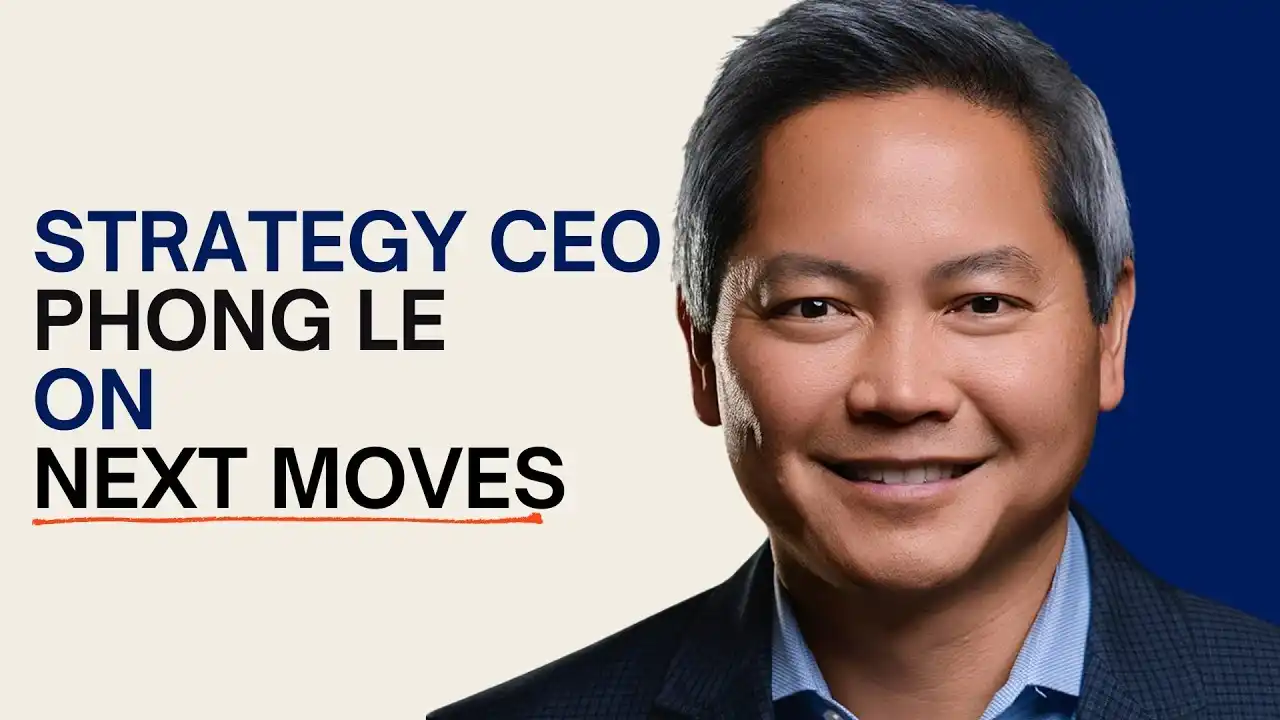
Interview with Strategy CEO: Can STRC Recover After Selling Bitcoin?

Interview with Strategy CEO Phong Le on the recent sale of 32 Bitcoin and its impact. He clarifies the move was a small, strategic action to demonstrate liquidity to debt holders, test internal processes, and prove operational discipline—not a response to fears of a "death spiral" from DeFi protocols leveraging STRC (Strategy's preferred stock product), which he notes holds less than 10% of STRC. Le emphasizes Strategy’s long-term focus as the largest corporate Bitcoin holder, using the adage that markets are a "voting machine" short-term but a "weighing machine" long-term. Decision-making is data-driven, involving the board, complex modeling, and multiple stakeholder considerations, moving beyond a founder-centric model. He outlines various capital options but stresses the strategic importance of "doing nothing" as a valid choice, citing resilience built during the 2022 bear market. Le expresses unwavering belief in Bitcoin's foundational value for global sovereignty and its future role in an AI-driven economy with trillions of autonomous agents. Addressing STRC's current price below its $100 face value, Le explains recent pressure was due to using dollar reserves for bond buybacks. He expects STRC to return to par as reserves are replenished and its semi-monthly dividend payments begin, noting the product is heavily over-collateralized. Finally, Le confirms the company sold Bitcoin the week prior to May 31st, as disclosed in an 8-K filing, leaving prediction market interpretations to others. The overarching philosophy remains "Spread Bitcoin with love," embracing all methods of gaining Bitcoin exposure.

marsbitHace 1 hora(s)

Interview with Strategy CEO: Can STRC Recover After Selling Bitcoin?

marsbitHace 1 hora(s)

IOSG Founder: Ethereum Doesn't Need Another Leap of Technical Faith, It Needs a Musk-style Compromise

Jocy, founder of IOSG Ventures, argues that Ethereum does not need renewed technological faith but a "Musk-like compromise." The recent formation of ETHLabs—funded by major ETH holders like BitMine and Lubin—highlights a market-driven move to fill a gap left by the Ethereum Foundation (EF), signaling a loss of confidence in its decentralized, hands-off approach. The core critique contrasts Vitalik Buterin's (V) idealistic, technology-first vision with Elon Musk's pragmatic, business-driven execution. The author asserts Ethereum's current shortage is not another technical roadmap but a clear, real-world application narrative and a leader willing to engage directly with commercial realities—like Musk. Internal issues are emphasized, citing EF's management problems and talent drain. While the new decentralized model with independent nodes like ETHLabs addresses the single foundation's limitations, it risks fragmentation without cohesive direction. True cohesion, the author suggests, must come from a shared, compelling narrative around ETH's value, not just from aligned financial interests. Independence claims for new entities are seen as aspirational, needing years of transparency to build trust. The ultimate threat is not competitors like Solana, but the broader shift of attention and talent toward AI. Ethereum has a limited window—12 to 18 months—to recapture focus by delivering tangible, real-world applications. The conclusion urges V to shift from abstract ideals to grounded, pragmatic leadership. The time for this crucial pivot is running out.

marsbitHace 2 hora(s)

IOSG Founder: Ethereum Doesn't Need Another Leap of Technical Faith, It Needs a Musk-style Compromise

marsbitHace 2 hora(s)

Trading

Spot
Futuros
活动图片