XRP向美国商品期货交易委员会提交二项式文件,迈出了推出现货ETF的最关键的第一步

币界网Publicado a 2024-08-14Actualizado a 2024-08-14

币界网报道:

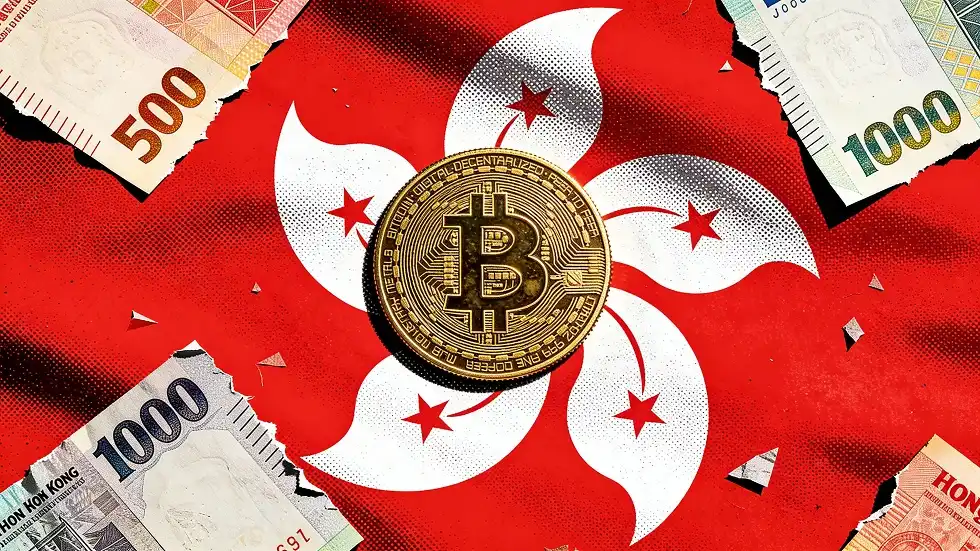
Binomial Exchange是一家受美国监管的加密货币衍生品交易所,已正式向商品期货交易委员会(CFTC)提交申请,推出XRP期货合约,这将导致XRP现货ETF Launs。

这一举措虽然本身意义重大,但代表着向潜在推出现货XRP ETF迈出了重要的第一步。一年前,法官Analisa Torres裁定XRP不是一种证券,距离Ripple诉SEC案的最终裁决不到一周。

Bitnomial XRP期货合约概述

Bitnomial于8月9日,即美国证券交易委员会诉讼结束两天后,向美国商品期货交易委员会提交了该文件,自我证明其有意在美元上列出XRP期货合约。根据文件,交易所计划从2024年8月13日开始提供这些合约进行交易。

XRP期货将以实物结算,基于100000 XRP价值的保证金合约,合约以美元交易和结算。这些合同将遵守CFTC制定的各种核心原则,包括确保透明度和保护市场参与者。

该文件还详细概述了XRP市场的现状。值得注意的是,XRP是XRP分类账的原生代币,其流通供应量约为608.6亿个代币,而最大供应量为1000亿个代币。在剩余的代币中,391亿XRP由Ripple托管。

XRP目前是流动性最强的数字资产之一,在所有加密货币中24小时交易量排名第八。在历史快照中,Bitnomial Exchange显示,XRP-USD货币对的平均月交易量超过850亿XRP。

期货合约规格及持仓限额

值得注意的是,Bitnomial的XRP期货合约具有特定的保障措施,以防止市场操纵并确保有序交易。

该交易所提议每月头寸限额为3亿XRP,相当于3000份XRP期货合约。这一头寸限额大致相当于Ripple从每月托管中释放的XRP金额,这一细节对市场具有重大影响。

有趣的是,律师Bill Morgan在回应Bitnomial的申请时指出,3亿XRP头寸限额反映了Ripple通常从每月的托管释放中使用的金额。

Morgan认为,这一事实将有助于反驳正在进行的“Ripple转储FUD”的说法,该说法声称Ripple的托管发行导致XRP在市场上表现不佳。

Bitnomial的文件还概述了交易所遵守CFTC要求的几个核心原则。这些原则确保XRP期货合约不易被操纵,并遵守严格的市场行为规则。

该交易所已采取措施防止市场混乱,包括设定头寸限额、监控交易行为和执行纪律程序。

对现货XRP ETF的更广泛影响

虽然Bitnomial的文件没有直接表明推出现货XRP ETF,但这是朝着这个方向迈出的关键一步。美国证券交易委员会(SEC)在批准现货ETF申请之前,通常会先寻找期货合约的存在。

因此,XRP期货合约的成功推出和运营可以为未来的ETF发行人探索推出XRP现货ETF奠定基础。Ripple首席执行官Brad Garlinghouse等行业领袖对最终推出现货XRP ETF表示了信心。

Bitnomial的举动与机构对加密货币资产兴趣增加的更广泛趋势相一致。去年12月,Bitnomial获得了美国清算所许可证,成为有史以来第一家获得全套经纪人、衍生品交易所和清算所许可的美国加密货币公司。

Criptos en tendencia

Lecturas Relacionadas

EF's Epic Reorganization: 20% Layoffs, Budget Halved, Is Ethereum Gearing Up for a Leaner Future?

The Ethereum Foundation (EF) has announced a major organizational restructuring, involving a 20% staff reduction (approx. 54 employees) and a division into functional clusters like Protocol, Access, User, Community, and Institutional layers. Co-founder Vitalik Buterin further revealed plans to cut the EF's budget by around 40% over the coming years, aiming to reduce its annual spending rate from about 15% to roughly 5% by 2030, transitioning to an endowment-driven model. This overhaul is seen as a long-overdue correction to the EF's ambiguous role. As Ethereum grew, the foundation faced persistent criticism over ETH sales, perceived lack of execution, and unclear strategy, often becoming a focal point for community frustration amid ETH's price stagnation. The reform aims to redefine the EF's boundaries, narrowing its focus to core protocol research, public goods funding, and ecosystem coordination, while offloading more applied development work to the broader market. Concurrently, ecosystem forces like the newly formed Ethlabs (founded by ex-EF researchers) and other independent groups are stepping in to fill the space, signaling a shift from a centralized model to a more distributed, collaborative ecosystem structure. The move was notably praised by Solana co-founder toly, who viewed a "leaner" EF as potentially more decisive and agile.

Odaily星球日报Hace 31 min(s)

EF's Epic Reorganization: 20% Layoffs, Budget Halved, Is Ethereum Gearing Up for a Leaner Future?

Odaily星球日报Hace 31 min(s)

Dragonfly Partner Haseeb: The Fastest-Growing Companies of the Future May All Get Stuck at 149 Employees

Dragonfly partner Haseeb explores the distorted economics of AI model pricing, drawing parallels to tax policy. He notes that startups and small teams (under 150 users) enjoy heavily subsidized, fixed-price AI subscriptions (like Claude Code), where the marginal cost of an additional token is effectively zero. This creates a powerful incentive for them to maximize token usage ("token-maxxing") and innovate aggressively with AI automation. In contrast, large enterprises (over 150 users) are forced onto "Enterprise" plans, paying per-token API fees with high (~75%) markups. This acts like a steep "tax" on AI-powered labor, disincentivizing marginal automation and experimental use, and encouraging them to retain more human workers. Haseeb argues this pricing creates a "150-person cliff," a regulatory notch similar to labor laws in France that discourage firms from growing past 50 employees. He predicts the fastest-growing future companies may deliberately cap their headcount at 149 to avoid the punitive enterprise pricing. This would foster an "AI-first" management philosophy obsessed with automation and outsourcing to stay lean. While not intentionally designed, this bifurcated pricing could become one of the most influential de facto tax policies, shaping how AI replaces labor—not through mass layoffs at big firms, but through agile, AI-native startups outcompeting them.

marsbitHace 42 min(s)

Dragonfly Partner Haseeb: The Fastest-Growing Companies of the Future May All Get Stuck at 149 Employees

marsbitHace 42 min(s)

How xBubble Breaks Through in the VC-Heavily-Backed OPC Economy

xBubble: Addressing the Structural Gap in the VC-Backed OPC Economy The concept of OPC (One Person Company) is evolving from a buzzword to a significant AI-driven market. While AI coding tools like Replit and Lovable have validated demand from non-technical users wanting to build applications, a key gap remains: the leap from creating a demo to running a stable, evolving business. These tools still require users to manage the development process, including technical judgments for integrations, modifications, and deployments—a major hurdle for OPCs. xBubble, by DAPPOS, tackles this by shifting from "Prompt-to-Code" to "SOP-to-Business." Instead of generating code from instructions, its core is a system of pre-organized SOPs (Standard Operating Procedures) that translate business goals—like "sell World Cup merchandise"—into complete, executable workflows. This includes generating cohesive assets, pages, payment systems, and backend logic. The platform is augmented by a network of third-party service providers who handle infrastructure (hosting, domains, payment setup), acting like "on-site service engineers." Users can pay for these services directly with xBubble credits, simplifying onboarding. This ecosystem aims to deliver not just an app, but a complete, modifiable business launch path. xBubble targets a clear OPC segment: small commercial nodes (e.g., creators, merchants) with existing products, customers, or channels, but for whom a full tech team is unjustifiable. Its potential lies in SOPs accumulating expertise from real cases, improving reliability and reducing delivery costs over time. Additionally, its native support for crypto payments caters to global or digital-native OPCs. In summary, as AI democratizes software creation, xBubble's opportunity is to prove that "SOP-to-Business" provides more immediate value for launching a real, operational business than a powerful but unstructured AI coding tool.

链捕手Hace 45 min(s)

How xBubble Breaks Through in the VC-Heavily-Backed OPC Economy

链捕手Hace 45 min(s)

If It's Not a Clear Yes, It's a No: A Nine-Year Retrospective by a VC Who Survived Four Cycles

**"Invest Only When Certain": A Nine-Year Retrospective from a VC Across Four Cycles** IOSG founder Jocy shares hard-earned lessons from nine years and over a hundred investments in Web3. The core challenge isn't identifying successful founders, but understanding why talented founders with solid ideas still fail. Through building a "failed founder database," IOSG identified six recurring failure patterns. **Founder Trait Red Flags:** 1. **Emotionally Unstable:** Founders who react defensively to criticism or publicly lash out under pressure (e.g., 80% drawdowns) often fail. Resilience is key. 2. **Lacking Hunger / Having a Fallback:** Founders with significant safety nets (family wealth, cushy fallback jobs) may lack the "do-or-die" commitment needed to survive crypto's brutal cycles. 3. **Unchecked Ego:** Includes "polished execution machines" who excel in known frameworks but struggle when paradigms shift, and "professor-types" who are technically brilliant but resistant to commercial feedback or coaching. **Project Structure Red Flags:** 4. **Token-First, Not Product-First:** Treating the token solely as a fundraising tool with no real utility or connection to product value is a major warning sign. The project should have value even if the token goes to zero. 5. **No Day-1 Exit Thesis:** Founders must have a clear, staged capital strategy from the start, understanding what each funding round needs to prove to unlock the next. "Exit before entry" is crucial. 6. **No Full-Cycle Experience:** Founders who haven't lived through a complete crypto bull/bear cycle (e.g., 2018, 2022) often underestimate their vulnerability. IOSG limits initial checks for such teams to $250k, sizing for risk. **The Positive Flipside: Desirable Founder Traits** The ideal candidate exhibits: obsessive problem-depth, being a second-time founder with a non-consensus vision, strong communication skills with *controlled* ego, relentless perseverance, and a global perspective with agency and taste (increasingly vital in the AI era). **Three Survival Tips for Founders:** 1. **Cash Flow Over Narrative:** Real revenue is what sustains projects, not vanity metrics. 2. **Tokens Are a Liability:** Avoid issuing a token unless absolutely necessary. The hidden costs (market making, liquidity, compliance) are immense, often a multi-million-dollar burden. 3. **Respect Liquidity:** Sell during peaks to build treasury, buy back to support the protocol during troughs. Be realistic about valuations and your ability to deliver for the next round. The final principle is simple yet paramount: **"If it's a borderline 'yes' or 'no,' don't invest."** In an industry that reinvents itself every few years, the discipline to consistently say "no" is the ultimate secret to longevity.

Foresight NewsHace 1 hora(s)

If It's Not a Clear Yes, It's a No: A Nine-Year Retrospective by a VC Who Survived Four Cycles

Foresight NewsHace 1 hora(s)

Trading

Spot
Futuros

Artículos destacados

Qué es XRP 2.0

XRP 2.0: Una Nueva Frontera en el Panorama de las Criptomonedas Introducción a XRP 2.0 En el siempre cambiante ámbito de las criptomonedas, nuevos proyectos surgen continuamente, compitiendo por atención y adopción. Una de estas iniciativas prometedoras es XRP 2.0, un nuevo proyecto de criptomoneda diseñado para aprovechar la tecnología blockchain avanzada y metodologías de encriptación robustas. Aunque el nombre establece paralelismos con el XRP de Ripple, es crucial señalar que XRP 2.0 opera de manera independiente, enfocándose en mejorar la seguridad de las transacciones, la privacidad y la escalabilidad. A medida que el panorama financiero digital abraza cada vez más soluciones descentralizadas, XRP 2.0 busca contribuir de manera significativa a web3 y a la expansión general de los proyectos de criptomonedas. ¿Qué es XRP 2.0? En esencia, XRP 2.0 es un proyecto de criptomoneda que busca crear un ecosistema de moneda digital seguro y descentralizado. Su tecnología fundamental integra principios avanzados de blockchain con técnicas de encriptación de vanguardia. El objetivo principal de XRP 2.0 es establecerse como una plataforma confiable y eficiente que permita la ejecución rápida de transacciones mientras prioriza la protección de la privacidad de sus usuarios. El proyecto se promociona como una solución a muchas limitaciones enfrentadas por las criptomonedas existentes, proponiendo un sistema que puede manejar un mayor volumen de transacciones con mejor velocidad y privacidad. Esta versatilidad posiciona a XRP 2.0 como un competidor significativo en un mercado plagado de diversas monedas digitales. ¿Quién es el Creador de XRP 2.0? La identidad del creador detrás de XRP 2.0 ha sido señalada como 'Wilbur.' Sin embargo, los detalles completos sobre Wilbur o su entidad asociada siguen siendo elusivos. La anonimidad de muchos creadores de criptomonedas no es un fenómeno poco común en la industria, a menudo diseñado para mantener un grado de privacidad y seguridad. ¿Quiénes son los Inversores de XRP 2.0? Hasta ahora, la información específica relacionada con las fundaciones o organizaciones de inversión que apoyan a XRP 2.0 no está disponible públicamente. En el sector de las criptomonedas, el respaldo de inversores respetables puede influir significativamente en la credibilidad y el éxito de un proyecto, sin embargo, la transparencia sobre los patrocinadores financieros de XRP 2.0 no se ha establecido. ¿Cómo Funciona XRP 2.0? XRP 2.0 se destaca al emplear una combinación de tecnología blockchain y algoritmos de encriptación avanzados que aseguran transacciones seguras y descentralizadas. Su estructura innovadora incluye características únicas diseñadas para fomentar el compromiso del usuario y ampliar las funcionalidades más allá de las transacciones convencionales de criptomonedas. Entre estas características, XRP 2.0 incorpora capacidades impulsadas por IA, como funcionalidades de texto a imagen y de texto a voz. Estas adiciones están diseñadas para mejorar la experiencia interactiva de los usuarios, promoviendo una mayor aplicabilidad en diversos sectores. Al unir avances tecnológicos con un diseño centrado en el usuario, XRP 2.0 busca captar la atención de una amplia gama de individuos y empresas que buscan integrar soluciones de criptomonedas en sus marcos operativos. Cronología de XRP 2.0 Entender XRP 2.0 requiere examinar los hitos que han definido su viaje hasta ahora: 23 de julio de 2023: Se presenta XRP 2.0 como un nuevo proyecto de criptomonedas, con el objetivo de revolucionar las capacidades de transacciones seguras y descentralizadas en el ámbito de blockchain. 8 de septiembre de 2023: Se lanza otro proyecto, XRP20, marcando la aparición de un token ERC-20 en la blockchain de Ethereum que no guarda relación con XRP 2.0. 13 de noviembre de 2023: El Libro Mayor de XRP experimenta una actualización significativa con el lanzamiento de la versión 2.0.0 del software del servidor rippled. Es esencial señalar que este desarrollo está desconectado del proyecto de criptomonedas XRP 2.0. Puntos Clave sobre XRP 2.0 Para destilar la esencia de XRP 2.0, surgen varios factores críticos: Características Únicas: La inclusión de características como texto a imagen y texto a voz impulsadas por IA diversifica aún más las aplicaciones potenciales de XRP 2.0. Tecnología Blockchain: El marco utiliza mecanismos avanzados de blockchain y protocolos de encriptación, asegurando un entorno seguro y descentralizado para las transacciones. Escalabilidad y Privacidad: XRP 2.0 prioriza la protección mejorada de la privacidad en los procesos de transacción y la escalabilidad necesaria para acomodar una base de usuarios creciente. No Afiliación con Ripple: Es importante destacar que, a pesar de su nombre, XRP 2.0 no tiene ninguna lealtad ni colaboración con el XRP de Ripple, diferenciando su marco operativo y objetivos dentro del ecosistema de criptomonedas. Conclusión XRP 2.0 representa una ambiciosa aventura en la esfera de las criptomonedas, buscando ofrecer una combinación de seguridad, privacidad y eficiencia en las transacciones digitales. Al integrar tecnologías sofisticadas y características amigables para el usuario, el proyecto se propone ampliar los horizontes de lo que la criptomoneda puede lograr en la economía digital de hoy. Si bien la anonimidad de su creador y la falta de inversores revelados pueden generar cuestionamientos para algunos, el enfoque de XRP 2.0 en funcionalidades avanzadas y descentralización realza su atractivo en un mercado de criptomonedas cada vez más abarrotado. A medida que el paisaje de las criptomonedas sigue evolucionando, XRP 2.0 podría emerger como un jugador crucial en la expansión de soluciones blockchain seguras y escalables.

187 Vistas totalesPublicado en 2024.04.05Actualizado en 2024.12.03

Qué es XRP 2.0

Cómo comprar XRP

¡Bienvenido a HTX.com! Hemos hecho que comprar XRP (XRP) sea simple y conveniente. Sigue nuestra guía paso a paso para iniciar tu viaje de criptos.Paso 1: crea tu cuenta HTXUtiliza tu correo electrónico o número de teléfono para registrarte y obtener una cuenta gratuita en HTX. Experimenta un proceso de registro sin complicaciones y desbloquea todas las funciones.Obtener mi cuentaPaso 2: ve a Comprar cripto y elige tu método de pagoTarjeta de crédito/débito: usa tu Visa o Mastercard para comprar XRP (XRP) al instante.Saldo: utiliza fondos del saldo de tu cuenta HTX para tradear sin problemas.Terceros: hemos agregado métodos de pago populares como Google Pay y Apple Pay para mejorar la comodidad.P2P: tradear directamente con otros usuarios en HTX.Over-the-Counter (OTC): ofrecemos servicios personalizados y tipos de cambio competitivos para los traders.Paso 3: guarda tu XRP (XRP)Después de comprar tu XRP (XRP), guárdalo en tu cuenta HTX. Alternativamente, puedes enviarlo a otro lugar mediante transferencia blockchain o utilizarlo para tradear otras criptomonedas.Paso 4: tradear XRP (XRP)Tradear fácilmente con XRP (XRP) en HTX's mercado spot. Simplemente accede a tu cuenta, selecciona tu par de trading, ejecuta tus trades y monitorea en tiempo real. Ofrecemos una experiencia fácil de usar tanto para principiantes como para traders experimentados.

1.4k Vistas totalesPublicado en 2024.12.10Actualizado en 2026.06.02

Cómo comprar XRP

Discusiones

Bienvenido a la comunidad de HTX. Aquí puedes mantenerte informado sobre los últimos desarrollos de la plataforma y acceder a análisis profesionales del mercado. A continuación se presentan las opiniones de los usuarios sobre el precio de XRP (XRP).

活动图片