25 Fields Medal Laureates Warn: The AI Race Is Harming Mathematics

cryptonews.ruPublicado a 2026-09-12Actualizado a 2026-09-12

Resumen

On September 11, 2026, 25 Fields Medal laureates issued an open statement titled "The Deep Mismatch Between AI and the Aims of Mathematics." They warn that the tech industry's race to use unsolved mathematical problems as benchmarks for AI performance is harming mathematics itself. The mathematicians argue that the core aim of mathematics is conceptual understanding, not merely generating true/false statements. The rapid, mass production of solutions by AI, often published hastily without proper methodology, attribution, or integration into mathematical canon, risks destroying the intellectual soil where new ideas grow. It threatens the human chain of understanding and the development of the ability to ask new questions. The immediate trigger was OpenAI's September 8 announcement. Using 10,000 AI agents over 88 hours, its internal system reportedly found a proof that Navier-Stokes equations can develop a finite-time singularity. While OpenAI stated it is not claiming the Clay Millennium Prize, similar AI-assisted results on related equations were announced by mathematicians from NYU and Anthropic. The signatories, a historic group including Artur Avila, Terence Tao, Maryna Viazovska, and Peter Scholze, acknowledge AI's potential to accelerate genuine understanding. However, they stress that whether the impact is beneficial or destructive depends on human decisions controlling the technology. They call for urgent discussion within the mathematical community and with AI deve...

On September 11, 2026, 25 Fields Medal laureates published an open statement titled 'The Profound Mismatch of AI with the Goals of Mathematics,' warning that the rush by technology companies to use the solving of mathematical problems as a way to measure the performance of neural networks is harming mathematics itself. The document is also hosted on a separate website, mathandai.org.

The authors of the statement point out: in recent months, the mathematical capabilities of large language models have grown sharply—they are already solving major unsolved problems from various areas of the discipline. The problem lies elsewhere: the goals of companies developing artificial intelligence and the goals of the mathematical community are seriously diverging.

Why Problem-Solving Is Not the Main Goal

Research mathematics is concerned with understanding the fundamental structures of forms, numbers, and natural phenomena. Famous unsolved problems have traditionally served as benchmarks by which the community measures progress—but the solution itself has always been only an indirect indicator of the main goal: conceptual understanding. The result underwent a long journey through presentations, discussions, simplifications, and only then made its way into textbooks accessible to students.

If this logic is forgotten, a tool can turn against its own purpose. According to the signatories, the mass production of 'true/false' statements at ever-increasing rates is capable of destroying the soil from which new ideas are born, rather than enriching it.

A separate grievance concerns the rush to publish. AI-claimed results are often announced without proper description of the method, without highlighting new ideas, and without citing previous work, which raises questions of attribution and potential plagiarism. The authors of the letter emphasize: without the involvement of mathematicians who integrate findings into the overall canon of the discipline, AI products will never become full-fledged mathematical knowledge, and the chain of understanding transmission between people will be lost. Years of a researcher's training are needed not only to answer a specific question but also to develop the ability to formulate new questions—and this is precisely what is at risk of disappearing.

The Catalyst: OpenAI's Announcement on Navier-Stokes Equations

The statement appeared in the context of an announcement from OpenAI on September 8, 2026. The company reported that its internal system—a model significantly surpassing GPT-6 Astra—using 10,000 agents over 88 hours of work, found a proof that the Navier-Stokes equations can develop a singularity in finite time. OpenAI emphasized that it does not claim the Clay Mathematics Institute's Millennium Prize. Work on the problem began on September 1, 2026—following rumors of progress on one of the 'Millennium Problems'.

Concurrently, mathematician Tristan Buckmaster from New York University and Levent Alpoge from Anthropic obtained similar results for simpler equations, including forced Euler equations, using AI.

Who Signed the Statement

Among the 25 initial signatories are exclusively Fields Medal laureates from different years:

  • Artur Avila, 2014

  • Manjul Bhargava, 2014

  • Caucher Birkar, 2018

  • Pierre Deligne, 1978

  • Yu Deng, 2026

  • Simon Donaldson, 1986

  • Hugo Duminil-Copin, 2022

  • Alessio Figalli, 2018

  • Martin Hairer, 2014

  • June Huh, 2022

  • Maxim Kontsevich, 1998

  • Elon Lindenstrauss, 2010

  • Pierre-Louis Lions, 1994

  • James Maynard, 2022

  • Curtis McMullen, 1998

  • Shigefumi Mori, 1990

  • Ngô Bảo Châu, 2010

  • Andrei Okounkov, 2006

  • Peter Scholze, 2018

  • Stanislav Smirnov, 2010

  • Terence Tao, 2006

  • Maryna Viazovska, 2022

  • Cédric Villani, 2010

  • Wendelin Werner, 2006

  • Efim Zelmanov, 1994

The signatories do not deny the potential of AI to accelerate genuine mathematical understanding. But, as they emphasize, whether the changes bring benefit or a destructive effect depends on the decisions of the people controlling the technology, not on the algorithms themselves.

The authors of the statement insist on an urgent discussion of the raised issues—both within the mathematical community and with the participation of companies developing AI and society as a whole. For now, two pieces of news—OpenAI's proof regarding the Navier-Stokes equations and the letter from the 25 Fields Medal laureates—have highlighted an open contradiction between the pace of technological development and the traditional mechanisms of scientific verification.

AI Opinion

From the perspective of machine data analysis, the conflict appears broader than a single article. The rush around AI's mathematical achievements fits into the overall race among companies for the status of AGI creator: OpenAI's chief scientist, Mark Chen, in a parallel piece, estimated the company's progress as '80% of the way' to AGI, and the company's president, Greg Brockman, compared the current period to the historical moment of creating general intelligence. Such context suggests that solving the Navier-Stokes problem may have served not only science but also the corporate showcase for investors.

A technical aspect glossed over in the text is the question of verification: a proof constructed by ten thousand agents over 88 hours requires independent verification by human experts before it can enter the canon, and this process historically takes years, not days. The discrepancy between the speed of generation and the speed of verification is a risk capable of devaluing the achievements themselves. Will the pace of verification remain the same if the stream of 'proofs' only grows?

end-content
Preguntas relacionadas

QAccording to the open letter, what is the core concern of the 25 Fields Medal laureates regarding the AI race and mathematics?

AThe core concern is that the technology companies' drive to use the solving of mathematical problems as a benchmark for AI performance is harming mathematical science itself. They argue this prioritizes rapid solution generation over conceptual understanding, disrupts the traditional process of integrating knowledge, and risks destroying the intellectual foundation for new ideas.

QWhat major AI achievement, mentioned in the article, served as a catalyst for the publication of the open letter by the mathematicians?

AThe catalyst was OpenAI's announcement on September 8, 2026, that its internal AI system, using 10,000 agents over 88 hours, found a proof that the Navier-Stokes equations can develop a singularity in finite time.

QBeyond the mere solving of problems, what key elements of mathematical research do the Fields Medalists fear are being bypassed by rapid AI-generated results?

AThey fear the bypassing of proper method description, identification of new ideas, citation of prior work, and the essential process of integration into the discipline's shared understanding. This undermines the development of genuine mathematical knowledge and the human chain of comprehension and questioning.

QThe article mentions a critical technical and procedural issue related to AI-generated proofs. What is this 'risk' associated with the speed discrepancy?

AThe risk is the growing divergence between the speed at which AI can generate potential proofs and the much slower, historically established pace required for independent verification and peer review by human experts. This discrepancy threatens to devalue the achievements if the verification process cannot keep up with the flood of outputs.

QHow does the article's 'AI Opinion' section frame the motivation behind tech companies' rush for mathematical AI breakthroughs?

AIt frames the motivation within the broader corporate race to claim the status of AGI (Artificial General Intelligence) creator. The achievement is suggested to serve not only science but also as a showcase for investors, with executives making high-profile claims about progress toward AGI.

Lecturas Relacionadas

US Stock Market Trends (October 16): Dow Surges Over 550 Points, TSMC's Net Profit Rises Nearly 70% but Stock Closes Lower

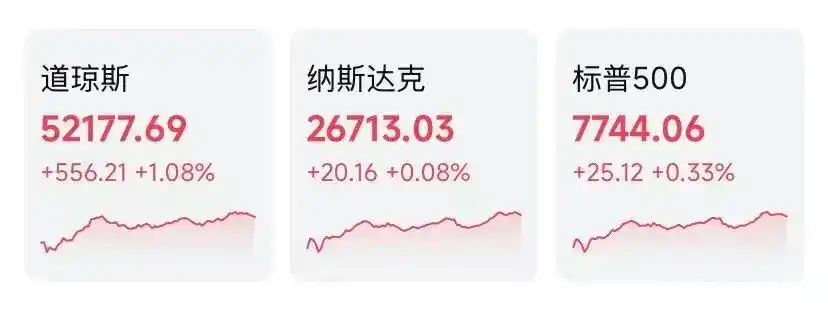
**U.S. Market Trends (October 16): Dow Jumps Over 550 Points, TSMC Falls Despite 69% Net Profit Surge** U.S. stocks reversed early losses on Thursday. The Dow Jones surged over 550 points (1.08%), while the Nasdaq Composite edged up 0.08%. The Philadelphia Semiconductor Index fell for a seventh consecutive session, closing down 0.88%. The S&P 500 rose 0.33%, with healthcare, materials, and financials leading gains. Energy and tech sectors declined. Major tech stocks were mixed. Microsoft and Alphabet gained, while Nvidia and Tesla fell. Server stocks like Dell and Hewlett Packard Enterprise dropped sharply. Despite reporting strong Q3 results—a 69% year-on-year jump in net profit and raising its full-year revenue growth forecast to ~44%—TSMC's U.S.-listed shares fell 1.80%. Investor concerns persist about funding for massive AI/data center expansions and their eventual returns. CoreWeave's stock rebounded to close nearly 6% higher after Nvidia CEO Jensen Huang stated the AI cloud provider was strengthening and did not need rescue, easing equity investor worries. However, its bonds remained under pressure due to high leverage and funding needs. Economic data showed mixed signals. September PPI surged 1.3% month-on-month (the highest since March 2022), driven by energy prices. Retail sales grew 0.8%, largely fueled by gasoline spending. Excluding autos and gas, growth was minimal. Despite hot inflation prints, Treasury yields retreated, with the 10-year near 5.09%. Oil (WTI) rose over 3%, while gold gained 2%. Bitcoin traded around $82,300. Focus turns to upcoming remarks from Fed officials ahead of the quiet period and key data like industrial production, as investors weigh inflation against growth concerns and tech sector volatility.

marsbitHace 2 min(s)

US Stock Market Trends (October 16): Dow Surges Over 550 Points, TSMC's Net Profit Rises Nearly 70% but Stock Closes Lower

marsbitHace 2 min(s)

After a Year of Farming Points, Why Am I Still Losing Money? — The Complete Guide to Avoiding Getting Rekt in Crypto Points Programs

**Title: Why Do You Still Lose Money After Grinding Points for a Year? A Complete Guide to Avoiding "Rug Pulls" in Crypto Points Programs** This article systematically analyzes crypto points farming programs and outlines a framework to assess their true profitability and avoid losses. It argues that while points offer new yield opportunities, their growing complexity often hides significant costs and risks. The author first examines the incentives from a project's perspective: points allow projects to attract liquidity and activity while deferring actual reward payouts. Ten common points-earning models are then detailed, each with its hidden "traps": 1. **Interaction Tasks:** Low capital but high gas/time costs and disqualification risks. 2. **TVL Deposits:** Easy but overlooks high opportunity costs vs. alternative yields. 3. **Lending Points:** Looping strategies amplify points but also risk and debt costs. 4. **LP Providing:** Attractive APRs can still underperform simply holding the assets due to impermanent loss. 5. **Pendle YT:** Offers high points leverage but carries time decay; the purchase price must be justified by future rewards. 6. **Perp Trading Volume:** High volumes generate large fees/slippage, often exceeding potential rewards. 7. **Spot Trading:** Costs hide in spreads, fees, and required token holdings that may depreciate. 8. **Social/Content:** Efficient for creators but time/effort should be valued. 9. **Referral/Community:** Rewards need separation from real income; carries reputational risk. 10. **Staking/Locking:** High multipliers come with lost liquidity and inability to exit during downturns. A core section explains how to value points. The theoretical value depends on Fully Diluted Valuation (FDV), the reward pool's token allocation, the user's share of total points, and vesting/listing conditions. Models should run optimistic, baseline, pessimistic, and zero-airdrop scenarios. The true cost of farming includes direct costs (gas, fees), opportunity costs (forgone yield), strategy P&L (e.g., IL, YT decay), liquidity costs, and tail risks (hacks, depegs). The article stresses calculating both absolute net profit and relative excess return versus a comparable baseline strategy. Five case studies illustrate break-even analyses for deposit, YT, lending loop, perp trading, and LP strategies, showing how easily costs can outweigh rewards. Seven red flags indicate higher "rug pull" risk: 1) Promising high multipliers without clear reward pool size, 2) Repeatedly extending seasons inflating total points, 3) Frequently changing rules, 4) Growth solely reliant on subsidies, 5) Large incentive disparities between user groups, 6) Valuations overly dependent on hype, 7) Complex/illiquid exit mechanisms. The guide concludes with a framework for prudent participation: categorize projects by risk, set clear exit conditions before entering, manage points strategies within a broader portfolio context, and use a scoring system for quick evaluation. A final 10-question checklist helps vet any new points program. The key insight is that as capital scales, securing reliable baseline yield becomes more valuable than chasing uncertain points rewards. Mature players must learn to pass on high-cost, high-risk opportunities, focusing instead on strategies with clear costs, controllable risks, and manageable exits.

marsbitHace 56 min(s)

After a Year of Farming Points, Why Am I Still Losing Money? — The Complete Guide to Avoiding Getting Rekt in Crypto Points Programs

marsbitHace 56 min(s)

Trading

Spot
活动图片