马斯克对话特朗普 泼天富贵要来了

币界网Publicado a 2024-08-12Actualizado a 2024-08-12

币界网报道:

两位在各自领域内具有巨大影响力的“喊单王”——埃隆·马斯克@elonmusk与唐纳德·特朗普@realDonaldTrump,明天(周二)上午8点(香港时间)将在推特进行一场备受期待的直播对话。

这场对话不仅会吸引全球观众的目光,更让币圈为之振奋。

马斯克甚至直言不讳想知道特朗普最喜欢的Meme币是什么,让人不得不期待新老喊单王齐聚一堂会掀起什么样的浪潮!

为什么两位巨头的观点碰撞值得期待?

马斯克作为特斯拉和SpaceX的创始人,他不仅是电动汽车和太空探索的先锋,还是加密货币的坚定支持者。他多次在社交媒体上表达对比特币、以太坊等加密货币的看好,甚至曾因一条推文引发比特币价格的剧烈波动。

而特朗普作为美国前总统,他的影响力同样不可小觑。特朗普在社交媒体上的每一次发声,都会引发广泛的讨论和争议。

特朗普曾经在竞选活动中提到加密货币,他的支持者基础庞大,许多人对他的经济政策和对加密货币的态度充满期待。

盘点“喊单王”马斯克&特朗普概念币

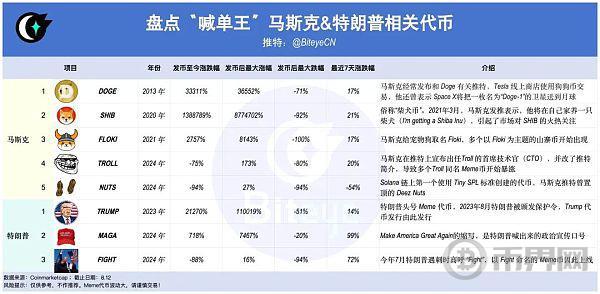
泼天富贵是不是又要来了?别急,先复习下“喊单王”相关代币的历史表现!到底是暴富,还是暴负?
马斯克:Meme币教父

马斯克在币圈影响力可以用"举足轻重"来形容。他不仅主动推广某些Meme币,更被誉为Meme币的"教父"。无数人紧盯他的推特,时刻捕捉任何Meme币机会。

典型的与马斯克相关的Meme币包括DOGE、SHIB、FLOKI、TROLL、NUTS等。DOGE自2013年诞生以来,因马斯克的频繁宣传而迅速崛起,成为目前第九大市值的加密货币。

FLOKI则是在马斯克晒出自己宠物柴犬后应运而生,现已发展出NFT、DeFi和链游等多元化项目。TROLL币在马斯克在推特宣布成为Troll 的首席技术官后迅速飙升。

可以说,马斯克的每一条推特都可能引发Meme币的狂热,他不仅推动某些Meme币的发展,更是市场的风向标,成为Meme币的带货达人,牢牢占据“教父”的地位。

特朗普:公开支持加密货币
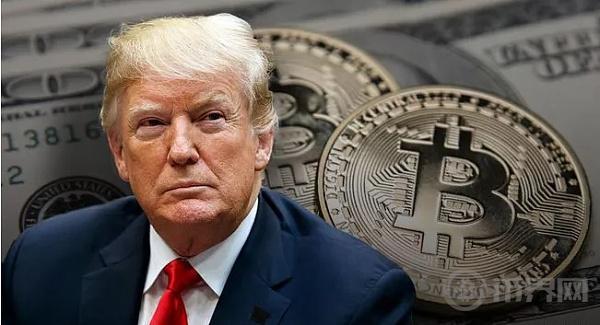
在社交媒体上,特朗普以其独特的风格和强大的影响力,常常能够引发大量的讨论和模仿。

特朗普7月份在宾夕法尼亚州竞选集会上遭遇枪击事件后,与他相关的Meme代币出现了大涨,比如TRUMP代币在24小时内涨幅高达68%。

特朗普在加密货币领域的发声主要集中在他竞选活动期间。2024年5月,特朗普宣布接受比特币、以太坊和狗狗币等加密货币作为竞选捐款,这一举动标志着他对加密货币的支持态度转变。

特朗普还在比特币会议上发表讲话,进一步表明他在竞选中将加密货币纳入重要议题。这些举动使得特朗普在加密货币领域的影响力逐渐上升,成为加密货币支持者的重要政治人物。

总结

过去,马斯克和特朗普的言论都曾引发过Meme币的短期狂热。特朗普以其独特风格和强大影响力,常常能够引发大量的讨论和模仿,加上马斯克在网络上的活跃表现,预计此次直播两人的结合很大概率会激发Meme币热潮的再度崛起。


Lecturas Relacionadas

Autonomy or Compatibility: The Choice Facing China's AI Ecosystem Behind the Delay of DeepSeek V4

DeepSeek V4's repeated delay in early 2026 has sparked global discussions on "de-CUDA-ization" in AI. The highly anticipated trillion-parameter open-source model is undergoing deep adaptation to Huawei’s Ascend chips using the CANN framework, representing China’s first systematic attempt to run a core AI model outside the CUDA ecosystem. This shift, however, comes with significant engineering challenges. While the model uses a MoE architecture to reduce computational load, it places extreme demands on memory bandwidth, chip interconnects, and system scheduling—areas where NVIDIA’s mature CUDA ecosystem currently excels. Migrating to Ascend introduces complexities in hardware topology, communication latency, and software optimization due to CANN’s relative immaturity compared to CUDA. The move highlights a broader strategic dilemma: short-term compatibility with CUDA offers practical benefits and faster adoption, as seen in CANN’s efforts to emulate CUDA interfaces. Yet, long-term over-reliance on compatibility risks inheriting CUDA’s limitations and stifling native innovation. If global AI shifts away from transformer-based architectures, strict compatibility could lead to technological obsolescence. Despite these challenges, DeepSeek V4’s eventual release could demonstrate the viability of a full domestic AI stack and accelerate CANN’s ecosystem growth. However, true technological independence will require building an original software-hardware paradigm beyond compatibility—a critical task for China’s AI ambitions in the next 3-5 years.

marsbitHace 15 min(s)

Autonomy or Compatibility: The Choice Facing China's AI Ecosystem Behind the Delay of DeepSeek V4

marsbitHace 15 min(s)

How Blockchain Fills the Identity, Payment, and Trust Gaps for AI Agents?

AI Agents are rapidly evolving into autonomous economic participants, but they face critical gaps in identity, payment, and trust infrastructure. They currently lack standardized ways to prove who they are, what they are authorized to do, and how they should be compensated across different environments. Blockchain technology is emerging as a solution to these challenges by providing a neutral coordination layer. Public ledgers offer auditable credentials, wallets enable portable identities, and stablecoins serve as a programmable settlement layer. A key bottleneck is the absence of a universal identity standard for non-human entities—akin to "Know Your Agent" (KYA)—which would allow Agents to operate with verifiable, cryptographically signed credentials. Without this, Agents remain fragmented and face barriers to interoperability. Additionally, as AI systems take on governance roles, there is a risk that centralized control over models could undermine decentralized governance in practice. Cryptographic guarantees on training data, prompts, and behavior logs are essential to ensure Agents act in users' interests. Stablecoins and crypto-native payment rails are becoming the default for Agent-to-Agent commerce, enabling seamless, low-cost transactions for AI-native services. These systems support permissionless, programmable payments without traditional merchant onboarding. Finally, as AI scales, human oversight becomes impractical. Trust must be built into system architecture through verifiable provenance, on-chain attestations, and decentralized identity systems. The future of Agent economies depends on cryptographically enforced accountability, allowing users to delegate tasks with clearly defined constraints and transparent operation logs.

marsbitHace 1 hora(s)

How Blockchain Fills the Identity, Payment, and Trust Gaps for AI Agents?

marsbitHace 1 hora(s)

Six Years Since DeFi Summer, How Will the Decentralized Financial Revolution Continue?

In 2026, the DeFi sector faces a severe trust crisis following a series of high-profile security breaches, including a $292 million theft from KelpDAO’s rsETH, a $2.85 million exploit at Drift Protocol due to permission vulnerabilities, and a $14.9 million lending failure at Venus Protocol. These incidents triggered a withdrawal of approximately $10 billion from DeFi over a single weekend, highlighting systemic risks beyond smart contract flaws—such as governance, cross-chain complexity, and operational weaknesses. Despite these challenges, on-chain finance continues to grow, with capital shifting toward safer, regulated products. Stablecoins like USDT ($185B) and USDC ($78B) have reached a combined market cap of $263 billion, while tokenized U.S. Treasuries surged to $10.93 billion. Visa’s growing USDC settlement volume, now annualized at $3.5 billion, signals increasing institutional adoption of compliant blockchain-based financial infrastructure. The competition for the future of on-chain finance is intensifying. While native DeFi struggles with trust and capital outflows, regulated products—stablecoins, tokenized assets, and ETFs—are gaining dominance by offering programmable, 24/7 settlement without high DeFi risks. Over 80 crypto projects shut down in Q1 2026, reflecting dwindling patience for speculative ventures. The core challenge for open DeFi is to rebuild trust and demonstrate irreplaceable value—or risk ceding its role as the primary entry point to on-chain finance.

marsbitHace 1 hora(s)

Six Years Since DeFi Summer, How Will the Decentralized Financial Revolution Continue?

marsbitHace 1 hora(s)

Trading

Spot
Futuros
活动图片