RLUSD 即将推出 XRP 将飙升至 1 美元

金色财经Publicado a 2024-08-09Actualizado a 2024-08-09

Ripple (XRP) 正准备推出备受期待的稳定币 RLUSD。考虑到该代币仍受到美国证券交易委员会的严格审查,该公司进军稳定币领域被称为标志性举措。
v2-a886c585788db3c2e6d2b30341fb671e_720w.webp

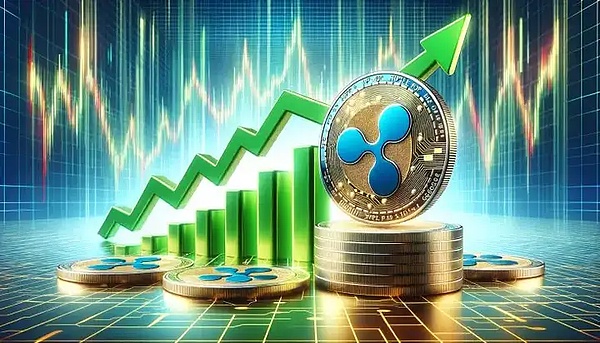
RLUSD 的推出将以多种方式帮助 Ripple。同时,这一发展也旨在提振 XRP 的价格,使其飙升至新高。XRP 最终会突破 0.65 美元并达到 1 美元吗?让我们来一探究竟。

RLUSD 推出将如何影响 XRP?

Ripple 最近一直在探索稳定币的竞争领域。该公司正准备推出其稳定币 RLUSD,以与 USDT 和 USDC 等行业巨头展开竞争。

这种稳定币的概念最早是在阿姆斯特丹 XRP 账本社区峰会上提出的。有迹象表明,它将在 2024 年某个时候推出,席卷稳定币世界。

RLUSD 对 Ripple 的好处

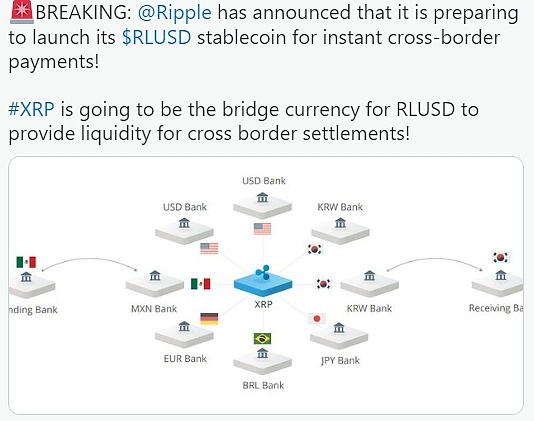
RLUSD 的推出对 Ripple 来说在许多方面都至关重要。例如,它将通过促进 XRP 分类账来帮助简化跨境支付。根据为 RLUSD 推出的新网站,该稳定币将在决定 Ripple 的未来发展方向方面发挥关键作用,包括 XRP 的价格走势及其在全球范围内的采用。
v2-e69b9a0099d768e12de2b9a5588825e6_720w.png

此举将 Ripple 的影响力扩展到机构和 DeFi 领域,使其使用案例多样化,并增强了我们的支付基础设施,使传统金融和去中心化金融的世界更加紧密地联系在一起。

资金支持

Ripple 的稳定币将 100% 由美元存款、美国政府债券和现金等价物支持,并且 Ripple 承诺每月提供第三方证明,以确保透明度,从而确保信任和可靠性。

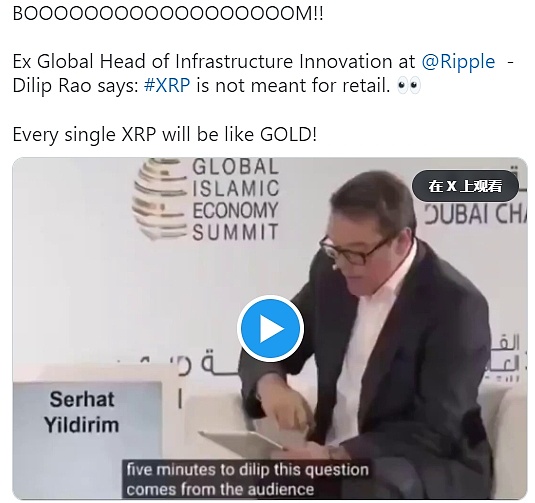
Ripple 开发稳定币符合该公司将 XRP 打造为关键机构选择的观点。正如其前基础设施创新主管 Dilip Rao 所解释的那样,Ripple 设计该代币是为了机构采用。
v2-4d24910be91b465bd05afbe123a3b160_720w.png

市场波动和稳定币

同时,稳定币与美元挂钩,不受市场波动的影响。这意味着经验丰富的投资者可以转向 Ripple 的稳定币,享受两全其美的优势。

随着美国证券交易委员会的案件逐渐接近尾声,如果Ripple能够获胜,这可能会引发XRP价格的催化飙升,甚至可能帮助该代币升至1美元大关。

XRP 正在点燃市场,价格走势正在升温,多头正在猛烈进攻。XRP 价格为 0.6127 美元,正在向关键阻力位发起冲击。

RLUSD 和 XRP:稳定币推出后可能飙升至 1 美元吗?

RLUSD 的推出可能有助于 Ripple 实现其采用指标的大幅增长。随着跨境支付的加入,大量资金可能会进入 XRP 领域,从而提升其价格前景。随着稳定币吸引更多用户,这一因素可能预示着流动性良好,从而推动 XRP 的价格上涨。

XRP 价格预测
v2-1017a33fedc6f54fa5d43af18ad5a89a_720w.webp

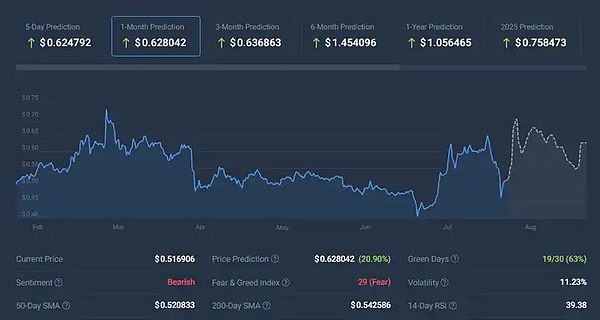
如果积极的发展继续帮助 Ripple,XRP 的价格可能在 2025 年飙升至 1 美元大关。

目前,XRP 2025 年的价格预测介于 0.317744 美元(最低)和 1.576559 美元(最高)之间。与今天的价格相比,如果 XRP 达到最高价格目标,到 2025 年,其涨幅将达到 206.68%。

简而言之

随着Ripple 在与 SEC 的法律纠纷的落幕,法律纠纷的胜利与监管不确定性已经过去,他们变得更加自信,这在 XRP 的价格上得到了明显的反映。同时稳定币的推出也有助于 Ripple 实现采用指标的大幅增长,从而吸引更多用户提升其价格前景,并帮助 Ripple 巩固其在 DeFi 和机构领域的地位。

综上所述,随着法律纠纷落幕与稳定币即将推出,这会支持 XRP 短期内的看涨前景,其投资潜力巨大,长期来看如果积极的发展继续帮助 Ripple ,预计XRP 价格会提前飙升至 1 美元大关。

Criptos en tendencia

Lecturas Relacionadas

Options Don't Work in DeFi? Vitalik Might Not Agree

For years, the prevailing view has been that options struggle to gain traction in DeFi due to complexity, fragmented liquidity, and lack of natural demand compared to products like perpetual futures. However, a recent algorithmic stablecoin design proposed by Vitalik Buterin presents a different perspective, using options not as a standalone trading product, but as foundational infrastructure for other financial instruments. In this design, one unit of ETH is split into two components: a "stable" side (P) that retains value up to a specified strike price, and an "upside" side (N) that captures all appreciation above that strike. Combined, they always equal one ETH, eliminating debt, margin, and liquidation risks inherent in typical collateralized debt position (CDP) stablecoins. The stable component essentially mimics the payoff of a covered call option. To function as a stablecoin, this structure requires continuously rolling deep in-the-money calls, which introduces challenges like rollover slippage, predictable transaction flow vulnerable to front-running, and persistent liquidity needs. A core hurdle is finding consistent buyers for the leveraged ETH upside exposure (N). While it offers leverage without funding rates or liquidation, it must compete with simpler alternatives like direct call options or perpetuals. The system's scalability depends on a sustained demand for this specific form of leverage. The author draws parallels to their experience with Rysk, where earlier versions of DeFi options protocols struggled. The breakthrough came with Rysk V12, which aligns incentives: asset holders generate yield by selling covered calls against their holdings, while market makers efficiently acquire the desired option exposure. This demonstrates that options can find product-market fit when embedded as a risk distribution and pricing engine within structured products, stablecoins, or yield-generating assets, rather than marketed as a complex direct trading instrument. Vitalik's proposal reinforces this architectural approach—using fully collateralized, non-custodial, and physically settled options as a fundamental building block. The real opportunity for options in DeFi may lie not in becoming the next perpetual swap, but in powering the next generation of on-chain financial products.

marsbitHace 34 min(s)

Options Don't Work in DeFi? Vitalik Might Not Agree

marsbitHace 34 min(s)

Conversation with Investor Zheng Di: MicroStrategy's Coin Sale Experiment, AI Economy, and Opportunities in US Stocks

Frontier tech investor Zheng "Didier" Di discusses the recent Bitcoin price drop, the financial strategy shift at MicroStrategy, the AI-driven surge in U.S. stocks, and the evolving role of crypto exchanges. Didier posits that the recent BTC decline stems less from macro factors or ETF outflows, and more from market repricing due to MicroStrategy's new financial structure. Following a wave of preferred stock and debt issuance (STRC, STRZ, etc.), MicroStrategy must now manage cash flow to pay dividends, potentially leading to a market expectation of sustained, small-scale BTC sales to maintain its "per-share bitcoin neutral" principle. Didier views this as a financial "experiment" testing market capacity for such recurring sell pressure, which, while creating near-term structural headwinds, likely avoids a true "death spiral" absent major new external shocks. Shifting to AI, Didier argues that tokens are becoming the new form of labor, with AI models and compute (tokenized inputs) increasingly replacing human roles in execution and middle-management. This drives enterprise efficiency and higher margins, fueling the sustained rally in U.S. semiconductor, data center, and infrastructure stocks. He foresees an emerging "machine economy" where automated agents transact and collaborate on-chain. Regarding crypto exchanges offering U.S. equities, Didier sees this as a natural evolution. With few crypto-native assets generating lasting value, exchanges are pivoting towards real-world assets (RWAs) like stocks and bonds. This doesn't necessarily cannibalize crypto but reflects a maturing industry focusing on blockchain's core utilities: decentralized choice and efficient settlement. He notes that trading logic for crypto natives doesn't need to drastically change, as meme-driven and fundamentalist strategies find analogs in U.S. markets. The "1011 event" (likely referring to a major market crash) severely damaged crypto market liquidity, marking a probable end to the altcoin speculative cycle, with capital flowing towards the deeper liquidity of U.S. markets. For the macro outlook, Didier is cautious about near-term market pressure from potential mega-IPOs (e.g., SpaceX) and the U.S. midterm elections, which could bring more regulatory scrutiny. Long-term, he remains bullish on AI's productivity gains and its convergence with blockchain/Web3, predicting a shift from speculative frenzy to a more institutionalized, industrial phase for the crypto sector.

marsbitHace 1 hora(s)

Conversation with Investor Zheng Di: MicroStrategy's Coin Sale Experiment, AI Economy, and Opportunities in US Stocks

marsbitHace 1 hora(s)

Playnance’s $GCOIN Lists on KoinBX Amid Rapid Growth in India

Playnance's native token, $GCOIN, has been listed on the cryptocurrency exchange KoinBX as of June 18. This move aims to enhance accessibility for its rapidly growing community, particularly in India, where the blockchain-powered Web3 iGaming ecosystem has gained significant traction. Over 130 partners in Playnance's "Be the Boss" program have built communities engaging thousands of active players in the region. The "Be the Boss" model allows participants to create and manage their own gaming communities, earning rewards tied to community activity. CEO Pini Peter noted India's high engagement, with community leaders successfully building player networks. One partner, Dr. Nicolas, reported earning over $57,000 through the program in recent months, highlighting both the financial rewards and the opportunity to grow an engaged community. $GCOIN serves as the ecosystem's core utility token, incentivizing participation and aligning the interests of players and community leaders ("Bosses"). The listing on KoinBX is part of Playnance's strategy to expand globally, increasing the token's utility and accessibility by combining community ownership, gamified engagement, and blockchain-based incentives. Founded in 2020, Playnance is a Web3 iGaming infrastructure company focused on creating live, non-custodial, on-chain products to onboard mainstream users. It currently processes approximately one million transactions daily, aiming to simplify the user experience while maintaining full on-chain transparency.

TheNewsCryptoHace 1 hora(s)

Playnance’s $GCOIN Lists on KoinBX Amid Rapid Growth in India

TheNewsCryptoHace 1 hora(s)

STRC Hits Historic Low, Saylor's Perpetual Motion Machine Grinds to a Halt

STRC, the perpetual preferred stock issued by MicroStrategy to fund its Bitcoin purchases, hit a historic low of $85.32, a 17% discount to its $100 par value. Designed as a "digital credit engine" to trade stably near par and enable continuous share issuance for buying Bitcoin, its plunge signals a breakdown in this model. Three key factors drove the decline: 1. Bitcoin's price fell over 50% from its peak, trading around $63,000 amid hawkish Fed signals. 2. MicroStrategy's cash reserves were depleted after a $1.5 billion convertible note repayment, slashing the dividend coverage for STRC's 11.5% yield to ~7 months. The company then sold 32 BTC to cover dividends—Michael Saylor's first Bitcoin sale since 2022—damaging the "never sell" narrative. 3. A competing Bitcoin-backed preferred stock, Strive's SATA, offers a higher yield (~13%) and daily dividends, drawing investors away from STRC. The drop triggers a negative cycle: STRC below par halts ATM share issuances, cutting off a key funding source for Bitcoin buys and potentially forcing more BTC sales for dividends, further eroding confidence. While Saylor argues the model is mathematically sound—needing only 2.3% annual Bitcoin growth to sustain itself—the market is testing the resilience of the leveraged Bitcoin treasury strategy in a bear market. The STRC price now reflects rising skepticism about this financial machinery's durability during downturns.

marsbitHace 2 hora(s)

STRC Hits Historic Low, Saylor's Perpetual Motion Machine Grinds to a Halt

marsbitHace 2 hora(s)

Trading

Spot
Futuros

Artículos destacados

Qué es XRP 2.0

XRP 2.0: Una Nueva Frontera en el Panorama de las Criptomonedas Introducción a XRP 2.0 En el siempre cambiante ámbito de las criptomonedas, nuevos proyectos surgen continuamente, compitiendo por atención y adopción. Una de estas iniciativas prometedoras es XRP 2.0, un nuevo proyecto de criptomoneda diseñado para aprovechar la tecnología blockchain avanzada y metodologías de encriptación robustas. Aunque el nombre establece paralelismos con el XRP de Ripple, es crucial señalar que XRP 2.0 opera de manera independiente, enfocándose en mejorar la seguridad de las transacciones, la privacidad y la escalabilidad. A medida que el panorama financiero digital abraza cada vez más soluciones descentralizadas, XRP 2.0 busca contribuir de manera significativa a web3 y a la expansión general de los proyectos de criptomonedas. ¿Qué es XRP 2.0? En esencia, XRP 2.0 es un proyecto de criptomoneda que busca crear un ecosistema de moneda digital seguro y descentralizado. Su tecnología fundamental integra principios avanzados de blockchain con técnicas de encriptación de vanguardia. El objetivo principal de XRP 2.0 es establecerse como una plataforma confiable y eficiente que permita la ejecución rápida de transacciones mientras prioriza la protección de la privacidad de sus usuarios. El proyecto se promociona como una solución a muchas limitaciones enfrentadas por las criptomonedas existentes, proponiendo un sistema que puede manejar un mayor volumen de transacciones con mejor velocidad y privacidad. Esta versatilidad posiciona a XRP 2.0 como un competidor significativo en un mercado plagado de diversas monedas digitales. ¿Quién es el Creador de XRP 2.0? La identidad del creador detrás de XRP 2.0 ha sido señalada como 'Wilbur.' Sin embargo, los detalles completos sobre Wilbur o su entidad asociada siguen siendo elusivos. La anonimidad de muchos creadores de criptomonedas no es un fenómeno poco común en la industria, a menudo diseñado para mantener un grado de privacidad y seguridad. ¿Quiénes son los Inversores de XRP 2.0? Hasta ahora, la información específica relacionada con las fundaciones o organizaciones de inversión que apoyan a XRP 2.0 no está disponible públicamente. En el sector de las criptomonedas, el respaldo de inversores respetables puede influir significativamente en la credibilidad y el éxito de un proyecto, sin embargo, la transparencia sobre los patrocinadores financieros de XRP 2.0 no se ha establecido. ¿Cómo Funciona XRP 2.0? XRP 2.0 se destaca al emplear una combinación de tecnología blockchain y algoritmos de encriptación avanzados que aseguran transacciones seguras y descentralizadas. Su estructura innovadora incluye características únicas diseñadas para fomentar el compromiso del usuario y ampliar las funcionalidades más allá de las transacciones convencionales de criptomonedas. Entre estas características, XRP 2.0 incorpora capacidades impulsadas por IA, como funcionalidades de texto a imagen y de texto a voz. Estas adiciones están diseñadas para mejorar la experiencia interactiva de los usuarios, promoviendo una mayor aplicabilidad en diversos sectores. Al unir avances tecnológicos con un diseño centrado en el usuario, XRP 2.0 busca captar la atención de una amplia gama de individuos y empresas que buscan integrar soluciones de criptomonedas en sus marcos operativos. Cronología de XRP 2.0 Entender XRP 2.0 requiere examinar los hitos que han definido su viaje hasta ahora: 23 de julio de 2023: Se presenta XRP 2.0 como un nuevo proyecto de criptomonedas, con el objetivo de revolucionar las capacidades de transacciones seguras y descentralizadas en el ámbito de blockchain. 8 de septiembre de 2023: Se lanza otro proyecto, XRP20, marcando la aparición de un token ERC-20 en la blockchain de Ethereum que no guarda relación con XRP 2.0. 13 de noviembre de 2023: El Libro Mayor de XRP experimenta una actualización significativa con el lanzamiento de la versión 2.0.0 del software del servidor rippled. Es esencial señalar que este desarrollo está desconectado del proyecto de criptomonedas XRP 2.0. Puntos Clave sobre XRP 2.0 Para destilar la esencia de XRP 2.0, surgen varios factores críticos: Características Únicas: La inclusión de características como texto a imagen y texto a voz impulsadas por IA diversifica aún más las aplicaciones potenciales de XRP 2.0. Tecnología Blockchain: El marco utiliza mecanismos avanzados de blockchain y protocolos de encriptación, asegurando un entorno seguro y descentralizado para las transacciones. Escalabilidad y Privacidad: XRP 2.0 prioriza la protección mejorada de la privacidad en los procesos de transacción y la escalabilidad necesaria para acomodar una base de usuarios creciente. No Afiliación con Ripple: Es importante destacar que, a pesar de su nombre, XRP 2.0 no tiene ninguna lealtad ni colaboración con el XRP de Ripple, diferenciando su marco operativo y objetivos dentro del ecosistema de criptomonedas. Conclusión XRP 2.0 representa una ambiciosa aventura en la esfera de las criptomonedas, buscando ofrecer una combinación de seguridad, privacidad y eficiencia en las transacciones digitales. Al integrar tecnologías sofisticadas y características amigables para el usuario, el proyecto se propone ampliar los horizontes de lo que la criptomoneda puede lograr en la economía digital de hoy. Si bien la anonimidad de su creador y la falta de inversores revelados pueden generar cuestionamientos para algunos, el enfoque de XRP 2.0 en funcionalidades avanzadas y descentralización realza su atractivo en un mercado de criptomonedas cada vez más abarrotado. A medida que el paisaje de las criptomonedas sigue evolucionando, XRP 2.0 podría emerger como un jugador crucial en la expansión de soluciones blockchain seguras y escalables.

182 Vistas totalesPublicado en 2024.04.05Actualizado en 2024.12.03

Qué es XRP 2.0

Cómo comprar XRP

¡Bienvenido a HTX.com! Hemos hecho que comprar XRP (XRP) sea simple y conveniente. Sigue nuestra guía paso a paso para iniciar tu viaje de criptos.Paso 1: crea tu cuenta HTXUtiliza tu correo electrónico o número de teléfono para registrarte y obtener una cuenta gratuita en HTX. Experimenta un proceso de registro sin complicaciones y desbloquea todas las funciones.Obtener mi cuentaPaso 2: ve a Comprar cripto y elige tu método de pagoTarjeta de crédito/débito: usa tu Visa o Mastercard para comprar XRP (XRP) al instante.Saldo: utiliza fondos del saldo de tu cuenta HTX para tradear sin problemas.Terceros: hemos agregado métodos de pago populares como Google Pay y Apple Pay para mejorar la comodidad.P2P: tradear directamente con otros usuarios en HTX.Over-the-Counter (OTC): ofrecemos servicios personalizados y tipos de cambio competitivos para los traders.Paso 3: guarda tu XRP (XRP)Después de comprar tu XRP (XRP), guárdalo en tu cuenta HTX. Alternativamente, puedes enviarlo a otro lugar mediante transferencia blockchain o utilizarlo para tradear otras criptomonedas.Paso 4: tradear XRP (XRP)Tradear fácilmente con XRP (XRP) en HTX's mercado spot. Simplemente accede a tu cuenta, selecciona tu par de trading, ejecuta tus trades y monitorea en tiempo real. Ofrecemos una experiencia fácil de usar tanto para principiantes como para traders experimentados.

1.4k Vistas totalesPublicado en 2024.12.10Actualizado en 2026.06.02

Cómo comprar XRP

Discusiones

Bienvenido a la comunidad de HTX. Aquí puedes mantenerte informado sobre los últimos desarrollos de la plataforma y acceder a análisis profesionales del mercado. A continuación se presentan las opiniones de los usuarios sobre el precio de XRP (XRP).

活动图片