大牛市要来了吗抄底4种山寨币下半年飙升100倍

币界网Publicado a 2024-08-09Actualizado a 2024-08-09

币界网报道:

首先,此刻市场的动荡,与昔日2020年那场惊心动魄的“312风暴”相比,简直是天壤之别!想当年,疫情如一头失控的巨兽,猛然闯入金融市场,掀起滔天巨浪,让无数散户与机构在绝望中抛售,市场仿佛陷入了一片末日般的踩踏狂欢。

而今,我们面对的不过是日元加息这一“温和刺客”引发的全球股市微妙去杠杆,外加对经济放缓的未雨绸缪,这些不过是华尔街大佬们茶余饭后的谈资,岂能与当年的惊天巨变相提并论?除非地球遭遇第三次世界大战的惊天灾难,否则,那样的末日景象,我们再难一睹!

再观前日美股,开盘之际犹如困兽犹斗,竟顽强地弹起了希望的火花。这看似是市场的本能喘息,犹如巨石坠地后的片刻颤动,实则不过是一丝微不足道的涟漪。别忘了,这丝反弹的假象,绝非市场转危为安的号角,而是暴风雨前的宁静,暗流涌动,危机四伏。

此时此刻,若有人提及全仓抄底,简直是疯狂至极,尤其是那些山寨币的深渊,即便已跌落半壁江山,也不过是无底洞中的短暂停留,随时可能继续沉沦,吞噬一切。此轮下跌虽非“312”再现,却也足以让人心惊胆战。市场反转的曙光尚未显现,每一步抄底都需如履薄冰,切莫让贪婪蒙蔽了双眼,盲目跟风,只会让自己深陷泥潭,无法自拔!

640?wx_fmt=png&from=appmsg&wxfrom=13&tp=wxpic

1.TURBO

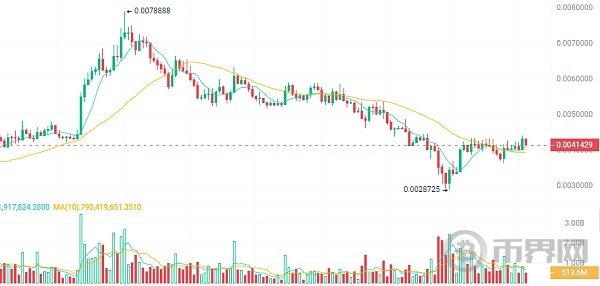
Turbo (TURBO)的交易价格在 0.0032 美元至 0.0053 美元之间,反映出强大的弹性和增长潜力。尽管过去一周下跌了 23.09%,但 TURBO 保持稳定,过去一个月上涨了 0.37%。令人印象深刻的是,它在六个月内实现了 1102.67% 的增长,展示了其动态潜力。值得关注的关键水平是最近的阻力位 0.0067 美元和支撑位 0.0024 美元。
图片

如果 TURBO 突破第一个阻力位,则可能瞄准 0.0088 美元,这意味着收益超过 60%。凭借 53.41 的 RSI 和 0.0041 美元的 SMA10,TURBO 具有潜在的稳定性和上升势头,凸显了其光明的前景。

2.BONK

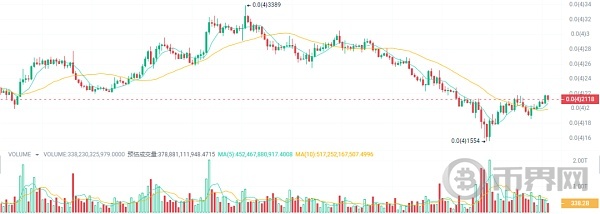
Bonk (BONK)目前的交易价格在 0.0000158 美元至 0.0000266 美元之间,近期的价格走势暗示其有大幅增长的潜力。尽管价格在过去一周下跌了约 16%,在过去一个月下跌了 14%,但 BONK 在过去六个月中仍上涨了 68%。
图片

最近的阻力位在 0.0000334 美元,支撑位在 0.0000118 美元。BONK 的相对强弱指数为 57.16,随机指标水平为 80.50,显示出强劲的增长潜力。如果多头反弹,BONK 可能会升至第二个阻力位 0.0000441 美元,可能上涨超过 65%,凸显其前景光明。

3.PEOPLE

PEOPLE代币的成立虽然与竞拍美国宪法副本的计划紧密相连,但这一计划的失败并未影响PEOPLE代币在市场上的地位。当前交易价格稳定的PEOPLE代币,持续吸引着投资者的目光。随着去中心化自治组织概念的普及和社区驱动项目的增多,PEOPLE代币的价值有望进一步得到提升。
图片

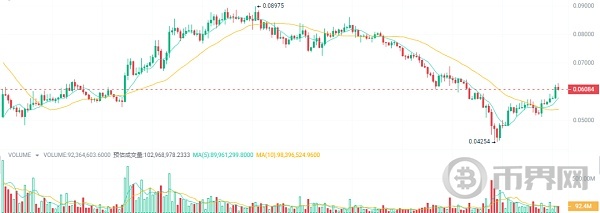
people没有底价,跟ETH息息相关,市值小的确拉盘容易,最近波段people很容易就10几个点,people是属于美国大选板块,可以持续炒作到美国11月份大选结束,目前市值4亿,性价比非常不错。

4.PEPE

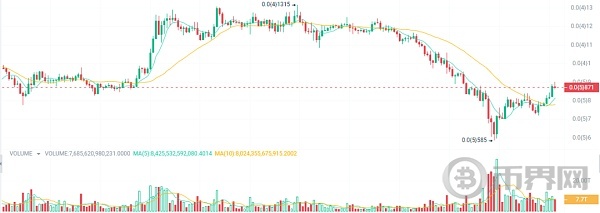
Pepe (PEPE)目前交易价格在 0.00000637 美元至 0.00001112 美元之间,最近一周下跌了 27.57%。尽管如此,PEPE 在六个月内实现了令人印象深刻的 690.56% 的增长,显示出巨大的增长潜力。空头略占主导地位,代币接近其最近的支撑位 0.00000465 美元。
图片

如果多头恢复力量,PEPE 可能会测试阻力位 0.00001413 美元,可能上涨高达 24%。下一个重要水平是 0.00001886 美元,代表 70% 的大幅上涨空间。RSI 为 60.50 表示谨慎乐观,随机指标为 83.48 表明市场超买,PEPE 有望在未来上涨。


Lecturas Relacionadas

The Entire Internet Hails Noam's Joining, But OpenAI's Loss Bill Just Got Thicker

While the AI community celebrates Noam Shazeer, co-author of the "Attention Is All You Need" paper, joining OpenAI as Head of Architectural Research, the company's audited financials reveal a starkly different reality. In 2025, OpenAI reported $13.07 billion in revenue but a massive $20.92 billion operating loss. Even excluding a one-time accounting charge, the cash burn is severe, with $3.7 billion consumed in Q1 2026 alone. This high-profile hiring occurs against a backdrop of significant internal research talent drain, with key founders and researchers departing as the company's focus shifts from exploratory research to product iteration. Meanwhile, OpenAI's fundamental business model faces a deep crisis. It paid Microsoft $10.59 billion for compute in 2025, while its vast user base of 9 billion weekly actives includes only 50 million paying customers, making growth a direct driver of escalating costs. The article argues Shazeer's recruitment is less about technical necessity and more about crafting a compelling narrative for OpenAI's upcoming IPO, aiming to justify a rumored $1 trillion valuation to future public market investors. It contrasts OpenAI's strategy with Anthropic's reported path to profitability, which relies on a strong enterprise customer base and cost control, rather than star-powered narratives. Ultimately, the piece concludes that while Shazeer's architectural work may take 1-2 years to materialize, OpenAI's financial clock is ticking much faster, with its massive losses undercutting the celebratory headlines.

marsbitHace 12 min(s)

The Entire Internet Hails Noam's Joining, But OpenAI's Loss Bill Just Got Thicker

marsbitHace 12 min(s)

Market Trend (June 19): US-Iran Deal Drives Out Geopolitical Premium; Chip Stocks Soar to New Highs; Energy Sector Leads Declines

U.S. Market Trends (June 19): U.S.-Iran Deal Eases Tensions, Chip Stocks Soar, Energy Sector Leads Declines. U.S. stocks rallied on Thursday as the signing of a temporary U.S.-Iran deal in Geneva de-escalated Middle East tensions, with Saudi oil tankers transiting the Strait of Hormuz. This geopolitical relief helped markets recover from recent Fed-driven volatility. The S&P 500 rose over 1%, the Nasdaq gained nearly 2%, and the Dow Jones Industrial Average closed at another record high. The Philadelphia Semiconductor Index surged over 6% to a historic peak. Chip stocks were the standout performers. Reports of an Apple-Intel design and foundry deal for certain products, alongside mentions of potential Nvidia and SpaceX collaborations with Intel, propelled the sector. Intel surged ~10.5%, while memory chip makers like Micron also saw significant gains, highlighting sustained confidence in long-term AI capital expenditure. In contrast, the energy sector was the day's sole loser, with the S&P 500 energy sub-index declining as WTI crude fell ~2% to around $74.29/barrel. The reopening of key shipping routes erased prior geopolitical risk premiums. SpaceX extended losses for a second day on news of a potential large bond offering. Market volatility (VIX) dropped sharply, indicating a swift reversal of post-Fed jitters. Treasury yields dipped slightly but remained elevated. The focus now shifts to upcoming economic data, including next week's PCE inflation report and Micron's earnings, which will serve as a key test for the AI trade's durability.

marsbitHace 34 min(s)

Market Trend (June 19): US-Iran Deal Drives Out Geopolitical Premium; Chip Stocks Soar to New Highs; Energy Sector Leads Declines

marsbitHace 34 min(s)

Will MicroStrategy Fall Into a Death Spiral? How Will the Macro Outlook Evolve in the Second Half of the Year?

**Summary:** The discussion centers on recent Bitcoin price declines and the evolving financial strategy of MicroStrategy (MSTR). The core argument is that the primary pressure is not from one-off Bitcoin sales by MSTR, but from the market's new expectation that MSTR may need to engage in *sustained, small-scale* Bitcoin sales to cover cash flow obligations for its growing portfolio of preferred shares and debt instruments (like STRC). This shift is driven by its stated goal of maintaining "bitcoins per share neutrality." The market is now testing whether it can absorb this potential ongoing selling pressure without entering a severe "death spiral" with Bitcoin's price. A resolution may involve MSTR softening its approach to avoid damaging both its stock and Bitcoin. The conversation then explores the parallel rise of AI-related stocks. The guest posits that AI is fundamentally restructuring labor, with "tokens" (representing access to AI models/compute) becoming a new form of capital and a substitute for human execution. This drives corporate efficiency and profits, benefiting upstream hardware providers (semiconductors, data centers), which explains the sustained rally. This represents the early stages of a "machine economy." Regarding crypto exchanges offering US stock trading, this is seen as a natural evolution. With few crypto-native assets generating lasting value, exchanges are pivoting to distribute valuable real-world assets (RWAs). This doesn't necessarily harm crypto's long-term prospects, as blockchain infrastructure may become crucial for future machine-to-machine economies. The analysis concludes that the era of rampant altcoin speculation is likely over, heavily damaged by the liquidity shock of the "1011" event (likely referring to a major market crash). Meme-driven capital has largely migrated to US equities. Looking ahead, macroeconomic uncertainty is rising due to potential large IPOs (e.g., SpaceX) and the US elections. While short-term market corrections are possible, the long-term trends of AI-driven productivity gains and the maturation of blockchain towards real-world utility and institutional adoption remain intact.

marsbitHace 38 min(s)

Will MicroStrategy Fall Into a Death Spiral? How Will the Macro Outlook Evolve in the Second Half of the Year?

marsbitHace 38 min(s)

Trading

Spot
Futuros
活动图片