Bitwise 首席投资官忽略短期的市场波动关注加密货币的发展前景

币界网Publicado a 2024-08-07Actualizado a 2024-08-07

币界网报道:

原文标题:《The Crypto Market Sell-Off: What Happened and Where We Go From Here》撰文:Matt Hougan,Bitwise 首席投资官编译:Chris,Techub News


加密货币市场在周末经历了大幅下跌。从上周五下午 4 点到周一早上 7 点,比特币的价格下跌了近 20%,从 63356 美元跌至 51026 美元。而以太坊的跌幅则更为严重,从 3307 美元暴跌超 30% 至 2234 美元。


当然,加密货币并不是唯一暴跌的市场。


全球金融市场由于经济衰退和地缘政治担忧而出现了剧烈波动,日经指数(东京证券交易所的主要股指)经历了自 1987 年以来最糟糕的一天,跌幅超过了 12%。纳斯达克期货下跌超过了 4%,同时,VIX 波动率指数(衡量市场预期波动性和不确定性的指标)自上周五以来上涨了 100%。


大多数加密货币投资者可能会经历剧烈的情绪波动,如恐惧和绝望,但最大的情绪是愤怒。投资者可能会因市场表现不如预期、损失严重或对投资决策的挫折感到愤怒。


「加密货币不是能够对冲全球不确定性吗?到底怎么回事?」


我也有同样的感受。但根据我六年多全职管理加密货币资金的经历,有一件事我感受更深,那就是机会来了。


新冠疫情引发下跌带来的教训


上一次类似的市场崩溃是在 2020 年 3 月 12 日。那一天,全世界都意识到了新冠疫情的影响,道琼斯工业平均指数下跌了 2353 点,是自 1987 年以来跌幅最大的一天。科技股和商品价格也急剧下跌,比特币跌幅最大,从 7911 美元暴跌 37% 至 4971 美元,抹去了过去一年的涨幅。


当时的感觉是,我们可能就此完蛋了。媒体声称比特币作为对冲资产的考验失败了。然而,随着全球领导人采取措施稳定经济(如降息和货币宽松),比特币的价格开始回升,最终在一年内涨至 57332 美元,涨幅超过 1,000%。


事后来看,2020 年 3 月 12 日并不是恐慌的时候,而是十年来比特币的最佳买入机会。这是因为 COVID-19 并没有改变比特币的基本特性,即其最大供应量不变,也不依赖任何银行、政府或公司。


当前的市场状况与 2020 年类似,即使面临经济不确定性,长期来看,比特币的价值和重要性可能会增加。疫情加速了比特币的长期上涨趋势,因为它证明了中心化机构的局限性,以及未来更为数字化的趋势。


今天我看到了同样的情景。


此次市场崩溃的原因


我不想花太多时间回顾导致当前市场回调的原因,简而言之:美国经济数据疲软引发全球经济放缓担忧,导致亚洲市场恐慌和日本股市大跌;中东地缘政治风险增加,伊朗威胁袭击以色列;


这些事件恰好和 Jump Trading 的大量仓位被强制清算叠加在一起。所有这一切都发生在一个流动性较低的夏季周末,进一步加剧了下跌。


但请注意接下来会发生什么:我们将要看到新冠疫情剧本的重演。


联邦基金期货市场已经将激进的应对措施纳入定价。一周前,美联储主席 Jerome Powell 还在淡化今年降息的必要性,市场预计美联储 9 月会议降息 50 个基点的可能性仅为 11%。如今,市场将这一可能性提高到了 98%。一些人甚至呼吁在 9 月会议前「紧急降息」。
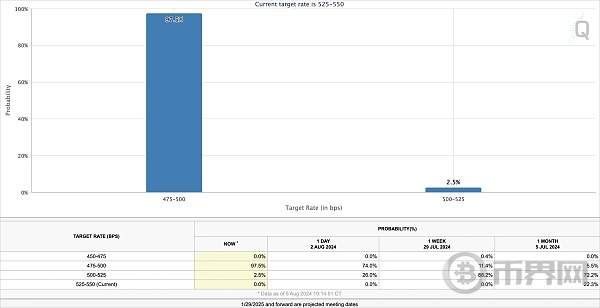
 

2024 年 9 月 18 日美联储会议目标利率概率,数据截至 2024 年 8 月 5 日。来源:CME Fedwatch


历史上每当发生类似的经济危机时,政府通常会采取措施增加货币供应,比如降息或印制更多的钱。过去在疫情期间、2010 年欧元区危机后以及 2008 年金融危机时,都出现了类似的情况。如果本周末的事件导致了真正的经济动荡,那么这种情况可能会再次发生。


未来需要关注什么


在短期内,我们需要关注加密货币市场是否已经触底。市场的剧烈回调可能会形成一种恶性循环,即市场价格下跌会引发更多的抛售,进一步加剧下跌。这是因为,当价格下跌时,使用杠杆交易的投资者会面临追加保证金的要求,他们被迫出售资产以补充保证金。已经有超过 10 亿美元的期货仓位被强制平仓,但我们尚不确定市场是否已经触底。


另外,需要关注加密生态系统中公司的健康状况。正如我们在 2021 年的危机中看到的那样,剧烈的市场波动可能会对资产负债表杠杆过高的公司造成严重冲击。现在有传言称,至少有一家做市商(Jump Trading)面临困境。如果这些问题蔓延到其他公司,可能会导致下跌趋势持续时间更长。


我还会关注 ETF 的资金流情况,看看 ETF 投资者是否会趁此回调抛售或买入更多。这三个因素将在很大程度上决定我们短期内的走向。


但我真正的建议是忽略短期的市场波动。比特币是一种波动性很大的资产,价格会有大幅度的涨跌。这种情况一直存在,并且将继续存在。因此,试图通过短期市场时机来进行投资是不明智的。


把交易员的心态带入加密货币市场是不对的。你是在投资全球金融体系的重大变革。抵制查看日内价格的冲动,更多地关注比特币未来一年、五年和十年的前景。


当你在华尔街找到第一份工作时,他们会告诉你,金融业最昂贵的五个字是「这次不一样」。


历史表明,每当全球经济出现恐慌时,加密货币市场往往会最先下跌,但会在接下来的一年里上涨。虽然这次可能情况不同,但我相信,长期来看,加密货币会恢复上涨趋势。

Lecturas Relacionadas

The Hunter Becomes the Hunted: The Most Profitable MEV Bot Gets Hacked

A well-known and highly profitable Ethereum MEV Bot, Jaredfromsubway.eth, suffered a sophisticated on-chain attack this Saturday, losing over $7.5 million. Analysis by Blockaid and others reveals this was not a conventional phishing or smart contract exploit, but a targeted "counter-MEV honeypot attack." The attacker meticulously laid a trap over several weeks, deploying 66 fake token contracts and liquidity pools disguised as major assets like WETH and USDC. These pools created the illusion of arbitrage opportunities. The MEV Bot's automated system detected these signals, executed trades, and in the process, granted approval permissions to attacker-controlled contracts. These approvals were not revoked, creating a persistent vulnerability. The attacker then exploited this in a single transaction, draining the bot's ETH, USDC, and USDT holdings. Jaredfromsubway.eth is notorious as one of Ethereum's most active and profitable MEV Bots, primarily known for executing "sandwich attacks" to profit from transaction slippage. Estimates suggest it has earned tens of millions in MEV revenue. The incident highlights escalating crypto security threats, demonstrating that even top-tier automated "predators" are vulnerable to novel, logic-based attacks designed to exploit their own operational rules. Following the hack, an unverified X account impersonating Jaredfromsubway.eth emerged, falsely offering a bounty for the return of funds, prompting developer warnings for users to stay vigilant.

marsbitHace 1 hora(s)

The Hunter Becomes the Hunted: The Most Profitable MEV Bot Gets Hacked

marsbitHace 1 hora(s)

The Reality of Payments in Latin America Is Not What You Think

The payment landscape in Latin America is undergoing a fundamental shift, driven by on-the-ground realities that challenge common perceptions. Based on over 500 hours of field research across the region, key insights emerge. Firstly, QR code payments, like Brazil's Pix, are becoming the dominant payment method in most emerging markets, overtaking cards. However, these domestic instant payment systems lack international interoperability, creating a significant gap for cross-border users. Secondly, the narrative around crypto cards is often misunderstood; their primary volume comes from high-net-worth professionals using them for salary conversions (e.g., USDT to local currency via Pix), not retail micro-payments. Competition in payments is shifting from customer acquisition to controlling the settlement layer, leading fintechs to acquire banking licenses for efficiency. Thirdly, treating "Latin America" as a single market is a mistake. Countries like Argentina, Brazil, and Mexico have distinct economic realities, user segments, and regulatory approaches. Brazil alone has at least five distinct user segments with different financial flows. Overlooked markets like Guatemala, Honduras, and El Salvador (the "forgotten five") offer high remittance volumes with lower competitive density. Finally, regulation in Latin America is often ahead of the US, with clearer frameworks for digital assets and a pragmatic approach from regulators focused on safety rather than obstruction. The margin on stablecoin forex is rapidly compressing toward zero, meaning future winners will be those building value-added services on top of the infrastructure, not just the cheapest exchange.

marsbitHace 1 hora(s)

The Reality of Payments in Latin America Is Not What You Think

marsbitHace 1 hora(s)

Making Music in a Bear Market: The Survival Experiment of a Bitcoin Band

"Orange Pill Jam: A Bitcoin Band's Survival in the Bear Market" Orange Pill Jam is a musical group exploring themes of financial sovereignty and privacy, born from the Bitcoin community. Formed after singer Mermaid performed her song "Dollar Apocalypse" at a 2022 conference, the band creates music intended for both Bitcoin enthusiasts and general audiences. Their creative process involves Mermaid writing lyrics and melodies, which producer/multi-instrumentalist Michi then shapes with a precise, rhythm-focused approach, often demanding numerous retakes to achieve his unique standard of timing. Their songs, like "Cypherpunks' Manifesto" and "Fire of Freedom," tackle concepts of digital privacy, the pitfalls of "free" services, and personal sovereignty, influenced by experiences in places like El Salvador. Despite operating in a crypto bear market with a Copyleft model (offering music for free sharing/remixing and accepting optional Bitcoin donations), they face practical challenges. Their growth is slow on platforms like YouTube and Spotify, which aren't optimized for their niche content. The band also navigates the rise of AI-generated music. While acknowledging AI's efficiency for certain tasks, they believe human creativity occupies a unique space that algorithms cannot replicate—the ability to create new genres and capture intangible rhythmic feeling. For Orange Pill Jam, the core argument for both Bitcoin in a downturn and human artistry in the AI age lies in this irreplaceable, intentional, and imperfectly human creative process. Their project persists as an anti-algorithm experiment, valuing the unquantifiable impact of music over scalable metrics.

marsbitHace 1 hora(s)

Making Music in a Bear Market: The Survival Experiment of a Bitcoin Band

marsbitHace 1 hora(s)

Trading

Spot
Futuros
活动图片