MetaSpaceX正式更名并启动元宇宙业务

Odaily星球日报Publicado a 2024-08-06Actualizado a 2024-08-06

Resumen

此次更名标志着 MetaSpaceX 将全面进军Web3.0 和元宇宙领域,为未来发展开启全新篇章。

MetaSpaceX正式更名并启动元宇宙业务

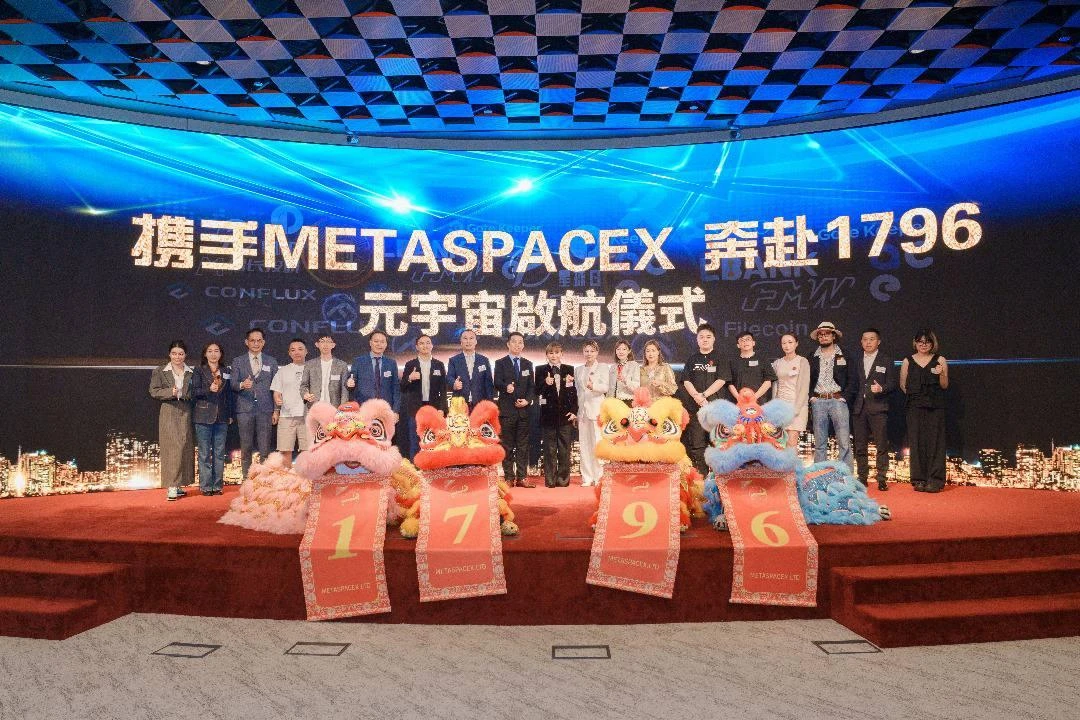
MetaSpaceX Limited(前称耀高控股有限公司,股份代号: 1796.HK)近期在香港联合交易所有限公司(香港交易所)举行了更名及元宇宙、Web3.0 业务启动仪式。此次更名标志着 MetaSpaceX 将全面进军Web3.0 和元宇宙领域,为未来发展开启全新篇章。

携手达尔富尔苏丹,全面进军Web3

MetaSpaceX正式更名并启动元宇宙业务

MetaSpaceX 宣布,公司正在与达尔富尔苏丹 Sultan Ahmed Dinar 商讨潜在的股份认购事项。据悉,Sultan Ahmed Dinar 为达尔富尔苏丹以及主要商业利益位于土耳其共和国及肯亚共和国的 Dinar Holdings Group 创办人兼董事会主席,对 MetaSpaceX 的Web3业务拓展表示了浓厚兴趣。这一合作有望为 MetaSpaceX 提供丰富的营运资金,并拓展其股东基础至中东和非洲市场,进一步巩固公司在全球范围内的地位。

MetaSpaceX 将专注于区块链金融服务,积极投身新兴技术领域,推动产业升级,并投资多个具有前瞻性的科技项目。公司业务涵盖人工智能、物联网、元宇宙、大数据分析、Web3.0 等多个领域,已成功打造多项领先的科技成果。这些成果不仅显著增强了公司的竞争力,也为整个行业的发展注入了创新与动力。

跨界合作,引领元宇宙潮流
MetaSpaceX正式更名并启动元宇宙业务

为了吸引更多用户涉足元宇宙世界,MetaSpaceX 宣布以六位数美元邀请日本超人气跳舞女团 Avantgardey 担任其元宇宙娱乐平台代言人,并拍摄品牌宣传片。Avantgardey 全团 17 人首次来港参加公开活动,她们活力四射的表演和独特的魅力为 MetaSpaceX 的元宇宙业务增添了更多活力和吸引力。

在此次活动中,达尔富尔苏丹 Sultan Ahmed Dinar 与前世界拳击冠军 Manny Pacquiao 也出席了 MetaSpaceX 的活动并致贺词。他们对公司前景及香港资本市场给予了高度肯定和信心,这一合作和认可进一步增强了 MetaSpaceX 在Web3.0 和元宇宙领域的地位。

MetaSpaceX 表示,公司将积极与各领域的顶尖企业携手合作,共同在Web3.0 和元宇宙领域内探索创新,创造更辉煌的成果。未来,MetaSpaceX 将继续秉承“创新、专业、可持续”的发展理念,通过拓展各种业务版图,持续增强核心竞争力。同时,集团也致力于进一步深化各方面的合作,期望在全球市场上实现更多显著的突破与成就。

对于品牌的未来发展与目标,MetaSpaceX 首席营运总监赖彩云女士表示:“元宇宙娱乐平台的灵活与多样性具有极大发展空间。我们很高兴邀请到日本超人气跳舞女团 Avantgardey 为 MetaSpaceX 担任全球代言人。她们有趣而整齐的舞技为大众带来活力及开心正能量,这也是 MetaSpaceX 希望为大家带来的娱乐体验。我们期待通过不断创新和完善,为全球用户打造一个充满活力和创意的元宇宙世界。”
 

Lecturas Relacionadas

Borrowed Faith: How Much of the Bitcoin ETF Flows Are Real Money

"Rented Faith: How Much of Bitcoin ETF Flows Are Real Money?" Bitcoin ETF inflows are often seen as a barometer of institutional conviction. However, week-to-week analysis reveals they are primarily driven by a hidden arbitrage trade rather than directional bullishness. This is the cash-and-carry trade: buying the ETF while simultaneously shorting Bitcoin futures on the CME to lock in the price difference (basis). This delta-neutral activity registers as ETF inflows but reflects a rate-seeking, not price-betting, strategy. Data shows weekly ETF flow volatility is closely tied to hedge fund ("leveraged funds") short positions on CME futures, with a correlation of 0.70. About half of weekly flow variation can be explained by this single factor. In contrast, Bitcoin's weekly price changes have no statistically significant power to predict flows. Crucially, while this arbitrage trade dominates weekly *fluctuations*, it is not the main component of the cumulative *stock*. Of the ~$55 billion total net inflow, the estimated net arbitrage position is only about $1 billion. The vast majority is steady, directional buying averaging ~$400 million per week. Thus, ETF flows overstate the *volatility* of belief, not its *level*. The "rented" arbitrage capital churns, while "owned" directional capital forms the bedrock. This arbitrage trade has been unwinding for two years, with hedge fund shorts peaking at ~$14 billion in late 2024 and falling to ~$4.5 billion. Recent outflows align with basis compression, signaling the trade's exit, not a loss of faith. For Ethereum ETFs, the same dynamic is weaker due to negative carry from forgone staking yield. The key takeaway: To interpret ETF flows, watch the basis vs. Treasury yields and CME hedge fund net shorts. They reveal how much of the weekly "demand" headline is driven by rented, rate-seeking capital versus real conviction.

链捕手Hace 2 min(s)

Borrowed Faith: How Much of the Bitcoin ETF Flows Are Real Money

链捕手Hace 2 min(s)

Two Giants' Credit Expansion: Loan Balances of $9.9 Billion vs. $14.6 Billion, Brazil Emerges as the Main Battlefield

Title: Two Giants "Credit" Surge: Loan Balances of 99 Billion vs. 146 Billion USD, Brazil Emerges as Main Battlefield Summary: The article compares the rapid expansion of credit businesses by two major e-commerce and fintech players, Sea (via Monee) and Mercado Libre (via Mercado Pago), in overseas markets like Southeast Asia and Latin America, contrasting with a slowing domestic Chinese credit market. Using Q1 2026 financial data, it highlights their significant growth. Sea's Monee reached a loan balance of $99 billion, up 71% year-over-year (YoY), contributing 17.5% to Sea's total revenue. Mercado Pago's loan balance hit $146 billion, up 87% YoY, contributing 45% to its parent company's revenue. Both maintained stable risk metrics (e.g., Monee's 90+ day NPL at 1.1%) despite rapid scaling. Brazil is identified as a key and accelerating growth market for both. Sea's Brazilian operations saw loan volumes exceed $10 billion, growing 250% YoY, with SPayLater GMV penetration still low (~10%) indicating high potential. Sea also secured a key Brazilian financial credit license (SCFI). Mercado Libre's Brazil segment contributed over half (54%) of total group revenue, with its credit business there generating $11.24 billion in revenue, up 89% YoY and accounting for 12.7% of global revenue. Mercado Pago's credit portfolio, especially credit cards (46% of loans, +105% YoY), is a strategic focus, described as crucial as building logistics was a decade ago. Its net interest margin after loss (NIMAL) remains high at 17.8%. The article concludes that while Brazil presents immense opportunities, the success is largely driven by these integrated "e-commerce + fintech" giants with proprietary transaction data and ecosystems, making it challenging for standalone fintech players to compete effectively.

链捕手Hace 23 min(s)

Two Giants' Credit Expansion: Loan Balances of $9.9 Billion vs. $14.6 Billion, Brazil Emerges as the Main Battlefield

链捕手Hace 23 min(s)

Research Report Analysis: Is Intel Making a Comeback with Apple? Bernstein's Calculations Show the Right Direction, but the Price Is Already Overvalued

Bernstein analyst Stacy A. Rasgon published a report on June 18 regarding Intel, assessing the potential impact of recent political support for a US-based PC chip design and manufacturing collaboration between Apple and Intel. The report views this as a significant signal for the foundry landscape shift but concludes the initial financial contribution would be minimal. Key conclusions: 1) An Apple deal is seen as a small-scale "proof of concept." Even if Intel wins 40% of Apple's premium notebook chip orders (~5 million units/year), Bernstein estimates it would generate only about $500M in annual revenue and ~$0.03 EPS, negligible against Intel's ~$55B revenue. 2) Political encouragement is not equivalent to enforceable mandates. Winning orders ultimately depends on Intel demonstrating competitive technology (like its 18A node), cost, and reliable supply. 3) The path from validation to large-scale production involves significant challenges, capital investment, and time. Due to these uncertainties, Bernstein maintains a Market-Perform (Hold) rating with a $100 price target, implying potential downside from the ~$121.10 price at the report date. The analysis highlights the tension between near-term validation value—serving as a crucial trust signal for Intel's foundry ambitions and US supply chain resilience—and the long-term opportunity to attract larger cloud and AI chip customers. The investment thesis hinges on successful 18A execution and sustained policy support, not on immediate financial gains from Apple.

marsbitHace 48 min(s)

Research Report Analysis: Is Intel Making a Comeback with Apple? Bernstein's Calculations Show the Right Direction, but the Price Is Already Overvalued

marsbitHace 48 min(s)

Trading

Spot
Futuros
活动图片