哈佛教授:为什么一定要参与Web3?

白话区块链Publicado a 2022-06-02Actualizado a 2022-06-02

Resumen

在Web3中,用户创建的任何内容(如帖子或视频)以及他们购买的数字对象(如NFT)完全归用户自己而不是控制底层数据的平台所有。

当今互联网正在发生重大变革。虽然现在的主流媒体守住了他们的用户数据宝库并借助互联网效应保持了相当的优势,但在如今所倡导的“Web3”模式下,新诞生的公司们正在提出一种全新的冲浪方式。

01

Web2与Web3的对比

当今占主导地位的互联网平台是建立在用户聚合和用户数据的基础上的。随着这些平台的发展,它们提供价值的能力也在增强且处于遥遥领先的地位——这要归功于网络效应的力量(web2.0的力量)。

例如,Facebook(现改名为Meta)的用户行为数据帮助其微调算法,使其推送给用户的内容提要和广告定位明显优于其他平台。与此同时,亚马逊利用其对客户需求的细致洞察来优化物流配送服务并开发出了自己的产品线。YouTube已经建立了来自众多创作者的庞大视频库,使其能够向观众提供几乎任何主题的内容。

在这些商业模式中,锁定用户的注意力及其数据是竞争优势的关键来源。因此,传统的互联网平台通常不会共享数据,即使是简单的数据汇总,用户也难以导出,更别说他们的社交图谱和其他内容了。因此,即使用户对某个特定平台不满意,也不会轻易放弃使用它们。

但这一切正在悄然发生变化。虽然新兴者很难依靠自己挑战像Meta这样的巨头“Web2.0”公司,但在“Web3.0”模式下,他们正在提出一个新颖的价值主张。尽管现在已经有很多围绕关于元宇宙和各种Defi、NFT项目的公开讨论,但对于web3.0,众多开发人员一致认同这是与其他话题有着本质差异。它发展的前提是,建立与用户直接共享价值的开放平台,除了为平台盈利,也要为每个人创造更多价值,而不仅仅是让平台利用用户获取数据来赚钱。

02

为什么Web3势不可挡

在Web3中,用户创建的任何内容(如帖子或视频)以及他们购买的数字对象(如NFT)完全归用户自己而不是控制底层数据的平台所有。此外,这些数字资产通常是根据公共区块链上的互操作标准创建的,而不是私人托管在公司的服务器上。这使得他们的资产变得“易于携带”。原则上,用户可以随时离开任何特定的平台,用户可以连同他们的数据一起从该应用程序退出然后移动到另一个平台。

这是一个重大转变。将有可能从根本上改变数字公司的运营方式:用户的平台数据转移能力带来了新的竞争压力来源,这可能迫使这些原有的巨头公司更新其业务战略。因为如果一个平台没有为它的用户创造足够的价值,他们可以扭头就走。事实上,在Web3中,这些新兴者们已经开始明目张胆的吸引大V用户转向他们——例如,最近推出的NFT平台LooksRare,通过“vampireattack(吸血鬼攻击)”给予人门奖励,以吸引OpenSea用户切换到他们这边来。

但同时,Web3较少有零和博弈,这意味着一个平台的整体价值创造机会可以更大。因为其建立在可互操作的基础设施层上,平台可以轻松链接其他的内容网络,从而扩大它们可以为用户提供的价值服务的规模和类型。例如,Web3艺术画廊可以允许用户在已有的区块链上创建艺术品,而不是要求他们直接将艺术品上传到平台。

即使对于目前已成立的巨头平台,这也是一种很有价值的内容扩源方法。Twitter最近推出了一项功能,用户可以在其个人资料中显示他们拥有的NFT;Instagram也在开发类似的东西。对于新平台而言,由于在初始阶段缺乏内容,平台早期获得动力可能具有挑战性,整合现有数字资产的能力对于解决所谓的“冷启动问题”至关重要。

此外,基础设施层的完善意味着与创建与用户信任相关的成本在Web3中要低得多。在公共分类账本上管理数字资产可以更清楚地了解有哪些资产以及谁拥有什么,这在以前是网络上的一个难题。例如,如果一位数字艺术家声称一件新艺术品仅限于489个版本,那么潜在所有者可以直接在区块链上验证这一点而无需非要验证对艺术家本人的信任,也无需画廊或其他中介机构提供此类保证。

这种信任框架扩展运行到Web3平台的软件:关键操作可以在区块链上以可审计和不可变的“智能合约”进行编码。这使得平台创建者可以预先实现某些设计功能,例如定价规则、版税协议和用户奖励机制。

所有这一切意味着,至少在理论上,在Web3中推出产品会容易得多。即使是一个不知名的企业家也可以在未经某个特定平台许可的情况下构建插入现有网络的产品。事实上,在Web3中,用户有时不需要信任项目背后的公司(或人)。相反,他们只需要信任代码本身。例如,最近一些支持乌克兰人道主义援助工作的筹款活动是通过智能合约进行的,该合约会自动将收到的所有资金转移给乌克兰政府或相关慈善机构;这意味着即使活动组织者完全匿名,捐助者也可以相信他们的资金会得到妥善使用。

当然,鉴于Web3的早期金融用例和大量交易,许多不良行为者利用炒作来策划诈骗活动。今天的许多Web3体验都是为精通技术的高级用户设计的,而普通用户可能对应用程序或平台的实际功能了解有限,更不用说审查源代码以验证其功能是否符合描述了。目前来看,Web3技术要安全并可供普通消费者使用,还有很长的路要走。

此外,在实践中插入现有网络并不意味着您可以自动解锁想要留下来的参与用户群。就像在所有创业企业中一样,构建一个能够满足真正用户需求的产品至关重要。但是,一旦您解决了用户需求,通过Web3利用已建立的网络可以更轻松地部署和扩展商业活动。

这使平台后端开放且可互操作,可以实现复合创新并激励构建者对基础设施层的直接投资。例如,koodos——一种Web3服务,可以让人们从互联网上创建他们喜欢的东西的集合,正在构建任何网络都可以插入和改进的共享基础设施。(PS:Esber共同创立了koodos和Kominers为该公司提供市场设计建议。)

共享基础架构意味着应用程序可以专注于构建出色的体验,从而更加重视平台设计,将其作为竞争优势的重要来源。应用程序对其市场的了解体现在其用户体验和界面中——因此即使在Web3中,用户洞察力仍然是衡量产品好坏的重要标准。

Web3平台还具有一种新颖且特别强大的网络效应形式的潜力,即可通过社区参与解锁社会凝聚力。数字资产的所有权培养了一种心理上的所有权感,也可以理解为一种心理归属感,这种感觉可以形成强烈的用户粘性且激励用户维护平台和自己的数字资产。平台的用户实际上成为“粉丝”,他们通过平台的共享验形成纽带,这也类似于那些运动队或默默无闻乐队的粉丝将自己视为同一个社区一样。

其中一位作者(Kominers)拥有的AdamBombSquadNFT

例如,流行的街头服饰品牌TheHundreds最近出售了以他们的吉祥物“AdamBombs(亚当炸弹)”为主题的NFT。持有其中一个NFT就可以访问社区活动和独家商品,这为品牌粉丝提供了一种见面和互动的方式,大大激发了他们的热情。TheHundreds也自发宣布它将向某些服装系列中使用的AdamBombs相关的NFT的所有者支付特许权使用费(以商店信用形式)。这使得用户可以拥有RalphLauren标志的部分所有权,并且每条使用该标志的新Polo衫系列都会给用户带来分红。以这种方式对品牌的价值进行了去中心化,但TheHundreds的社区成员对IP更加依恋,并不遗余力地推广它——以至于一些社区成员甚至去搞了AdamBombs的纹身。

另一个例子是SushiSwap,它是去中心化金融平台Uniswap的“分叉”——这意味着SushiSwap的底层算法是Uniswap发布的代码的克隆。主要区别在于SushiSwap建立了强大的品牌和社区,同时为用户提供了一个积极和持续的奖励系统,从而推动了更高的用户参与度和对该平台的积极情绪;这使其迅速成为Uniswap的成功竞争对手。

更开门见山的说,共享所有权允许产品与其衍生品之间的激励更加一致,从而激励每个人成为建设者和贡献者。底层技术标准还使每个Web3公司都可以建立在其之上。这意味着平台周围的社区可以以一种比过去少得多的对抗性和更多的衍生品流通的方式共同创造,使平台生态系统变得更加强大。

在短期内,这种模式将部分消费者剩余让给了建造者或创造者。但是因为建设者得到的更多,他们被更强烈地激励去投资并为每个人增加总蛋糕。这意味着从长远来看,Web3应该也将提高消费者剩余。

03

小结

总而言之:Web3有潜力为每个人解锁更有价值的互联网。与以前的网络迭代相比,新公司在Web3基础架构上构建围绕其品牌和产品概念的社区更容易。甚至已建立的平台也可以利用这些力量,通过插入基于区块链的内容网络并赋予其用户对其数据的一些所有权。所有这一切意味着网络的下一个时代可能看起来与我们今天生活的时代大不相同,而且更加开放。


Lecturas Relacionadas

North Korean Hackers Loot $500 Million in a Single Month, Becoming the Top Threat to Crypto Security

North Korean hackers, particularly the notorious Lazarus Group and its subgroup TraderTraitor, have stolen over $500 million from cryptocurrency DeFi platforms in less than three weeks, bringing their total theft for the year to over $700 million. Recent major attacks on Drift Protocol and KelpDAO, resulting in losses of approximately $286 million and $290 million respectively, highlight a strategic shift: instead of targeting core smart contracts, attackers are now exploiting vulnerabilities in peripheral infrastructure. For instance, the KelpDAO attack involved compromising downstream RPC infrastructure used by LayerZero's decentralized validation network (DVN), allowing manipulation without breaching core cryptography. This sophisticated approach mirrors advanced corporate cyber-espionage. Additionally, North Korea has systematically infiltrated the global crypto workforce, with an estimated 100 operatives using fake identities to gain employment at blockchain companies, enabling long-term access to sensitive systems and facilitating large-scale thefts. According to Chainalysis, North Korean-linked hackers stole a record $2 billion in 2025, accounting for 60% of all global crypto theft that year. Their total historical crypto theft has reached $6.75 billion. Post-theft, they employ specialized money laundering methods, heavily relying on Chinese OTC brokers and cross-chain mixing services rather than standard decentralized exchanges. Security experts, while acknowledging the increased sophistication, emphasize that many attacks still exploit fundamental weaknesses like poor access controls and centralized operational risks. Strengthening private key management, limiting privileged access, and enhancing coordination among exchanges, analysts, and law enforcement immediately after an attack are critical to improving defense and fund recovery chances. The industry's challenge now extends beyond secure smart contracts to safeguarding operational security at the infrastructure level.

marsbitHace 16 min(s)

North Korean Hackers Loot $500 Million in a Single Month, Becoming the Top Threat to Crypto Security

marsbitHace 16 min(s)

Circle CEO's Seoul Visit: No Korean Won Stablecoin Issuance, But Met All Major Korean Banks

Circle CEO Jeremy Allaire's recent activities in Seoul indicate a strategic shift for the company, moving away from issuing a Korean won-backed stablecoin and instead focusing on embedding itself as a key infrastructure provider within Korea’s financial and crypto ecosystem. Despite Korea accounting for nearly 30% of global crypto trading volume—with a market characterized by high retail participation and altcoin dominance—Circle has chosen not to compete for the role of stablecoin issuer. Instead, Allaire met with major Korean banks (including Shinhan, KB, and Woori), financial groups, leading exchanges (Upbit, Bithumb, Coinone), and tech firms like Kakao. This approach reflects a broader industry transition: the core of stablecoin competition is shifting from issuance rights to systemic positioning. With Korean regulators still debating whether banks or tech companies should issue stablecoins, Circle is avoiding regulatory uncertainty by strengthening its role as a service and technology partner. The company is deepening integration with trading platforms, building connections, and promoting stablecoin infrastructure. This positions Circle to benefit regardless of which entity eventually issues a won stablecoin. Allaire also noted the potential for a Chinese yuan stablecoin in the next 3–5 years, underscoring a regional trend of stablecoins becoming more regulated and integrated with traditional finance. Ultimately, Circle’s strategy highlights that future influence in the stablecoin market will belong not necessarily to the issuers, but to the foundational infrastructure layers that enable cross-system transactions.

marsbitHace 44 min(s)

Circle CEO's Seoul Visit: No Korean Won Stablecoin Issuance, But Met All Major Korean Banks

marsbitHace 44 min(s)

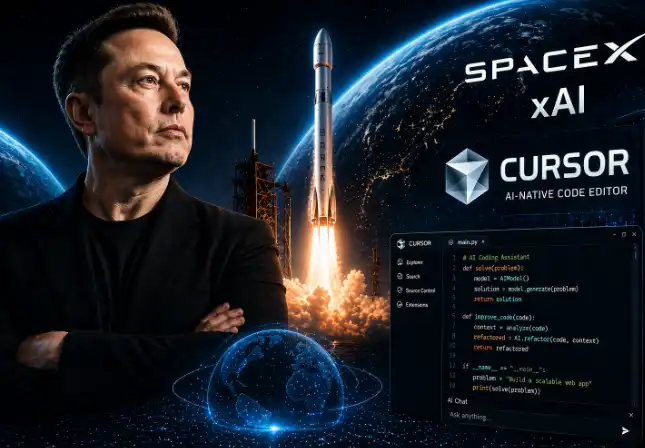
SpaceX Ties Up with Cursor: A High-Stakes AI Gambit of 'Lock First, Acquire Later'

SpaceX has secured an option to acquire AI programming company Cursor for $60 billion, with an alternative clause requiring a $10 billion collaboration fee if the acquisition does not proceed. This structure is not merely a potential acquisition but a strategic move to control core access points in the AI era. The deal is designed as a flexible, dual-path arrangement, allowing SpaceX to either fully acquire Cursor or maintain a binding partnership through high-cost collaboration. This "option-style" approach minimizes immediate regulatory and integration risks while ensuring long-term alignment between the two companies. At its core, the transaction exchanges critical AI-era resources: SpaceX provides its Colossus supercomputing cluster—one of the world’s most powerful AI training infrastructures—while Cursor contributes its AI-native developer environment and strong product adoption. This synergy connects compute power, models, and application layers, forming a closed-loop AI capability stack. Cursor, founded in 2022, has achieved rapid growth with over $1 billion in annual revenue and widespread enterprise adoption. Its value lies in transforming software development through AI agents capable of coding, debugging, and system design—positioning it as a gateway to future software production. For SpaceX, this move is part of a broader strategy to evolve from a aerospace company into an AI infrastructure empire, integrating xAI, supercomputing, and chip manufacturing. Controlling Cursor fills a gap in its developer tooling layer, strengthening its AI narrative ahead of a potential IPO. The deal reflects a shift in AI competition from model superiority to ecosystem and entry-point control. With programming tools as a key battleground, securing developer loyalty becomes crucial for dominating the software production landscape. Risks include questions around Cursor’s valuation, technical integration challenges, and potential regulatory scrutiny. Nevertheless, the deal underscores a strategic bet: controlling both compute and software development access may redefine power dynamics in the AI-driven future.

marsbitHace 1 hora(s)

SpaceX Ties Up with Cursor: A High-Stakes AI Gambit of 'Lock First, Acquire Later'

marsbitHace 1 hora(s)

Trading

Spot
Futuros
活动图片