CoinStats And FIO Protocol Partner Up To Offer Free Web3 Handles

zycryptoPublicado a 2024-07-27Actualizado a 2024-07-27

CoinStats And FIO Protocol Partner Up To Offer Free Web3 Handles

6
CoinStats And FIO Protocol Partner Up To Offer Free Web3 Handles
Advertisement
&nbsp &nbsp

CoinStats, a leading crypto, NFT, and DeFi portfolio manager, is proud to announce its partnership with FIO Protocol, which will allow CoinStats users to claim free Web3 handles.

The integrations will allow users to replace their public wallet addresses with a single, secure, customizable handle. Notably, this integration will provide a safe, read-only connection that protects user data and minimizes the risks of lost funds. Users have full control over their data, particularly what information third parties can access or share.  The partnership aligns with CoinStat’s mission of allowing users to manage their crypto portfolio efficiently.

FIO Protocol was created to provide users with a customizable, single, and secure handle that replaces their public wallet addresses. These handles are designed as the user’s Web3 identity and function as NFTs, offering a streamlined method for managing crypto assets. The Layer-1 FIO chain powers FIO Protocol and has registered 1.7 million handles. FIO Protocol is widely adopted and backed by over 70 industry leaders, including Edge Wallet, Opera, Binance, MetaMask, Trust Wallet, Coinomi, Guarda Wallet, and dopamine. The FIO token is at the project’s core used to power the FIO ecosystem.

The partnership with FIO Protocol introduces several features to CoinStats users that aim to simplify their crypto management. Users will be able to view FIO token balances and other blockchain data within the CoinStats portfolio tracker. In addition, users can use the FIO handle lookup to track balances for all addresses mapped to an FIO handle across different blockchains. With the partnership, users can also register and manage their FIO handles freely.

Founded in 2017 by Narek Gevorgayan, CoinStats provides users with a single platform to manage all their wallets and exchanges. CoinStats seeks to provide its users with the right tools to manage their crypto portfolios efficiently. Users can track their assets by connecting with over 300 wallets, exchanges, and blockchains. Notably, this integration marks CoinStats’ 100th blockchain integration a step to providing the most comprehensive and user-friendly platform for all users. CoinStats has over $100 million worth of assets managed through its app. 

AdvertisementFollow ZyCrypto On Google News &nbsp

Users can visit the stories sections on the CoinStats app to access the free Web3 handle and learn more about the integration.


Lecturas Relacionadas

New ChatGPT Feature: AI Begins Monitoring Users

OpenAI has launched "Computer History," a new feature for its ChatGPT desktop app on macOS, designed to track user activity across applications and websites. This allows the AI model to use this data to provide more accurate and personalized responses in subsequent conversations. The feature, released on August 13th, is available to Pro, Business, and Enterprise subscribers. However, its rollout in the European Economic Area, the UK, and Switzerland is delayed as OpenAI works to align the tool with local data processing regulations. Computer History operates in the background, logging user activity into a temporary timeline. Users can review, manage, or delete this history via the app's interface or macOS menu bar. The feature is opt-in and requires explicit user activation in the settings. This release replaces and expands upon an earlier experimental project called Chronicle. OpenAI states the new version is more computationally efficient and offers improved privacy controls. The launch coincides with other AI advancements from the company, including a high-speed GPT-5.6 model. The article notes potential technical risks associated with the predecessor, Chronicle, such as prompt injection vulnerabilities and unencrypted local data storage. It also highlights the competitive landscape, where similar memory features are being developed by rivals like Anthropic's Claude and Google's Gemini. The delayed European rollout underscores the ongoing challenge of balancing deep personalization with stringent data protection laws.

cryptonews.ruHace 19 min(s)

New ChatGPT Feature: AI Begins Monitoring Users

cryptonews.ruHace 19 min(s)

GPT-5 Also Has Tip-of-the-Tongue Moments, Google Tested 4.5 Million Times: The Keys Are Lost

Google researchers have discovered that advanced AI models like GPT-5 and Gemini 3 experience a phenomenon akin to the human "tip-of-the-tongue" state, where they possess knowledge but fail to retrieve it. Their study, "Empty Shelves or Lost Keys?" (ICML 2026), introduces the "Knowledge Portrait" framework to analyze factual knowledge in models, distinguishing between failure to encode a fact versus failure to recall it. Testing on 13 models across 2.15 million queries from the WikiProfile benchmark revealed that state-of-the-art models successfully encode 95-98% of facts into their parameters. However, when asked directly, they fail to recall 26-34% of these known facts. Enabling chain-of-thought ("thinking") reasoning reduces this recall failure to 11-12%, recovering 40-65% of the previously unrecalled but encoded facts. The research identifies two key bottlenecks: recalling obscure ("long-tail") facts and answering reversed queries (e.g., "Who is Tom Cruise's mother?" vs. "Whose son is Tom Cruise?"). While scaling model size effectively reduces encoding failures, it does little to improve recall rates. In larger models, recall failure becomes the dominant source of factual errors, accounting for over 70% of mistakes in GPT-5.2. The findings suggest that for top models, the primary challenge is no longer storing knowledge but accessing it efficiently. Future accuracy gains may depend more on improved inference-time methods and "meta-cognitive" abilities, enabling models to recognize when they need to engage in deeper reasoning to retrieve information they already know.

marsbitHace 40 min(s)

GPT-5 Also Has Tip-of-the-Tongue Moments, Google Tested 4.5 Million Times: The Keys Are Lost

marsbitHace 40 min(s)

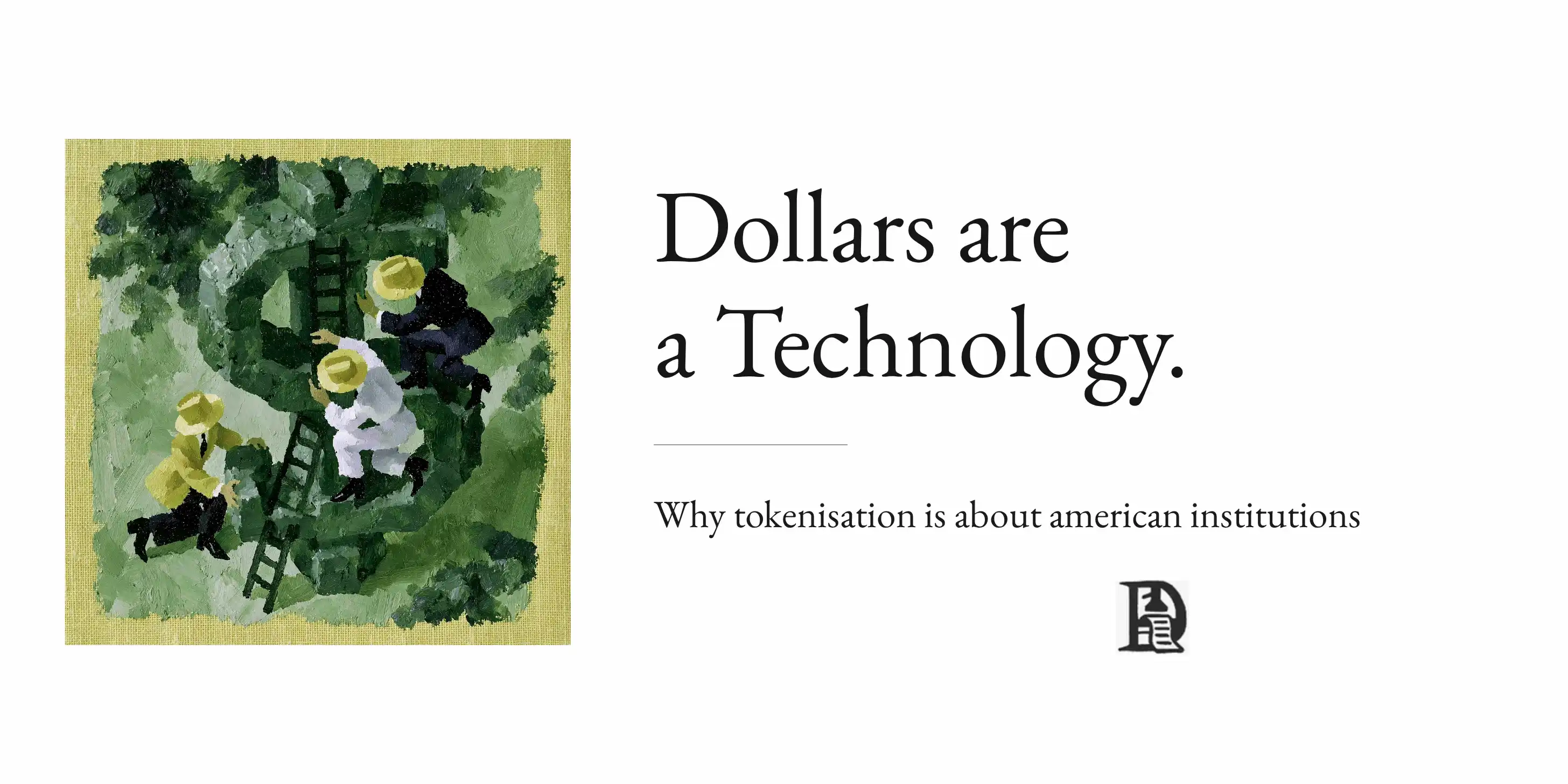
The Dollar is a Technology: Stablecoins Are Exporting U.S. Institutions to the World

This article argues that stablecoins and blockchain infrastructure are becoming a vehicle for exporting American financial systems globally. The core thesis is that the U.S. dollar, as a "technology," is increasingly embedded in blockchain rails, moving beyond a reserve currency to represent the institutional stability of the United States itself. The piece highlights three key areas where this is happening: 1. **Cross-border payments and trade finance:** Companies like Keyrails use stablecoins and blockchain to streamline and secure trade finance for emerging markets (e.g., Nigeria-China trade), offering faster, often cheaper dollar liquidity than traditional systems. 2. **Programmable collateral and credit:** Platforms like SemiLiquid allow institutions to use tokenized assets (e.g., treasuries, stocks) as "programmable collateral" for loans without moving them from custody, unlocking capital efficiency and improving transparency in institutional lending. 3. **Financing real-world assets:** Protocols like USD.AI create lending markets for productive, hard-to-finance assets like AI GPUs, connecting global stablecoin liquidity to physical capital. The author concludes that the true value of these new blockchain-based financial platforms lies not just in transaction volume, but in the deep, hard-to-replicate "context" (data, trust, operational knowledge) they build around specific economic activities like trade and asset finance. This represents crypto's evolution into an operating system for real-world capital formation, moving beyond speculation.

marsbitHace 43 min(s)

The Dollar is a Technology: Stablecoins Are Exporting U.S. Institutions to the World

marsbitHace 43 min(s)

Trading

Spot
活动图片