投研报告:Stacks(STX)- 比特币智能合约的先锋

金色财经Publicado a 2024-07-08Actualizado a 2024-07-08

xH8w9OzqThwUsF3j4SsRrROMidG3QaarCnYUCAK2.jpeg

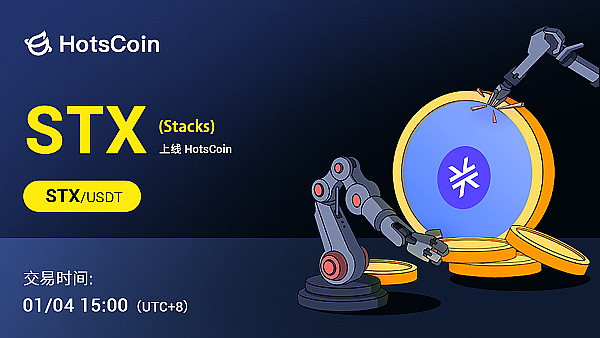
1月4日 Stacks(STX)在HotsCoin上线,Stacks是一项致力于建立基于比特币的上层应用的公链项目,成立于2015年。目前STX已在HotsCoin开放交易。


一、基本信息

Stacks是一项致力于建立基于比特币的上层应用的公链项目,成立于2015年。通过两个版本的迭代,Stacks已经在比特币的链上智能合约开发方向取得了长足的进展,主网版本Stack 2.0已于2021年1月14日成功上线。目前,该项目在资金、代码迭代、生态建设等方面表现良好,吸引了众多开发者参与。


二、技术特点

共识机制和智能合约语言: Stack 2.0采用了新的共识机制PoX,将比特币作为基础链,Stacks 2.0作为连接链,实现了比特币网络的安全性与Stacks网络的智能合约开发的结合。智能合约采用Clarity语言,它内置了SPV,可读取比特币链上的数据,同时优化了可预测性和安全性。


交易量和DApp生态: Stack 2.0上线后,已推出DApp商店,App Mining等功能,目前有超过500款DApp。其中一些实用性较强的应用如BlockSurvey和Pravica已经取得一定的用户基础。


可扩展性和安全性: Stack 2.0相对以太坊在可扩展性和BTC的参与方式上进行了优化。通过微块等技术提高了吞吐量和速度,并着重于降低智能合约出错和被攻击的可能性。


三、经济模型

代币供应和需求: STX是Stack 2.0的代币,初始供应为13.2亿,每年有一定的通货膨胀率增发,预计到2050年将达到18.42亿。STX的主要用途包括支付智能合约费用、交易费用,以及作为矿工和开发者的激励手段。


代币分配和释放: STX的分发经历了多轮发行,目前总供应量为739,781,894 STX。代币的释放以创世纪区块为起点,2021年将有较大数量的STX释放,之后逐渐趋于平稳。代币的增发主要通过挖矿,按照浮动的增发率进行。


四、未来展望

Stacks项目在比特币智能合约领域有着独特的技术优势,生态建设逐渐丰富。未来的发展方向包括通过微块提高网络性能、完善智能合约语言,吸引更多开发者和用户参与。整体而言,Stacks 2.0作为一个刚上线的主网,展示了良好的产品迭代和发展态势,有望在比特币生态中发挥重要作用。


五、风险因素

代币供应: 随着年限的推移,STX的总供应将逐渐增加,可能对代币的长期价值产生一定的影响。

生态发展: 虽然目前有较多DApp上线,但生态发展还处于早期阶段,需要密切关注生态建设的速度和质量。

竞争风险: 比特币智能合约领域的竞争激烈,需要不断提升技术和生态优势以应对竞争挑战。

六、总结与建议


Stacks作为比特币智能合约的先驱,展现了强大的技术实力和生态潜力。在良好的技术基础上,建议关注其生态的拓展、开发者社区的建设以及与比特币网络的深度融合。同时,密切关注代币的供应情况,谨慎评估投资风险,建议投资者根据自身风险承受能力做出明智的投资决策。

Lecturas Relacionadas

a16z Deep Dive: Stop Chasing the 'AI Smell', Here's a Practical Guide to Writing with AI

"Don't Obsess Over AI Detection: A Practical Guide to Writing Alongside AI" by Steph Zinn (a16z Crypto) This guide moves beyond the flawed premise that AI-generated text can be easily spotted by a set of "tells" and that these features automatically mean poor quality. Instead, it focuses on how writers and founders can use LLMs effectively by understanding, controlling, and editing the common stylistic tendencies of AI-assisted prose. The article breaks down AI writing "tells" into four key dimensions: **1. Rhetorical Features (Insight-Shaped Writing):** AI often produces semantically empty, "corporate-sounding" filler language—vague profundities, hedging phrases, excessive parallelism, and summary statements. The advice is to ruthlessly edit these out, using prompts to make language more specific and direct. **2. Voice Features (The Alexa Voice):** Default AI writing relies on a narrow, fungible vocabulary of low-friction, abstract words and cliché phrases that lack personality. While this generic voice is acceptable for support docs or mass communications, founders should preserve their unique voice for impactful writing. Use LLMs to identify and replace jargon, aiming for concrete, distinctive word choices. **3. Structural Features (Form Without Function):** AI tends towards over-structured text with excessive subheadings, lists, roadmaps, and the rigid "three-point" framework. While clear structure is good for readability and SEO, it shouldn't force ideas into unnatural containers. Choose a structure that serves the format and purpose, borrowing from effective examples. **4. Punctuation Features (Dash Panic):** The overuse of em dashes and colons has become a hallmark, but writers shouldn't avoid useful punctuation just to seem "human." The key is avoiding repetitive, distracting patterns. Use punctuation that is grammatically correct and supports the flow of your argument. The core argument is that many so-called AI flaws are just amplified versions of existing bad writing habits. The goal isn't to eliminate AI's role but to use it as a tool while maintaining editorial control. The final question shouldn't be "Can this be detected as AI?" but "Does this writing effectively do its job?"

marsbitHace 15 min(s)

a16z Deep Dive: Stop Chasing the 'AI Smell', Here's a Practical Guide to Writing with AI

marsbitHace 15 min(s)

Podcast Notes | Conversation with Tom Lee: Bitmine Acquiring Nearly 5% of Total ETH Supply Is Not the End Goal, ETH Price Target Set at $10,000

In a podcast interview, Tom Lee, Chairman of BitMine Immersion Technologies, discusses the company's strategy to accumulate nearly 5% of the total Ethereum supply within 14 months, using equity financing and avoiding debt. BitMine has consistently purchased ETH for over 60 consecutive weeks, with recent weeks combining buybacks with purchases. The company's substantial ETH holdings generate approximately $300 million in annual staking rewards, covering operational costs like the dividends for its 9.5% perpetual preferred stock (BMNP). Lee positions ETH as a store-of-value asset, likening it to stocks or land, rather than a pure cash-flow instrument. Looking ahead, Lee suggests BitMine may continue buying beyond the 5% target if institutional adoption grows. He outlines a bullish price target for ETH: surpassing $5,000 in a new crypto bull cycle and potentially exceeding $10,000 within 1-2 years, driven by Wall Street tokenization and AI-related demand. The discussion also covers BitMine's evolution into an ecosystem player, funding Ethereum Foundation spin-offs and developing its Maven staking platform. Lee acknowledges his significant financial interests are tied to ETH's price and BitMine's performance. The interview provides a framework for evaluating ETH as a long-term asset, emphasizing staking yield sustainability and future institutional demand, while noting the uncertainties surrounding macro cycles and real-world adoption.

marsbitHace 15 min(s)

Podcast Notes | Conversation with Tom Lee: Bitmine Acquiring Nearly 5% of Total ETH Supply Is Not the End Goal, ETH Price Target Set at $10,000

marsbitHace 15 min(s)

Pricing Risk Assets in 8 Hours: Tonight's PCE to Set the Discount Rate, Nvidia to Test Earnings Tomorrow Morning

"Pricing Risk Assets in 8 Hours: PCE to Set the Discount Rate Tonight, NVIDIA to Test Profits Tomorrow Morning" Risk asset prices hinge on two variables: the numerator (earnings expectations) and the denominator (the discount rate). Both will be recalibrated within eight hours. First, at 20:30 Beijing time, the US Bureau of Economic Analysis releases July PCE inflation data and the second estimate of Q2 GDP. Consensus expects mild core PCE growth, but a surge in key PPI components poses an upside risk. A hotter-than-expected print could push Treasury yields and the dollar higher, threatening the recent rally in Bitcoin (BTC) above $80K, which was fueled by falling yields. A benign reading would support risk assets. Market sentiment is already "greedy" (Fear & Greed Index at 74), making it vulnerable to disappointment. Second, around 04:20, NVIDIA reports its Q2 FY27 earnings. While consensus revenue of ~$91.85B slightly exceeds company guidance, the market has priced in a beat. The key will be the magnitude of the beat and, crucially, the Q3 guidance. As a bellwether for tech and AI narratives, NVIDIA's results will significantly impact overall risk appetite and AI-related crypto tokens. The combination creates four scenarios: 1) Benign PCE & strong NVIDIA guidance confirms the bullish trend. 2) Hot PCE & strong NVIDIA leads to conflicted signals and likely volatility for BTC. 3) Benign PCE & weak NVIDIA guidance pressures tech but offers some macro support for BTC. 4) Hot PCE & weak NVIDIA guidance presents a "double whammy," risking a sharp pullback in BTC toward the $75K-$76K support zone. The outcomes will set the tone for markets ahead of the upcoming Jackson Hole symposium.

marsbitHace 48 min(s)

Pricing Risk Assets in 8 Hours: Tonight's PCE to Set the Discount Rate, Nvidia to Test Earnings Tomorrow Morning

marsbitHace 48 min(s)

Trading

Spot
活动图片