What is ALU
Altura is a platform designed specifically for Web3 gaming, aiming to simplify game development, connect developers with player communities, and provide ways to monetize through its market solutions. The platform hosts a diverse gaming community including studios, developers, and players, driving the integration of Web3 features into video games.
Altura offers a range of developer tools, such as Altura Guard II for user authentication, NFT collection creation, NFT minting and importing, and a developer wallet. Additionally, it provides comprehensive documentation to help developers quickly deploy Web3 technology stacks. Altura also offers JS/TS SDK and Unity SDK, and a developer dashboard to simplify NFT design, property definition, and minting processes. The white-label NFT marketplace allows developers to showcase their assets with a user-friendly interface. Altura’s Smart NFT feature lets developers update NFT properties instantly without gas fees, enhancing the value and uniqueness of digital assets.
Altura Guard II ensures a secure Web3 gaming environment with multi-chain support, including ETH, AVA, Telos, etc. Game developers appreciate Altura's innovative platform for integrating Web3 and upgrading NFTs in a short time. Altura also provides blog posts to help developers and players understand NFTs, secure cryptocurrency and NFT safety, and explore Web3 strategies.
Product Modules
Altura's product modules focus on the application of Web3 technology in the gaming industry, providing tools and services to support game developers and players. Key modules include:
- Developer Accounts and Dashboard: Developers can create accounts and manage their projects, NFT collections, and developer wallets via the dashboard.
- Project Creation and Management: Developers can create project containers and manage all related NFT collections.
- Minting NFTs: Tools for minting new NFTs, including individual and bulk minting options.
- Smart NFTs: Support for creating dynamic NFTs that can be upgraded and modified.
- Loot Boxes: Creation of virtual mystery boxes containing NFT items for added surprise elements.
- Linking Collections: Linking NFT collections to specific projects for easy management and interaction.
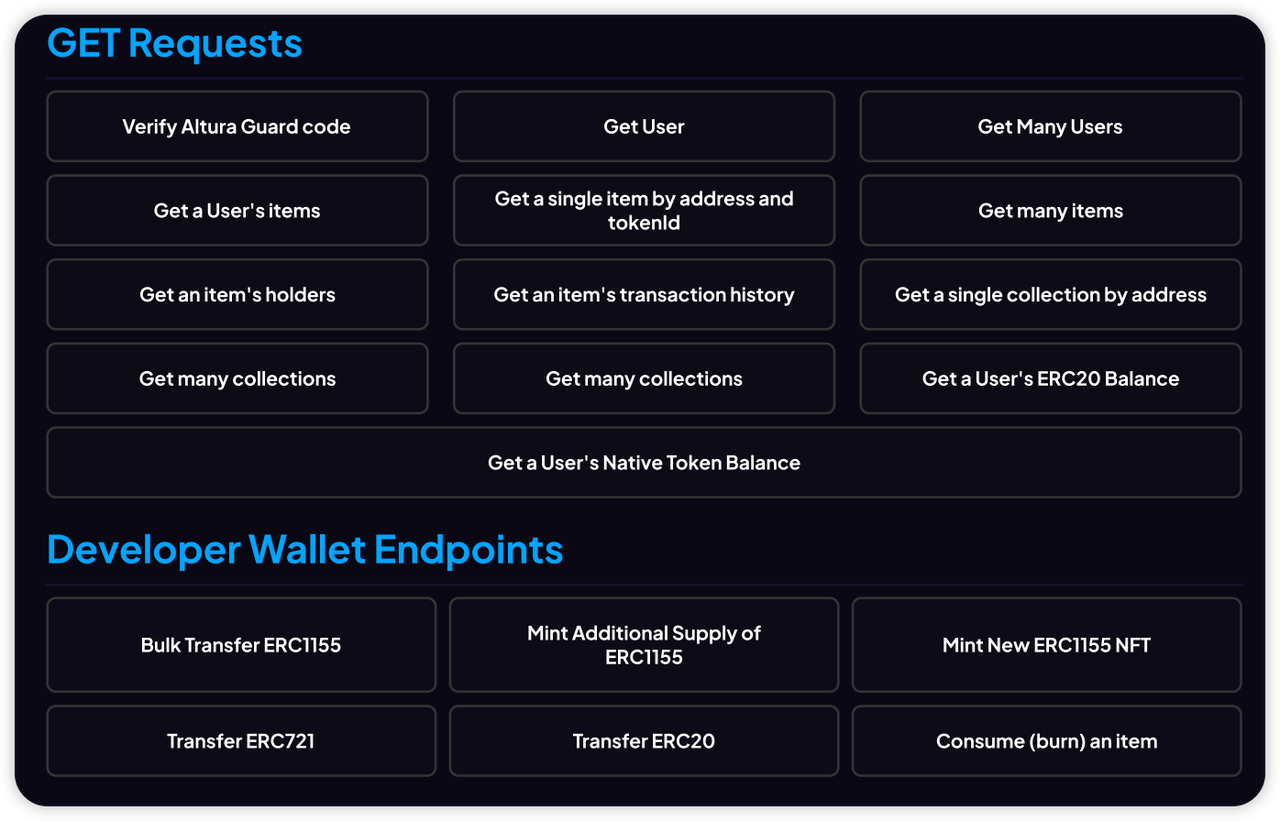
- Developer Wallet: A shared wallet for managing game assets, including transferring and minting new NFTs.
- API and SDKs: Application programming interfaces and software development kits for integrating Altura features into games.
- Altura Marketplace: A platform for buying, selling, and trading NFTs with a user-friendly interface.
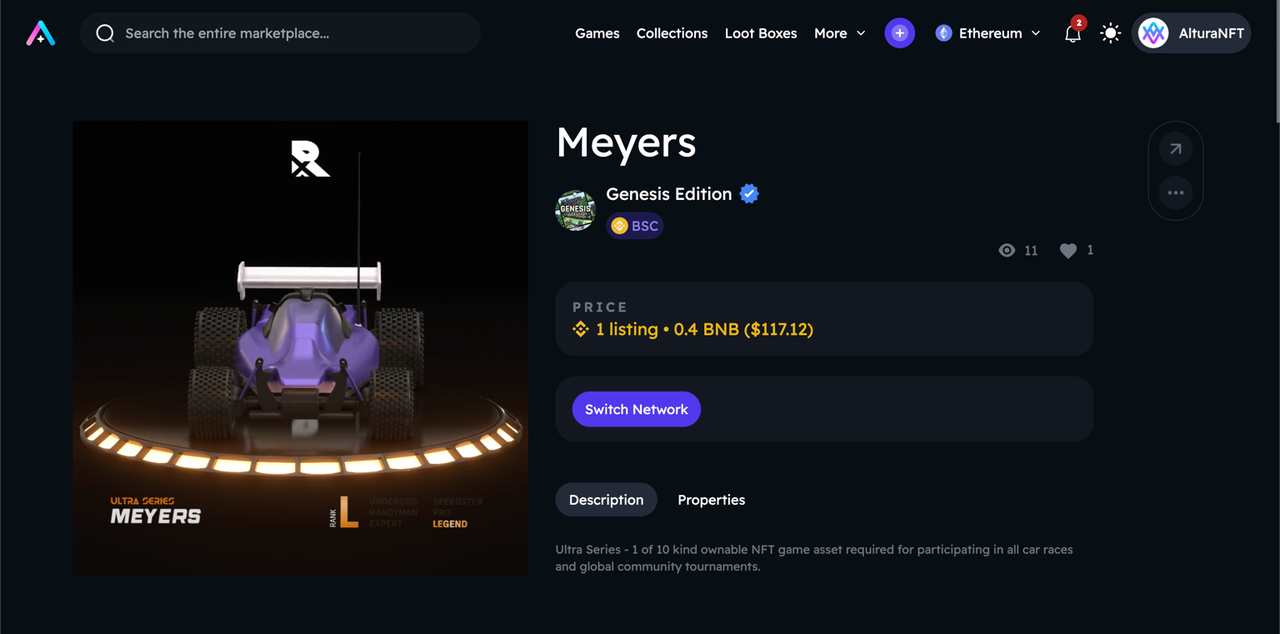
- White Label Marketplace: Allows developers to create and customize their own NFT marketplaces for personalized branding experiences.
These modules collectively form Altura's product ecosystem, providing a comprehensive platform for game developers to utilize Web3 technology to create and manage their games and digital assets, while also offering players a vibrant marketplace for NFT participation and trading.
Team Introduction for Altura
1. Majd Hailat - Co-founder and CEO of Altura. Majd has a background in computer engineering with over five years of programming experience and has developed a successful cryptocurrency management app. He designed and led the development of the Altura platform and built the Altura team.
2. Tanner Matthews - COO and Co-founder of Altura. Tanner is a Canadian CPA and a graduate of the Lazaridis School of Business and Economics with a Bachelor's degree and a Graduate Diploma in Business Administration, specializing in accounting. He is known for his highly analytical problem-solving mindset and prepares Altura for upcoming funding opportunities.
3. Abdullah Rangoonwala - Head of Engineering at Altura. Abdullah began his career at the age of 12 and has accumulated extensive experience across multiple companies, including senior positions at Utopian Game Labs and Alphabit.
4. Alex Kosloff - Head of Sales at Altura. A renowned business leader, Alex has signed over 100 games and established major partnerships with industry giants like Unity, Cronos Labs, Oasys, Arbitrum, Coinbase, and Avalanche within a year and a half. He is one of the six members elected to the Blockchain Game Alliance, highlighting his influence in the blockchain gaming community.
5. Nick Tremblay - Lead Engineer at Altura. Nick developed his first software at age 11 and was a Schulich Leader in 2015, laying a solid academic foundation for his seamless transition into the entrepreneurial world. As a technical CEO in his venture, Nick delved into building a business from the ground up and honed his software development skills.
6. Zhao ZhiMing - Frontend Developer at Altura. Zhao has extensive web development experience, specializing in JavaScript. He has in-depth knowledge of frontend JavaScript and browser APIs and significant experience with popular frameworks and libraries like React and Redux. His full-stack experience includes Node.js and Express, MongoDB, and traditional technologies like PHP and MySQL.
Economic Model
Altura's economic model revolves around its native token, which facilitates vibrant economic activities within its ecosystem. Revenue is generated through market transaction fees:
- Altura charges a 4% transaction fee on each NFT sale in its marketplace.
- For games using Altura's White Label Marketplace (WLM) solution, Altura charges a lower transaction fee and a monthly fee to host the WLM.
Altura's business model aims to expand with the growth of Web3 technology in the gaming industry. As the tokenization of in-game assets increases market transaction volume, Altura is well-positioned to capitalize on this growth. With continued market growth, Altura may explore new business models, such as charging for API usage, which would be a suitable revenue source at a later stage of industry development.
The ALU token plays a crucial role in the economic model, offering discounts on market transaction fees and potential future uses. The total supply of ALU is 990,000,000, and in Q2 2024, a community tier system will be launched, allowing community members to enjoy different levels of services and discounts based on the amount of ALU tokens held.
How to Build and Scale Web3 Games on Altura
Building and scaling Web3 games on Altura involves the following steps:
1. Using Developer Tools: Utilize Altura's tools like Altura Guard II for user authentication, NFT collection creation, NFT minting and importing, and the developer wallet to simplify development.
2. Integrating SDKs: Use JS/TS SDK or Unity SDK to interact with Altura’s services for user authentication, data retrieval, and NFT management.
3. Using the Developer Dashboard: Connect to the platform via the dashboard to upload designs, define properties, and mint NFTs easily.
4. Setting Up White Label NFT Marketplaces: Create customized markets for game assets, allowing players to buy and trade NFTs.
5. Implementing Smart NFTs: Use Altura’s Smart NFT features to update NFT properties instantly without gas fees.
6. Ensuring Security: Utilize Altura Guard II for secure Web3 login and user authentication.
7. Cross-Chain Support: Choose suitable chains like ETH, AVA, Telos, etc., for game development and deployment.
8. Community Engagement: Join Altura’s game community to connect with other developers and players, get feedback, and promote games.
9. Continuous Updates and Iteration: Update and optimize games based on player feedback and market changes to maintain attractiveness and competitiveness.
By following these steps, developers can effectively build and scale Web3 games on Altura, leveraging the platform's tools and services to simplify the development process while ensuring game security and player engagement.
Why Choose Altura?
Altura is worth choosing for several reasons:
1. Simplified Web3 Integration: Altura offers developer-friendly tools and documentation, making it easier to build Web3 games without handling complex tech stacks manually.
2. Time and Resource Savings: By using Altura's solutions, development teams can reduce the time and cost associated with managing Web3 stacks, lowering fuel consumption and development expenses.
3. Community Building: Altura's marketplace and community tools help developers promote their products to a large audience of gamers and Web3 enthusiasts, allowing them to list and sell NFTs on the Altura marketplace.
4. Security: Altura provides built-in authentication tools and supports multiple blockchains and NFT standards, ensuring a secure and trustworthy NFT economy for games.
5. Market Exposure: Through the Altura marketplace, developers can reach thousands of potential users who buy, sell, and trade NFTs daily.
Choosing Altura means selecting a platform that helps developers efficiently and securely build and monetize Web3 games while effectively connecting with the target community.
Appendix
- Altura Website
- Altura Twitter
- Start Trading
Please let me know if you need further details or additional sections translated!