
上周五美联储重点关注的核心 PCE 物价指数月率录得 0.2% ,略低于预期 0.3% ,创下 2023 年 12 月以来新低。数据公布后美债收益率连续四天下降,回吐了上周半数涨幅,十年期跌至 4.5% 以下,现报 4.475% ,两年期报 4.871% 。风险市场得到提振,道指和标普分别上涨 1.51% /0.8% ,纳指接近平收。
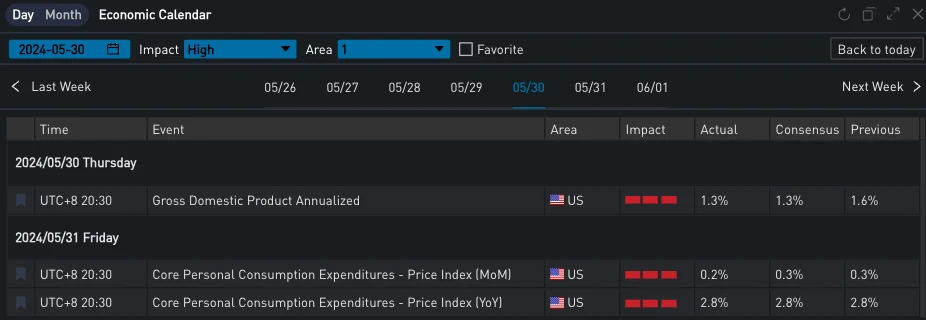
Source: SignalPlus, Economic Calendar
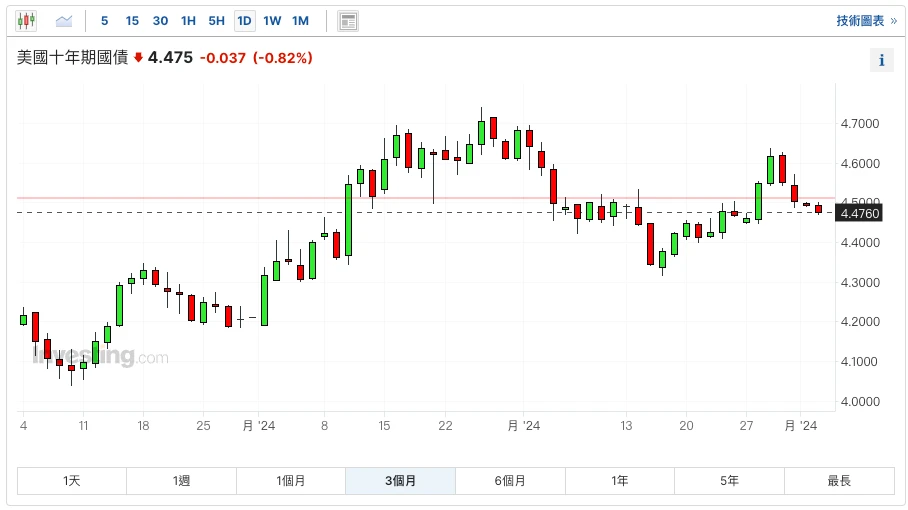
Source: Investing
数字货币方面,根据 Leon Waldmann 在推特展示的 Glassnode 数据来看,自 ETH ETF 批准后,BTC & ETH 在中心化交易所的存量占比已经降至历史新低,价值大约$ 3 B 的以太坊离开了中心化交易所,增加了潜在空头挤兑的可能性。BTC 今日上行突破了 68500 美元阻力位,开始向下一道阻力位 71500 发起挑战,截止目前,BTC 已在 68500 附近盘旋了接近 12 天,如果突破无望,有可能再次回到 66000 寻求支撑。
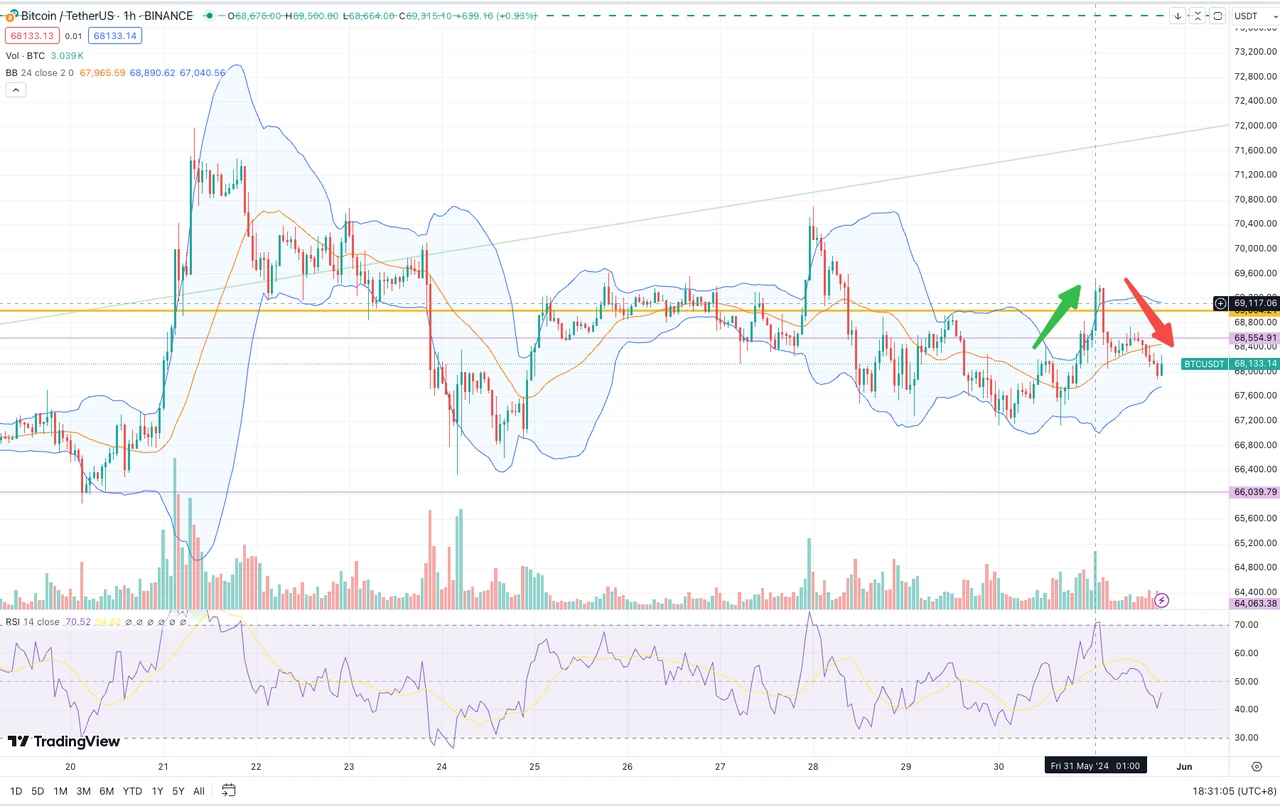
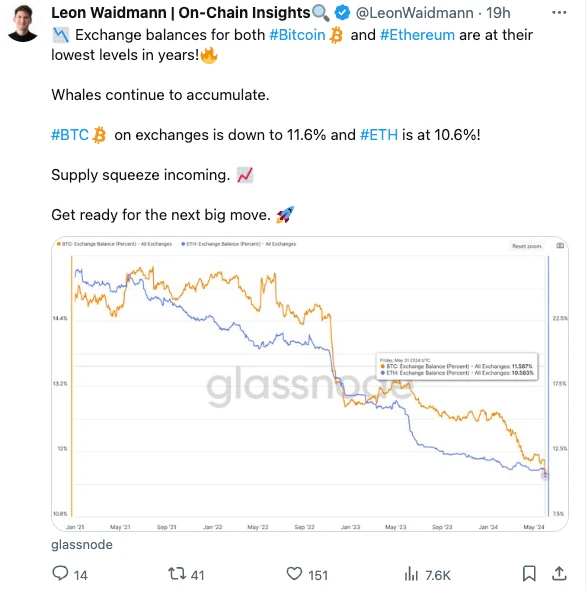
Source: TradingView;Twitter
期权方面,BTC 前端 IV 在进入工作日之前小幅反弹,但整体仍处在历史三个月的 25% 分位数以下的相对低点;ETH 略低于历史中位数,期限相对曲线偏陡,观察过去 24 小时的成交也可以看到,六月中上旬看涨期权的卖压强劲,相反六七月底及其以后的 Call 大受欢迎,或许也和 ETF S-1 的批准预期有关,当前市场“共识”仍是“最快七月批准”,届时资金进场,币价有望再度上行突破,但从另一方面说,当前 Grayscale 的 Ehereum Trust(ETHE)管理资金规模高达$ 11 B,所以也有人担心 ETF 批准发售以后市场会重演当时 GBTC 的抛压。
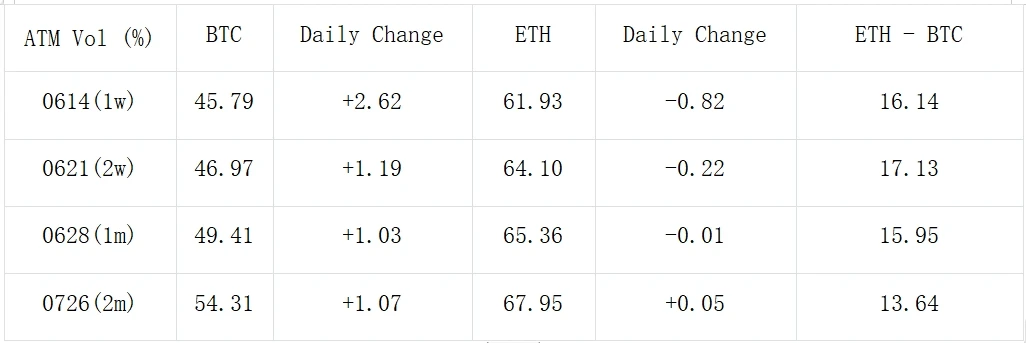
Source: Deribit (截至 3 JUN 16: 00 UTC+ 8)
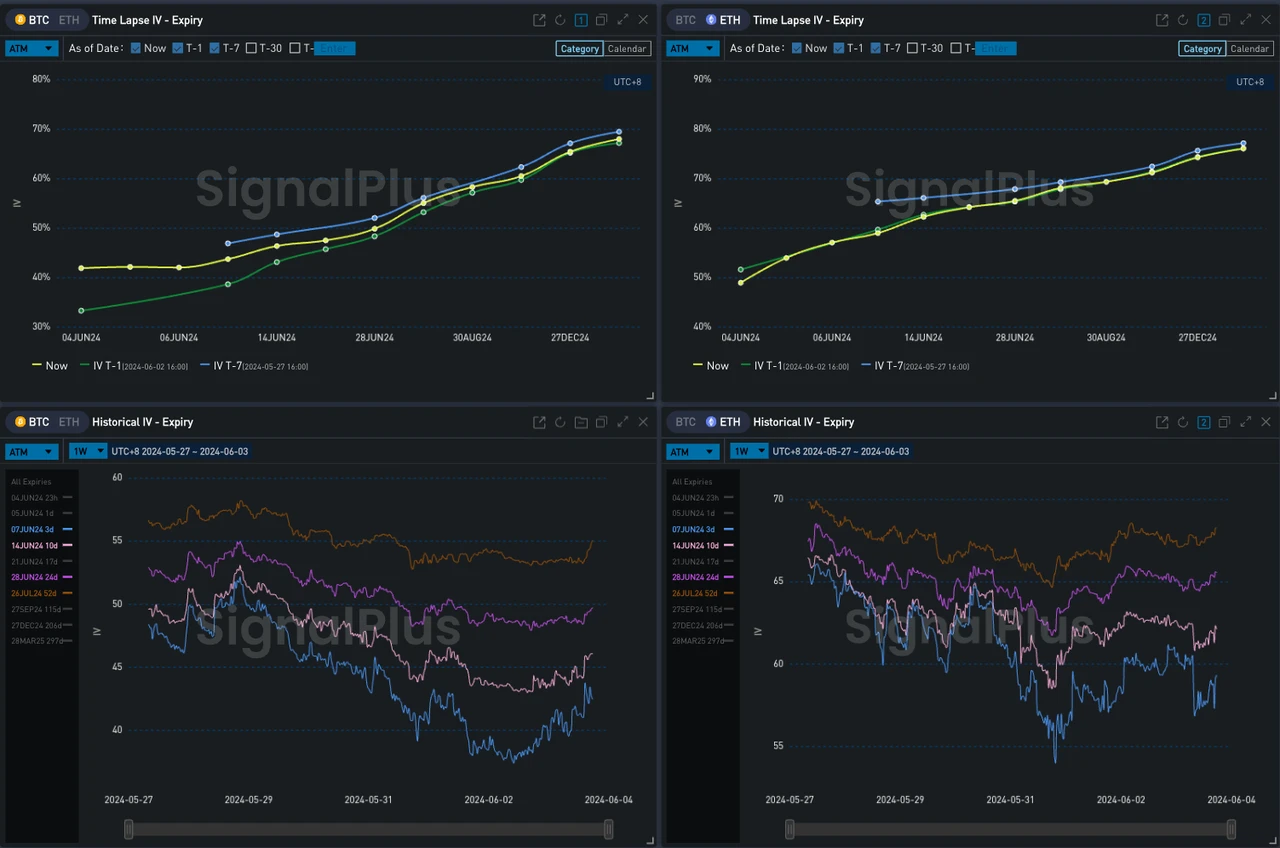
Source: SignalPlus,BTC & ETH ATM Vols
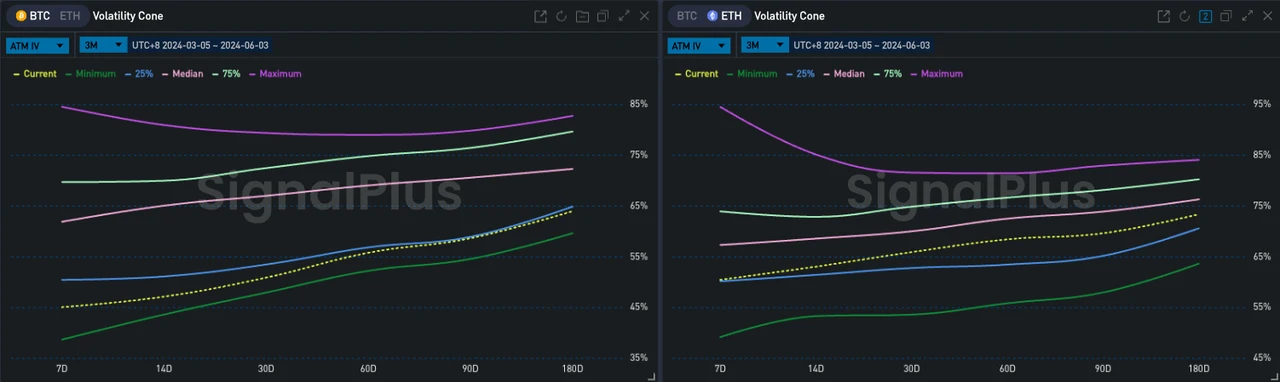
Source: SignalPlus,BTC & ETH 25 dRR
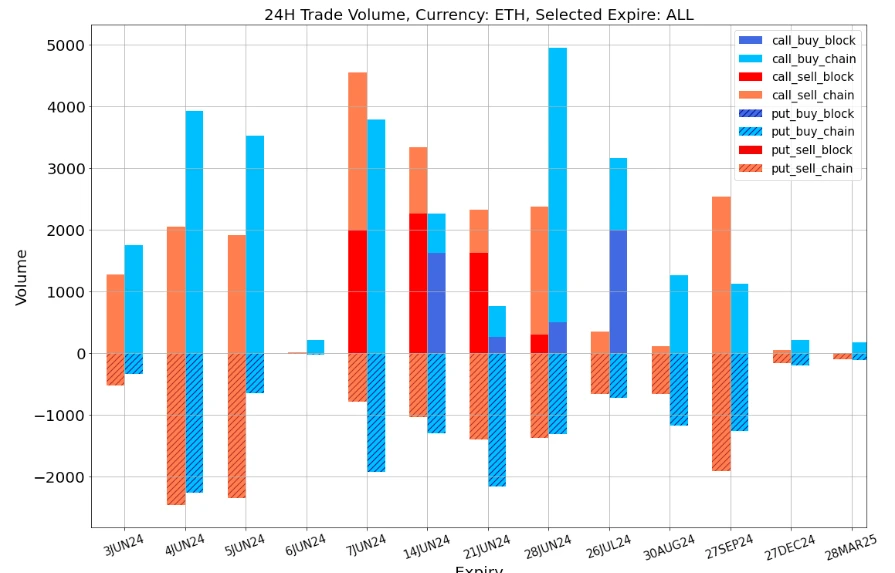
Data Source: Deribit, ETH 交易总体分布
Data Source: Deribit, BTC 交易总体分布
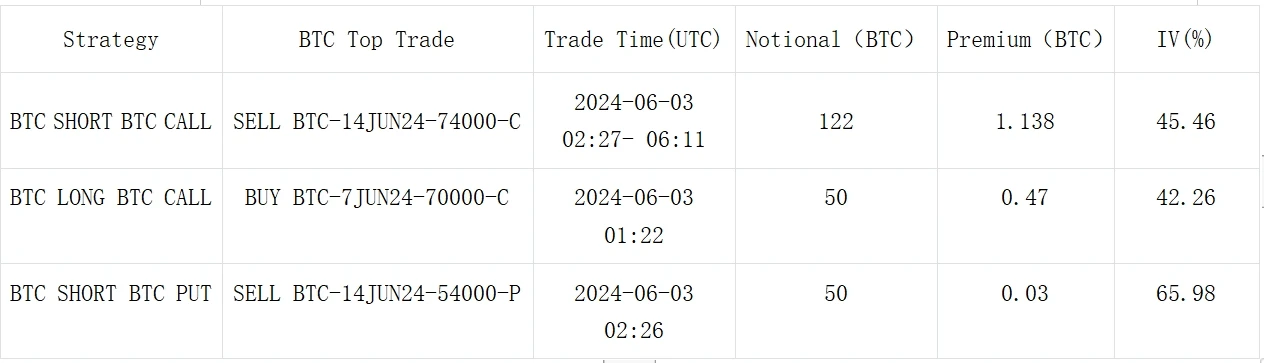
Source: Deribit Block Trade
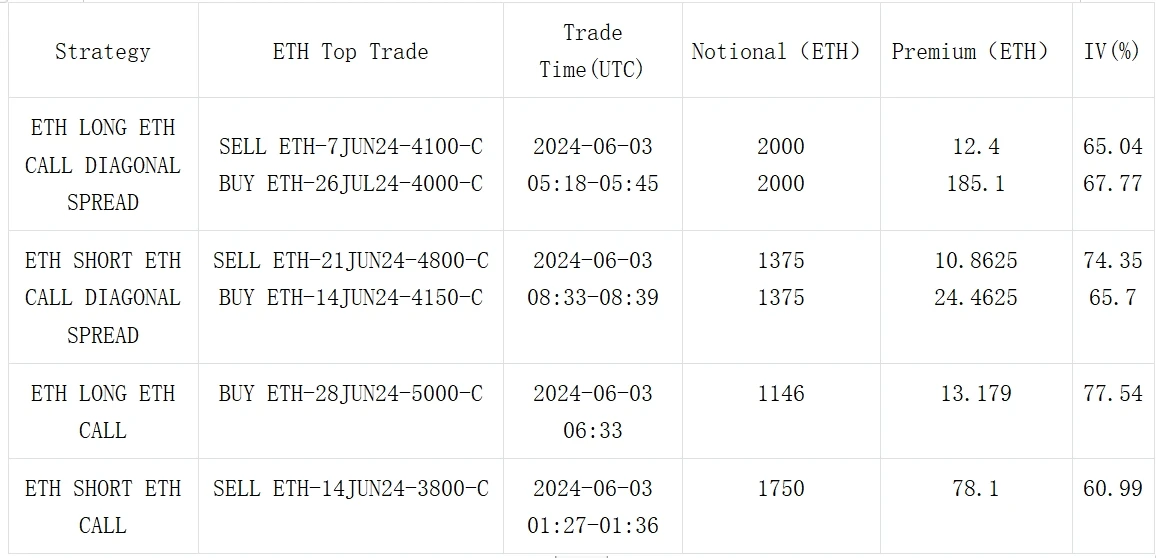
Source: Deribit Block Trade

您可在 ChatGPT 4.0 的 Plugin Store 搜索 SignalPlus ,获取实时加密资讯。如果想即时收到我们的更新,欢迎关注我们的推特账号@SignalPlus_Web3 ,或者加入我们的微信群(添加小助手微信:SignalPlus 123)、Telegram 群以及 Discord 社群,和更多朋友一起交流互动。SignalPlus Official Website:https://www.signalplus.com