What is a DAO?
A DAO, or decentralized autonomous organization, is an online-based organization that exists and operates with no single leader or governing body. DAOs are run by code written on a blockchain like Ethereum (ETH) and are owned and operated by the people who use them.
There are many different types of DAOs, but they all have one thing in common: they are decentralized, meaning that decisions about the organization's future are decided by the collective group and not a single individual.
This decentralization is what makes DAOs promising, as it theoretically removes the possibility of corruption or manipulation by a single entity. Smart contracts (and not people) execute the terms and conditions of the organization, making them incredibly efficient and resilient to change.
How does a DAO work?
A DAO is a collection of smart contracts that live on the Ethereum blockchain. These contracts interact with each other to form the organization. They are written in such a way that anyone in the world can use them.
The code for a DAO is public, and anyone can view it to see how it works. This transparency is one of the key features of a DAO. Compared to traditional organizations, DAOs are much more efficient because there is no need for a middleman or central authority.
Another key feature of a DAO is that it is autonomous, meaning that it can operate without human intervention. This is made possible by using smart contracts, which can automatically execute tasks according to the programmed rules.
DAOs are self-governing and self-sustaining, meaning they can continue to exist and operate even if the original creators are no longer involved. This is another advantage of using smart contracts. They ensure the DAO continues to follow its original rules even if the people running it changes.
Some of the most well-known DAO tokens and platforms are Uniswap (UNI), Aave (AAVE), Compound (COMP), Maker (MKR) and Curve DAO.
Steps to raise money from VCs after incorporating a DAO
Write a white paper
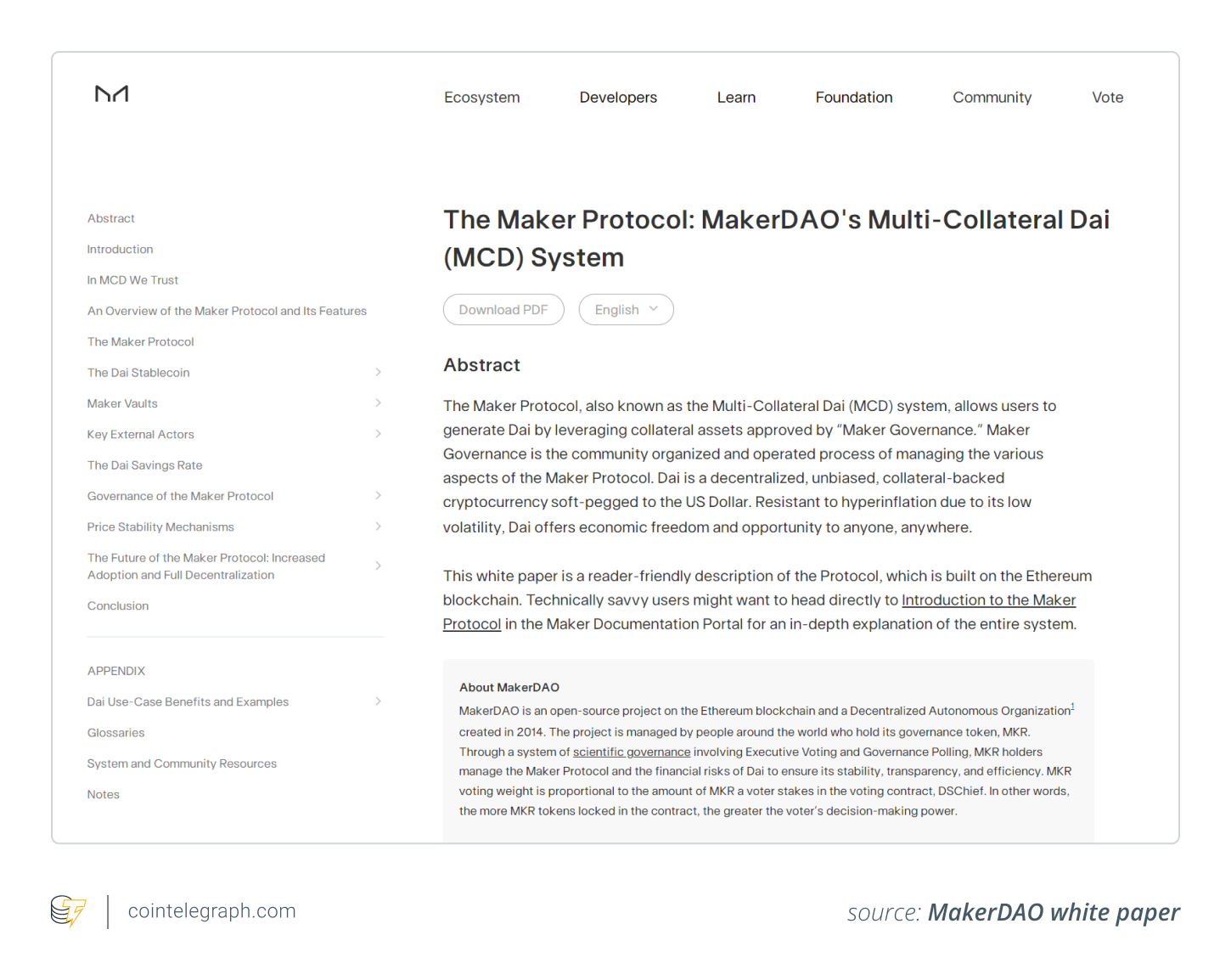
After incorporating your DAO, you will need to write a white paper. A white paper is an essential document that explains what your DAO is, what it does and how it works. It should be clear, concise and easy to understand.
Your white paper will be used to convince potential investors to support your DAO, so it’s important to ensure it’s well-written and persuasive. To help you get started on writing your DAO's white paper, check out our detailed guide here.
Create a pitch deck
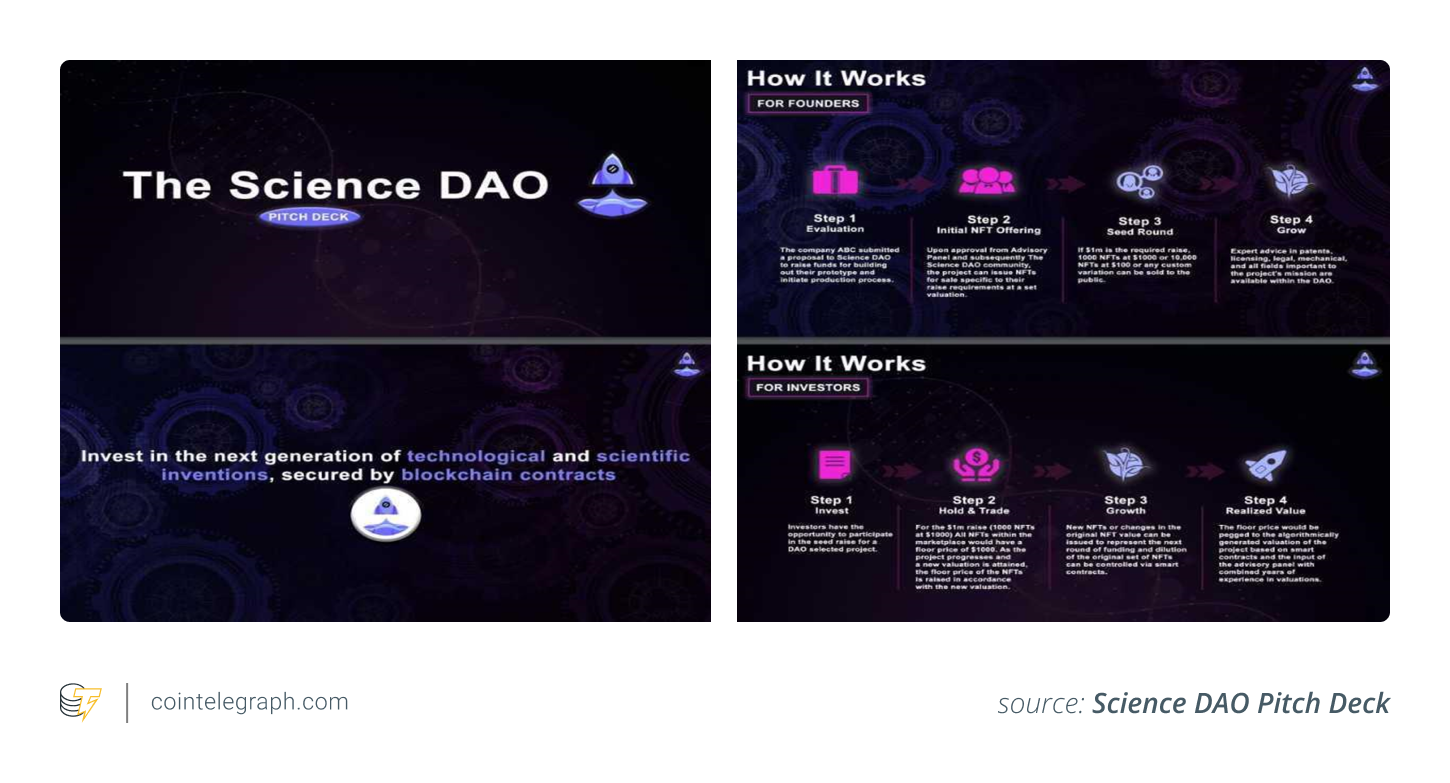
In addition to a white paper, you will also need to create a pitch deck. A pitch deck is a short presentation that gives an overview of your DAO and its purpose.
Your pitch deck should be clear, visually appealing and easy to follow. It should also include information about your team, your progress to date and your plans for the future.
Create a website
The next step in raising money for your DAO is to create a website. Your website should be professional and informative. It should include your white paper as well as any other relevant information about your DAO.
It should also have a way for potential investors to get in touch with you. This could be through a contact form, an email address or a social media account.
Reach out to VCs
Once you have created a white paper, pitch deck and website, you can start reaching out to venture capitalists, or VCs. When contacting VCs, it’s important to be clear about your objectives and what you are looking for.
Some VCs may be interested in investing in your DAO if they believe in its mission. Others may be more interested in the financial return that investing in your DAO would give them.
It’s also important to remember that VCs are busy people. They receive hundreds of pitches every week, so you need to ensure that your pitch stands out.
Negotiate terms
Once you have found a VC interested in investing in your DAO, you will need to negotiate the terms of the investment. This includes the amount of money the VC will invest, and the equity stake they will receive in return.
It’s important to remember that you are in a strong position when negotiating with VCs. After all, they are the ones who are interested in investing in your DAO. As such, you should aim for terms favorable to you and your team. This includes getting a large equity stake and a high valuation for your DAO.
Close the deal
Closing the deal is an important step in raising money for your DAO. Once you have negotiated the terms of the investment, you will need to close the deal. This involves signing a contract with the VC, as well as receiving the agreed upon amount of money. It’s a good idea to have a lawyer review the contract before you sign it.
Use the funds
Once you have closed the deal and received the investment, you will need to use the money wisely. This means spending it in a way that will help your DAO achieve its objectives. Some of the things you could use the money for include hiring employees, marketing your DAO and developing new features.
It’s also important to remember that you will need to report back to the VCs on how you are using the money. For this reason, ensure that your expenses and progress are all properly tracked.
Pay back the VCs
Eventually, you will need to pay back the VCs. This could be through a sale of your company, an initial public offering (IPO) or another exit strategy. Paying back the VCs is an important step in the life cycle of a DAO. It is also a good way to show them you are committed to your business and have faith in its future.
Can DAOs replace VCs?
Are DAOs a viable replacement for venture capitalists? The answer is that it depends. VCs typically invest in early-stage companies and help them grow through the provision of capital, mentorship and connections.
DAOs can provide some of these same services, but they're not well suited to invest in early-stage companies. This is because DAOs are decentralized and cannot make quick and decisive decisions.
VCs, on the other hand, are centralized and can make quick decisions that help early-stage companies grow. So, while DAOs can provide some of the same services as VCs, they're not a perfect replacement. A VC is probably a better choice if you're looking for an organization to invest in early-stage companies.
A hybrid future of DAOs and traditional VCs
DAOs are a new and innovative way of organizing people and resources. While they can't exactly replace traditional VCs, they can potentially disrupt the industry.
We'll likely see a future where DAOs and traditional VCs work together to support the growth of early-stage companies. For example, a DAO could provide the capital and resources while a VC provides the mentorship and connections.
Such a hybrid model would allow early-stage companies to get the best of both worlds: the capital and resources they need to grow, and the mentorship and connections they need to succeed.
VC DAOs already exist, proving that such a model is possible. One example is The LAO, a venture capital DAO. It focuses on early-stage blockchain projects based on Ethereum (ETH) and has funded over 30 projects so far. How it works is that governance remains a function of the blockchain while an external service provider takes care of the administrative and legal procedures.
Another good example is MetaCartel Ventures, a private VC DAO and a spin-off of the Ethereum ecosystem grant fund, MetaCartel. The VC DAO arm is managed by a board of "mages," who conduct functions like presenting investment proposals, due diligence and voting on proposals. They mainly fund early-stage decentralized applications and protocols at the moment.